Artwork
Faust and Gretchen
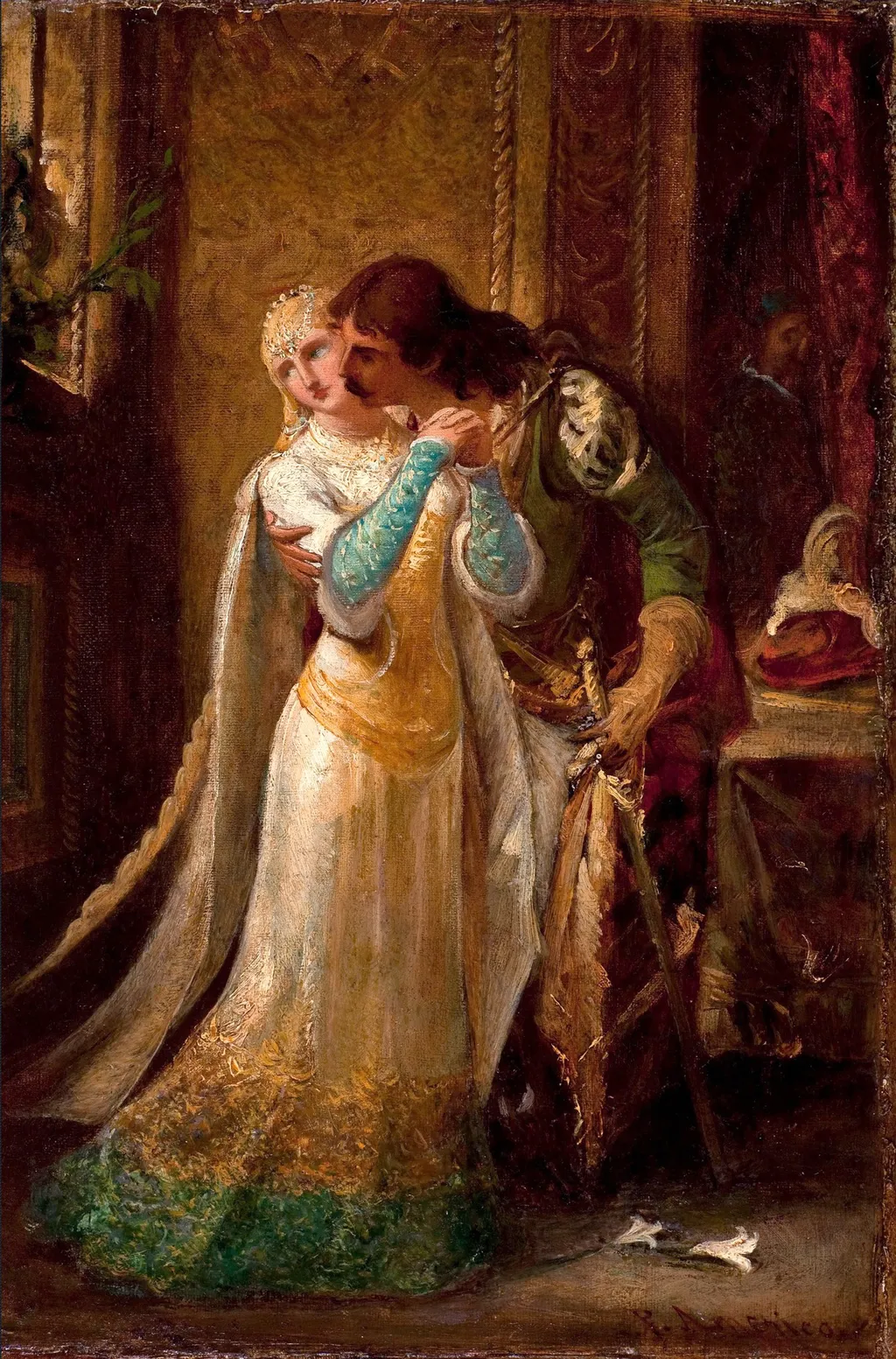
Faust and Gretchen is an oil painting by the High Renaissance artist Pedro Américo. It dates from 1500 and is held in the collection of the Pinacoteca de São Paulo.
About this work
Overview
It illustrates a moment from Goethe’s dramatic poem Faust, portraying the titular scholar in the presence of Gretchen, a young woman drawn into his orbit.
Faust and Gretchen is an oil painting by Brazilian artist Pedro Américo, completed in the late 19th century. It illustrates a moment from Goethe’s dramatic poem Faust, portraying the titular scholar in the presence of Gretchen, a young woman drawn into his orbit. The work is part of the collection at the Pinacoteca do Estado de São Paulo and reflects Américo’s academic training and engagement with European literary themes through a Brazilian lens.
Subject & Meaning
The scene captures a tense, intimate encounter between Faust, a learned but morally ambiguous figure, and Gretchen, an innocent young woman. His grip on her arm suggests both persuasion and coercion, while her posture and attire imply vulnerability. The rope suspended from the ceiling introduces an ominous undertone, hinting at the tragic trajectory of their relationship as told in Goethe’s narrative, where desire leads to ruin.
Technique & Style
Américo employed oil paint with careful attention to texture and light, using chiaroscuro to model forms and heighten emotional tension. The figures are rendered with academic precision, their clothing detailed in rich hues—white, blue, green, and red—contrasting against a dim interior. The composition directs focus to the interaction between the two figures, with minimal background detail to isolate the psychological drama.
History & Provenance
Painted in the 1880s, the work emerged during Américo’s mature period, following his studies in Europe and his rise as a leading figure in Brazilian academic art. It was acquired by the state of São Paulo and has remained in the Pinacoteca’s collection since its early years. Unlike many of his historical canvases, this piece draws from literary rather than national themes, reflecting his broader cultural interests.
Context
In 19th-century Brazil, academic painters like Américo often turned to European literature and mythology to elevate their subjects beyond local narratives. Faust and Gretchen aligns with a broader trend among Latin American artists who sought legitimacy through engagement with Western canon. The painting’s setting and costume reflect 19th-century interpretations of Renaissance Europe rather than historical accuracy.
Legacy
Though less celebrated than Américo’s grand historical scenes, Faust and Gretchen remains a significant example of his literary engagement and technical skill. It illustrates how Brazilian academic art absorbed European traditions while adapting them to new cultural contexts. The painting continues to be studied for its psychological nuance and its role in the transnational circulation of Romantic themes in the Americas.
Artist & collection
Artist
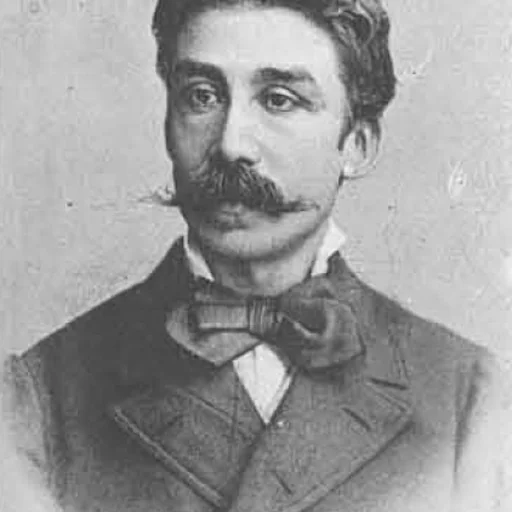
Pedro Américo de Figueiredo e Melo (29 April 1843 – 7 October 1905) was a Brazilian novelist, poet, scientist, art theorist, essayist, philosopher, politician and professor, but is best remembered as one of the most…

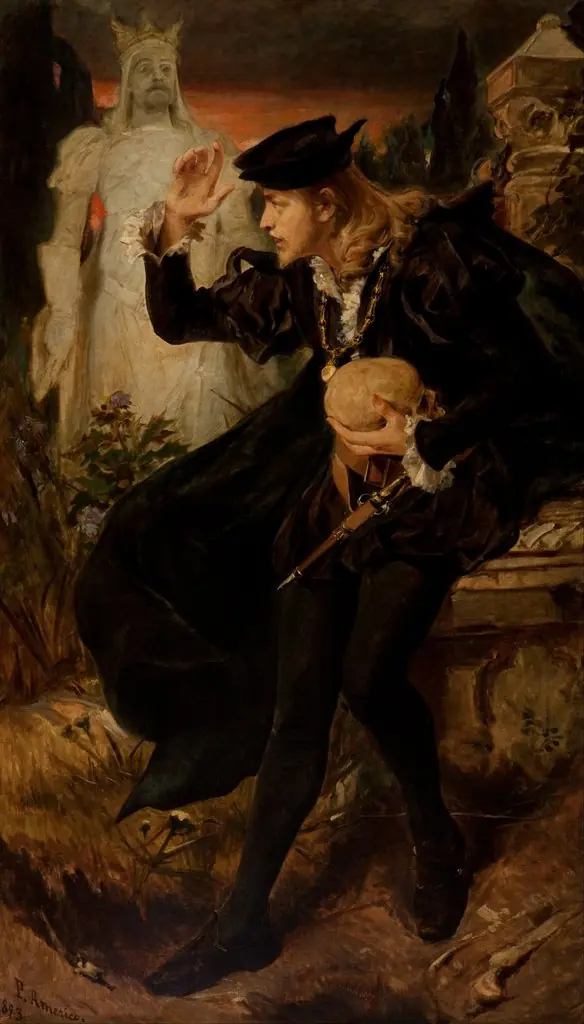
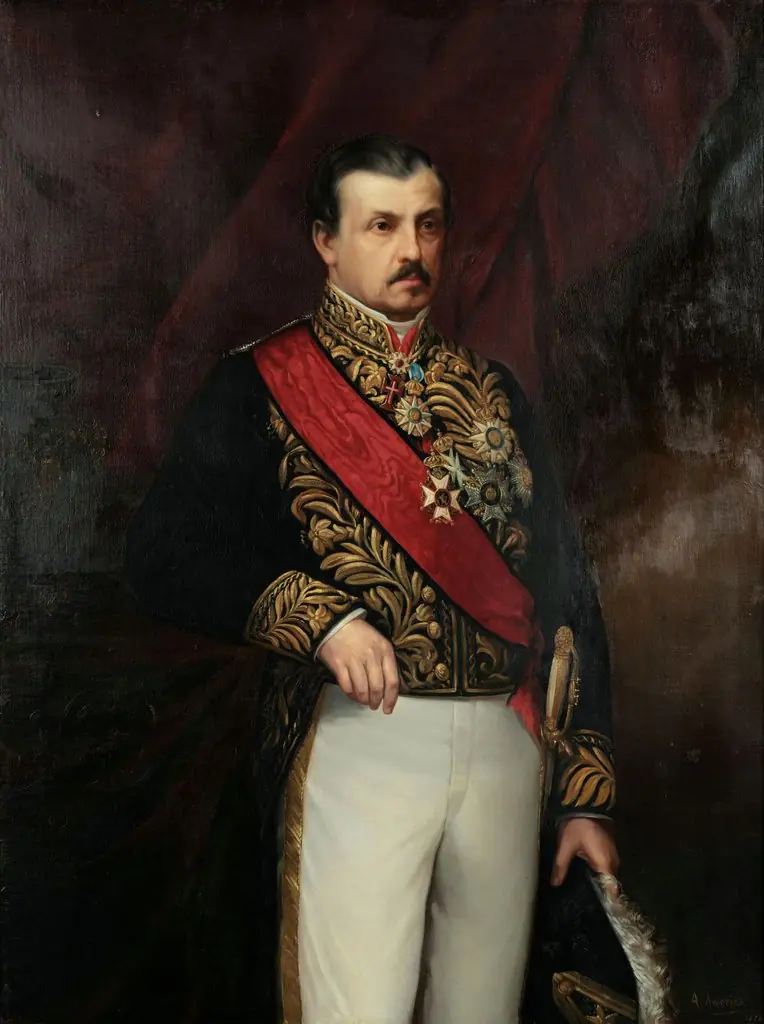

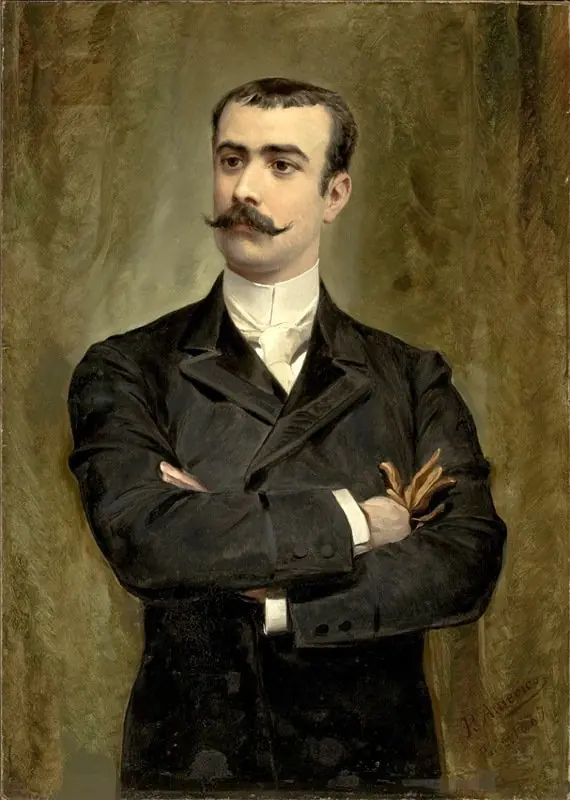
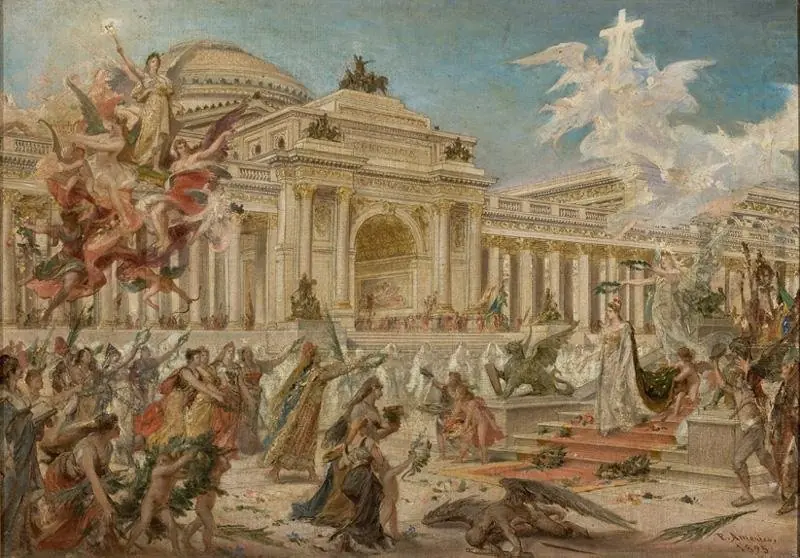
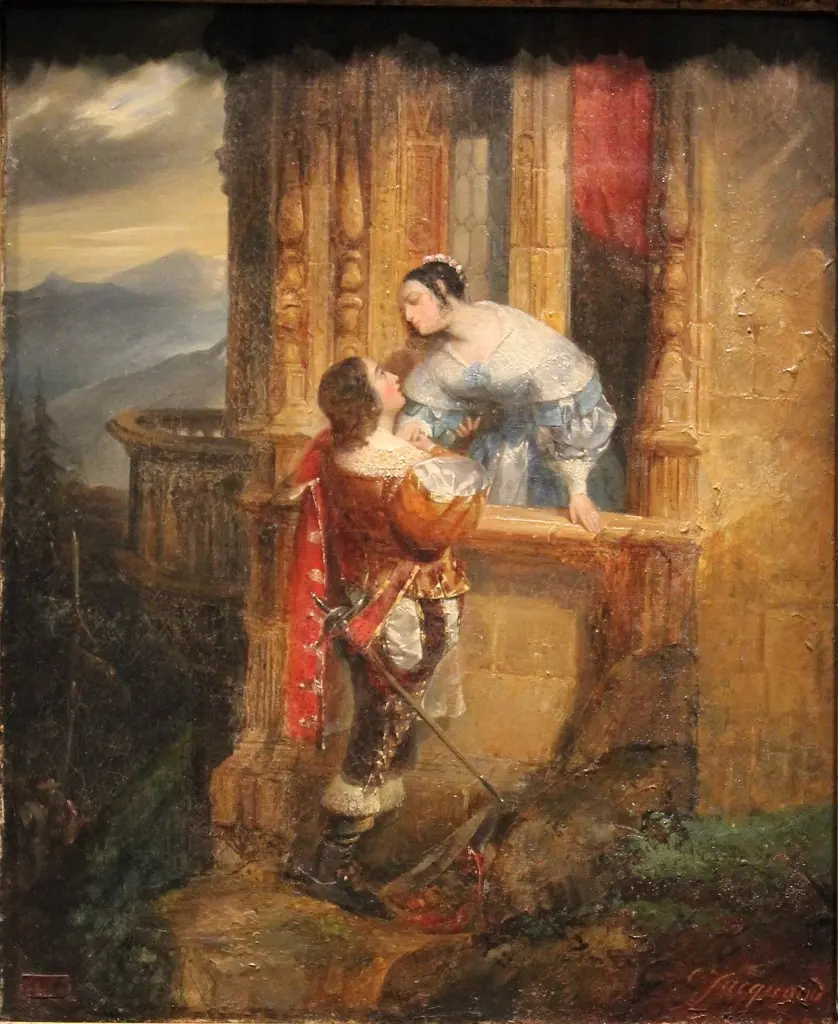 Les Adieux de Cinq-Mars à Marie d'Entraigues or le Baiser du départ
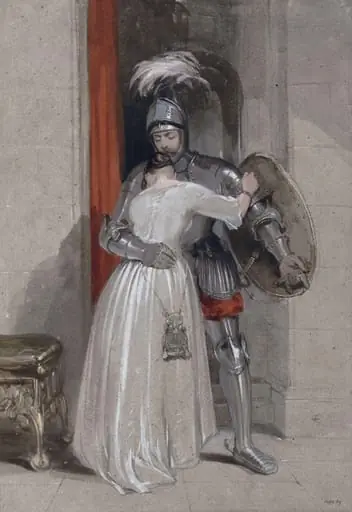 Knight and Lady
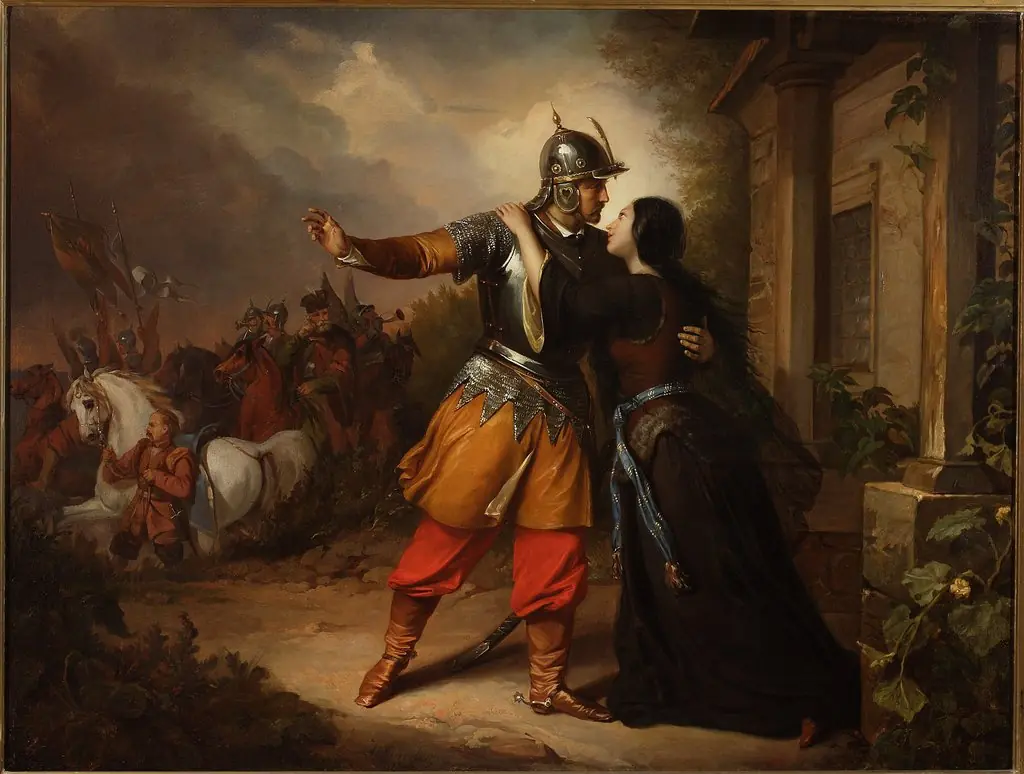 Wacław's farewell to Maria
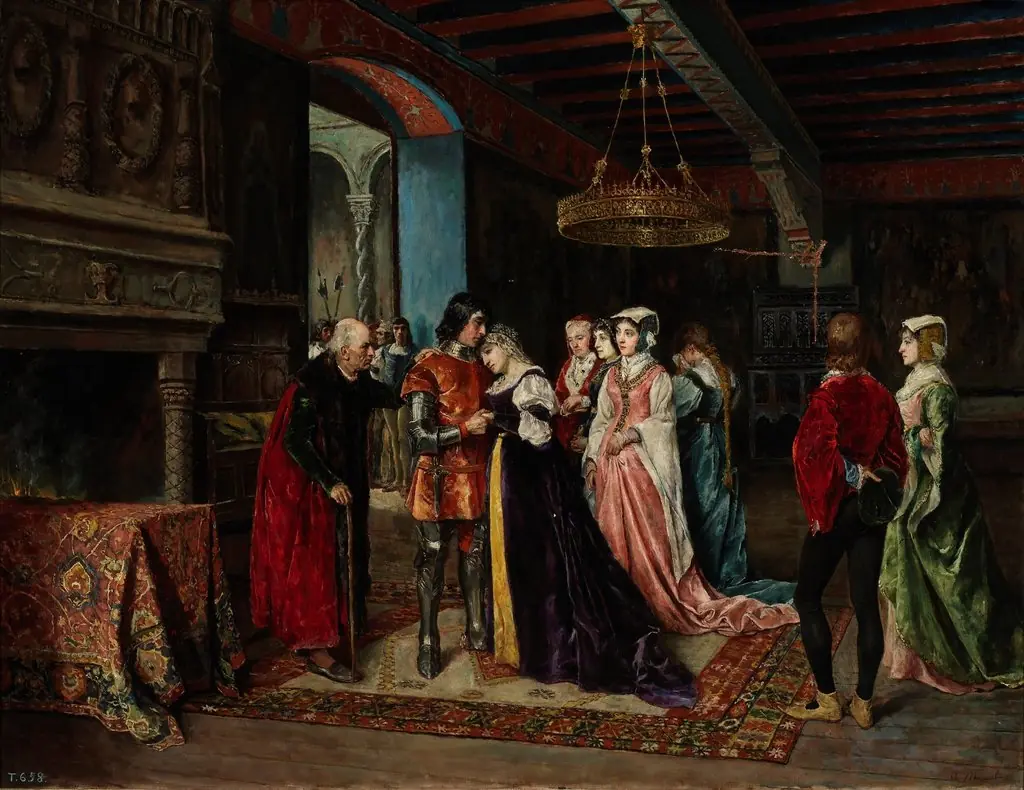 La despedida
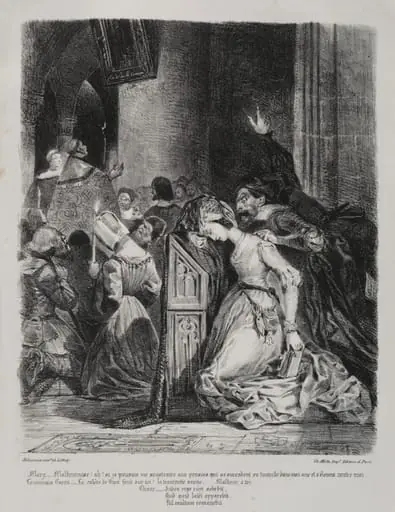 Illustrations for Faust: Marguerite at church
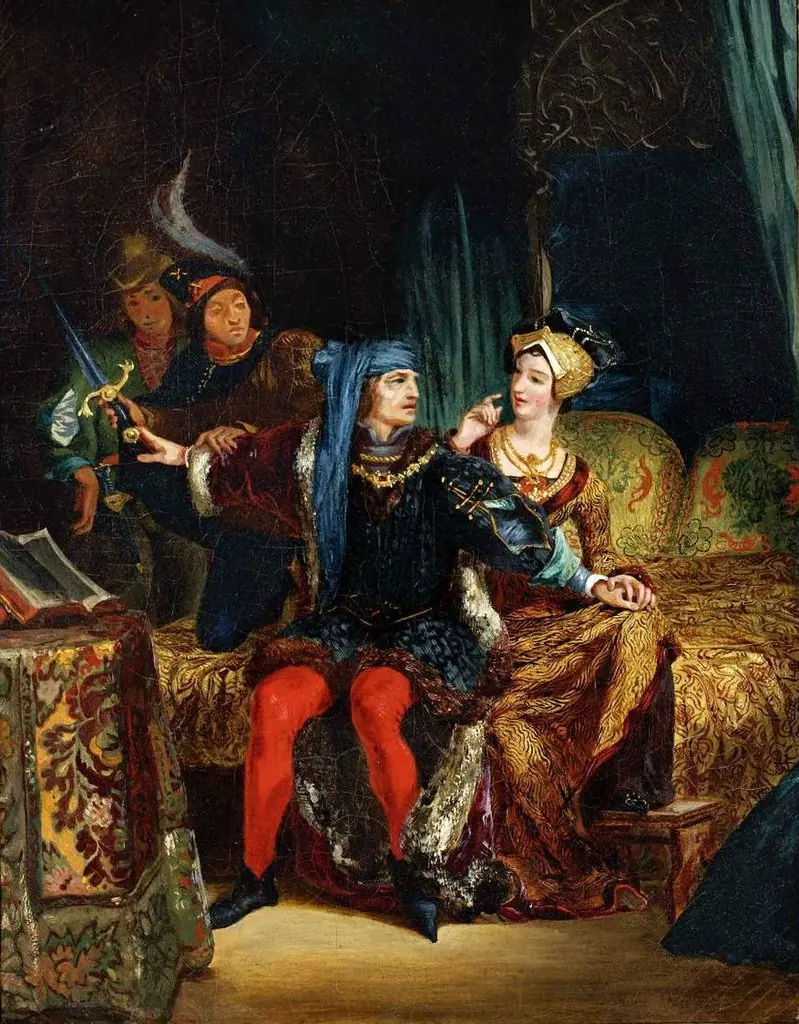 Charles VI et Odette de Champdivers
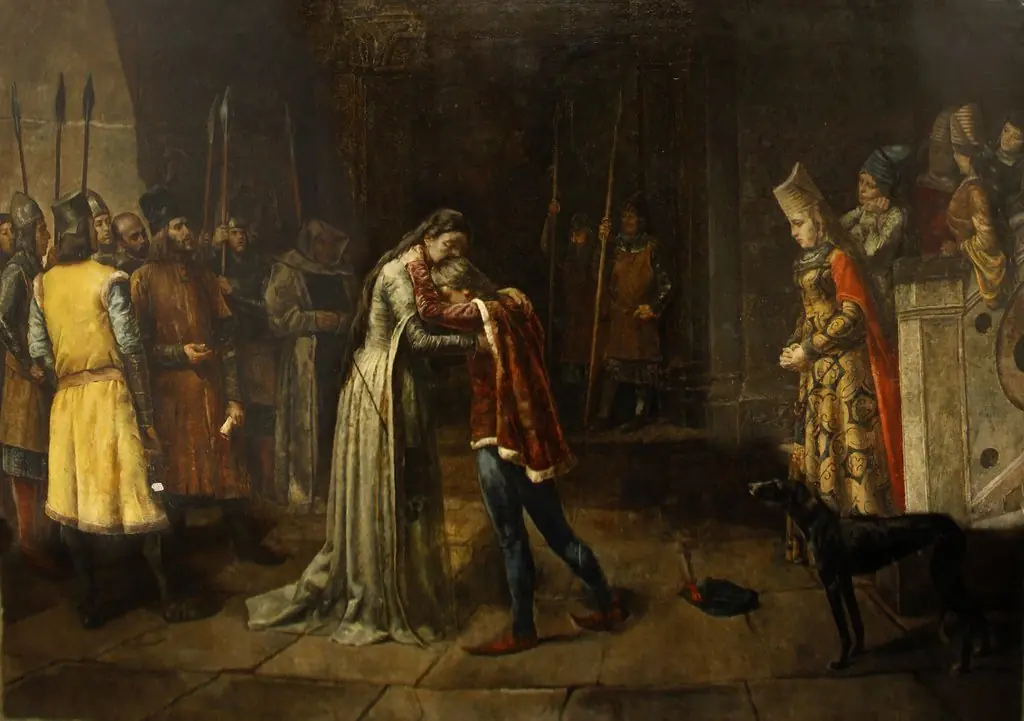 La última despedida
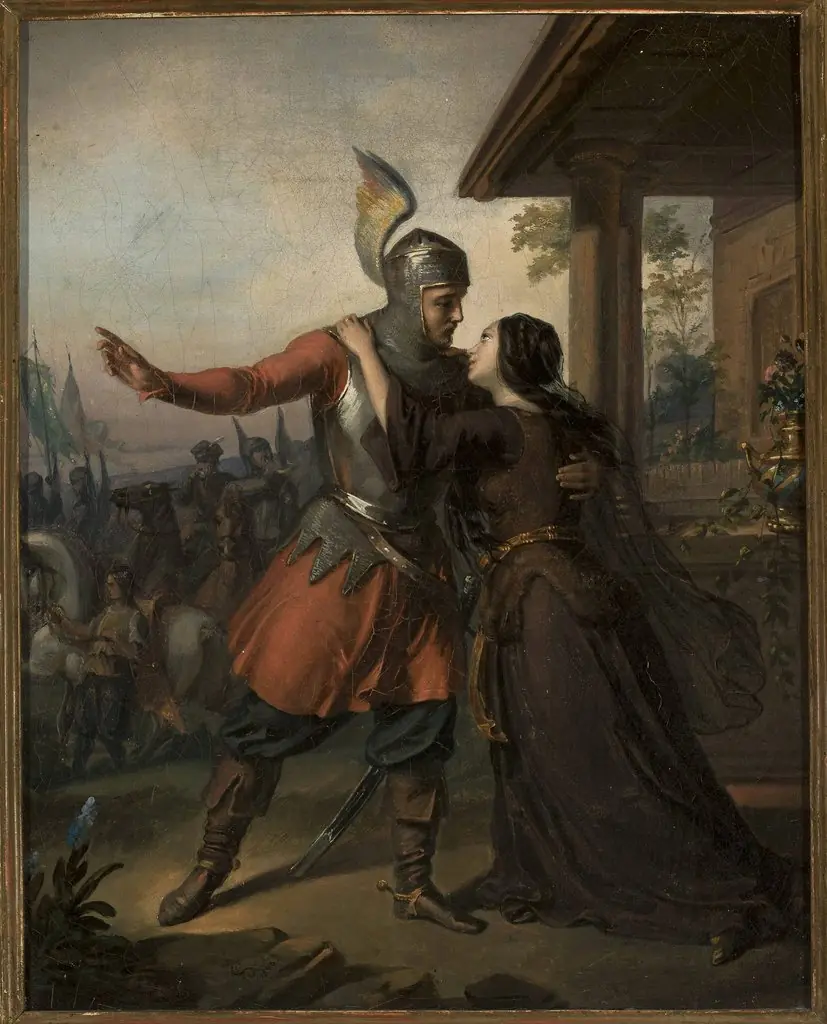 Wacław's farewell to Maria
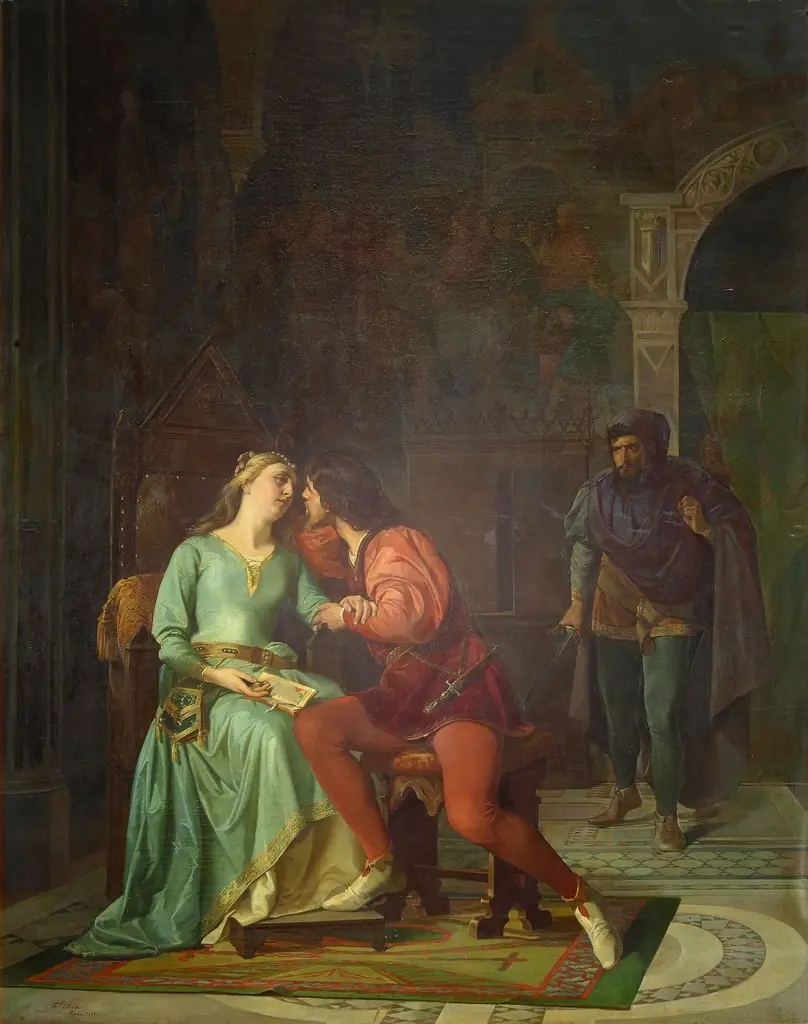 Francisca de Rímini
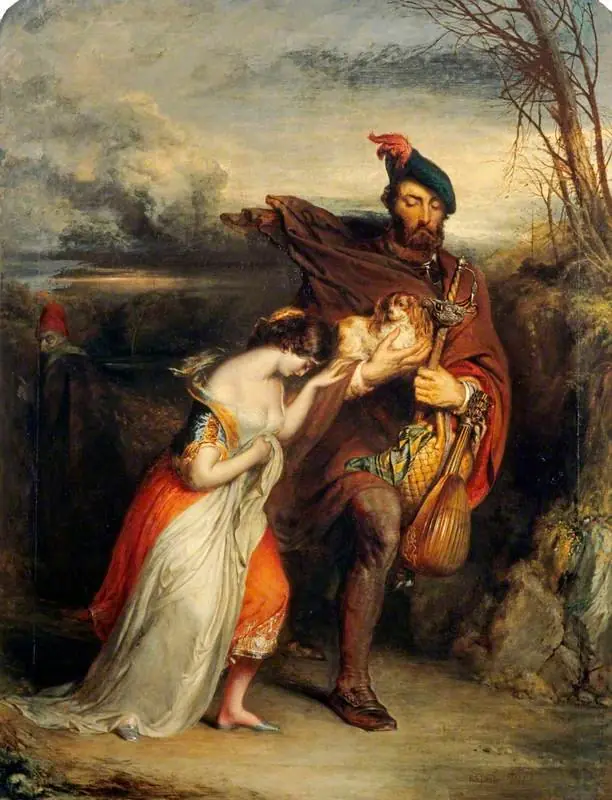 The Gow Chrom Reluctantly Conducting the Glee Maiden to a Place of Safety (from Scott's 'The Fair Maid of Perth')
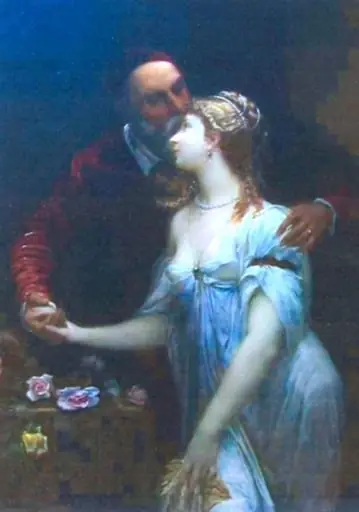 Tizian și Lavinia
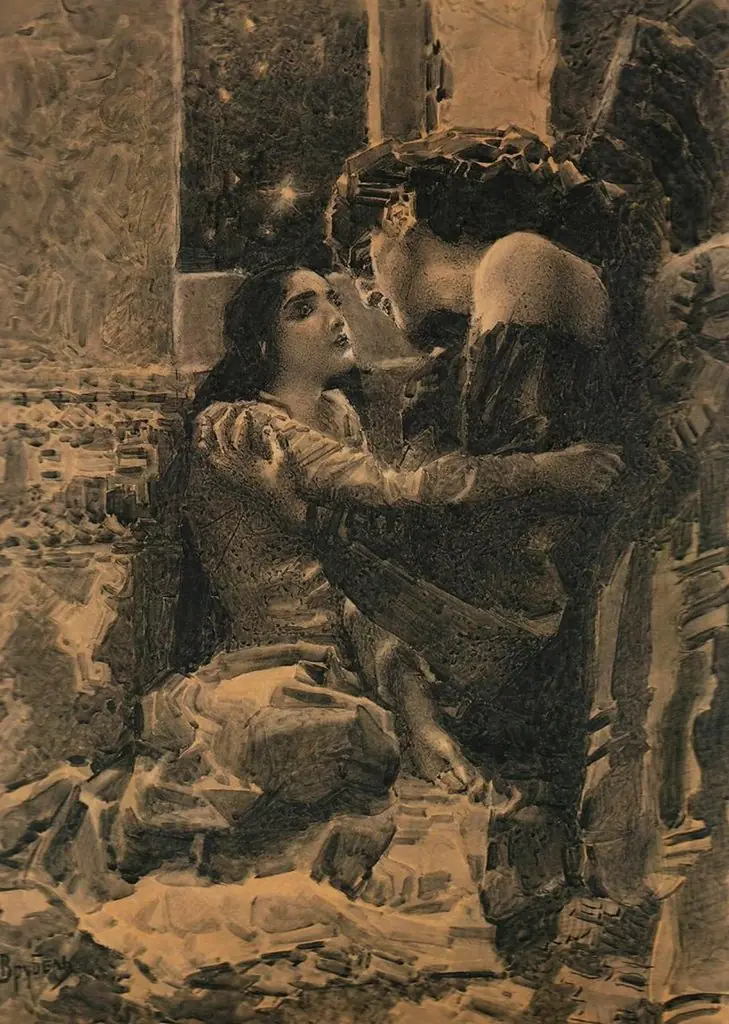 Tamara and Demon