Artwork
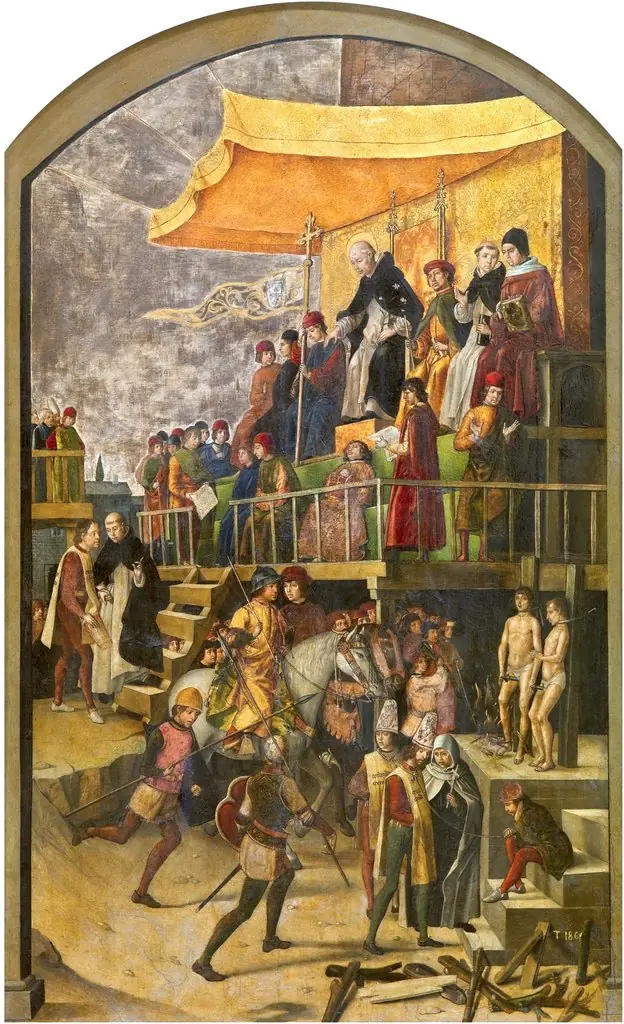
Saint Dominic and the Albigensians
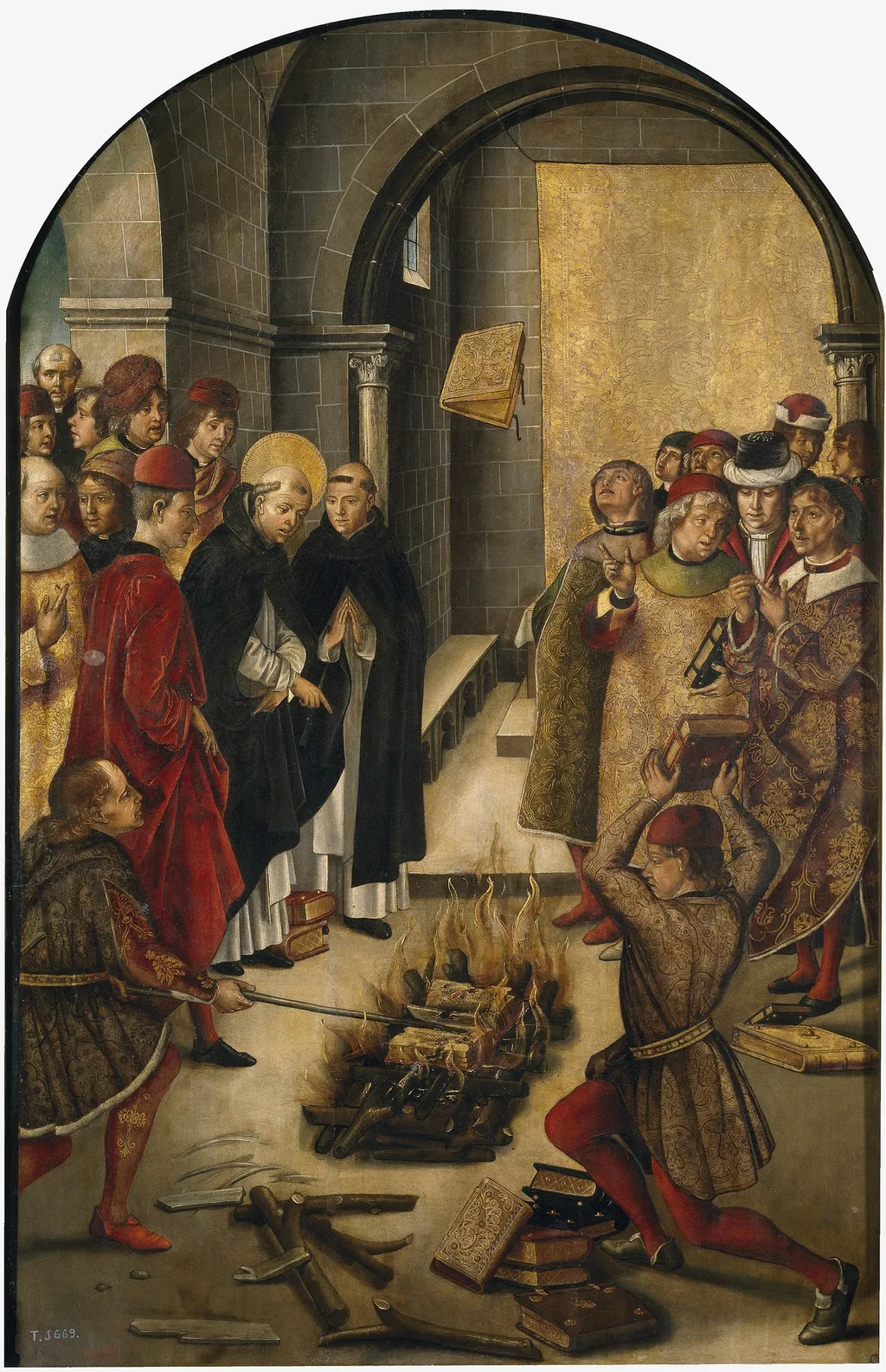
Saint Dominic and the Albigensians is an oil painting by the Early Renaissance artist Pedro Berruguete. It dates from 1498 and is held in the collection of the Museo del Prado.
About this work
Overview
The painting is part of the permanent collection of the Museo del Prado in Madrid.
Created in 1498 by the Spanish painter Pedro Berruguete, *Saint Dominic and the Albigensians* is an oil on panel that measures roughly a modest size for a devotional work. The composition places Saint Dominic at the center of a heated encounter inside a stone interior, surrounded by two groups of figures whose gestures convey tension and conflict. The painting is part of the permanent collection of the Museo del Prado in Madrid.
Subject & Meaning
The scene depicts Saint Dominic confronting members of the Albigensian movement, a medieval heretical sect. On the left, cloaked monks in red and black stand with clasped hands, while a small fire burns on the floor, suggesting a ritual or punitive act. To the right, secular figures in elaborate dress argue and point, one bent over a book, implying a debate over doctrine. The work visualizes the saint’s role as a defender of orthodoxy.
Technique & Style
Berruguete employs the Hispano‑Flemish synthesis characteristic of late‑15th‑century Spain, combining detailed northern realism with emerging Italianate spatial awareness. Warm reds, golds, and chiaroscuro modeling give the interior a dramatic intensity, while the careful rendering of textures—stone, fabric, and flame—demonstrates his mastery of oil paint. The composition balances a crowded foreground with a shallow receding space, guiding the viewer’s eye toward the central figure of Saint Dominic.
History & Provenance
The painting remained in Spanish collections after its completion, eventually entering the holdings of the Museo del Prado, where it has been displayed since the museum’s early acquisitions. Its attribution to Berruguete has been stable, supported by stylistic analysis and documentary evidence linking the work to the artist’s known output in the late 1490s.
Context
At the turn of the 16th century, Spain was consolidating religious uniformity following the Reconquista and the Inquisition. Berruguete’s choice of a Dominican saint confronting the Albigensians reflects contemporary concerns about heresy and the Church’s authority. The painting also anticipates the Spanish Renaissance, bridging medieval devotional imagery and the humanist interest in narrative clarity that would later be expanded by his son, the sculptor Alonso Berruguete.
Artist & collection
Artist
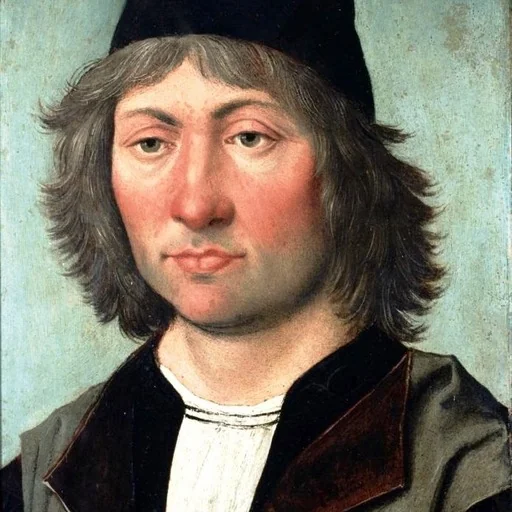
Pedro Berruguete (c. 1450 – 1504) was a Spanish painter who adopted Flemish techniques and conventions and so is part of the Hispano-Flemish style. Berruguete most famously created paintings of the first few years of…