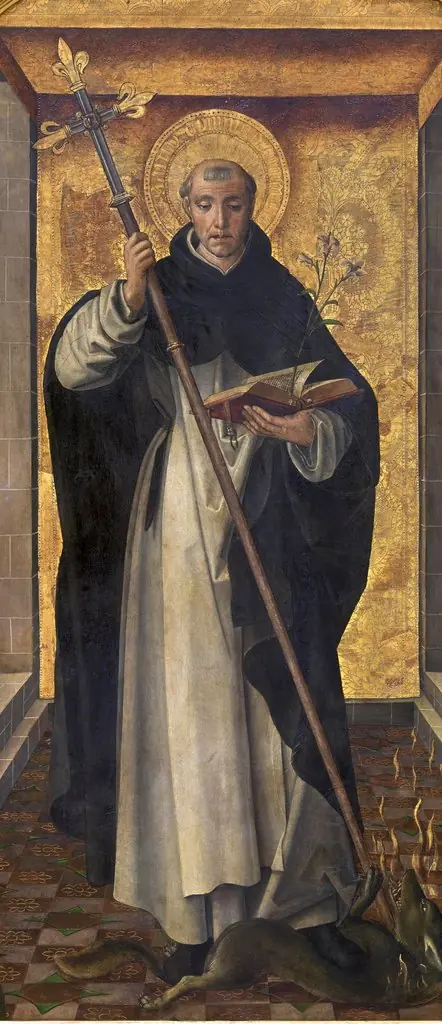
Artwork
The Death of Saint Peter Martyr
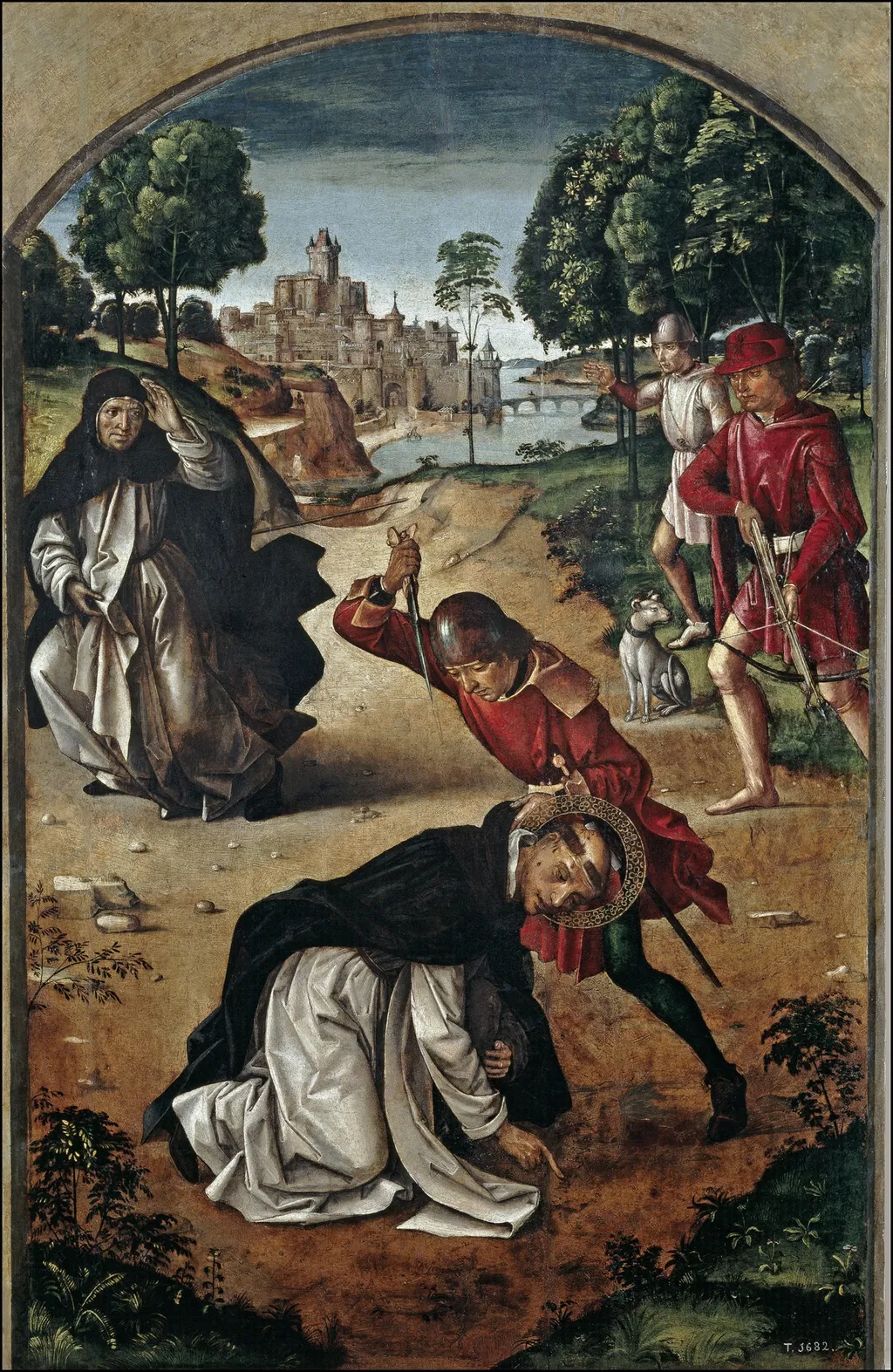
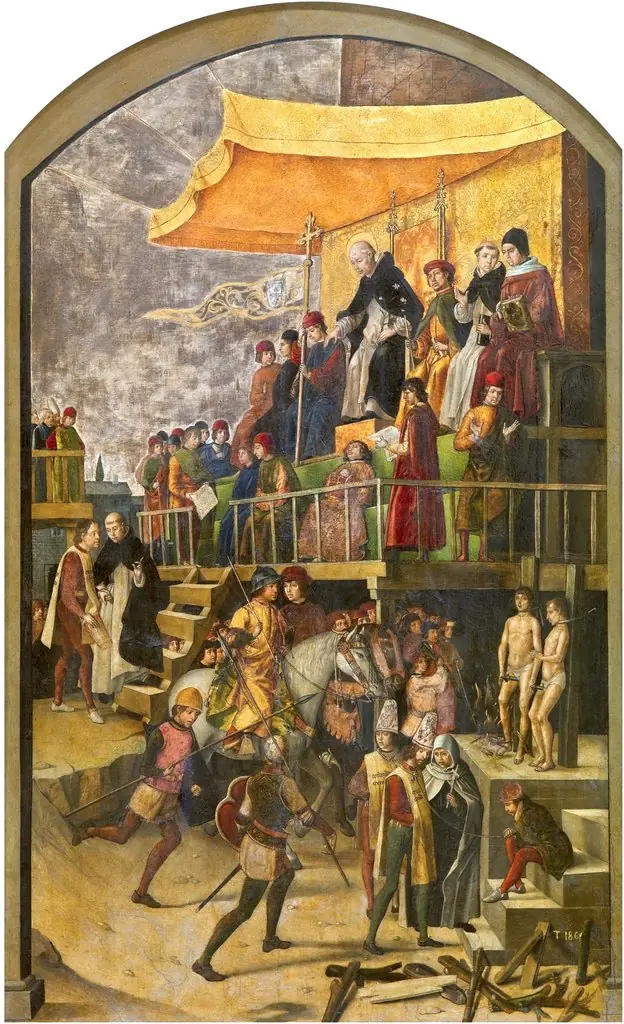
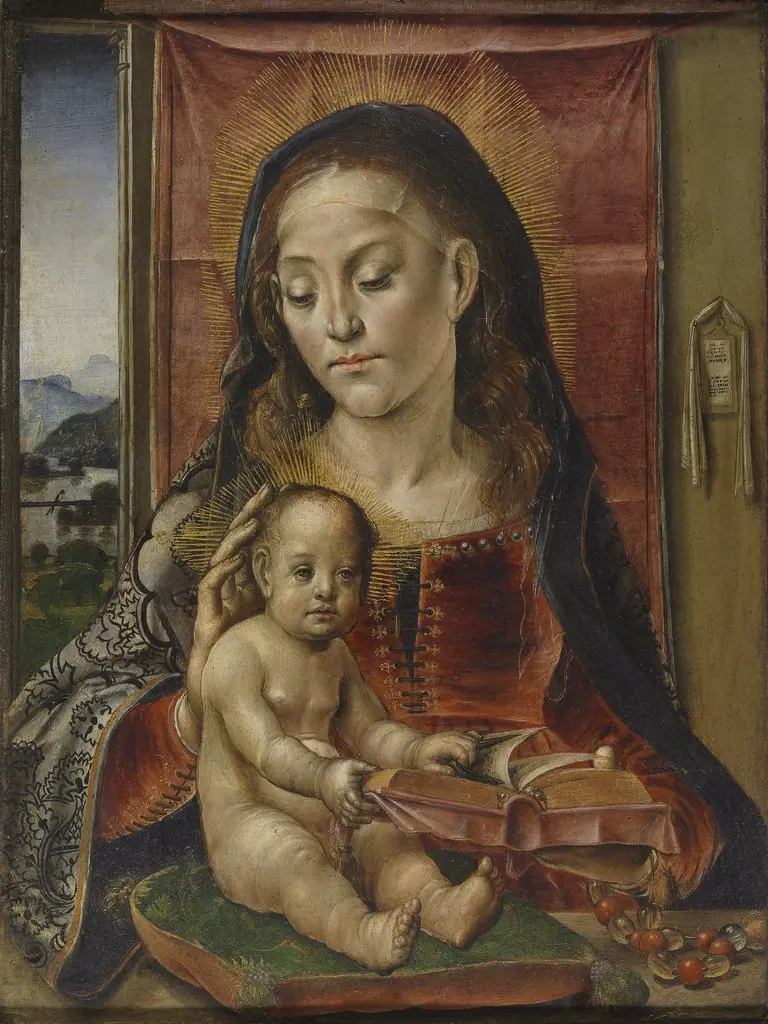
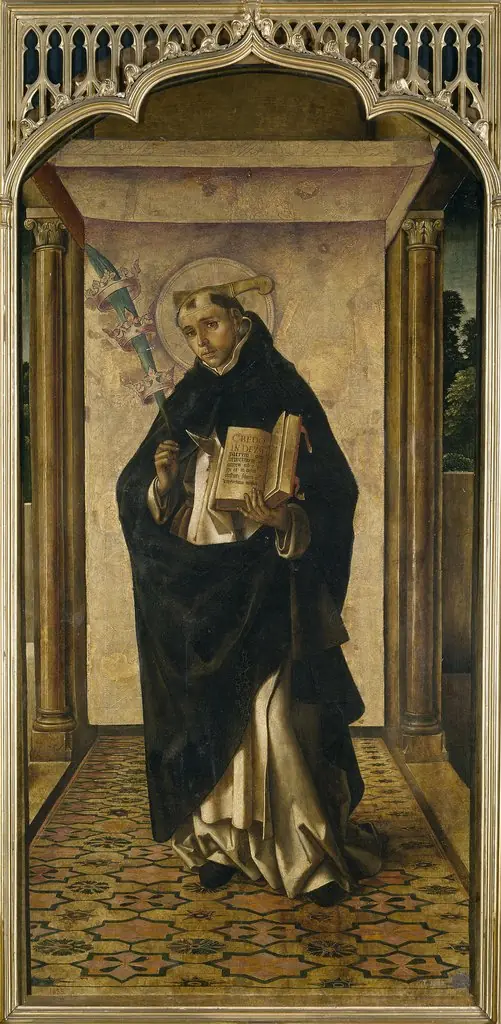
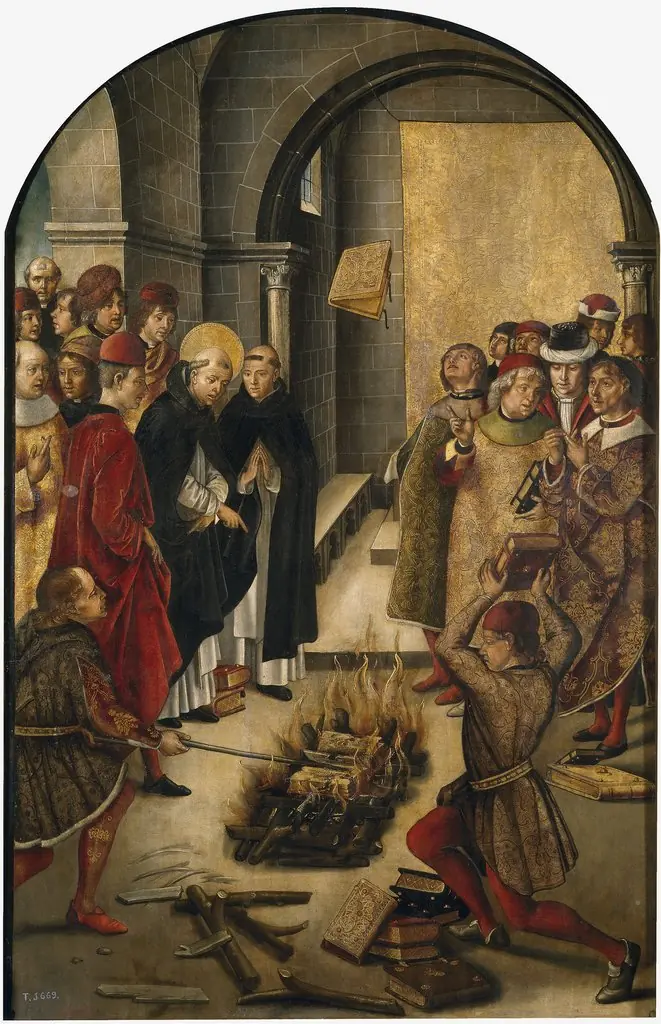
The Death of Saint Peter Martyr is an oil painting by the Early Renaissance artist Pedro Berruguete. It dates from 1497 and is held in the collection of the Museo del Prado.
About this work
Overview
Created in 1497 by the Spanish painter Pedro Berruguete, this oil on canvas portrays the violent death of Peter of Verona, a 13th‑century Dominican preacher. The work is part of the early Renaissance corpus and is currently displayed in Madrid’s Museo del Prado.
Subject & Meaning
The composition captures the moment the saint, clad in a white habit and black mantle, is struck by a crossbow while kneeling in apparent agony. An assailant in a red tunic and helmet looms above, wielding both sword and crossbow, emphasizing the martyr’s suffering and steadfast faith.
Technique & Style
Berruguete employs a pronounced chiaroscuro, contrasting illuminated figures against a darker backdrop to heighten drama. The palette of stark whites, deep reds, and muted earth tones reinforces the tension, while the careful modeling of forms gives the scene a three‑dimensional presence.
History & Provenance
Recognized as one of Spain’s earliest Renaissance artists, Berruguete produced numerous religious panels for Castilian retablos. The painting entered the Prado’s collection through the museum’s acquisition of royal and private holdings in the 19th century.
Context
The work reflects the Hispano‑Flemish synthesis characteristic of late 15th‑century Spanish art, merging Northern attention to detail with Italianate compositional balance. Its subject—Saint Peter Martyr’s martyrdom—was a popular devotional theme in the period, reinforcing the order’s ideals of sacrifice.
Artist & collection
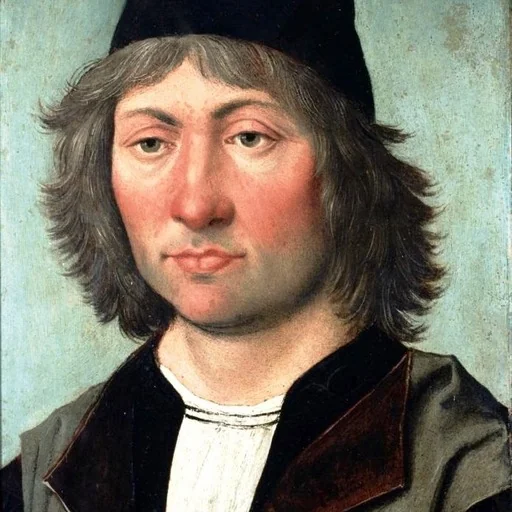
Artist
Pedro Berruguete (c. 1450 – 1504) was a Spanish painter who adopted Flemish techniques and conventions and so is part of the Hispano-Flemish style. Berruguete most famously created paintings of the first few years of…