Artwork
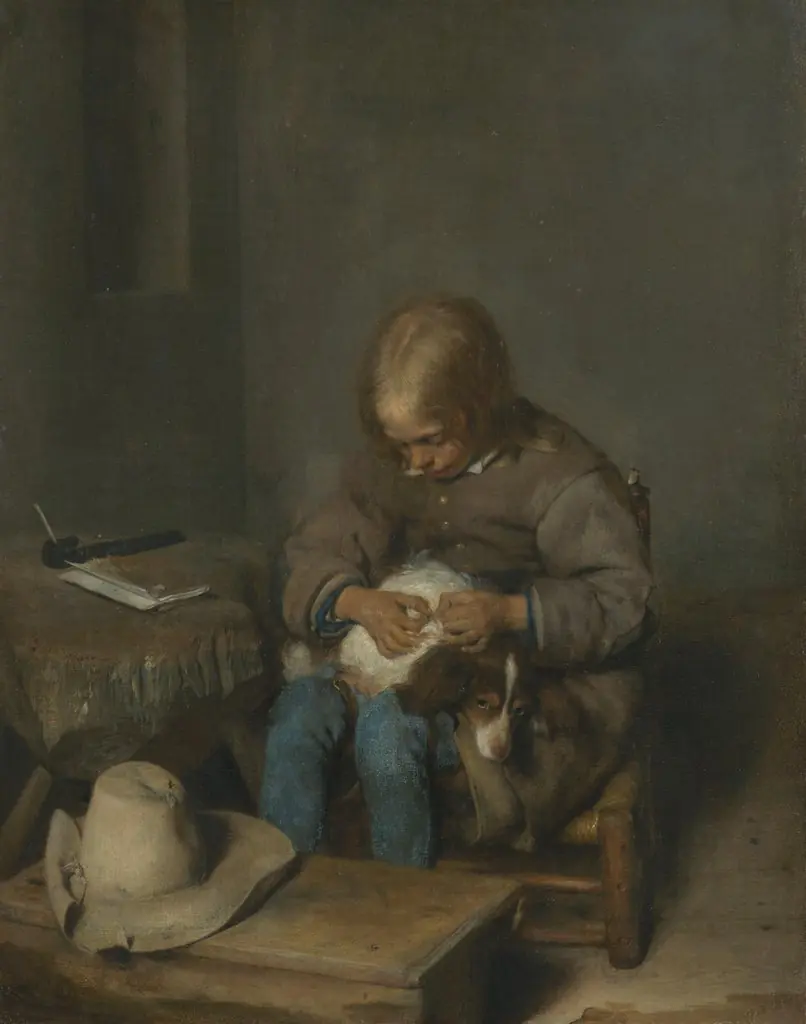
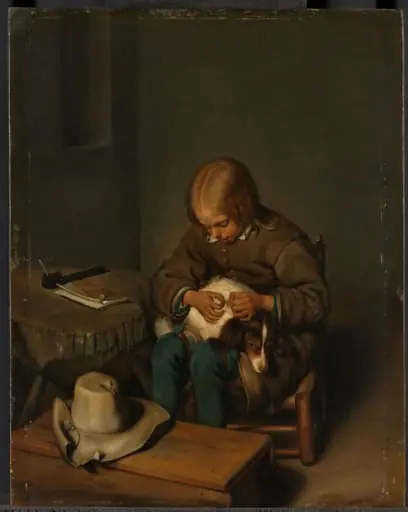
Boy Looking for Fleas on a Dog
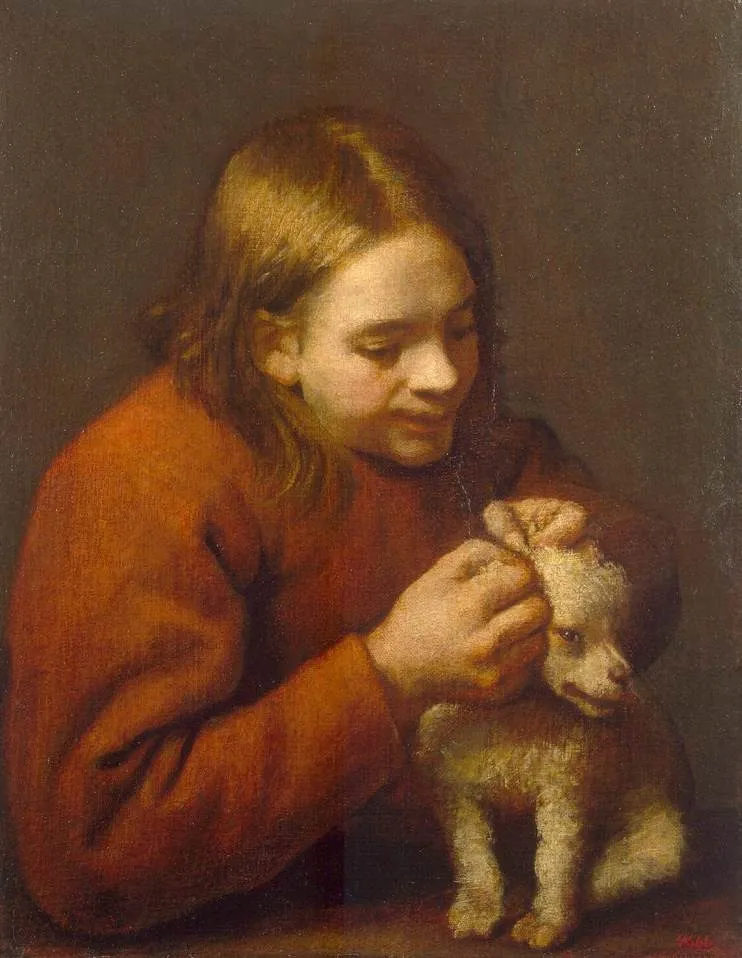
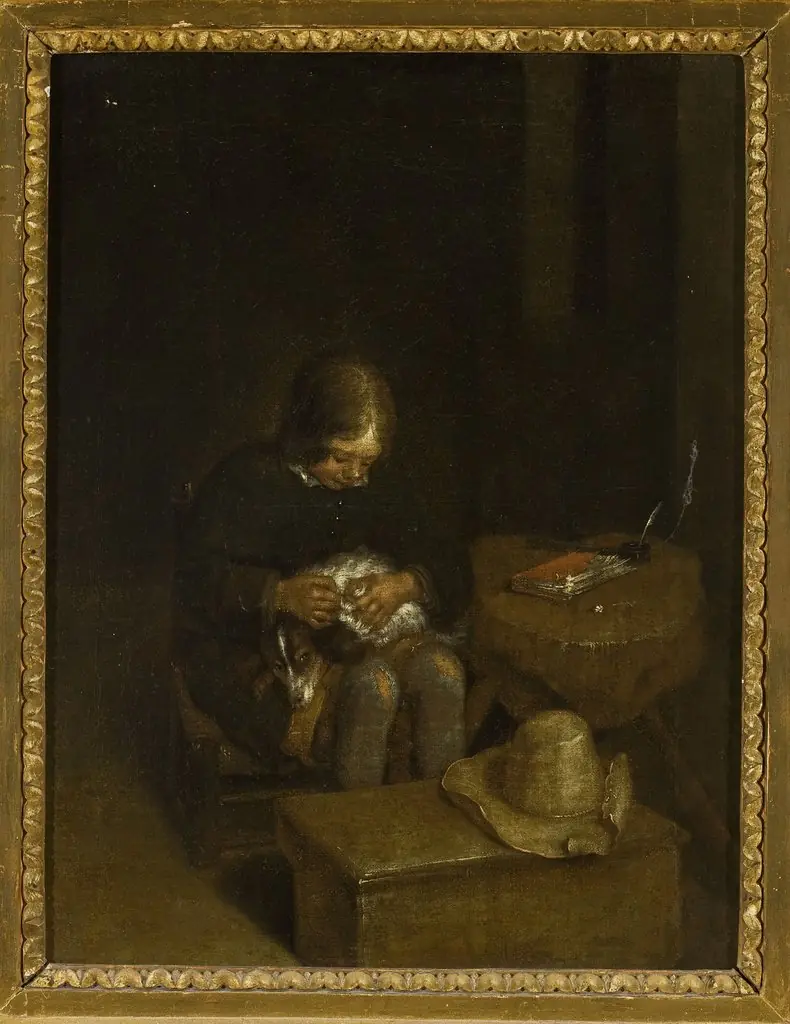
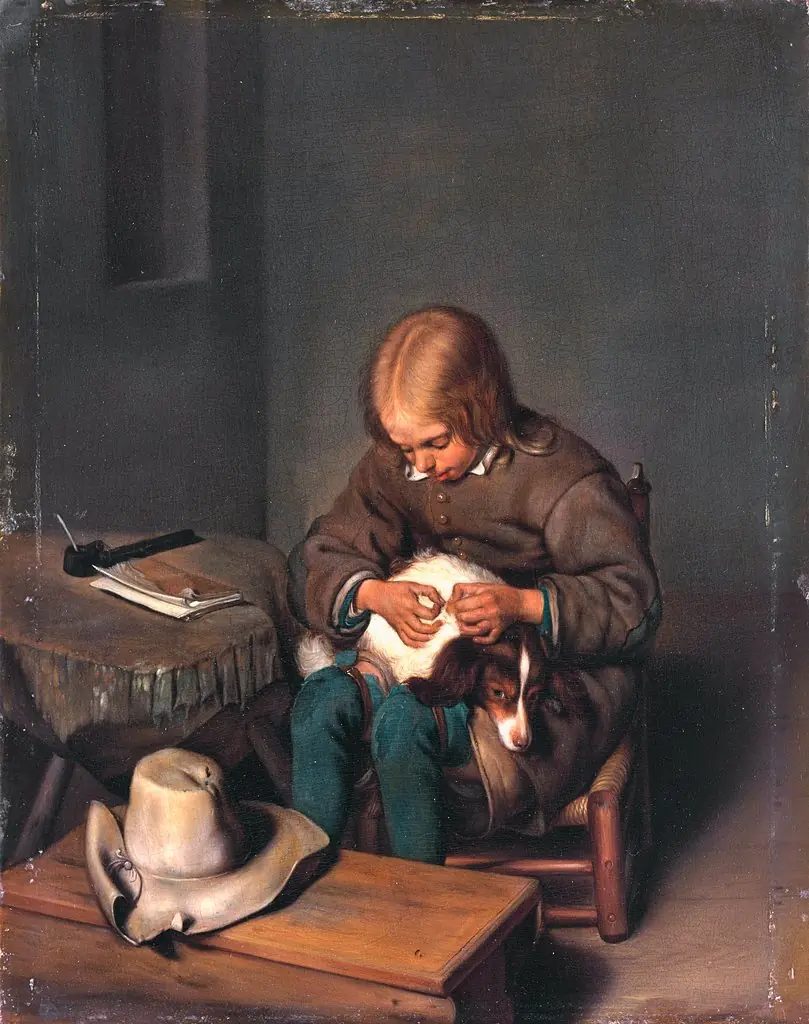
Boy Looking for Fleas on a Dog is an oil painting by the Early Baroque Italian artist Pedro Nuñez de Villavicencio. It dates from 1650 and is held in the collection of the Hermitage Museum.
About this work
Overview
Though trained in Seville under Bartolomé Esteban Murillo, Villavicencio’s style reflects broader Iberian Baroque tendencies rather than Italian movements.
Painted around 1650 by Pedro Nuñez de Villavicencio, this oil-on-canvas work captures a quiet moment between a boy and his dog. Though trained in Seville under Bartolomé Esteban Murillo, Villavicencio’s style reflects broader Iberian Baroque tendencies rather than Italian movements. The painting is now part of the State Hermitage Museum’s collection, where it stands as a modest yet precise example of genre painting from mid-17th century Spain.
Subject & Meaning
The scene portrays a young boy carefully inspecting a dog for fleas, his focus entirely on the task. There is no narrative flourish or moral allegory; the subject is ordinary, grounded in daily life. The intimacy of the gesture—hand on the dog’s head—suggests familiarity and care, not cruelty. The absence of context or symbolism invites viewers to appreciate the quiet dignity of mundane observation.
Technique & Style
Villavicencio employs a restrained chiaroscuro, using deep shadows to isolate the figures against a near-black background. The boy’s red shirt and the dog’s white-and-brown fur catch subtle light, enhancing their three-dimensionality without dramatic contrast. Brushwork is precise but unobtrusive, favoring naturalism over theatricality. The signature in red at the lower right confirms authorship without disrupting the scene’s stillness.
History & Provenance
Created during Villavicencio’s early career in Seville, the painting predates his later move to Malta and his involvement with the Order of San Juan. It remained in Spain until entering the Hermitage collection, likely through 18th-century acquisitions. No documented ownership history exists between its creation and museum acquisition, suggesting it may have passed through private hands before public institutional care.
Context
In mid-17th century Spain, genre scenes of everyday life gained traction among artists influenced by Caravaggisti and Dutch realism. Villavicencio, though trained in Murillo’s studio, avoided idealized piety in favor of unembellished observation. This work aligns with a broader trend of depicting servants, children, and animals with psychological nuance, reflecting a shift toward secular, intimate subjects in Spanish painting.
Legacy
Though Villavicencio is less known than his contemporaries, this painting endures as a quiet testament to his observational skill. It contributes to the understanding of how Spanish Baroque artists adapted realism beyond religious or aristocratic themes. The work’s preservation in a major European collection underscores its value as a representative example of provincial genre painting from a transitional period in Spanish art.
Artist & collection
Artist
Pedro Nuñez de Villavicencio (1635–1700) was a Spanish Baroque painter. He was born in Seville in 1635. He was trained by Murillo. He was named a knight of the order of San Juan. As a knight of the order, he performed…