Artwork
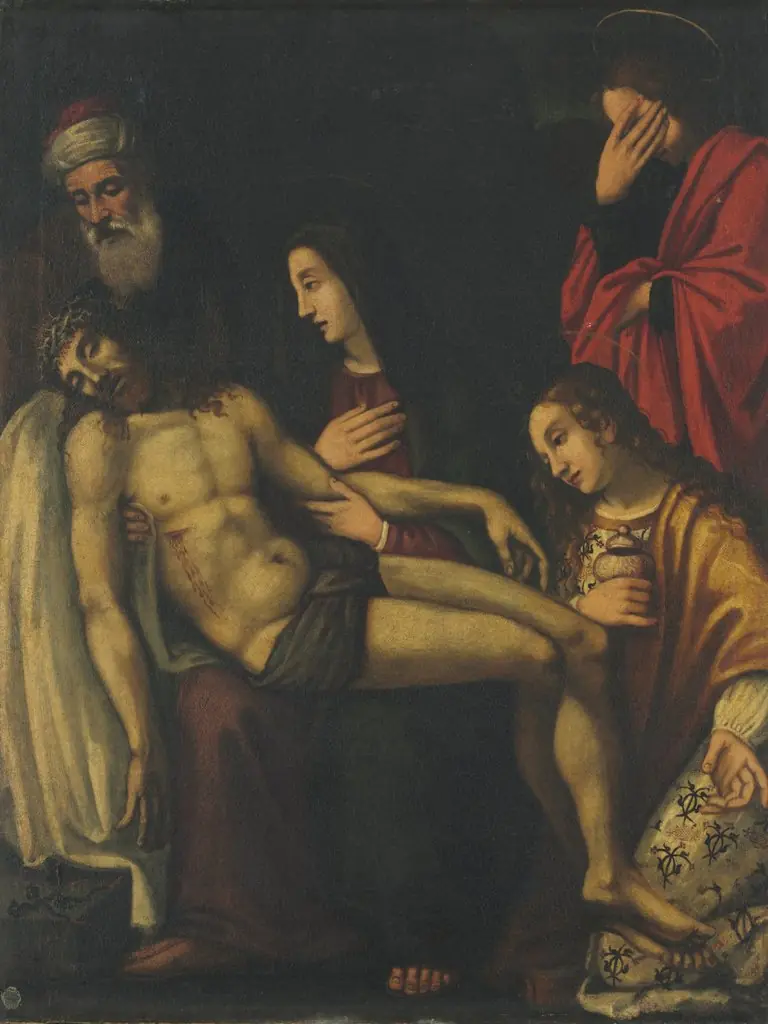
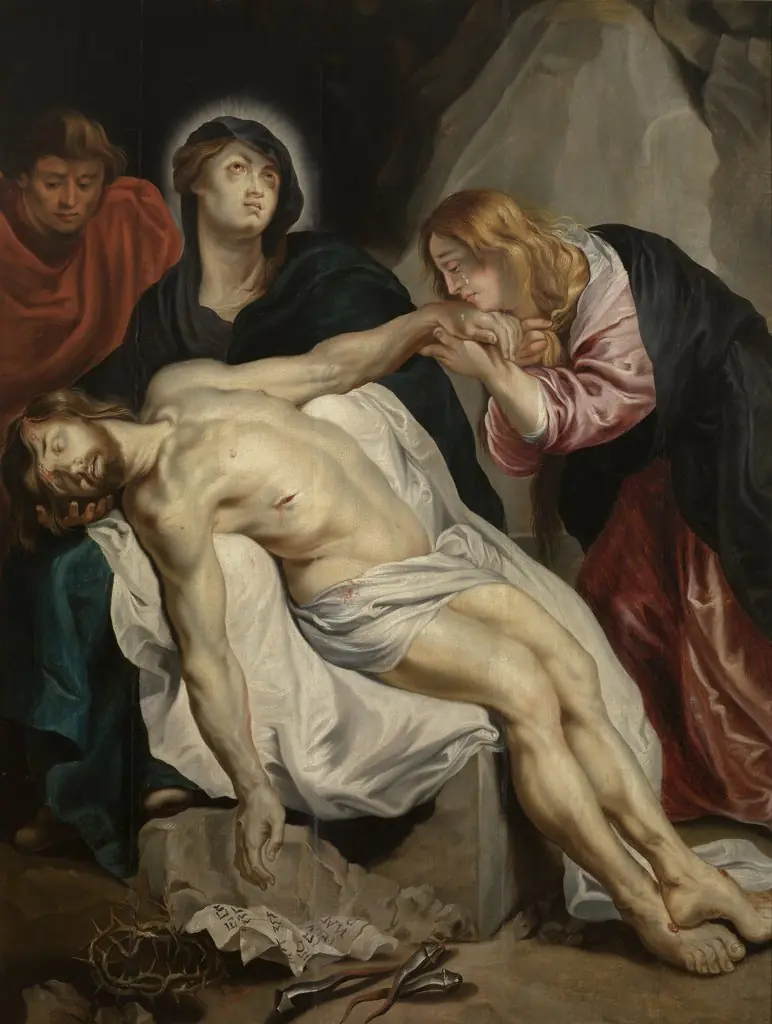
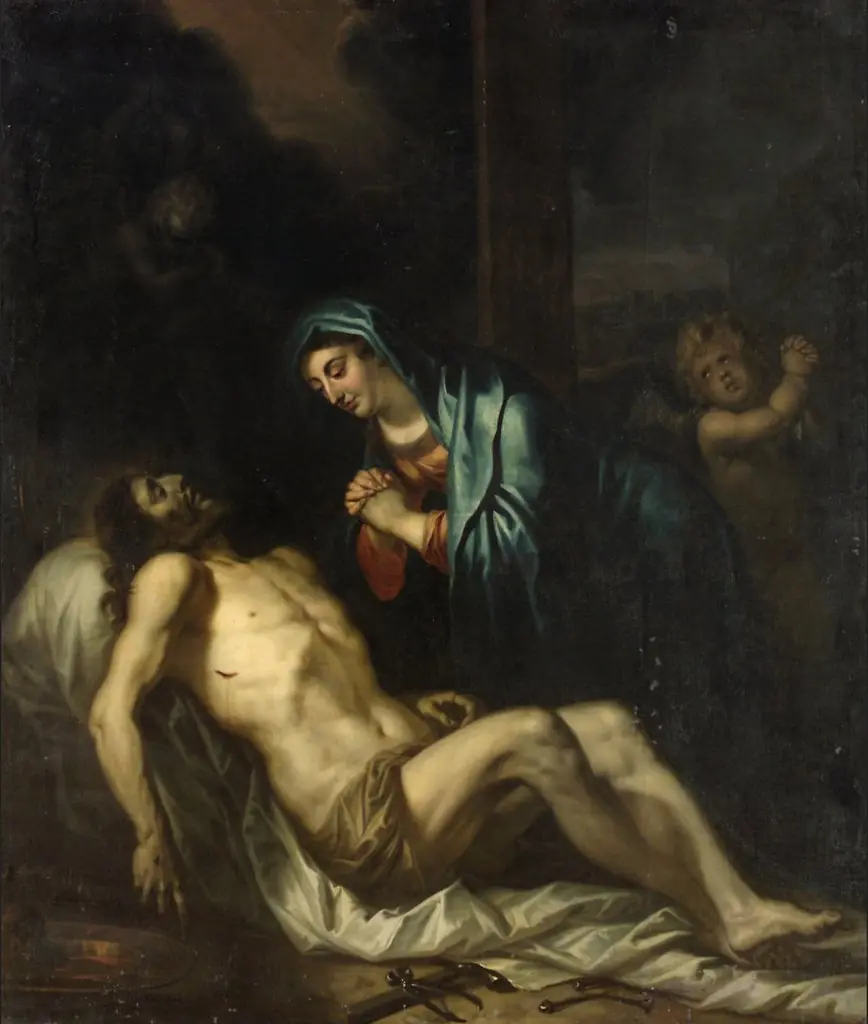
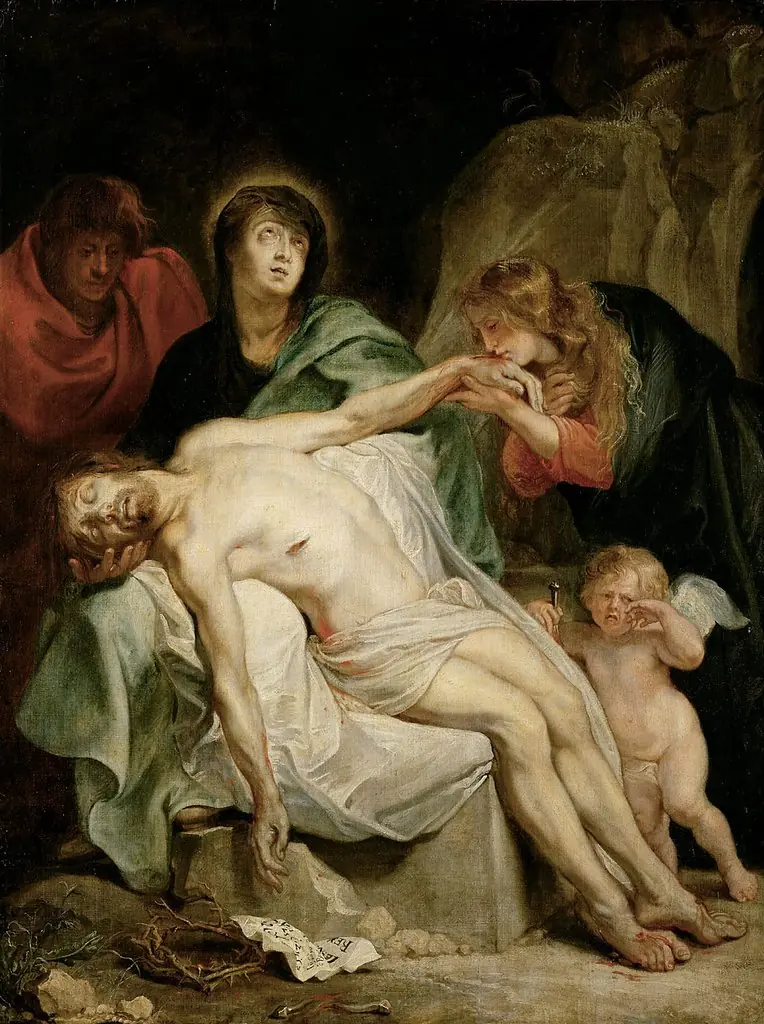
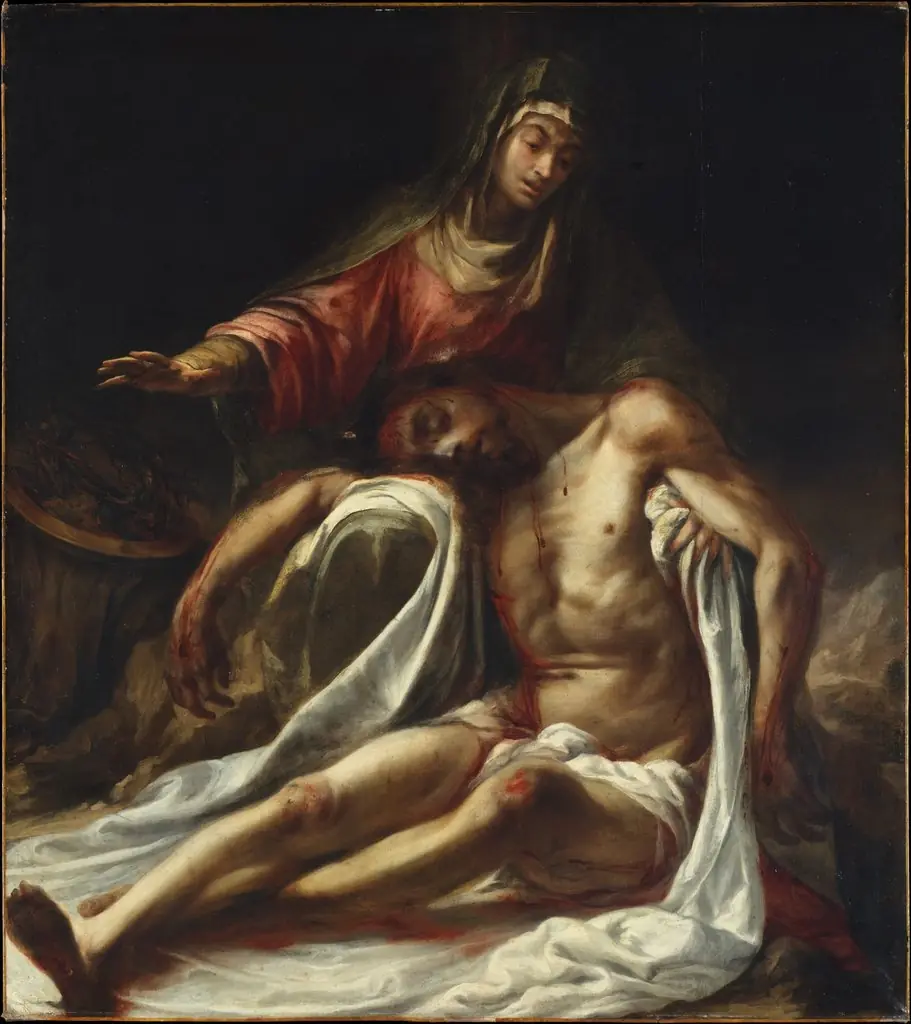
La Piedad con la Magdalena
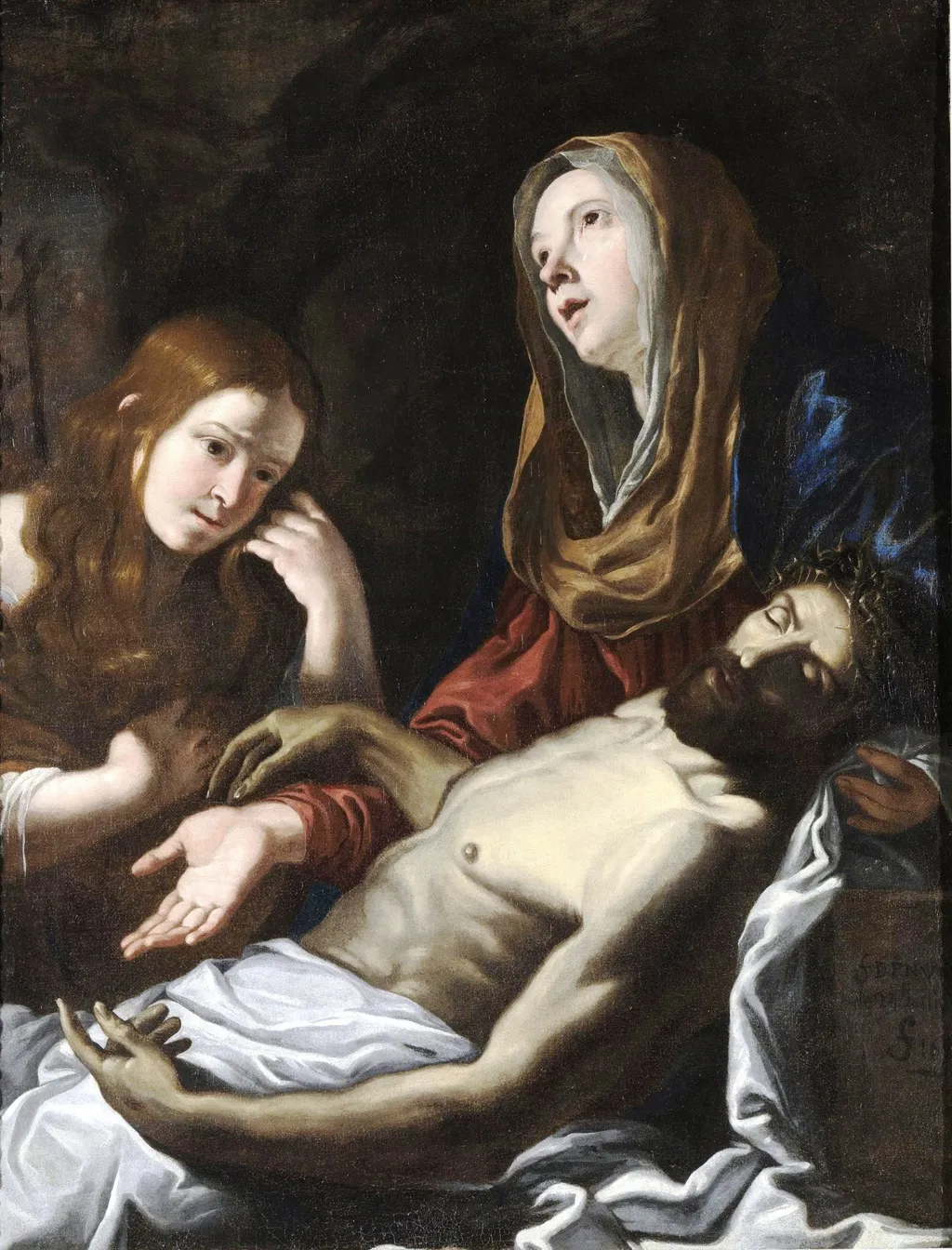
La Piedad con la Magdalena is an oil painting by the Early Baroque Italian artist Pedro Nuñez de Villavicencio. It dates from 1675 and is held in the collection of the Museo del Prado.
About this work
Overview
La Piedad con la Magdalena is a 1675 oil painting by Spanish Baroque artist Pedro Nuñez de Villavicencio, depicting a somber religious scene with three central figures set against a predominantly dark background.
Subject & Meaning
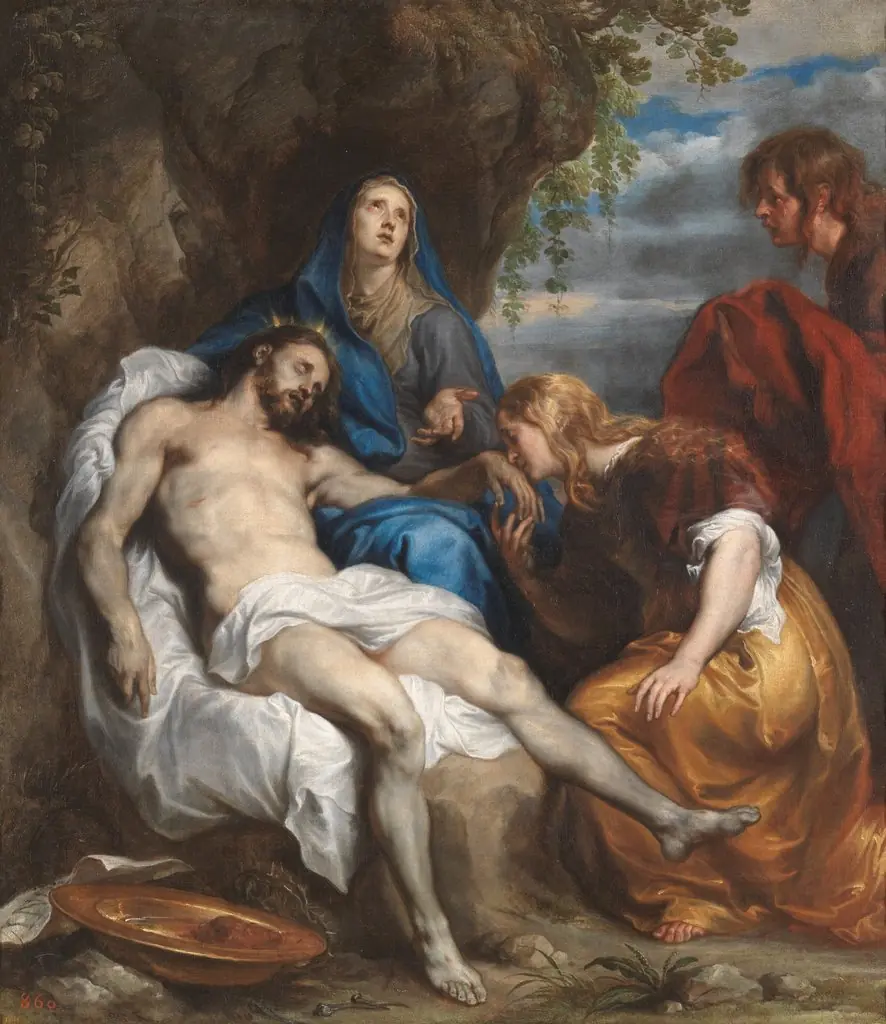
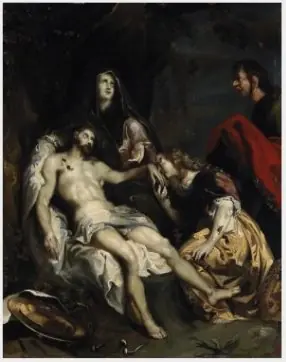
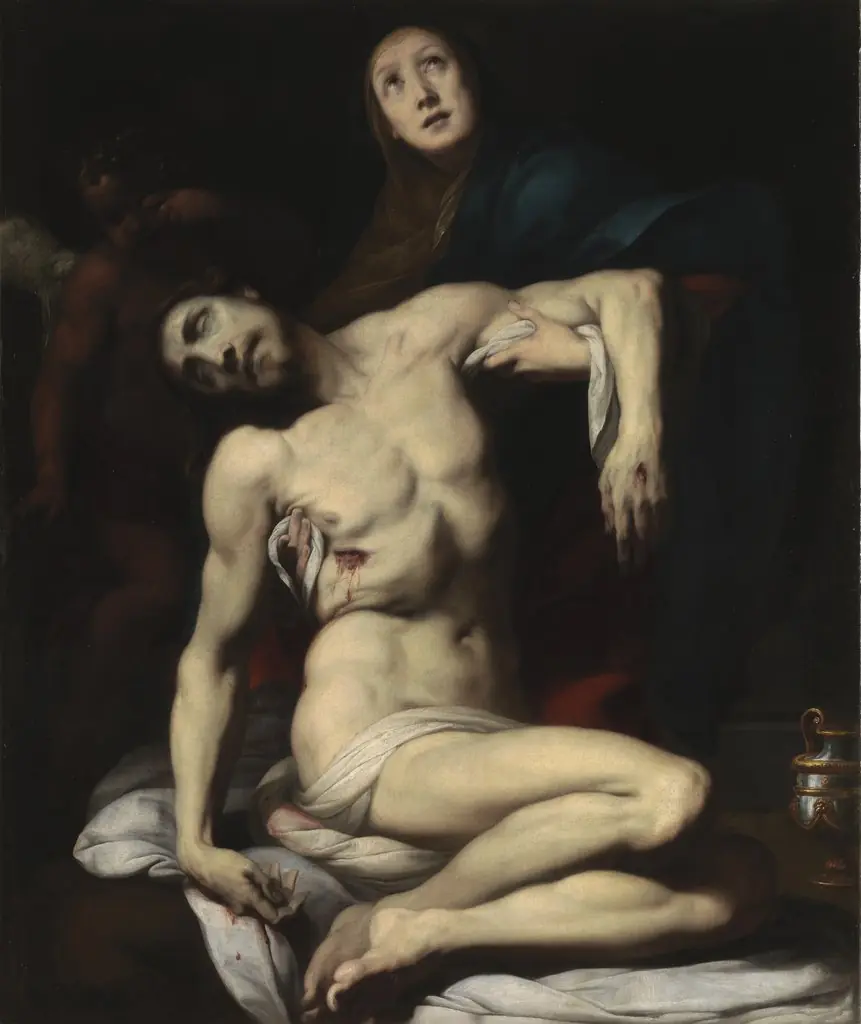
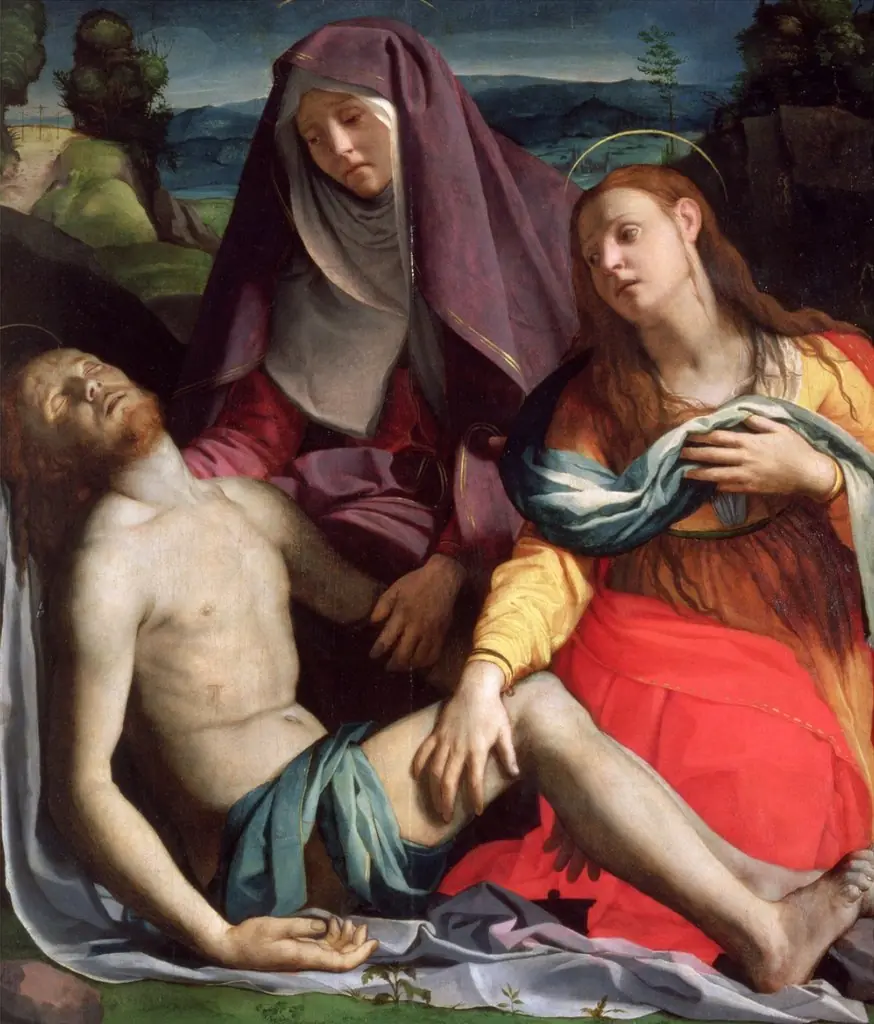
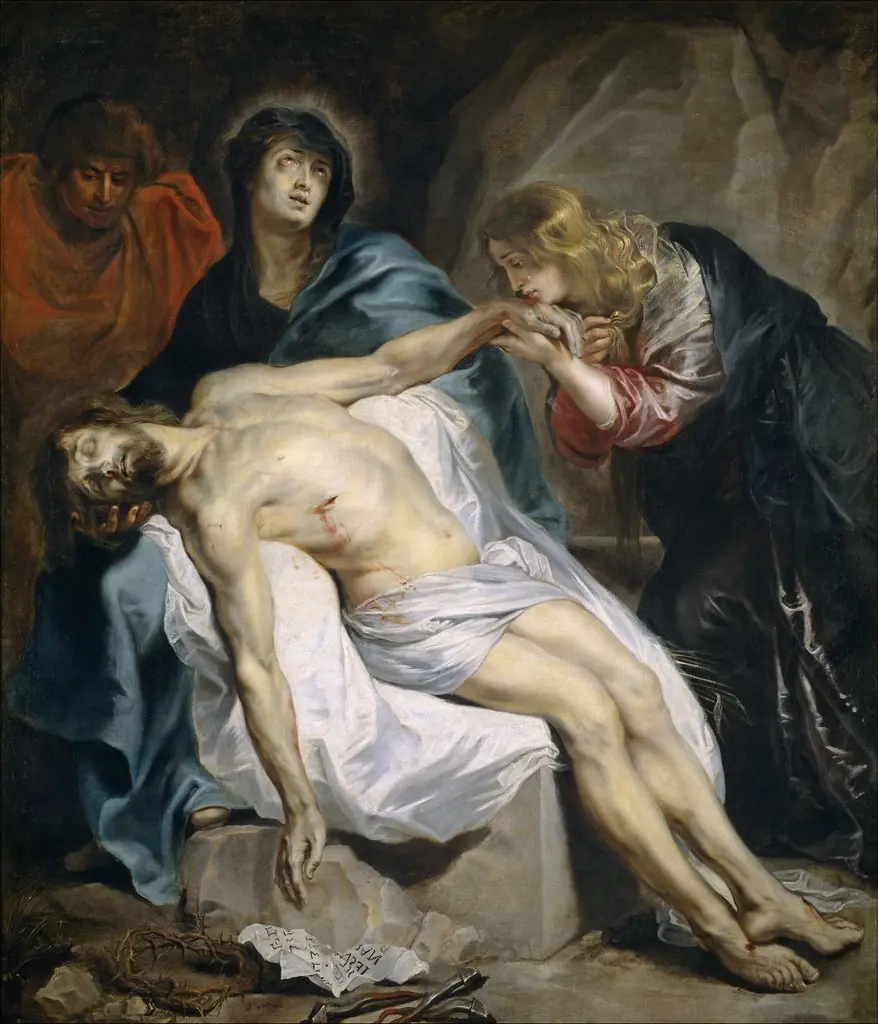
The painting portrays a poignant religious moment, featuring a woman in red (likely Mary) cradling a limp, thorn-crowned figure (Christ), while another woman in white (possibly Mary Magdalene) reaches out, and a hooded figure observes. The scene conveys emotional intensity and spiritual depth.
Technique & Style
Villavicencio employs strong chiaroscuro, contrasting light and dark to accentuate the faces and hands of the figures, enhancing dramatic realism. This technique, characteristic of the Baroque, draws the viewer’s attention to the emotional core of the scene.
History & Provenance
Created after the artist’s trip to Madrid following his mentor Murillo’s death, the painting is now part of the Museo del Prado’s collection. Villavicencio’s background includes training under Murillo and co-founding the Academia de Seville.
Context
Although attributed to the early Baroque Italian movement, the painting reflects Villavicencio’s Spanish Baroque roots, influenced by his Seville upbringing and training. His dual role as an artist and a knight of the Order of San Juan adds to the work’s historical context.
Legacy
As part of the Prado’s collection, *La Piedad con la Magdalena* contributes to the museum’s rich Baroque holdings, offering insights into Villavicencio’s contribution to Spanish art of the period, albeit with less documented impact compared to his contemporaries.
Own this work as a print
Artist & collection
Artist
Pedro Nuñez de Villavicencio (1635–1700) was a Spanish Baroque painter. He was born in Seville in 1635. He was trained by Murillo. He was named a knight of the order of San Juan. As a knight of the order, he performed…