Artwork
The Crucifixion
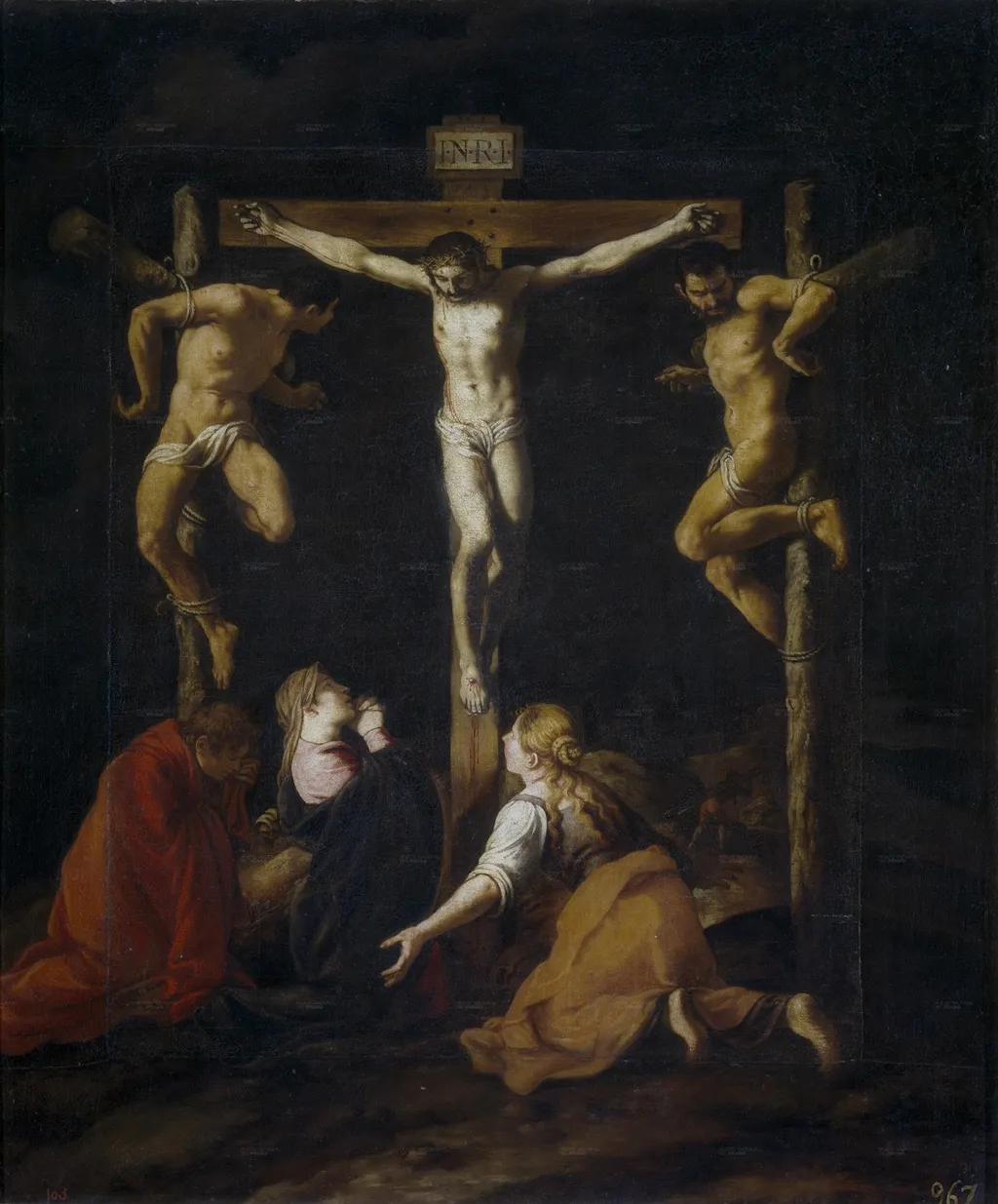
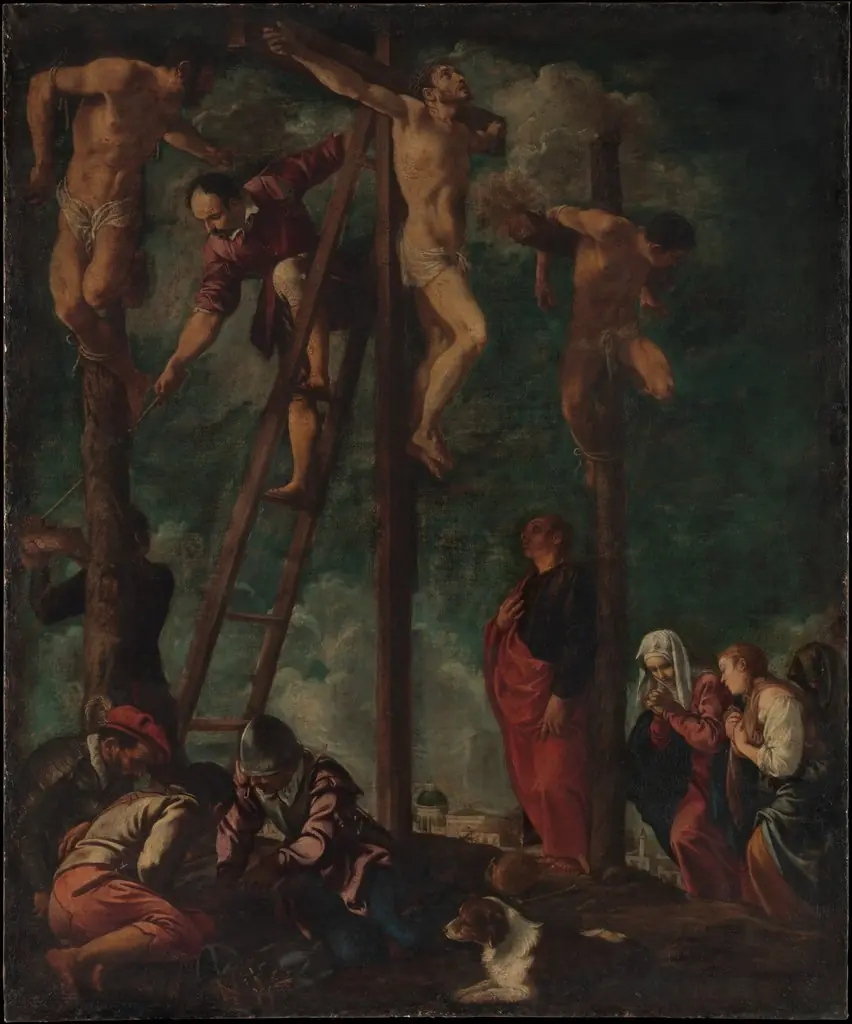
The Crucifixion is an oil painting by the Early Baroque Italian artist Pedro Orrente. It dates from 1630 and is held in the collection of the Museo del Prado.
About this work
Overview
Created in 1630, this oil painting portrays the crucifixion scene central to Christian narrative. The composition places the figure of Christ on the central cross, flanked by two other crucified men, while a gathering of onlookers occupies the foreground. The overall atmosphere is somber, underscored by a darkened background that hints at a distant landscape.
Subject & Meaning
The work visualizes the moment of Christ’s sacrifice, emphasizing human suffering through the contorted bodies of the three crucified figures, who are minimally clothed in simple loincloths. The presence of kneeling and seated observers conveys collective grief and devotion, inviting contemplation of the theological significance of redemption and the emotional weight of the Passion.
Technique & Style
Executed in oil, the painter employs chiaroscuro to generate stark contrasts between illuminated forms and deep shadow, heightening the drama of the scene. The naturalistic rendering of flesh and anatomy reflects early Baroque influences, while the careful modeling of light across the figures creates a three‑dimensional presence that enhances the painting’s realism.
History & Provenance
The canvas belongs to the collection of Madrid’s Museo del Prado, where it has been displayed as part of the institution’s holdings of 17th‑century Spanish art. Its creation is attributed to Pedro Orrente, a figure noted for introducing a more lifelike, naturalistic approach to Spanish painting during the early Baroque period.
Own this work as a print
Artist & collection
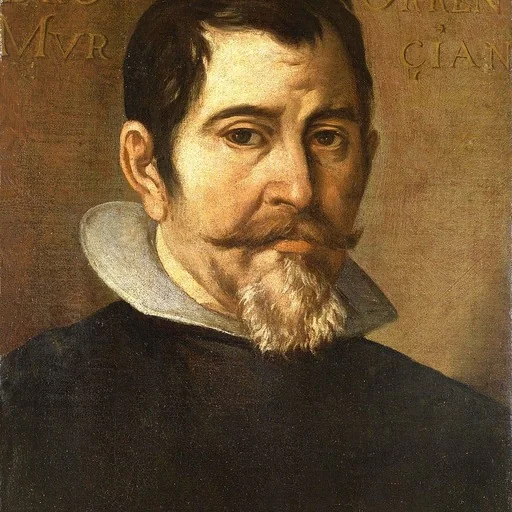
Artist
Pedro de Orrente (April 1580 – 19 January 1645) was a Spanish painter of the early Baroque period. He became one of the first artists in that part of Spain to paint in a Naturalistic style.