Artwork
Medea Returning the Penates to Jason
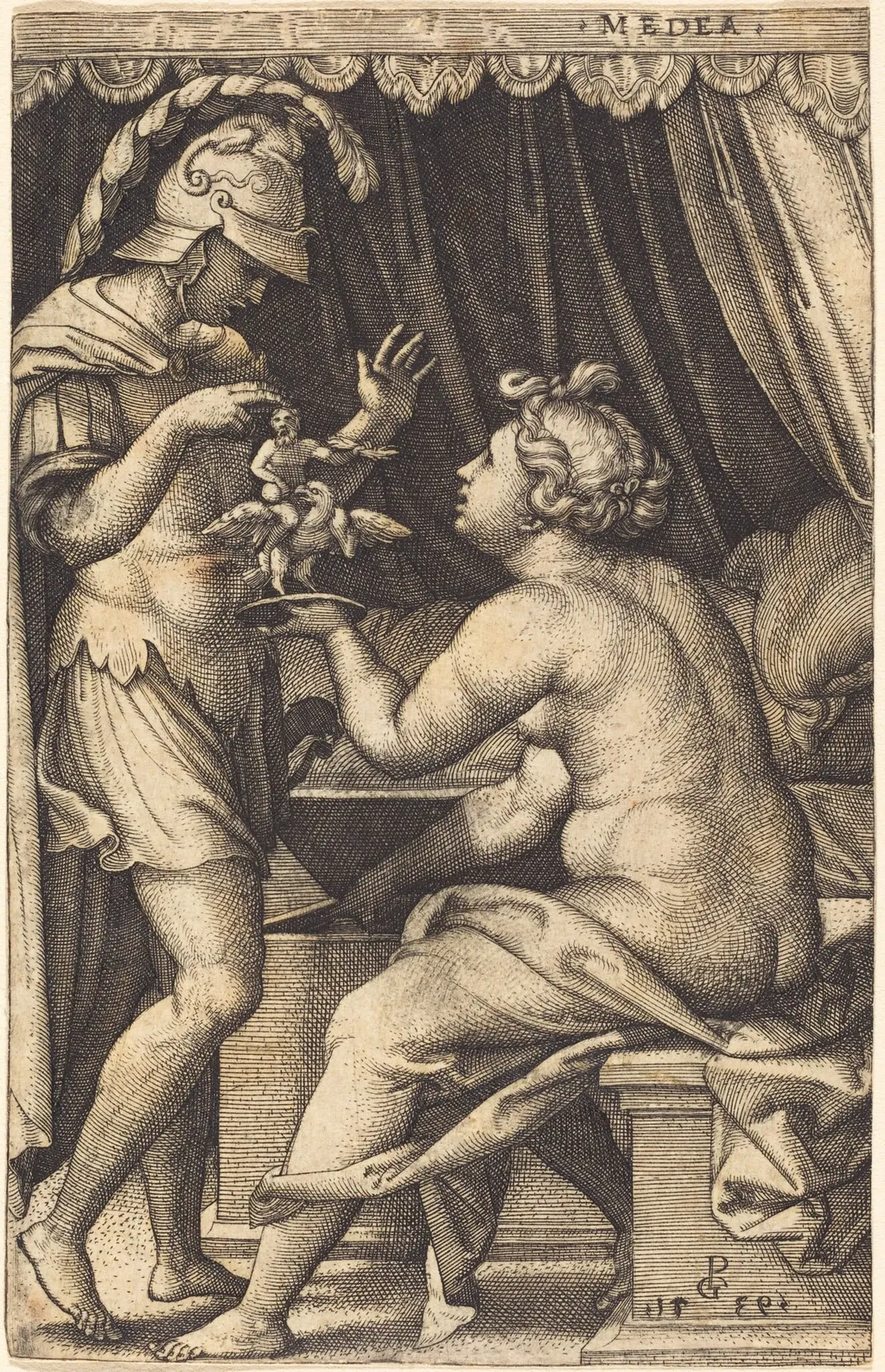
Medea Returning the Penates to Jason is an ink print by the Renaissance artist Georg Pencz. It dates from 1525 and is held in the collection of the National Gallery of Art.
About this work
Overview
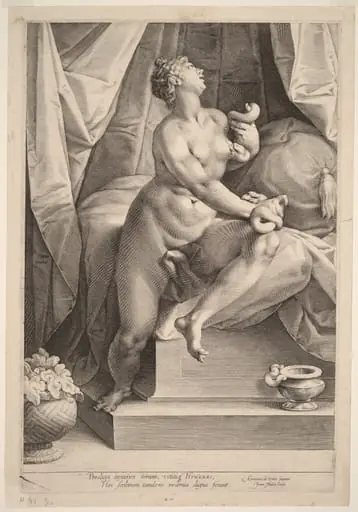
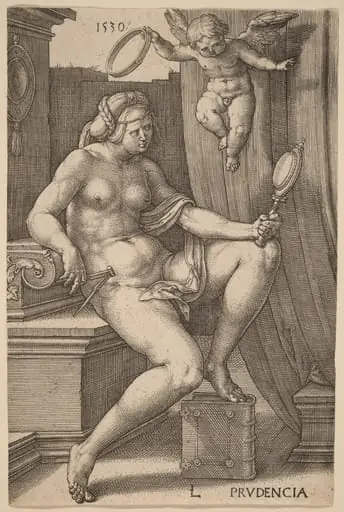
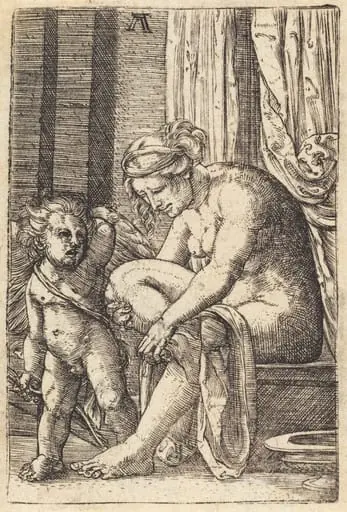
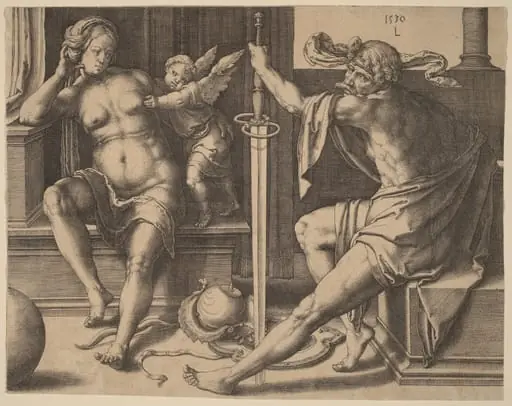
Georg Pencz’s 1525 engraving, titled *Medea Returning the Penates to Jason*, presents a compact, densely worked scene in which the mythic sorceress Medea is shown kneeling, clutching a child and reaching for a small box. The composition is framed by swirling ornamental motifs that heighten the tension, while a snake coils around her arm, adding a note of danger to the domestic tableau.
Subject & Meaning
The image draws on Ovid’s *Metamorphoses*, illustrating the moment when Medea returns the household gods—penates—to her husband Jason, a gesture that underscores themes of loyalty, betrayal, and the complex bonds of marriage in classical mythology. The presence of multiple children and the serpent suggest both familial responsibility and the underlying threat of Medea’s volatile nature.
Technique & Style
Executed with fine, cross‑hatching lines, the engraving achieves subtle gradations of shadow and texture, characteristic of the Northern Renaissance’s attention to detail. Pencz’s training under Albrecht Dürer is evident in the precise rendering of figures, while the ornamental swirl surrounding the scene reflects the influence of Venetian decorative motifs he encountered during his Italian journeys.
History & Provenance
Pencz, a German artist active in Nuremberg, produced this print shortly before his imprisonment in 1525 for religious dissent, an event he shared with the Beham brothers. The work likely circulated among the city’s print‑making networks, aligning with the broader diffusion of mythological subjects in early sixteenth‑century German engraving.
Context
The early 1520s were marked by religious turmoil and a flourishing of humanist scholarship in the Holy Roman Empire. Within this climate, Pencz’s choice of a classical narrative reflects the period’s fascination with antiquity, while his technical approach demonstrates the cross‑regional exchange between German and Italian artistic practices.
Artist & collection
Artist
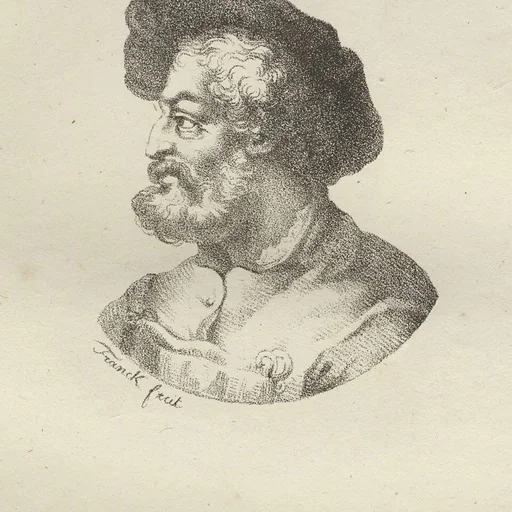
Georg Pencz (c. 1500 – 11 October 1550) was a German engraver, painter and printmaker. Pencz was probably born in Westheim near Bad Windsheim/Franconia. He travelled to Nuremberg in 1523 and joined Albrecht Dürer’s…