Artwork
Pygmalion and Galatea
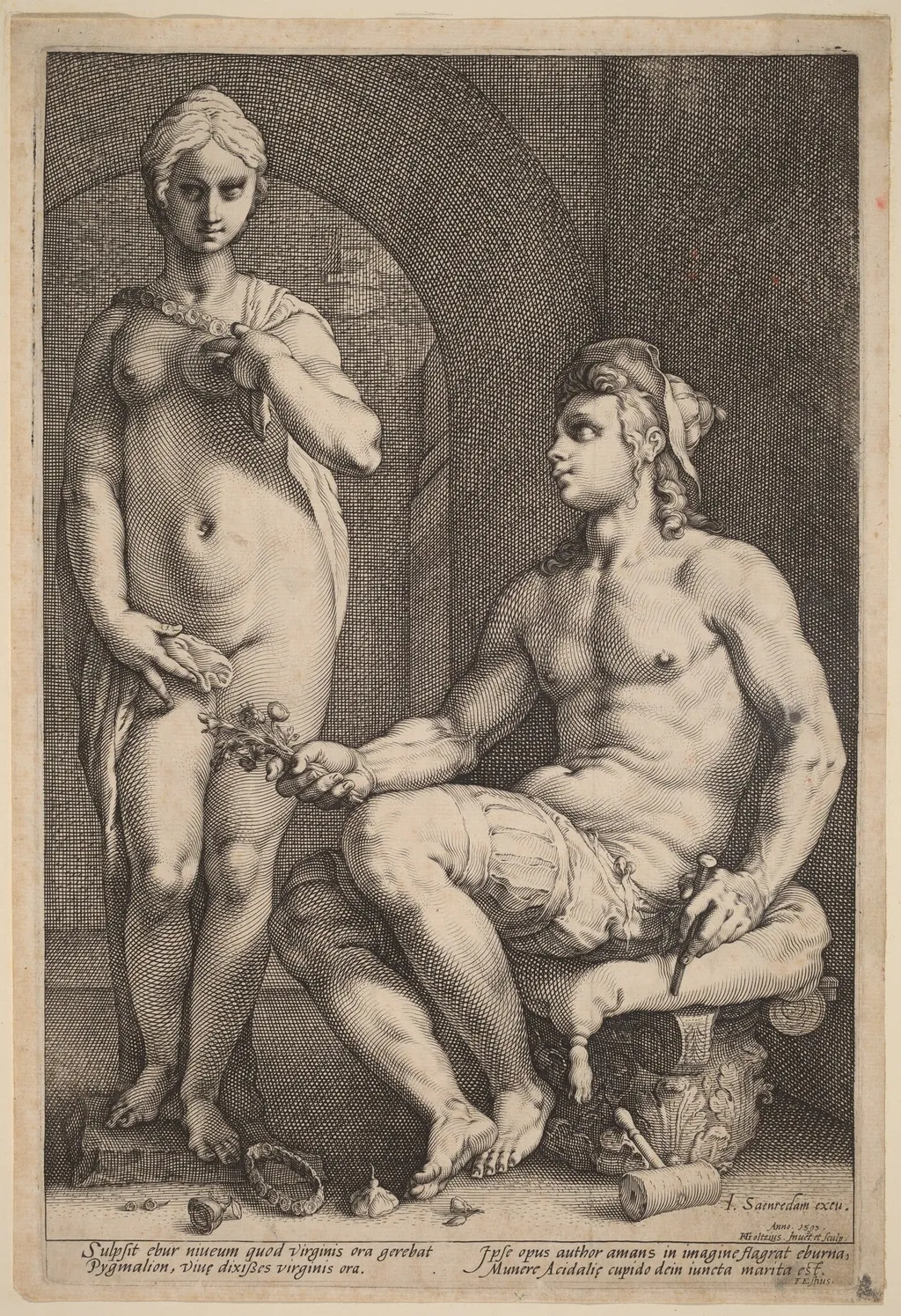
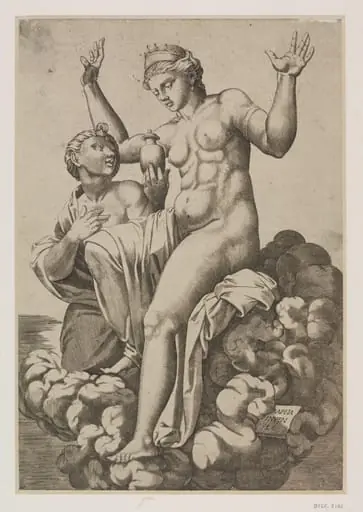
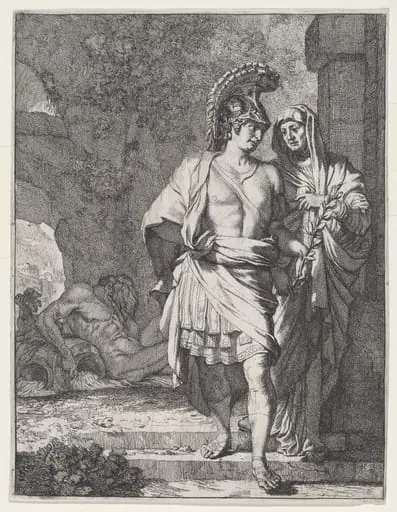
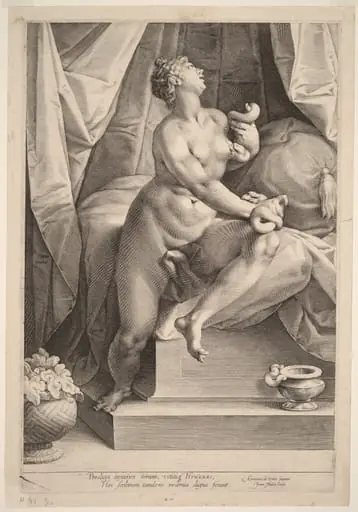
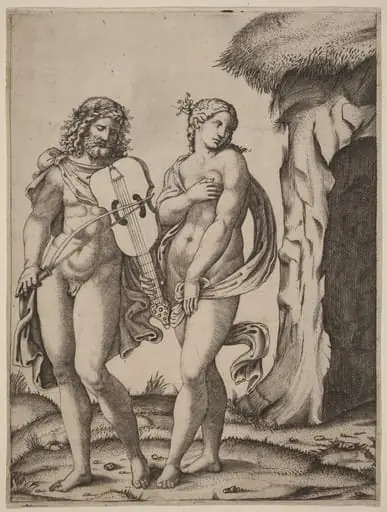
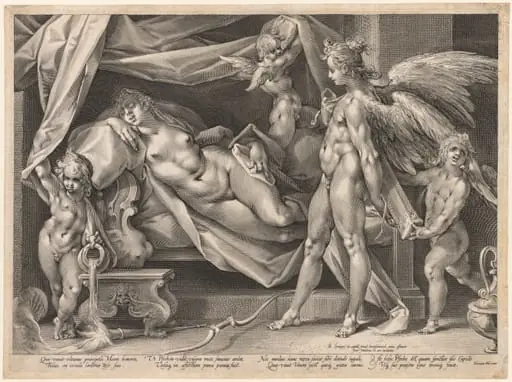
Pygmalion and Galatea is an ink print by the Renaissance artist Hendrik Goltzius. It dates from 1593 and is held in the collection of the National Gallery of Art. Created in 1593, this engraving by Hendrick Goltzius captures a moment from Ovid’s Metamorphoses.
About this work
Overview
Executed on laid paper, the work exemplifies the precision and intricate line work characteristic of Northern Mannerist printmaking.
Created in 1593, this engraving by Hendrick Goltzius captures a moment from Ovid’s Metamorphoses. Executed on laid paper, the work exemplifies the precision and intricate line work characteristic of Northern Mannerist printmaking. Goltzius, a Dutch artist of German origin, was celebrated for his ability to translate complex narratives into detailed monochrome compositions, elevating engraving as a serious artistic medium.
Subject & Meaning
The scene illustrates the myth of Pygmalion, a sculptor who falls in love with a statue he carved, which is then animated by Venus. Here, Pygmalion holds a chisel and flowers, suggesting both his artistic labor and the gift of life. Galatea, still partially stone-like, gazes downward, caught between inert matter and awakening consciousness. The moment reflects themes of creation, desire, and divine intervention.
Technique & Style
Goltzius employed fine, controlled engraving lines to render texture and volume, from the roughness of stone to the softness of fabric and skin. The dark background isolates the figures, heightening their sculptural presence. His use of cross-hatching and varied line weight creates depth without color, demonstrating mastery over the medium’s limitations while emphasizing anatomical detail and emotional stillness.
History & Provenance
Produced during Goltzius’s mature period, the print was part of a broader interest in classical mythology among Northern European artists. It circulated widely through print networks, influencing other engravers and collectors. While its early ownership is undocumented, its survival in multiple institutional collections attests to its enduring reputation among connoisseurs of Renaissance and Mannerist print culture.
Context
This work emerged in a period when Dutch artists were reinterpreting classical myths through a humanist lens, often blending academic ideals with emotional nuance. Goltzius’s engagement with Italian Renaissance models, combined with his northern attention to detail, positioned him as a bridge between southern antiquity and northern craftsmanship. The print reflects both scholarly interest in Ovid and the era’s fascination with art’s power to transcend material form.
Legacy
Goltzius’s engraving influenced later generations of printmakers through its technical rigor and narrative clarity. It contributed to the canon of mythological prints in early modern Europe and remains a reference for studies of artistic creation and transformation. Its restrained palette and focused composition continue to inform discussions on how line and texture can convey psychological depth in monochrome art.
Artist & collection
Artist
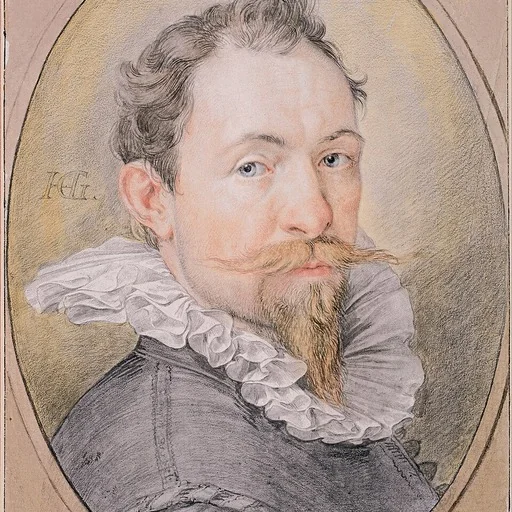
Hendrick Goltzius (German: , Dutch: ; né Goltz; January or February 1558 – 1 January 1617) was a German-born Dutch printmaker, draftsman, and painter.