Artwork
Going to Market
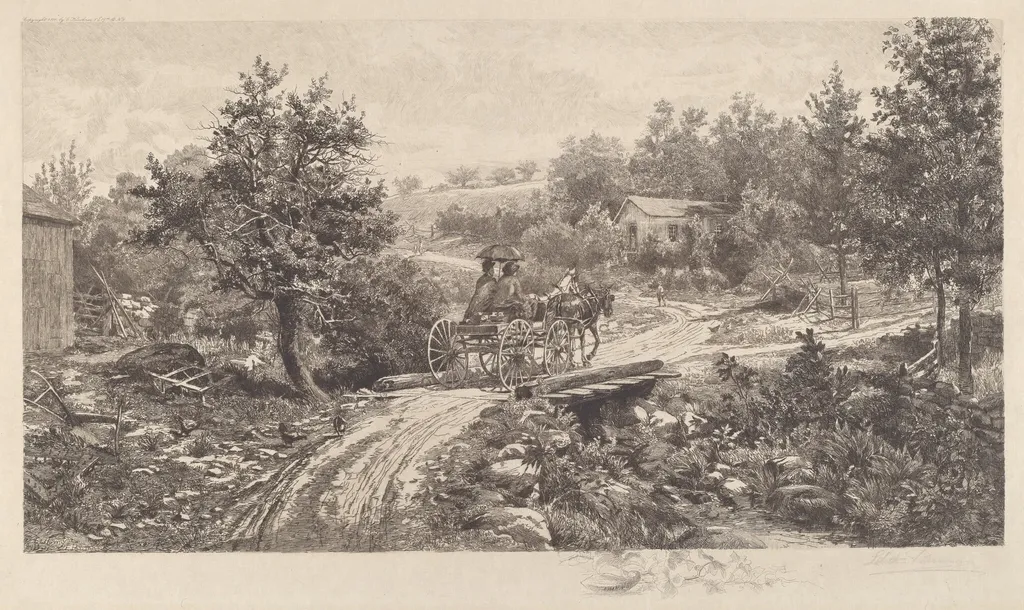
Going to Market is an ink print by the Impressionist artist Edith Penman. It dates from 1889 and is held in the collection of the National Gallery of Art.
About this work
Overview
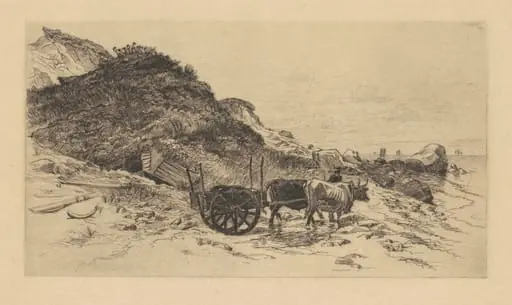
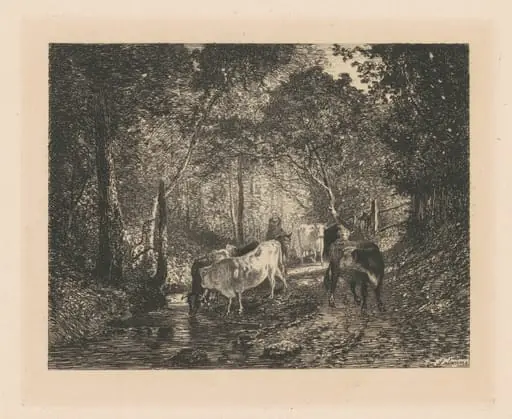
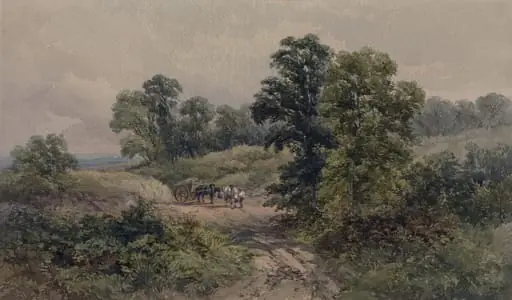
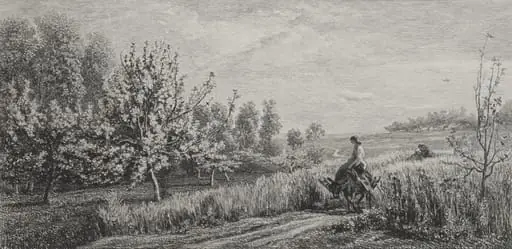
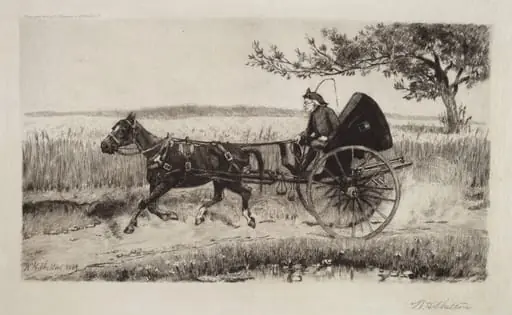
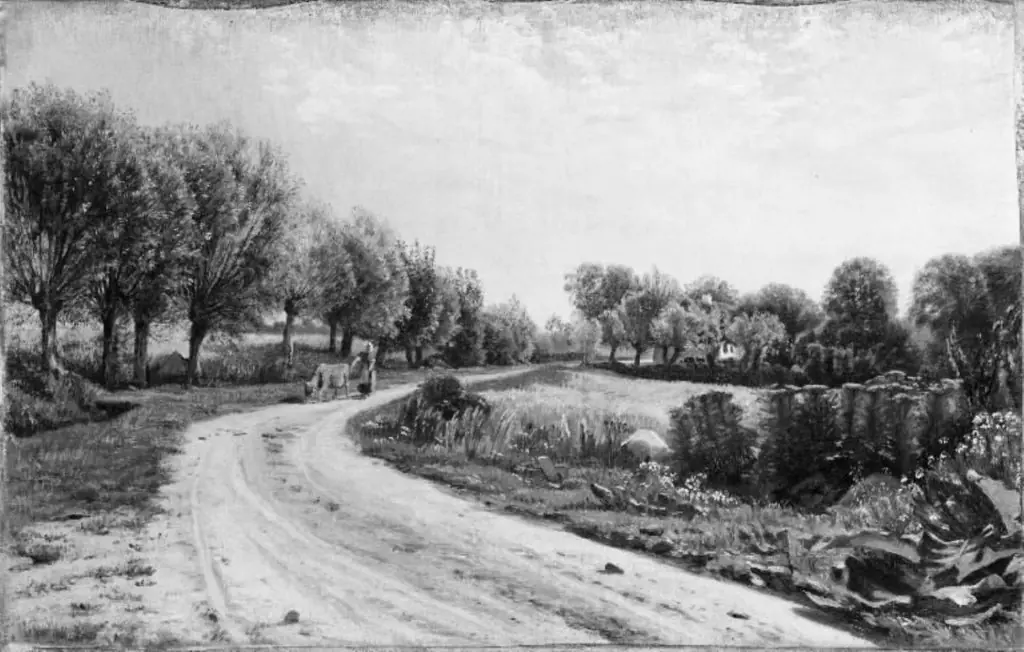
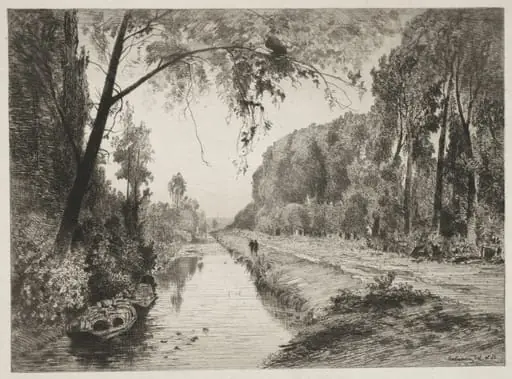
Going to Market is an 1889 etching by American artist Edith Penman. Executed as a print, the work portrays a tranquil rural scene rendered in monochrome. The composition centers on a horse‑drawn wagon traveling along a gently curving lane, framed by trees, a modest stream and distant structures, evoking the pace of nineteenth‑century country life.
Subject & Meaning
The image captures a moment of everyday travel, with two figures seated in the wagon as they move through a wooded landscape. The quiet atmosphere, highlighted by the soft flow of the stream and the low fence, suggests a leisurely journey rather than a hurried passage, reflecting a nostalgic view of agrarian routine.
Technique & Style
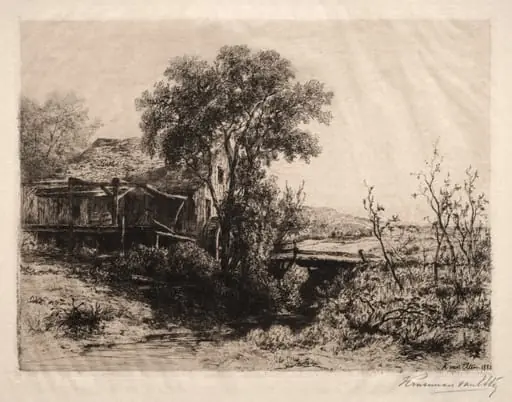
Penman employed the traditional etching process, incising fine lines into a copper plate to render texture and depth. Delicate cross‑hatching defines the bark of trees and the uneven ground, while broader strokes suggest the water’s surface. The restrained tonal range and precise line work create a clear, detailed representation characteristic of late‑nineteenth‑century printmaking.
Context
Created during a period when American artists increasingly documented rural environments, the print aligns with contemporary interests in regionalism and the romanticization of pastoral life. As a work by a female printmaker of the era, it also contributes to the broader narrative of women’s expanding participation in the visual arts of the late 1800s.
Artist & collection