Artwork
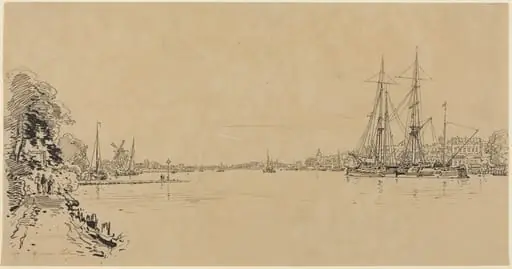
Canal at Pont Sainte-Maxence
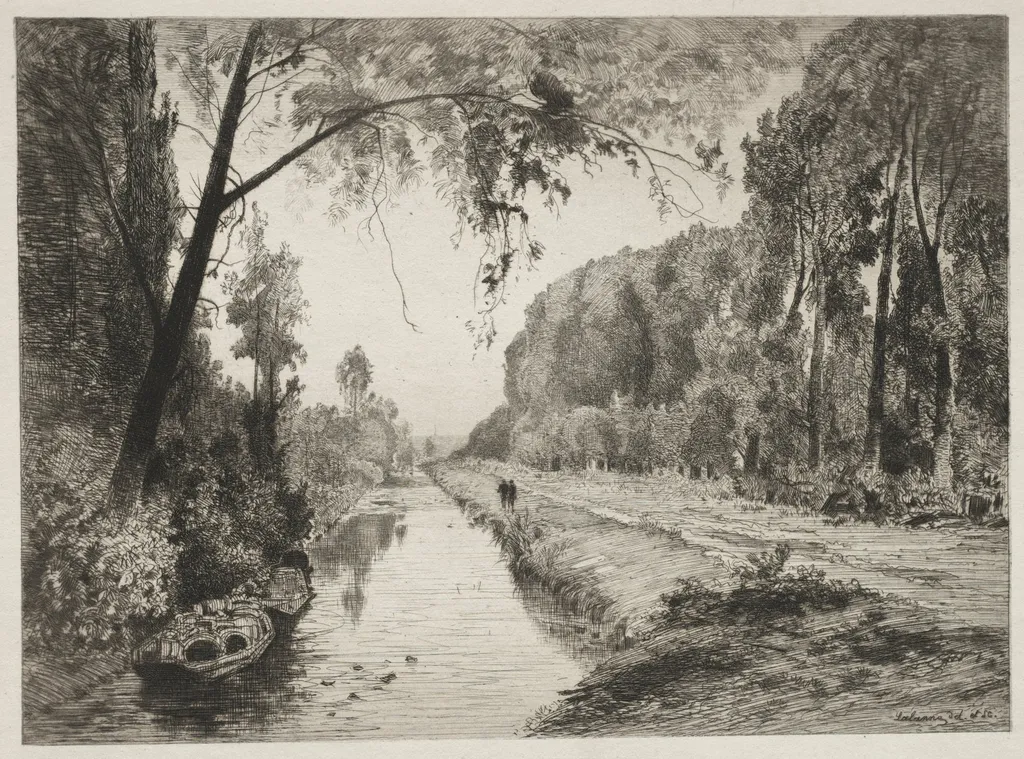
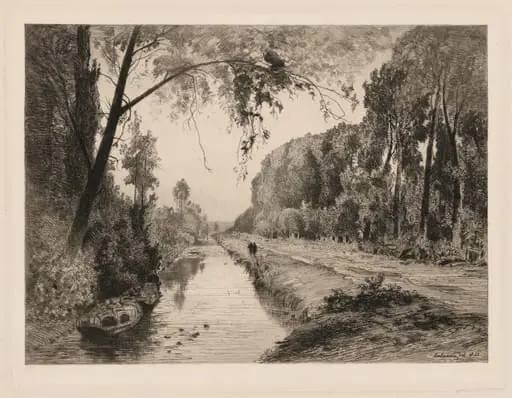
Canal at Pont Sainte-Maxence is a print by the Impressionist artist Maxime Lalanne. It dates from 1878 and is held in the collection of the Cleveland Museum of Art.
About this work
This painting shows a quiet canal near Pont Sainte-Maxence with old stone buildings along the bank.
This painting shows a quiet canal near Pont Sainte-Maxence with old stone buildings along the bank. The water is still, reflecting muted colors of the sky and shore. A few rowboats drift near the edge.
Lalanne made his name by reviving etching in France. He helped start a group in 1862 that pushed artists to treat prints like serious art. This scene feels like one of his prints, not a busy painting.
If you like this, check out the Etching Society’s work at The Cleveland Museum of Art.
Overview
This print by Félix Bracquemond Lalanne captures a tranquil stretch of the canal near Pont Sainte-Maxence, rendered in the quiet precision of etching. Unlike painted landscapes, it relies on fine lines and tonal gradations to suggest stillness and atmosphere. Lalanne’s focus on modest, everyday scenes aligned with his broader effort to elevate printmaking as a serious artistic medium in mid-19th-century France.
Subject & Meaning
The scene depicts a quiet waterway bordered by weathered stone structures, with a few rowboats resting near the shore. There is no human activity, no narrative thrust—only the calm interplay of water, architecture, and sky. This restraint reflects Lalanne’s interest in the poetic potential of ordinary places, inviting contemplation rather than drama.
Technique & Style
Lalanne employed etching to achieve subtle tonal variations, using controlled line work to render reflections on water and the texture of stone. The composition is deliberately sparse, with muted colors implied through ink density rather than wash. His technique avoids theatricality, favoring clarity and atmospheric nuance characteristic of the revivalist print movement.
History & Provenance
Created in the 1860s, this work emerged during Lalanne’s active involvement with the Société des Aquafortistes, which he co-founded in 1862 to promote etching as fine art. The print likely circulated among collectors and artists sympathetic to the movement, though its specific early ownership remains undocumented. It exemplifies the society’s mission to distinguish etching from commercial reproduction.
Context
In mid-19th-century France, printmaking was often dismissed as secondary to painting. Lalanne and his peers sought to reverse this by emphasizing artistic intent in etching, drawing inspiration from Old Masters and contemporary landscape traditions. Their efforts coincided with broader shifts in artistic values, aligning with realism and a renewed interest in direct observation of nature.
Legacy
Lalanne’s advocacy helped establish etching as a respected medium in France, influencing generations of printmakers. His focus on quiet, unadorned landscapes set a precedent for later artists who valued subtlety over spectacle. The Société des Aquafortistes, though short-lived, left a lasting imprint on European print culture, particularly in institutional collections and scholarly appreciation.
Artist & collection
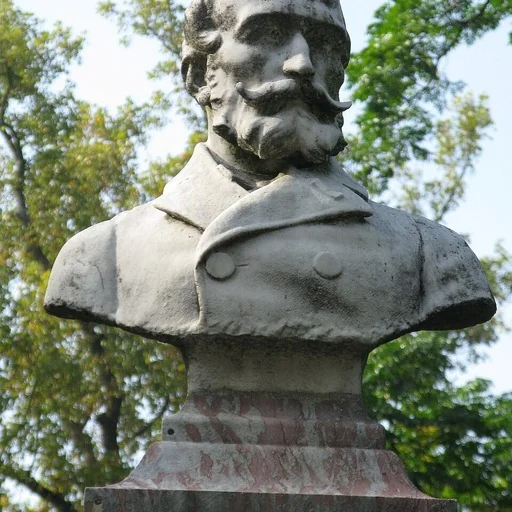
Artist
François Antoine Maxime Lalanne (November 27, 1827 – July 29, 1886) was a French artist known for his etchings and charcoal drawings (fusain).

 Le Canal à Pont-Saint-Maxence
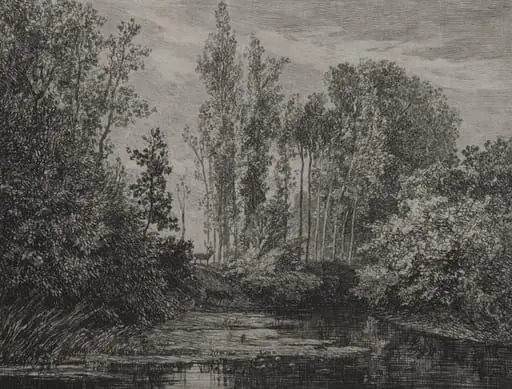 Stags at the water's edge
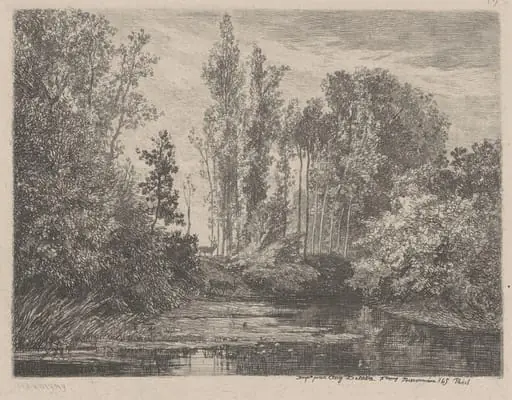 Stags at the Waterside
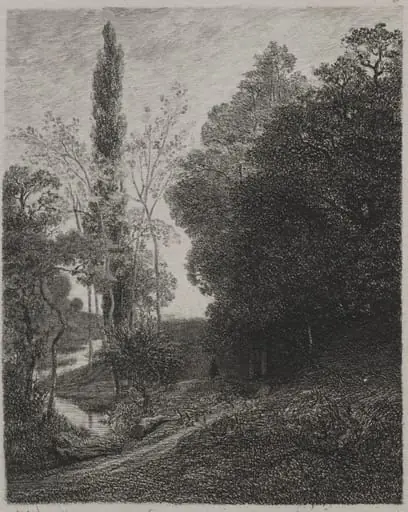 Banks of the River Cousin
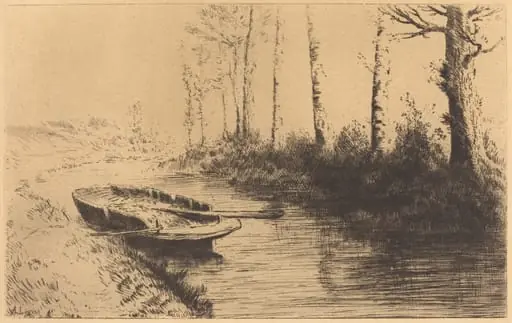 Canal Seen by Morning Light (Le canal: Effet du matin)
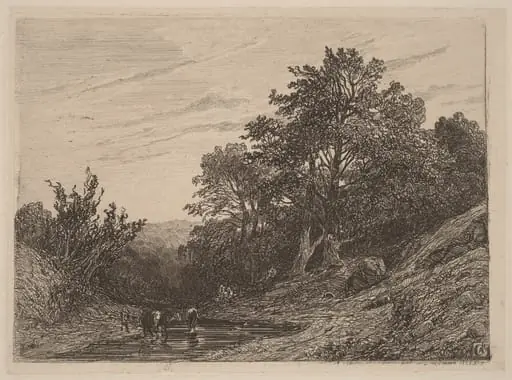 Herd in a Stream
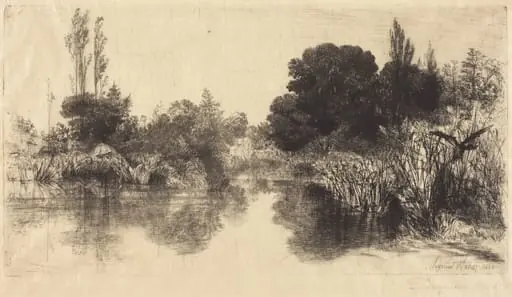 Shere Mill Pond (The Larger Plate)
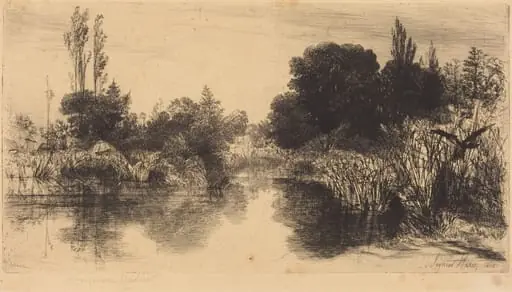 Shere Mill Pond (The Larger Plate)
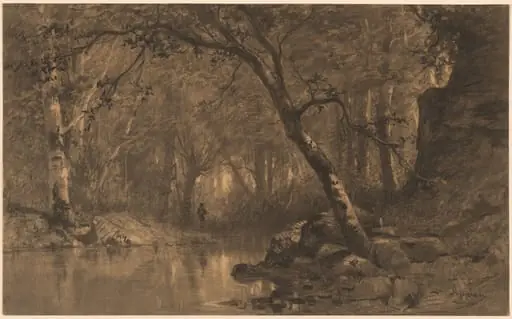 A Woodland River with a Fisherman
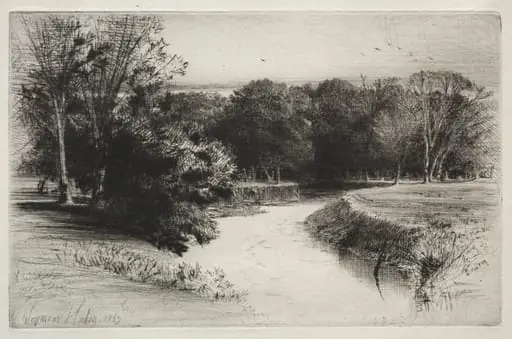 A Sunset in Ireland
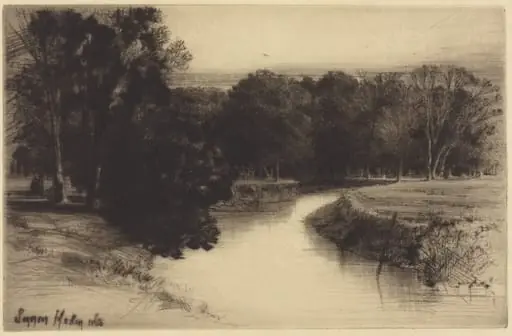 A Sunset in Ireland
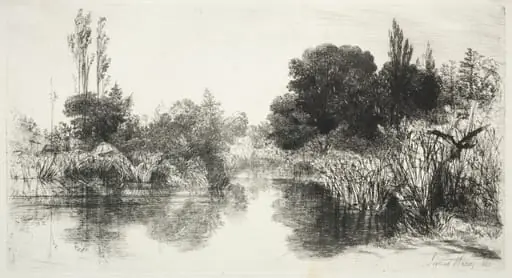 Share Mill Pond