Artwork
Evening
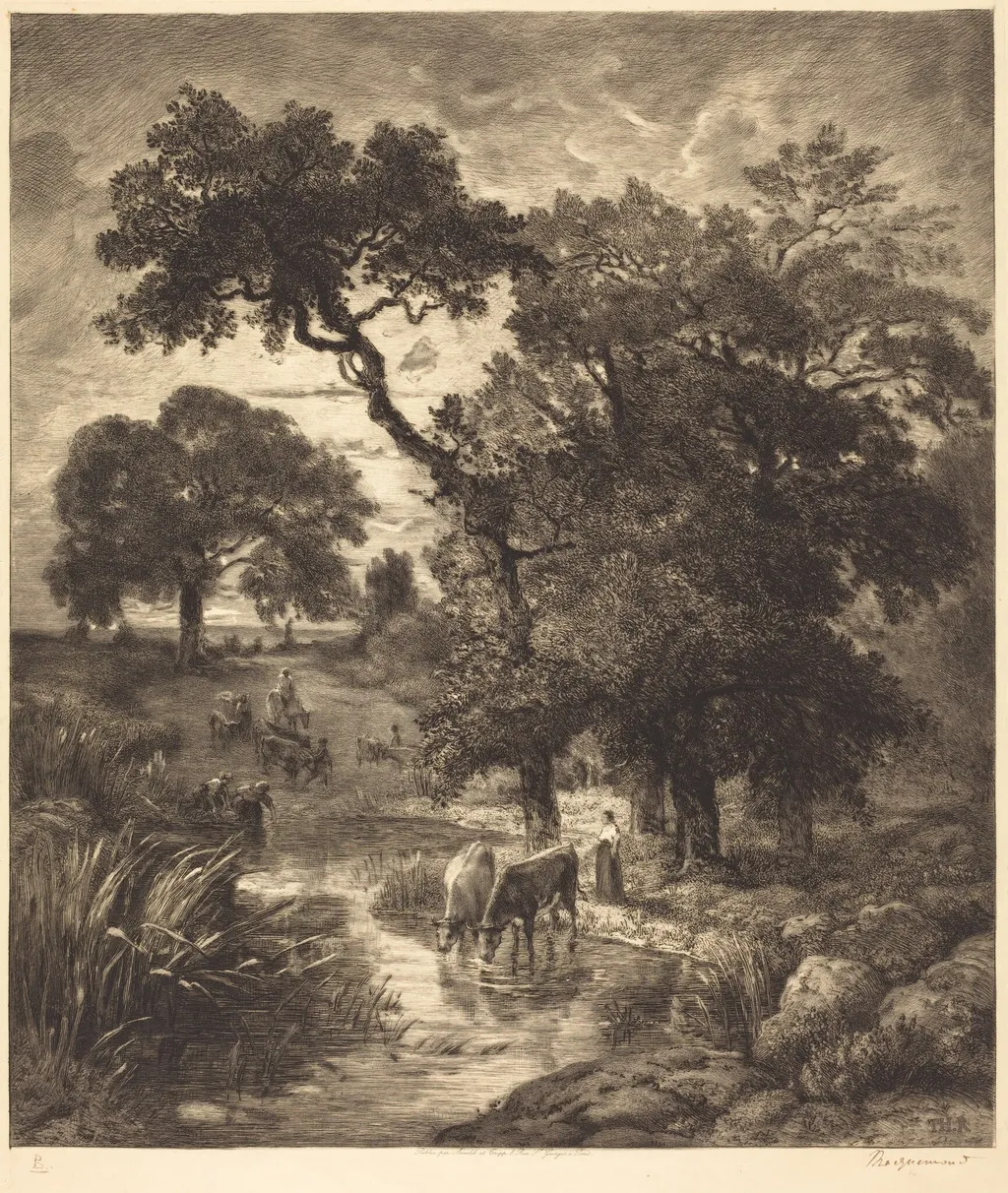
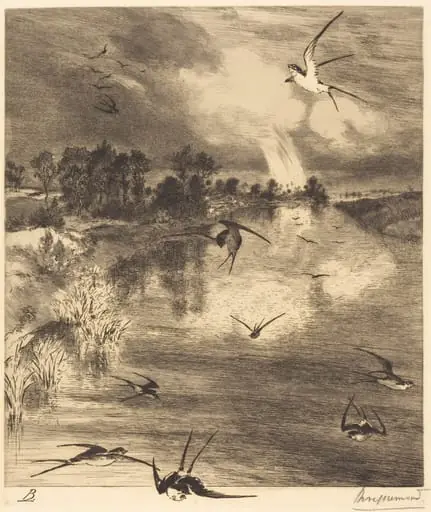
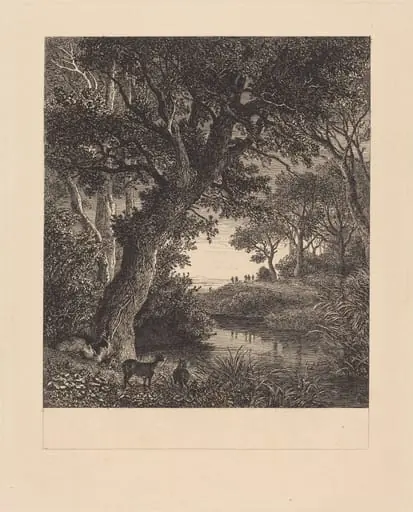
Evening is an ink print by the Impressionist artist Félix Bracquemond. It dates from 1882 and is held in the collection of the National Gallery of Art.
About this work
Overview
His choice of delicate Japanese paper underscores his interest in Asian aesthetics, aligning with broader 19th-century European engagements with Japanese art.
Félix Henri Bracquemond created *Evening* in 1882 as an etching and drypoint on Japanese paper. The work exemplifies his dedication to printmaking as a refined artistic medium, distinct from painting. His choice of delicate Japanese paper underscores his interest in Asian aesthetics, aligning with broader 19th-century European engagements with Japanese art. The print captures a tranquil rural moment with precision and restraint.
Subject & Meaning
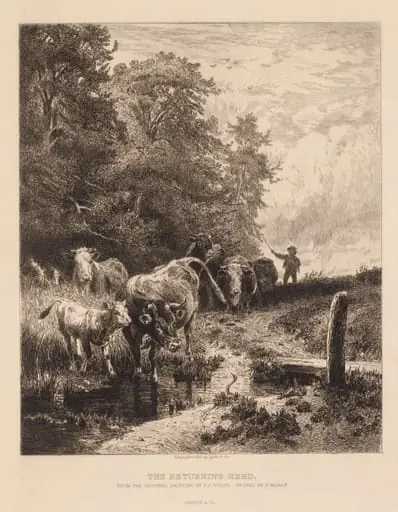
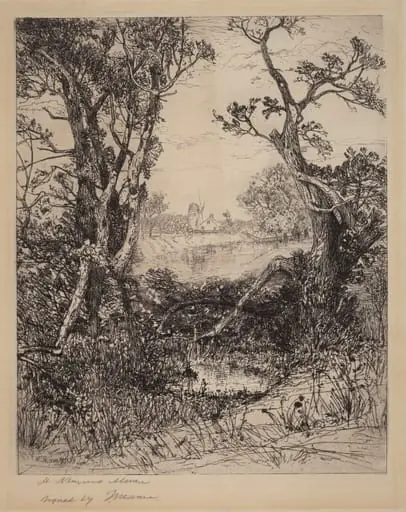
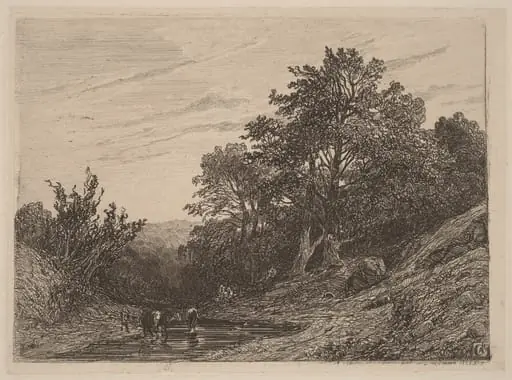
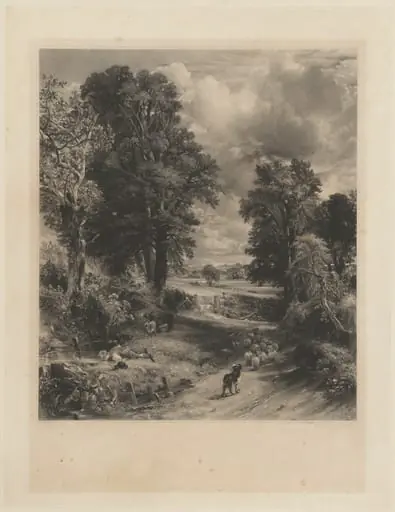
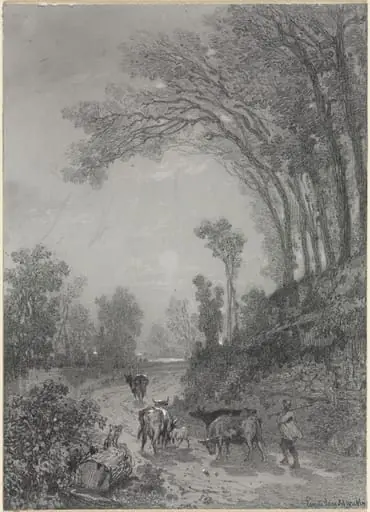
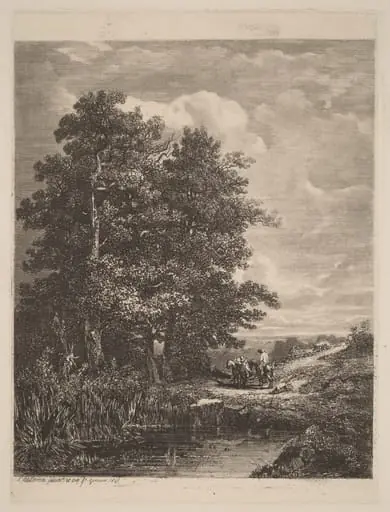
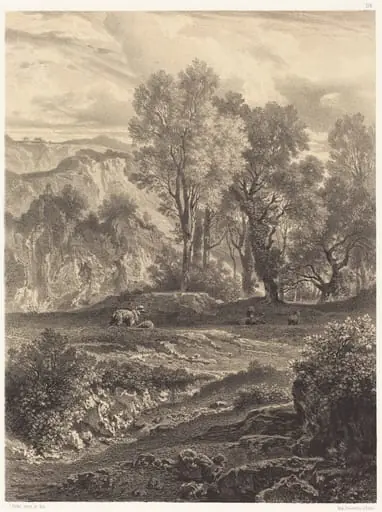
The scene depicts a quiet pastoral dusk: a cow drinks from a shallow stream, while a shepherd leads a flock along a grassy path. Tall trees frame the composition, their branches weaving against a muted sky. There is no narrative drama—only the stillness of twilight. The imagery reflects a contemplative engagement with nature, common among artists responding to industrialization and urban growth in late 19th-century France.
Technique & Style
Bracquemond employed etching and drypoint to achieve fine, incised lines that suggest texture and depth without color. The drypoint’s burr adds subtle tonal richness, particularly in the shadowed undergrowth and sky. The precision of the lines mimics ink sketching, yet each mark was carved into a metal plate. The use of Japanese paper enhanced the print’s delicacy, allowing for nuanced ink absorption and a soft, luminous finish.
History & Provenance
Created in 1882, *Evening* emerged during Bracquemond’s most active period in printmaking, following his earlier work with the Société des Aquafortistes. The piece was likely produced for private collectors and fellow artists, reflecting his role in elevating printmaking’s status. While its early ownership is undocumented, its survival in museum collections attests to its recognition within the print revival movement of the era.
Context
Bracquemond worked amid a surge of interest in Japanese art, known as Japonisme, which influenced composition, line, and subject matter across European studios. His own pottery designs and print techniques absorbed Japanese principles of simplicity and asymmetry. *Evening* aligns with contemporaneous works by Degas and Manet, who also explored intimate, everyday scenes with renewed technical focus.
Legacy
Bracquemond’s prints, including *Evening*, helped reestablish etching as a serious artistic practice in France. His technical innovations and aesthetic discipline influenced a generation of printmakers. Though less widely known today than his Impressionist peers, his contributions to the revival of printmaking and his integration of Japanese sensibilities remain significant in the history of 19th-century graphic art.
Artist & collection

Artist
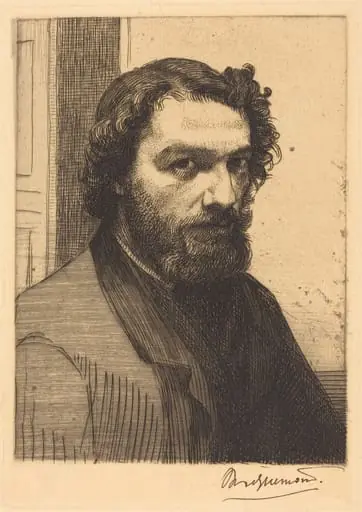
Félix Henri Bracquemond (French pronunciation: ; 22 May 1833 – 29 October 1914) was a French painter, etcher, and printmaker.