Artwork
Building Destroyers
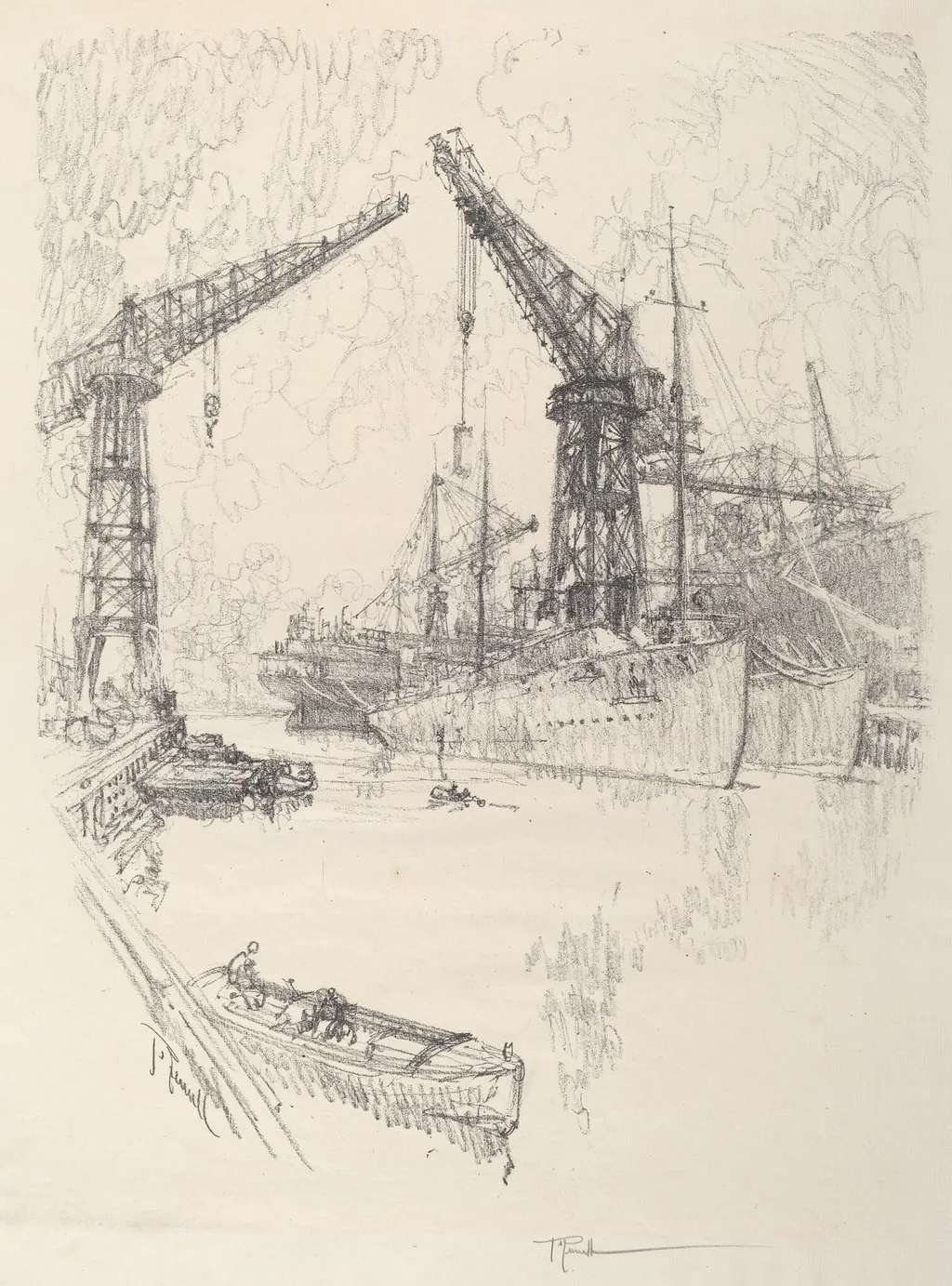
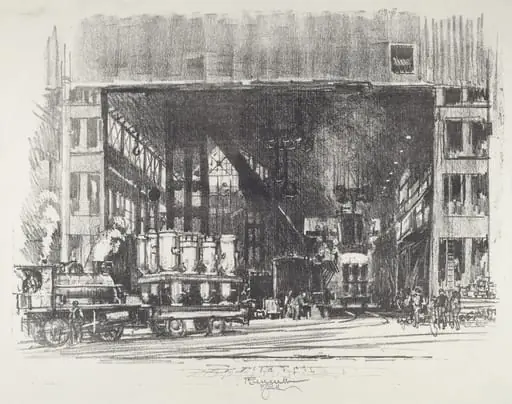
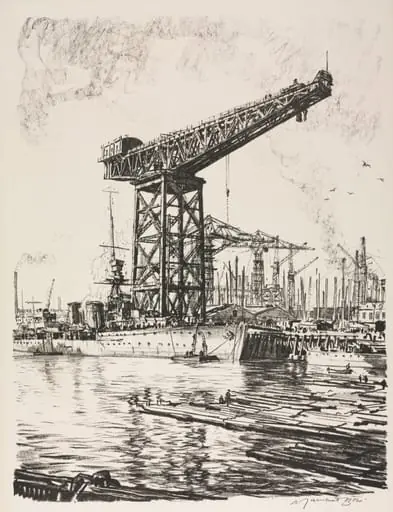
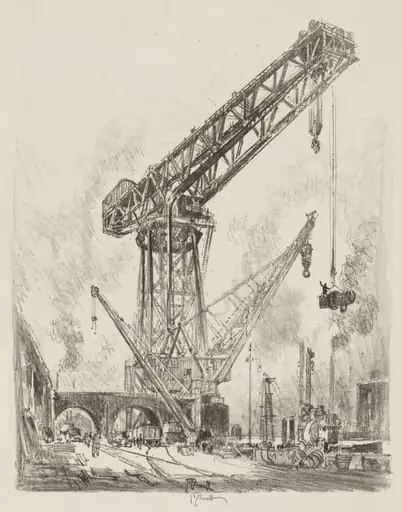
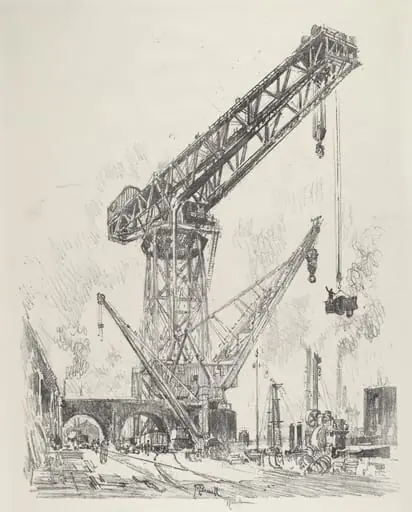
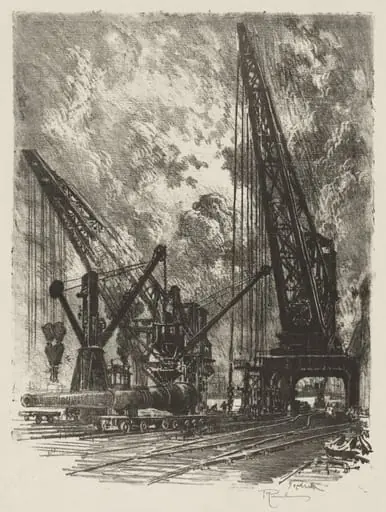
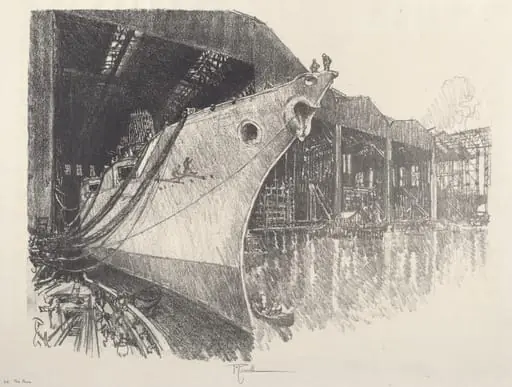
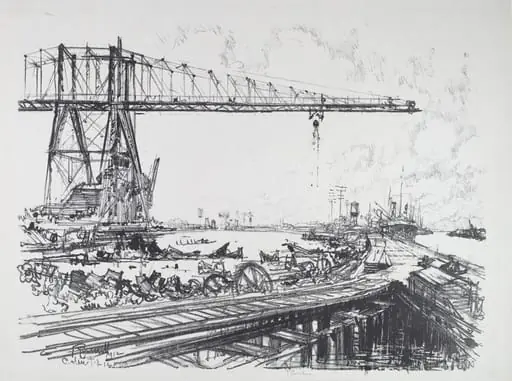
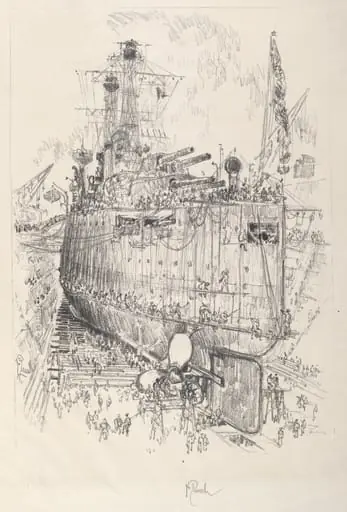
Building Destroyers is an ink print by Joseph Pennell. It dates from 1917 and is held in the collection of the National Gallery of Art.
About this work
Overview
This print reflects his lifelong interest in architecture and labor, rendered through the immediacy of graphic media rather than detailed realism.
Joseph Pennell created *Building Destroyers* in 1917 as a lithograph, capturing the dynamic energy of a shipyard during wartime production. Though based in Europe for much of his career, Pennell maintained a strong focus on American industrial subjects. This print reflects his lifelong interest in architecture and labor, rendered through the immediacy of graphic media rather than detailed realism. His approach prioritized movement and structure over polish.
Subject & Meaning
The scene depicts two unfinished ships under construction in a bustling yard, surrounded by cranes and scattered workers. Rather than idealizing industry, Pennell emphasizes its chaotic, unfinished state—metal frames exposed, tools scattered, laborers in motion. The title suggests a paradox: ships built for war are themselves agents of destruction, yet here they are merely in formation, vulnerable and raw, embodying the tension between creation and conflict.
Technique & Style
Pennell employed loose, rapid lithographic lines to convey the urgency of the shipyard’s activity. The composition avoids fine detail, using gestural strokes to suggest form and motion. Shadows and masses of metal are implied rather than defined, creating a sense of immediacy. This method aligns with his illustrative background, favoring expressive energy over precision, and echoes the spontaneity of sketchbook drawings translated into print.
History & Provenance
Created during World War I, the print emerged from Pennell’s documented visits to American shipyards commissioned by government agencies to record wartime industry. Though he had studied under Thomas Eakins and been influenced by Whistler, this work diverges from aestheticism toward documentary realism. It was likely produced for public dissemination, part of a broader effort to visualize national industrial capacity during the war effort.
Context
In 1917, the United States had entered World War I, and shipbuilding became a critical national priority. Pennell’s depiction aligns with a wave of visual propaganda and documentation aimed at showcasing American industrial might. Unlike heroic portrayals of soldiers, this image honors the unseen labor of workers and the raw machinery of war production, offering a grounded, unembellished view of the home front’s contribution.
Legacy
Pennell’s *Building Destroyers* stands as a significant example of early 20th-century American industrial lithography. It influenced later documentary artists who sought to capture labor and infrastructure without romanticism. Though not widely exhibited during his lifetime, the work remains a key reference in studies of American graphic art and the visual culture of wartime production.
Own this work as a print
Artist & collection
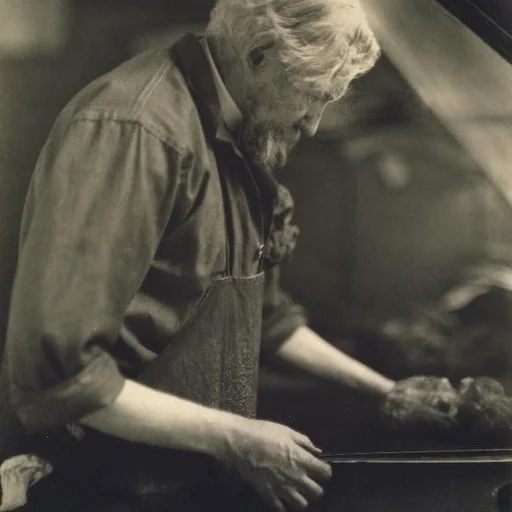
Artist
Joseph Pennell (July 4, 1857 – April 23, 1926) was an American draftsman, etcher, lithographer, and illustrator for books and magazines.