Artwork
The Prow
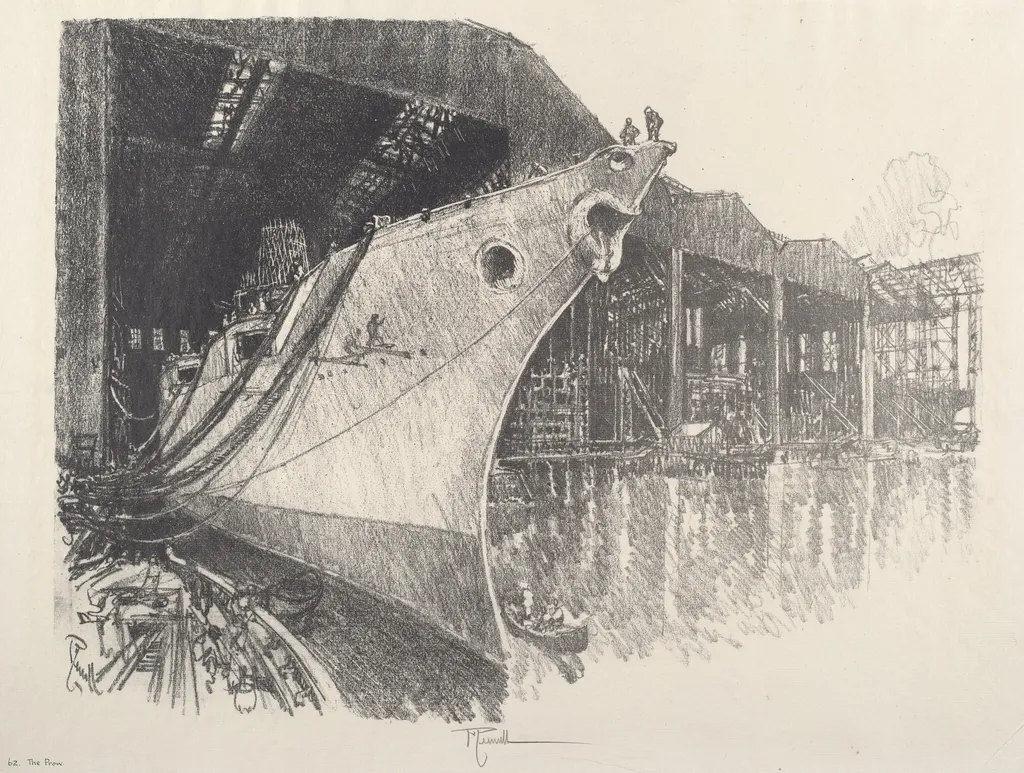
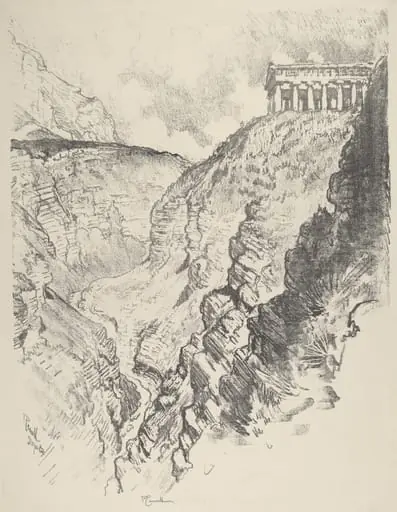
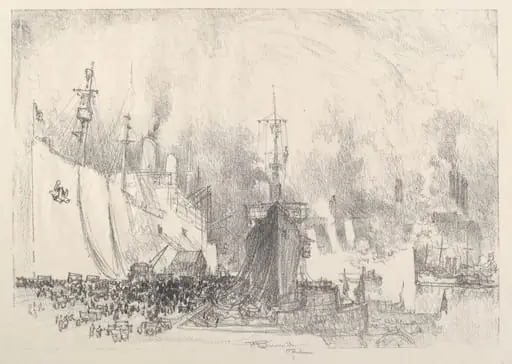
The Prow is an ink print by Joseph Pennell. It dates from 1917 and is held in the collection of the National Gallery of Art.
About this work
Overview
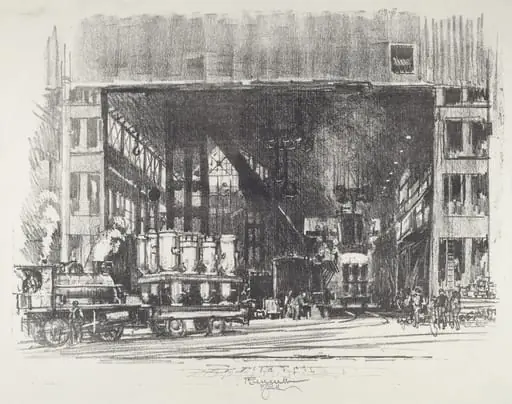
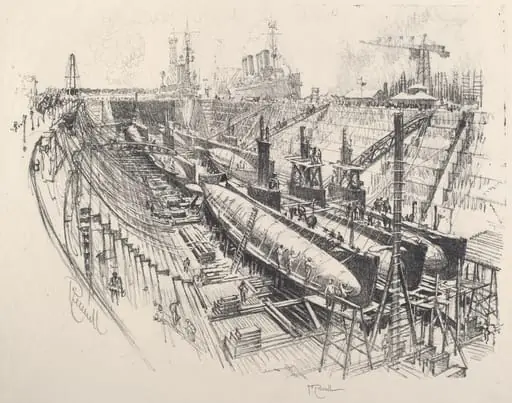
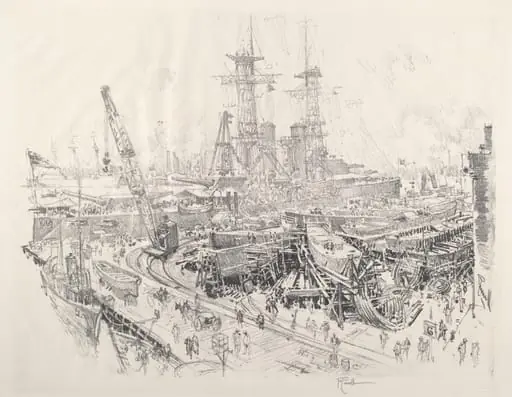
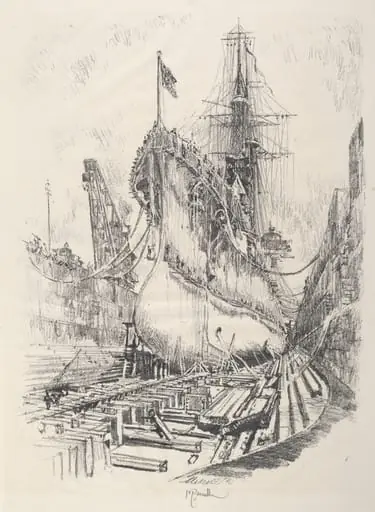
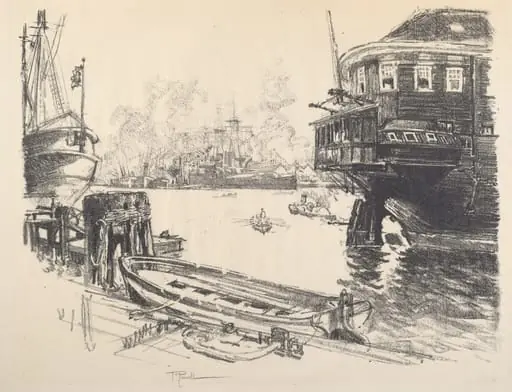
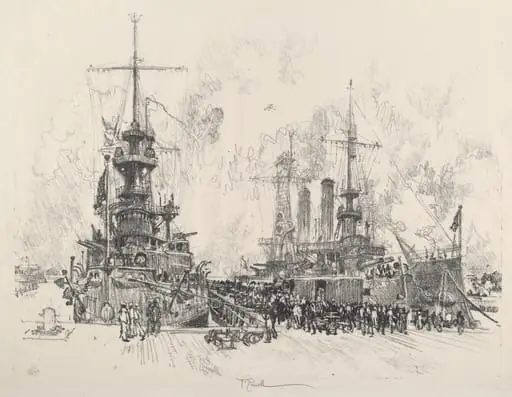
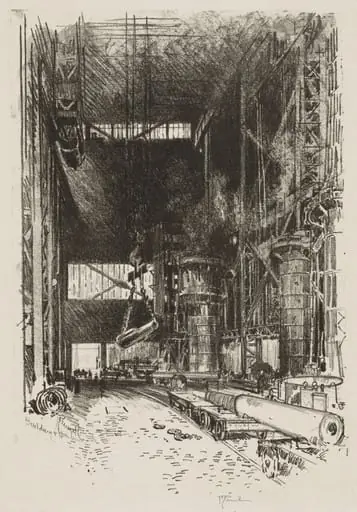
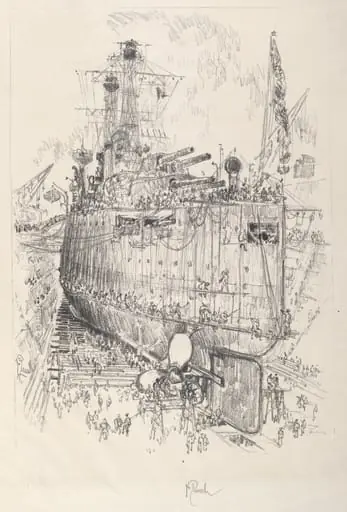
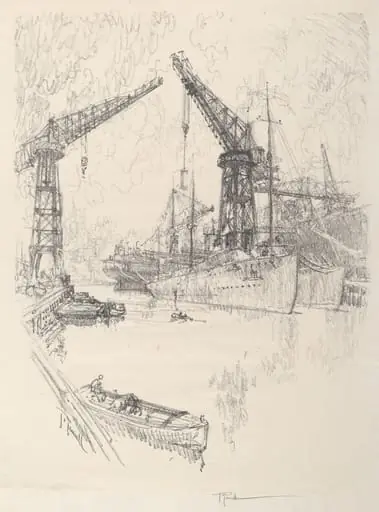
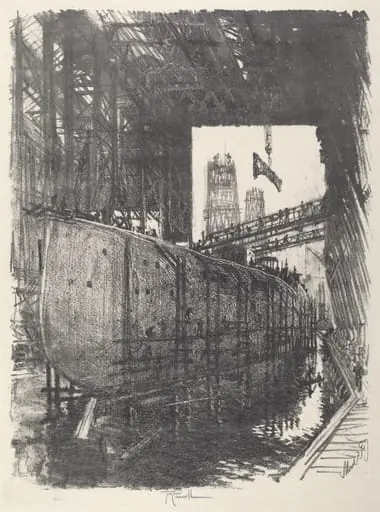
Created in 1917, *The Prow* is a black‑and‑white lithographic print by American artist Joseph Pennell. The composition centers on the forward‑most part of a large vessel, its bow thrusting into the viewer’s space, while a bustling dockyard recedes into muted background forms. The work exemplifies Pennell’s sustained interest in industrial and architectural subjects.
Subject & Meaning
The image captures a moment in a busy shipyard, emphasizing the stark geometry of the ship’s prow against a network of scaffolding and neighboring vessels. By isolating the bow, Pennell draws attention to the power and precision of early‑twentieth‑century maritime engineering, suggesting both the grandeur of the machine and its integration within a complex urban environment.
Technique & Style
Executed through traditional lithography, Pennell rendered the scene by drawing directly onto a prepared stone surface, then transferring the image onto paper. He employed bold, decisive lines and graduated shading to model volume and convey atmospheric depth. The monochrome palette heightens contrast, allowing the intricate structural details of the ship and dock to emerge with clarity.
History & Provenance
Pennell, who spent much of his career working in Europe, produced *The Prow* during a period when he was heavily influenced by the tonal sensibilities of James McNeill Whistler and the rigorous training he received from James Lambdin and Thomas Eakins. The print was issued shortly after his collaboration with his wife, writer Elizabeth Robins, on various art‑critical and travel publications, reflecting the couple’s shared engagement with contemporary visual culture.
Artist & collection
Artist
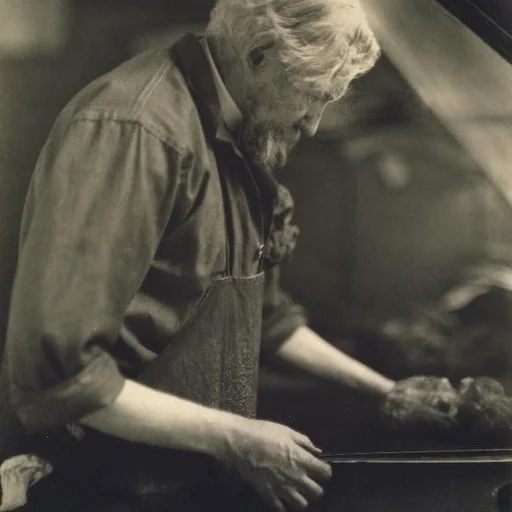
Joseph Pennell (July 4, 1857 – April 23, 1926) was an American draftsman, etcher, lithographer, and illustrator for books and magazines.