Artwork
Laying the Floor of Pedro Muguel Lock
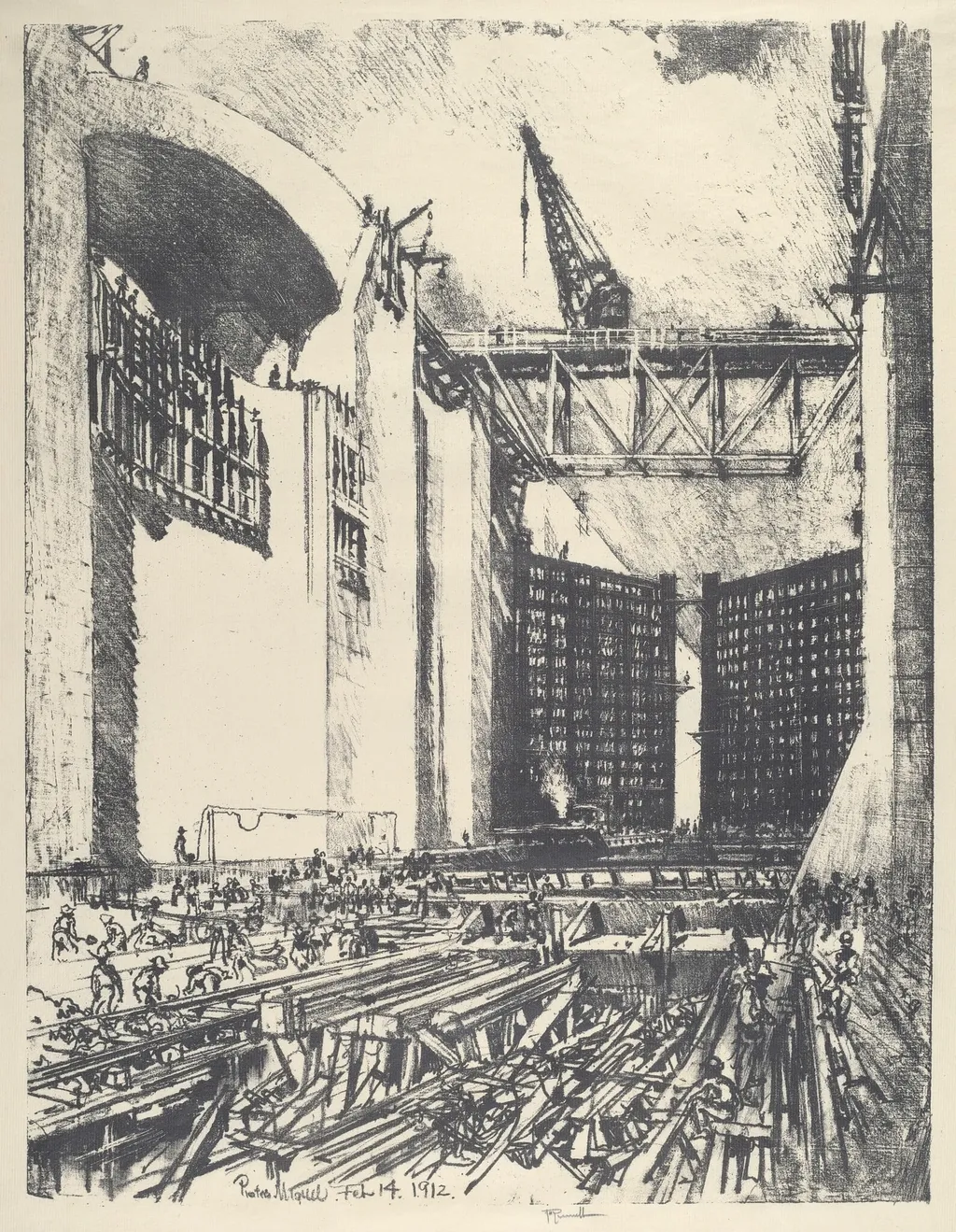
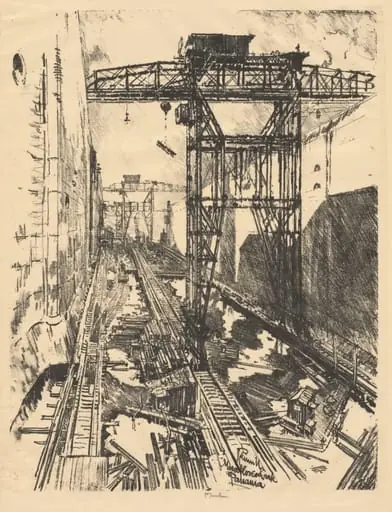
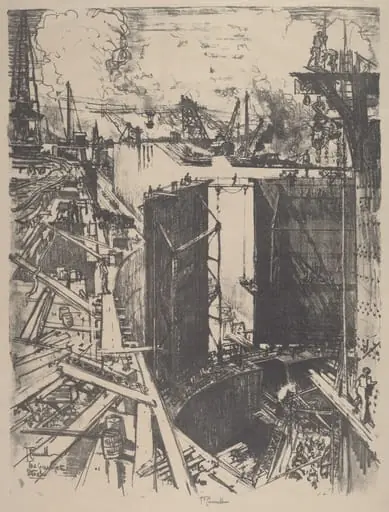
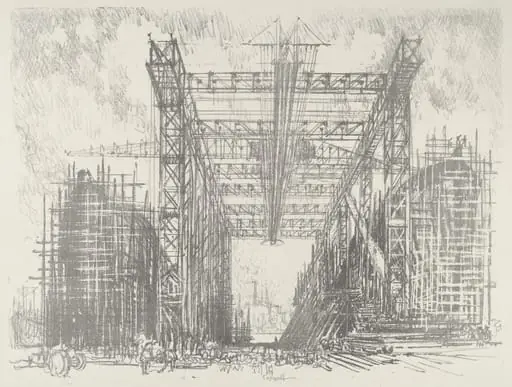
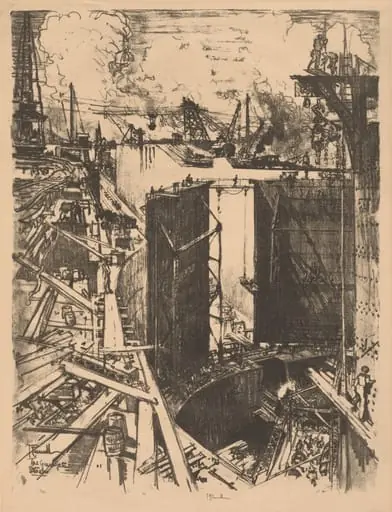
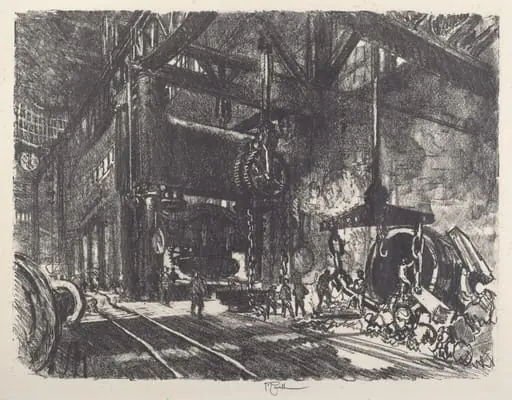
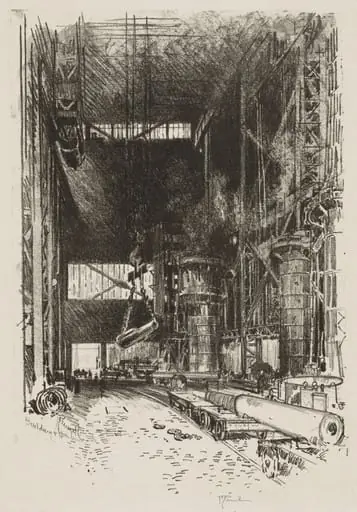
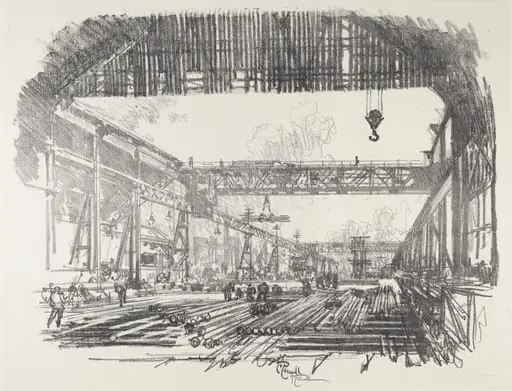
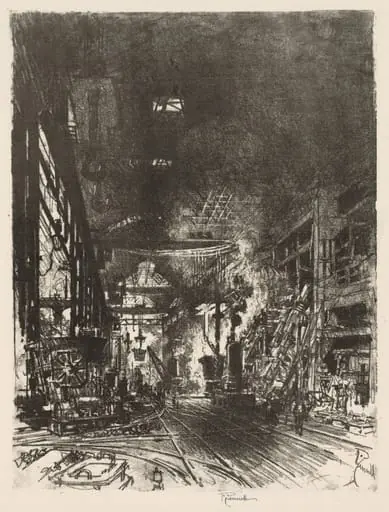
Laying the Floor of Pedro Muguel Lock is an ink print by Joseph Pennell. It dates from 1912 and is held in the collection of the National Gallery of Art.
About this work
The date in the corner tells us it’s from 1912, but the drawing feels like it could be any time a major project is underway.
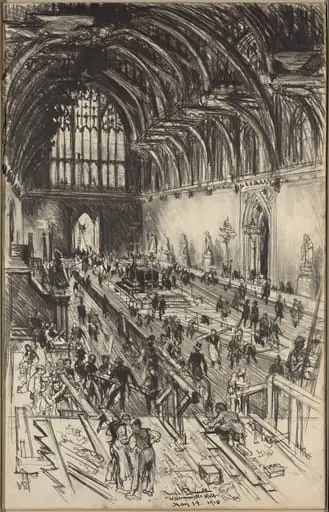
This sketch shows a busy construction site with a half-built structure in the center. The walls are tall and empty, and a giant crane looms over the top. Below, workers move along a platform, some carrying tools or materials. The lines are rough and sketchy, like a quick study of the scene.
The artist focused on the raw, messy energy of building something big. The date in the corner tells us it’s from 1912, but the drawing feels like it could be any time a major project is underway.
Next, look up lithography to see how this kind of sketch was made.
Overview
Joseph Pennell’s 1912 lithograph *Laying the Floor of Pedro Muguel Lock* captures a moment on an active construction site. Rendered in monochrome, the print presents a half‑erected structure framed by towering walls and a massive crane, while laborers navigate a platform below. The composition records the bustling activity of early‑20th‑century engineering work.
Subject & Meaning
The image documents the physical process of building a lock, emphasizing the scale of the project and the coordinated effort of its workforce. By foregrounding the unfinished architecture and the machinery, Pennell highlights the transformative power of industrial labor and the transient nature of construction sites as spaces of organized chaos.
Technique & Style
Executed as a lithograph, the work relies on the medium’s capacity for fine line work and tonal variation. Pennell’s hand‑drawn lines are deliberately sketchy, conveying immediacy and movement. The contrast between stark outlines and softer shading underscores the structural forms while preserving the sense of a rapid visual study.
History & Provenance
Pennell, trained under James Lambdin and Thomas Eakins and later influenced by James McNeill Whistler, produced the print during a period when he concentrated on industrial and architectural subjects. The lithograph was created in 1912, a time when documenting large‑scale engineering projects was a common artistic pursuit, reflecting his broader interest in the built environment.
Context
The early 1900s saw extensive infrastructure development in the United States, with locks and canals playing crucial roles in transportation and commerce. Pennell’s choice of a lock construction scene aligns with contemporary fascination with progress and the technological optimism that defined the era’s public works.
Legacy
While not as widely reproduced as Pennell’s etchings, this lithograph contributes to his reputation as a chronicler of America’s industrial landscape. It offers scholars visual evidence of construction practices of the period and exemplifies the lithographic medium’s utility for capturing detailed, on‑site observations.
Artist & collection
Artist
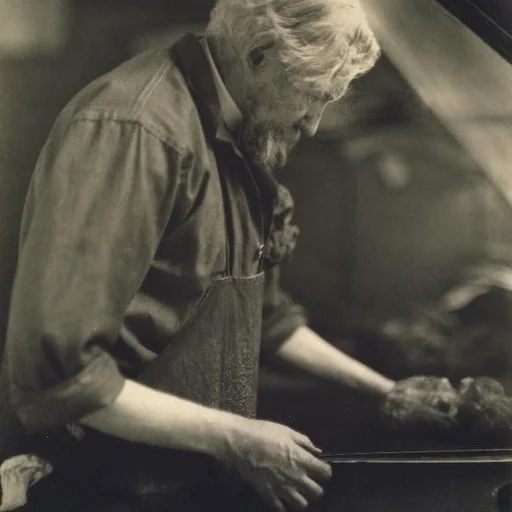
Joseph Pennell (July 4, 1857 – April 23, 1926) was an American draftsman, etcher, lithographer, and illustrator for books and magazines.