Artwork
The Gantry
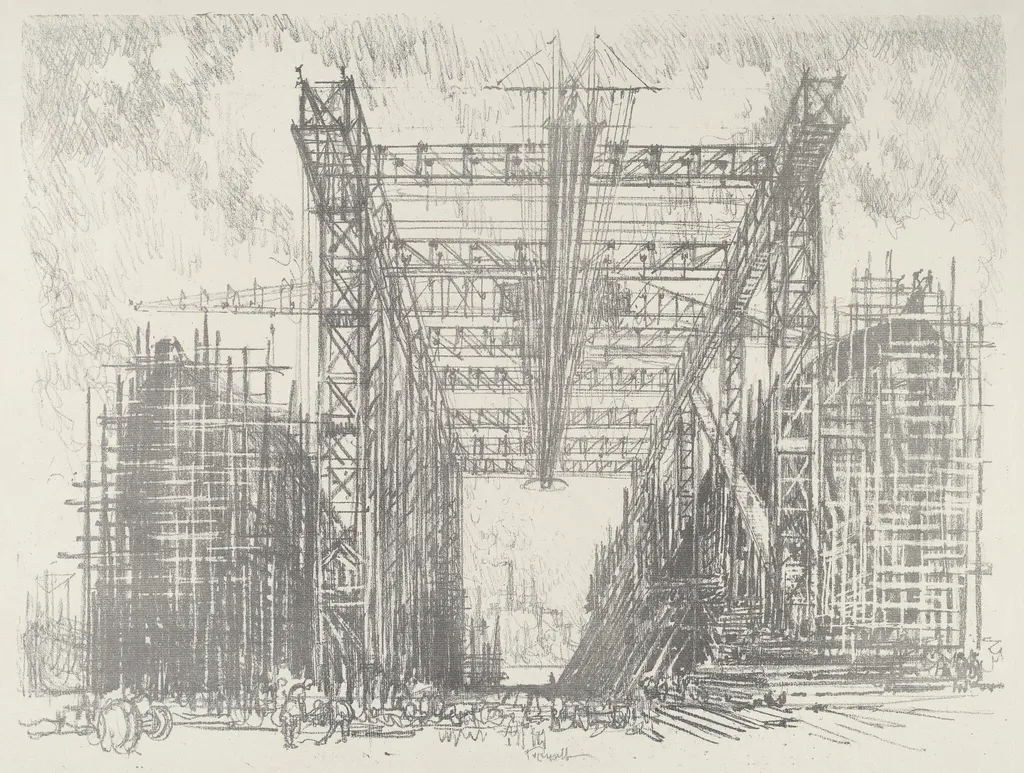
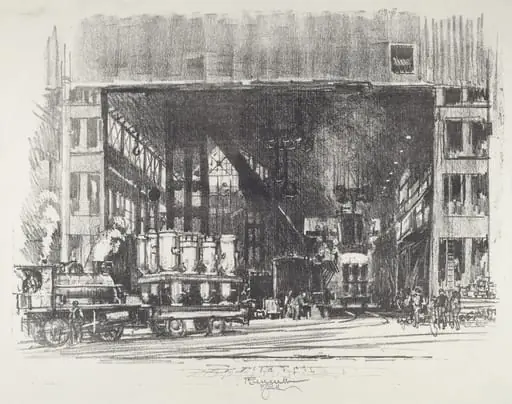
The Gantry is an ink print by Joseph Pennell. It dates from 1916 and is held in the collection of the National Gallery of Art.
About this work
Overview
The Gantry is a lithograph created by Joseph Pennell in 1916, exemplifying his fascination with industrial landscapes and architectural structures.
Subject & Meaning
The print depicts a complex, in-progress construction scene, focusing on a tangle of metal beams and scaffolding, conveying the dynamic and chaotic nature of industrial building processes.
Technique & Style
Pennell employed a distinctive, expressive technique in The Gantry, characterized by loose, shaky lines and a scratchy, almost chaotic rendering, evoking the immediacy of a quick study.
History & Provenance
Created in 1916 by American artist Joseph Pennell, this work reflects his career-long interest in documenting global industrial and architectural subjects through printmaking, influenced by his associations with European art circles and figures like Thomas Eakins and James McNeill Whistler.
Context
The Gantry sits within Pennell's broader oeuvre of industrial landscapes, a theme that dominated much of his work during his time in Europe, often produced in collaboration with his wife, Elizabeth Robins, through various artistic and literary projects.
Legacy
While specific legacy details of The Gantry are not highlighted, it contributes to Pennell's recognized body of work in lithography, reflecting early 20th-century artistic interests in industrialization and the built environment.
Artist & collection
Artist
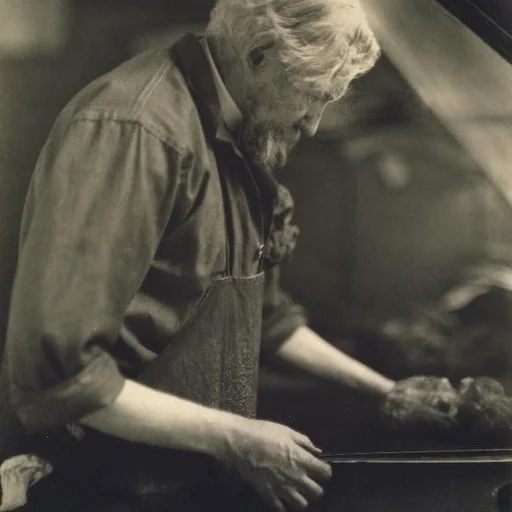
Joseph Pennell (July 4, 1857 – April 23, 1926) was an American draftsman, etcher, lithographer, and illustrator for books and magazines.

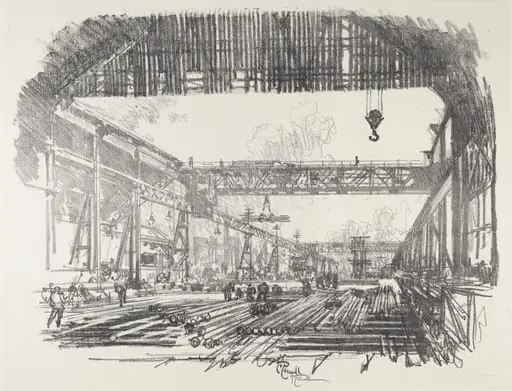 Steel Bars for Shells
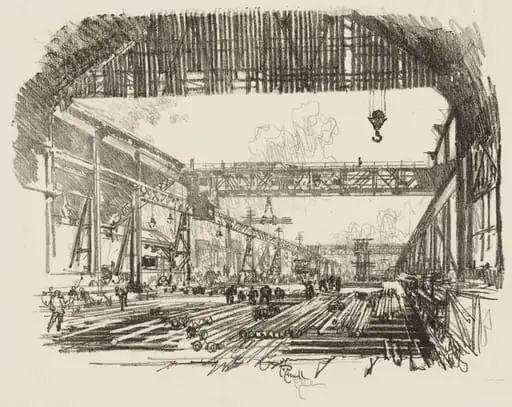 English War Work: Steel Bars for Shells
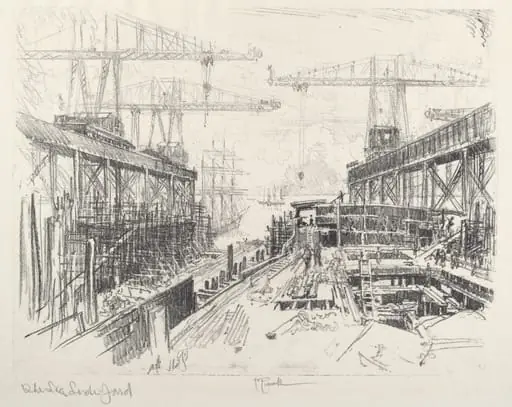 The Sea Lord's Yard
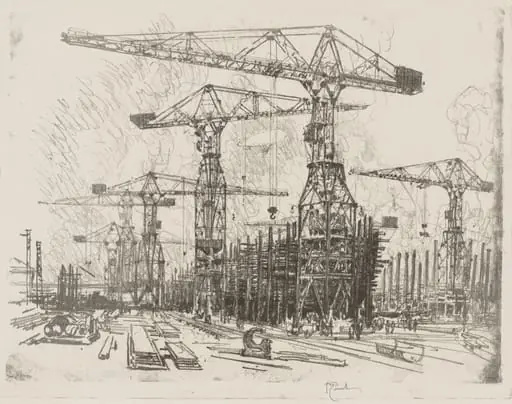 English War Work: The Old Shipyard
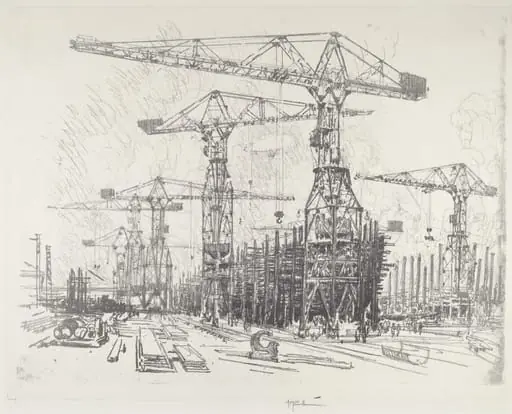 The Old Shipyard
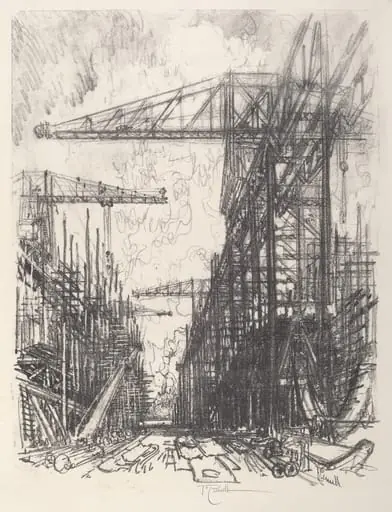 Building Destroyers, No.I
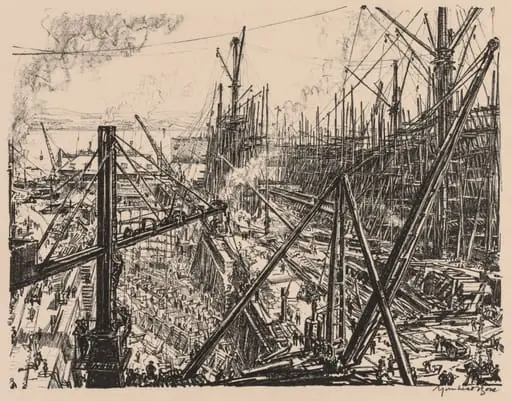 On the Clyde, 1917-1918: Reconstructing a Clyde Shipyard
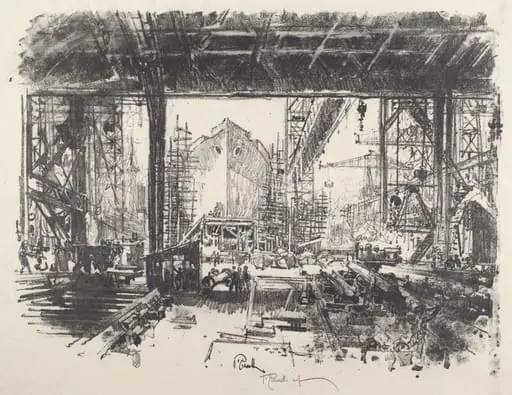 Under the Shed
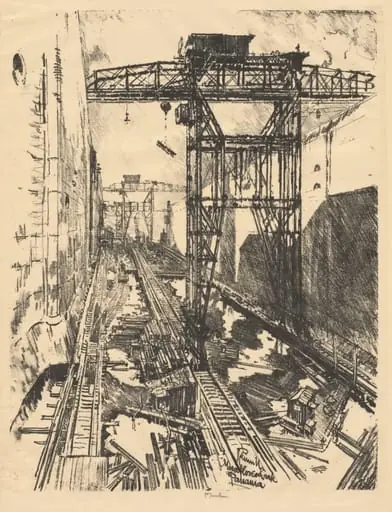 Cranes at Miraflores Lock, Panama
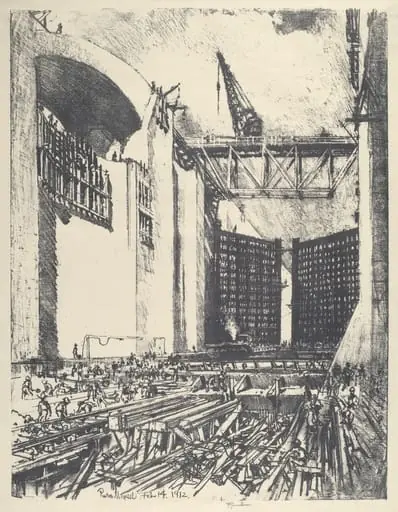 Laying the Floor of Pedro Muguel Lock
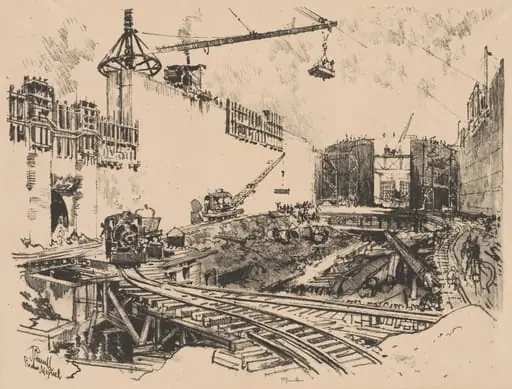 The Walls of Pedro Miguel Lock, Panama
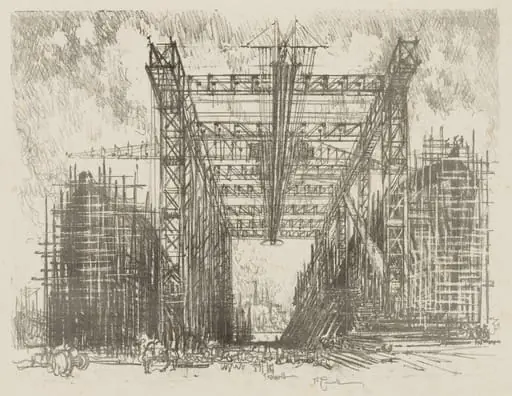 English War Work: The Gantry (A Merchant Shipyard)