Artwork
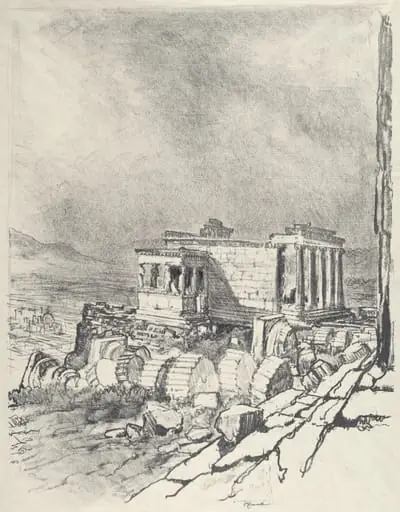
The Fallen Column, Athens
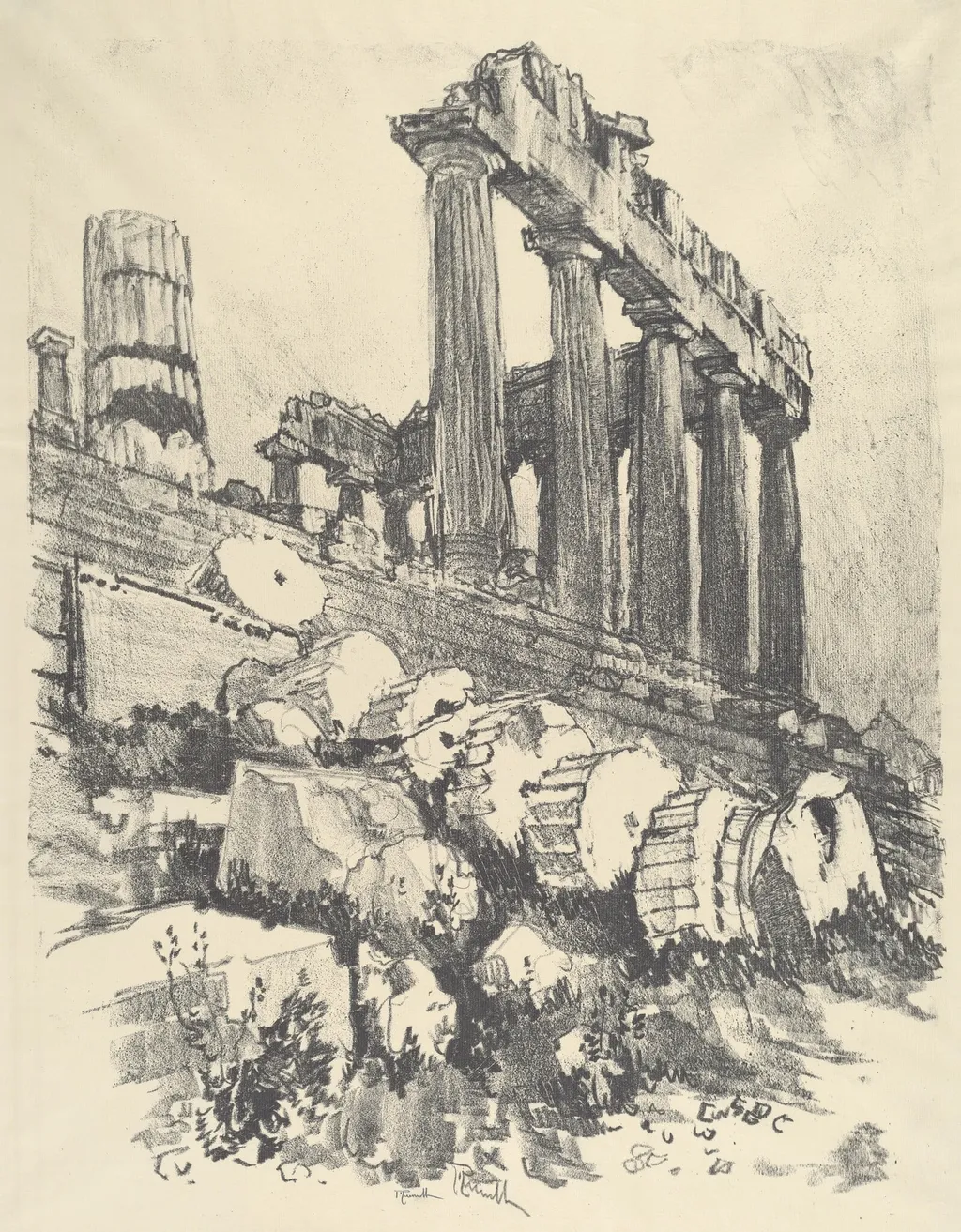
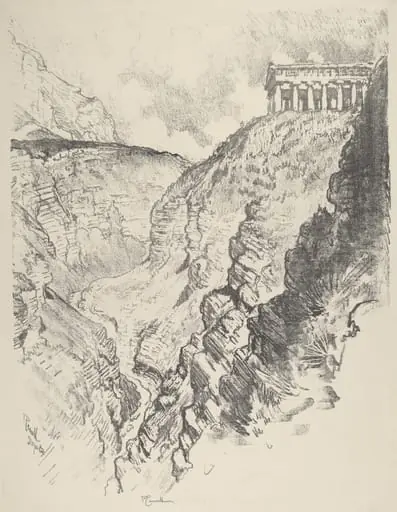
The Fallen Column, Athens is an ink print by Joseph Pennell. It dates from 1913 and is held in the collection of the National Gallery of Art.
About this work
Overview
Created during his travels through Europe, the work reflects his dedication to documenting historical structures through printmaking.
Joseph Pennell’s 1913 lithograph *The Fallen Column, Athens* captures a fragment of ancient architecture in decay. Created during his travels through Europe, the work reflects his dedication to documenting historical structures through printmaking. Pennell, an American artist trained in draftsmanship, used lithography to translate the quiet erosion of time into visual form, favoring subtle tonal shifts over bold contrast.
Subject & Meaning
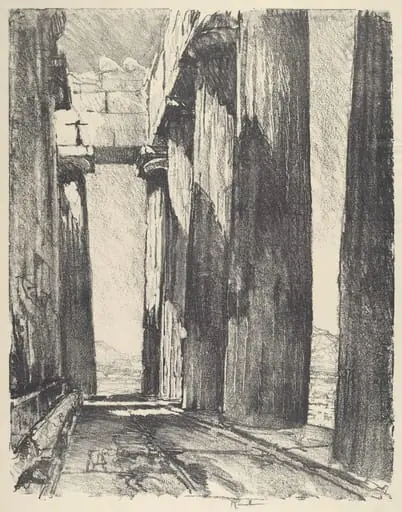
The image centers on a collapsed Doric column, its fractured upper section resting against a weathered stone wall. Surrounding debris—shards of masonry, scattered stones—suggests the slow collapse of a once-grand structure. Pennell does not idealize the ruin but presents it as a silent witness to time’s passage, emphasizing impermanence over monumentality.
Technique & Style
Pennell employed lithographic crayon to achieve a sketch-like texture, using loose, gestural lines to convey the roughness of aged stone. The grayscale palette limits detail, focusing attention on form and surface. Delicate tonal gradations suggest light falling across uneven surfaces, while the faint signature blends into the composition, reinforcing the theme of obscurity and decay.
History & Provenance
Created during Pennell’s extended stays in Europe, this print belongs to a series of architectural studies he produced between 1900 and 1920. It was likely made after direct observation in Athens, consistent with his practice of sketching on-site. The work entered institutional collections in the mid-20th century, valued for its documentary precision and aesthetic restraint.
Context
Pennell’s interest in ruins aligned with broader late-19th-century European trends that viewed antiquity not as idealized perfection but as a record of entropy. His approach echoed Whistler’s emphasis on mood over narrative, contrasting with the grand historical paintings of his contemporaries. This work situates him within a generation of artists who found poetry in the overlooked and the eroded.
Legacy
Pennell’s lithographs, including this one, contributed to the revival of printmaking as a serious medium for urban and architectural observation. His unembellished depictions of ruins influenced later documentary artists and photographers who sought to capture the passage of time in physical form. The work remains a quiet testament to the endurance of material history.
Own this work as a print
Artist & collection
Artist
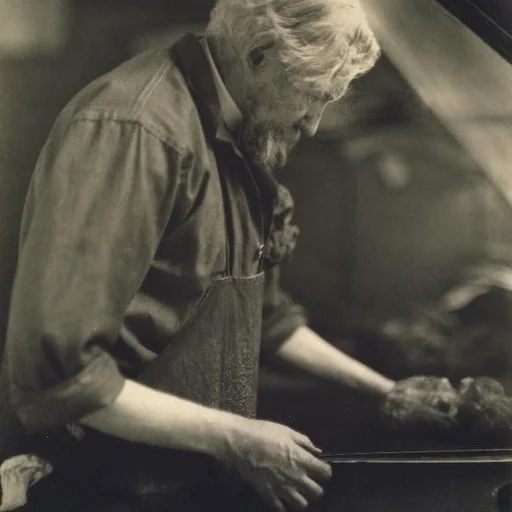
Joseph Pennell (July 4, 1857 – April 23, 1926) was an American draftsman, etcher, lithographer, and illustrator for books and magazines.