Artwork
The Old Gun-Pit
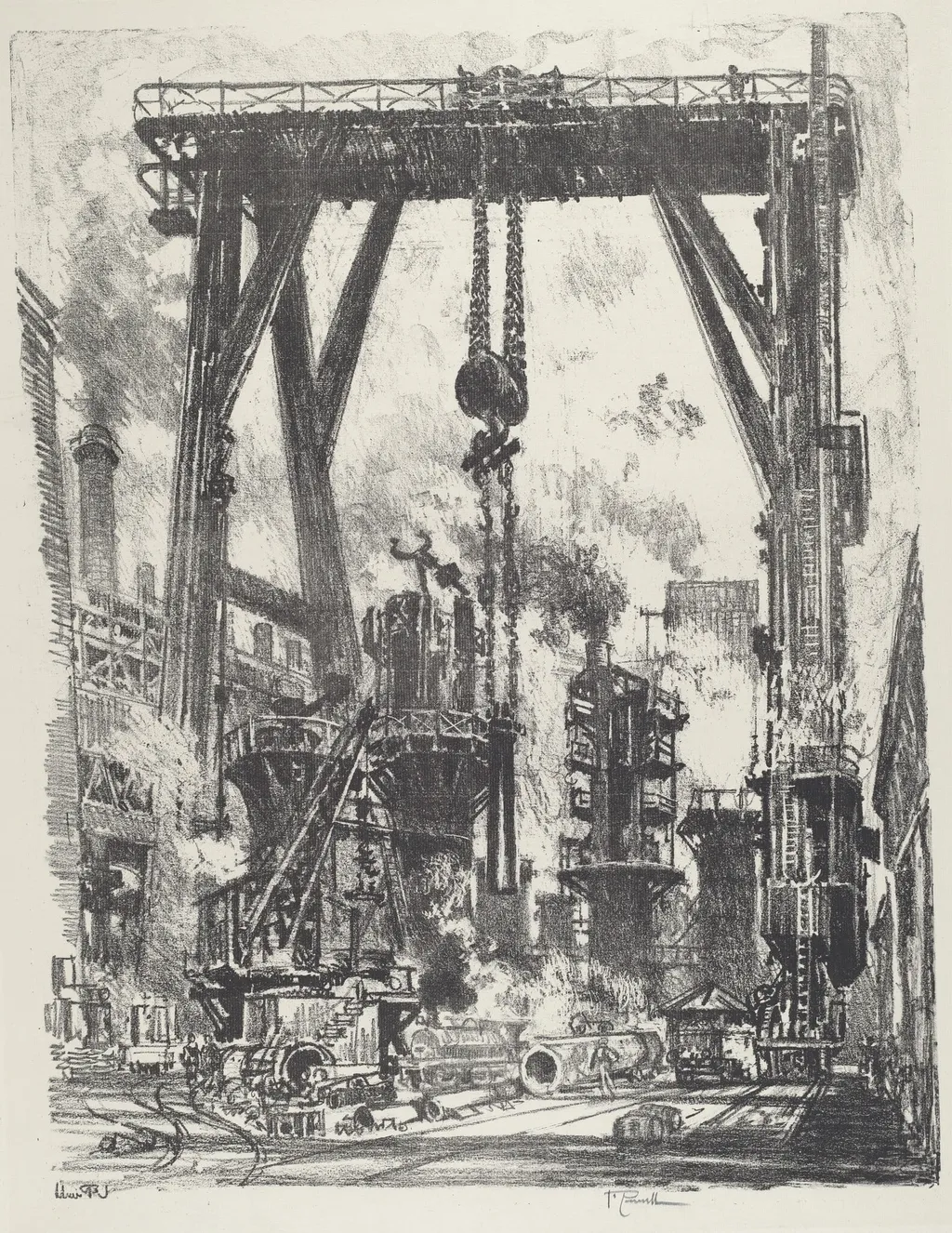
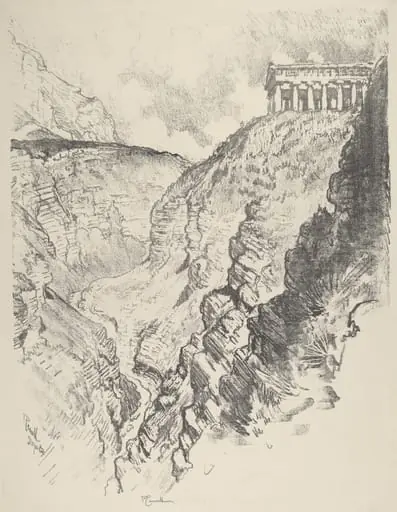
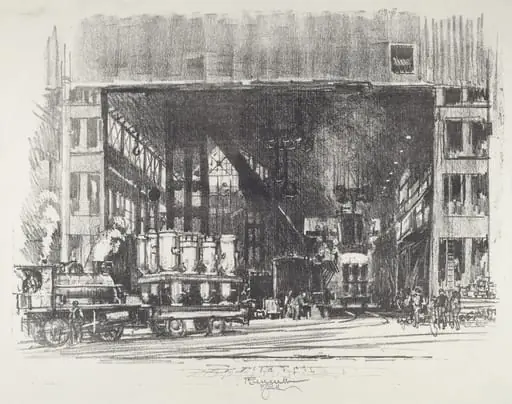
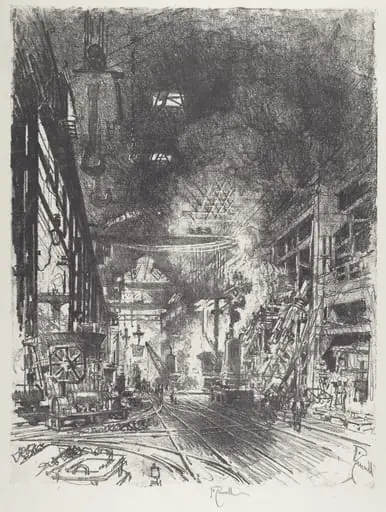
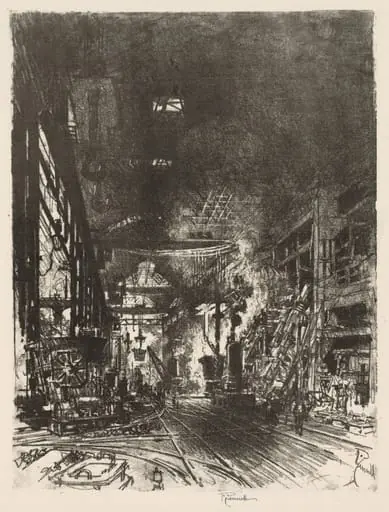
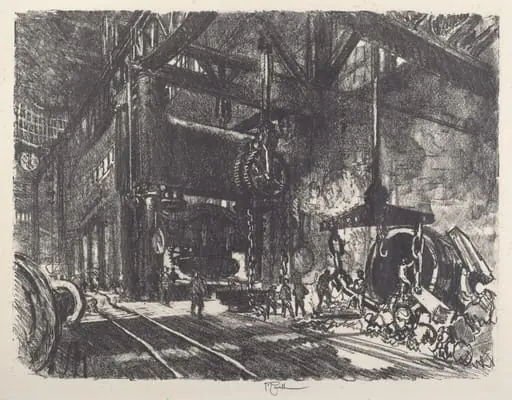
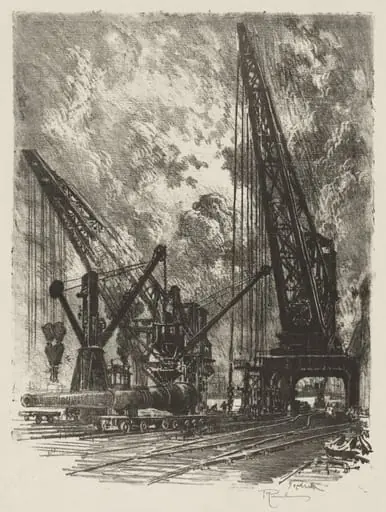
The Old Gun-Pit is an ink print by Joseph Pennell. It dates from 1916 and is held in the collection of the National Gallery of Art.
About this work
Overview
Executed during his time in Europe, the work exemplifies his shift from traditional etching to lithography, a medium allowing for rapid, expressive mark-making.
Created in 1916, *The Old Gun-Pit* is a lithograph by American artist Joseph Pennell, known for his detailed renderings of industrial and architectural subjects. Executed during his time in Europe, the work exemplifies his shift from traditional etching to lithography, a medium allowing for rapid, expressive mark-making. The image captures a disordered mechanical environment, reflecting Pennell’s interest in the aesthetics of labor and machinery.
Subject & Meaning
The scene depicts a cluttered industrial yard, likely a decommissioned or under-repair armament site, filled with rusted machinery, tangled cables, and scattered tools. No human figures are present, yet the accumulation of objects suggests recent activity and abandonment. The composition conveys the weight of industrial labor and the passage of time, emphasizing decay and the quiet persistence of mechanical forms.
Technique & Style
Pennell employed lithographic crayon to produce bold, gestural lines that convey urgency and texture. The surface is densely worked with rough, overlapping strokes, avoiding smooth contours in favor of fragmented, energetic marks. This approach captures the chaotic energy of the space, aligning with his interest in immediacy and the raw character of industrial environments rather than idealized form.
History & Provenance
Pennell created this print during a period of intense travel and documentation in Europe, shortly before the United States entered World War I. While not commissioned by any military body, the work aligns with his broader project of recording industrial sites as cultural artifacts. The lithograph was likely produced for private circulation or exhibition, consistent with his practice of publishing prints through commercial lithographic studios.
Context
In 1916, industrialization was reshaping both urban and military landscapes, and artists like Pennell responded by documenting factories, shipyards, and armories. His work stood apart from romanticized portrayals of labor, instead focusing on the physical residue of industry. Influenced by Whistler’s tonal subtlety and Eakins’s realism, Pennell merged observational precision with expressive line to capture the modern world’s complexity.
Legacy
Pennell’s *The Old Gun-Pit* contributed to a growing body of early 20th-century prints that redefined industrial subjects as worthy of artistic attention. His use of lithography to convey motion and decay influenced later American printmakers interested in social and mechanical themes. Though not widely exhibited during his lifetime, the work remains a significant example of how printmaking could document the changing face of industry with both accuracy and emotional resonance.
Own this work as a print
Artist & collection
Artist
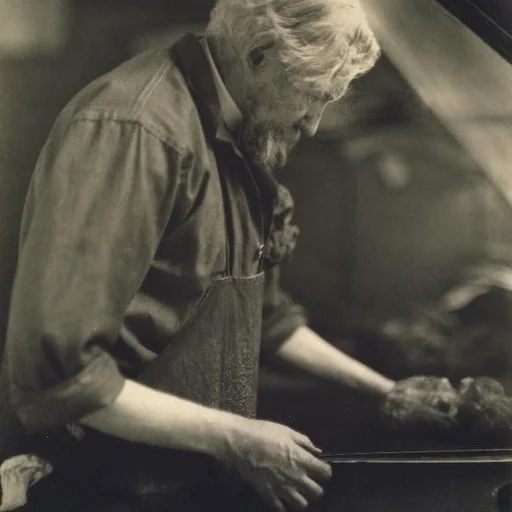
Joseph Pennell (July 4, 1857 – April 23, 1926) was an American draftsman, etcher, lithographer, and illustrator for books and magazines.