Artwork
Mouth of the Mine, Ruhrort near Oberhausen
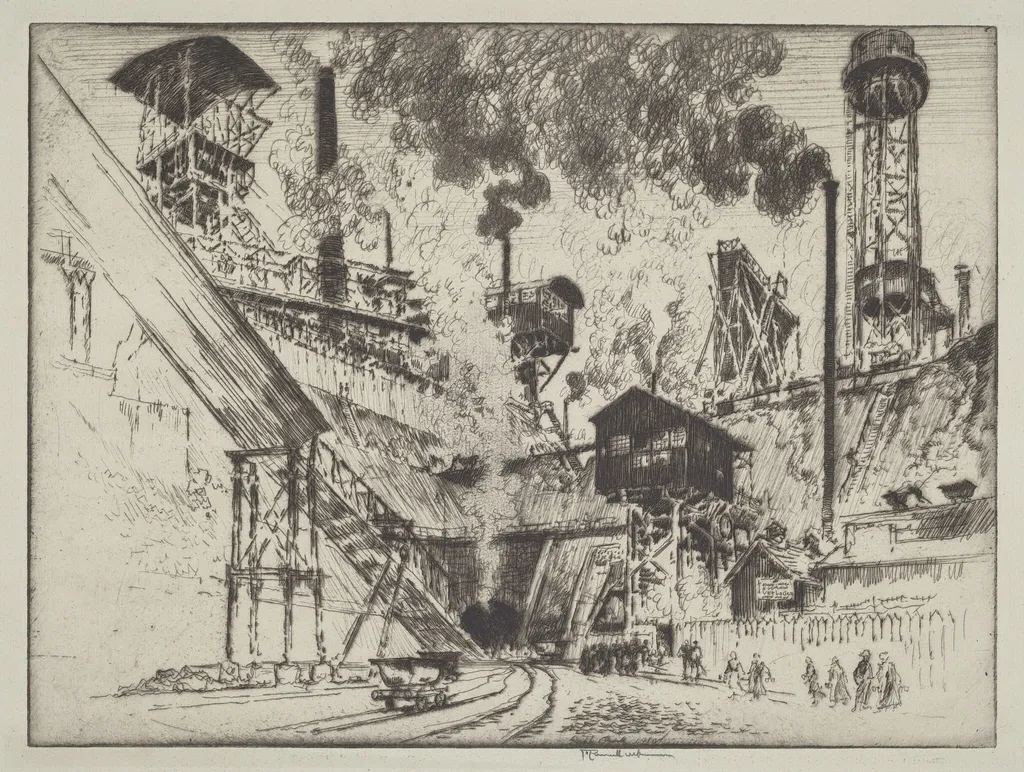
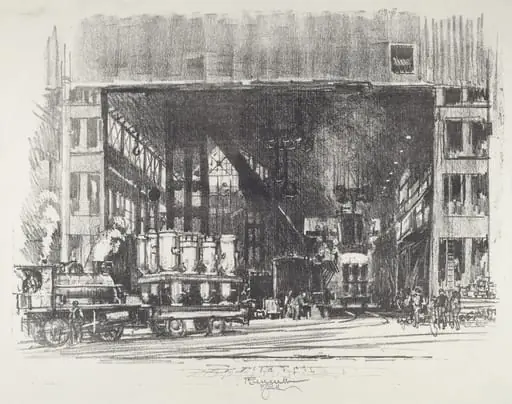
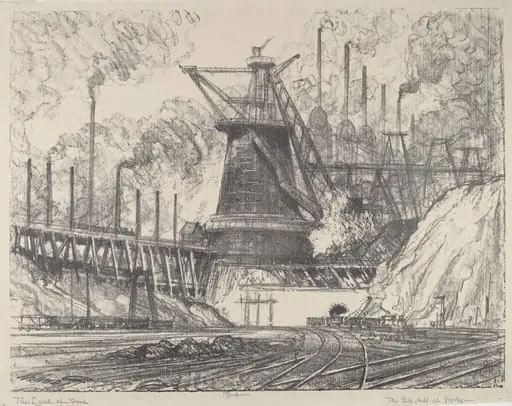
Mouth of the Mine, Ruhrort near Oberhausen is an ink print by Joseph Pennell. It dates from 1910 and is held in the collection of the National Gallery of Art.
About this work
Overview
Pennell, known for his precise draftsmanship and interest in modern infrastructure, produced this print during a period of extensive travel across Europe.
Created in 1910, *Mouth of the Mine, Ruhrort near Oberhausen* is an etching by American artist Joseph Pennell that captures a working industrial site in Germany’s Ruhr region. Pennell, known for his precise draftsmanship and interest in modern infrastructure, produced this print during a period of extensive travel across Europe. The work reflects his engagement with the visual language of industry, rendered through the intricate, line-based technique of etching on metal plate.
Subject & Meaning
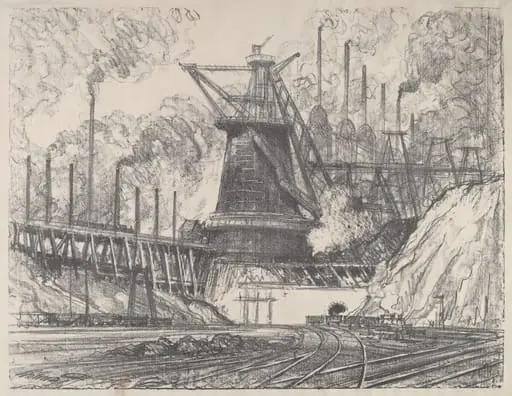
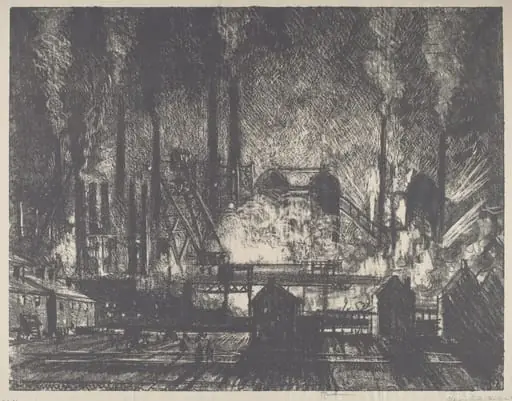
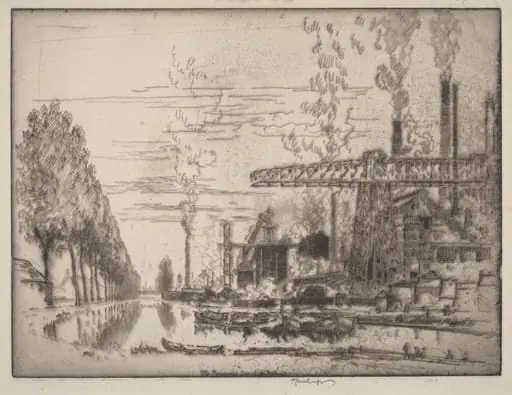
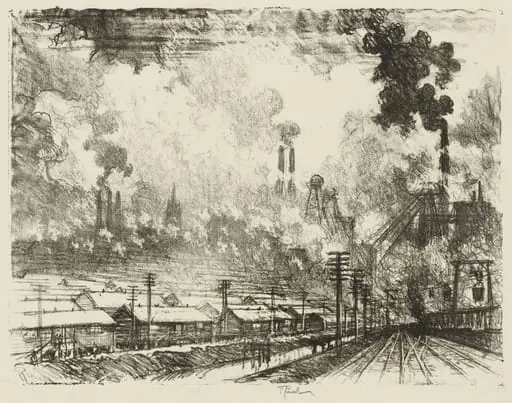
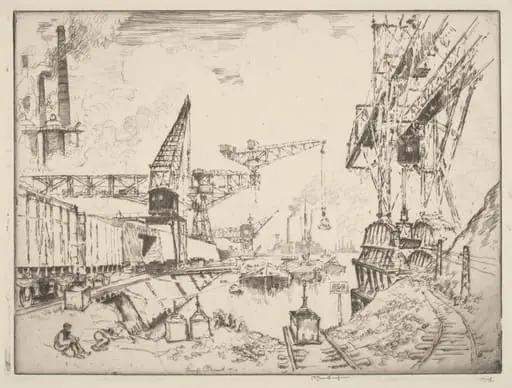
The scene portrays the entrance to a coal mine, with towering smokestacks, cranes, and overhead wiring dominating the composition. A narrow path carries a few pedestrians past a low, slanted-roof building, emphasizing human presence amid mechanical scale. The cluttered background of trees and rising smoke suggests an environment shaped by labor and extraction, conveying the quiet persistence of daily life within an industrial zone without overt commentary.
Technique & Style
Pennell employed etching to achieve fine, controlled lines that mimic the spontaneity of a sketch. Acid-bitten grooves in the metal plate allowed for dense shading and textural contrast—rough tree bark, metallic surfaces, and hazy smoke are rendered with varying line weights. The print’s hand-drawn appearance results from deliberate, expressive mark-making rather than mechanical reproduction, preserving the immediacy of observation while maintaining the precision of the medium.
History & Provenance
Pennell produced this work during his extended stays in Europe, where he documented industrial sites from Britain to the Ruhr Valley. The print was likely made from on-site sketches and later refined in his studio. It entered circulation through print portfolios and exhibitions focused on modern urban life, aligning with early 20th-century interest in industrial documentation. No record of early ownership is widely documented, but it remains part of institutional collections focused on American printmaking.
Context
In 1910, the Ruhr region was the heart of Germany’s industrial expansion, producing coal and steel for national and international markets. Pennell’s focus on this area reflects broader artistic and journalistic interest in the transformation of landscapes by industry. His approach differed from romanticized depictions of labor, instead offering unembellished views that acknowledged the visual complexity of modern infrastructure without overt sentiment.
Legacy
Pennell’s etchings, including this one, contributed to the recognition of industrial subjects as legitimate themes in fine art printmaking. His blend of observational accuracy and expressive line work influenced later documentary artists and urban chroniclers. While not widely known to the public today, his works remain referenced in studies of early modern printmaking and the aesthetic treatment of industry in the early 20th century.
Own this work as a print
Artist & collection
Artist
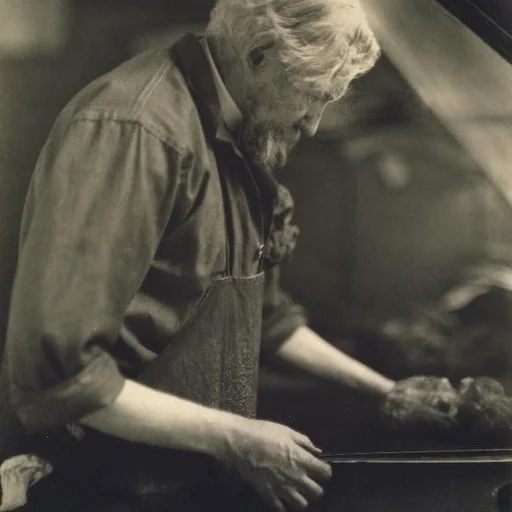
Joseph Pennell (July 4, 1857 – April 23, 1926) was an American draftsman, etcher, lithographer, and illustrator for books and magazines.