Artwork
The Treasury of Athens, Delphi
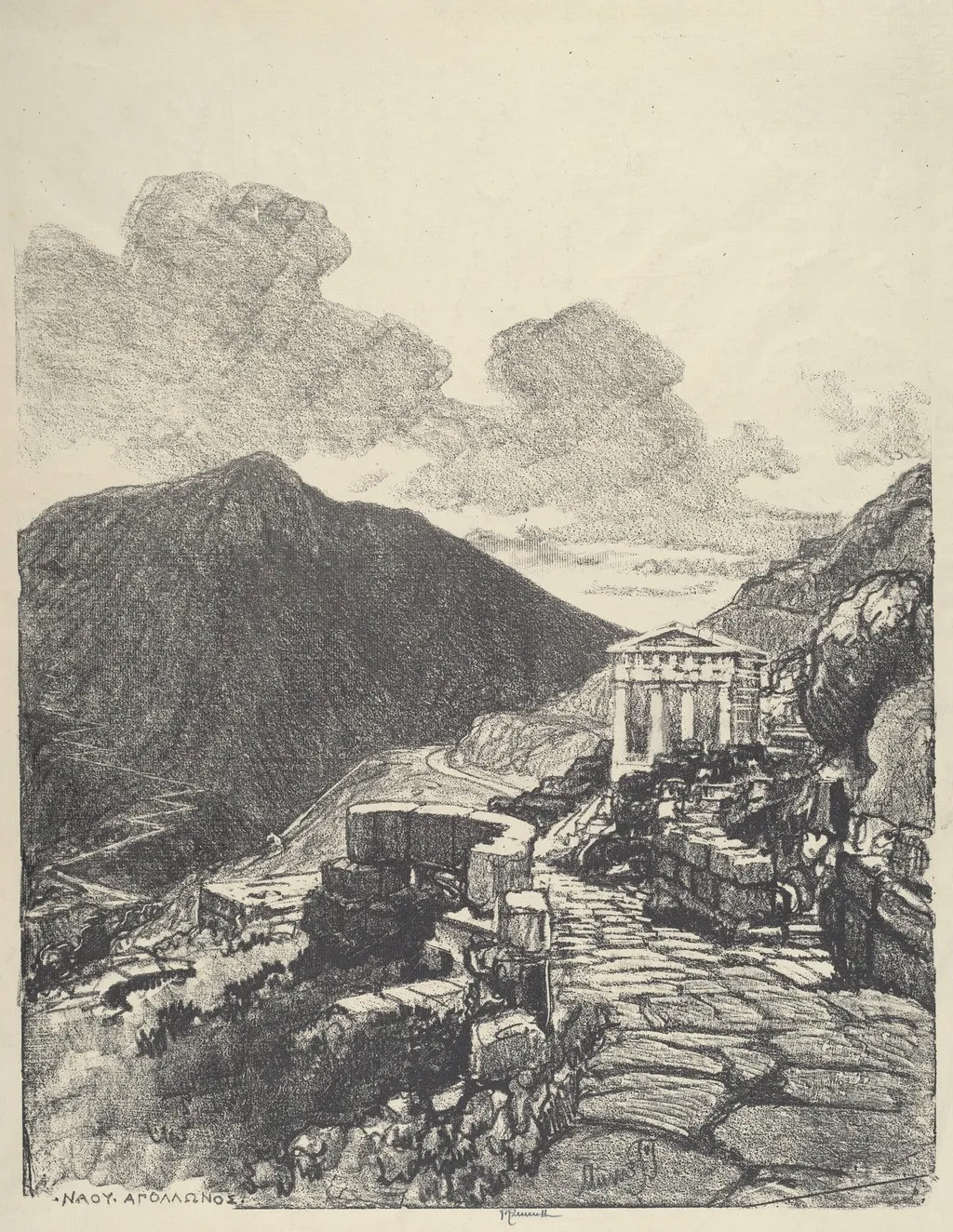
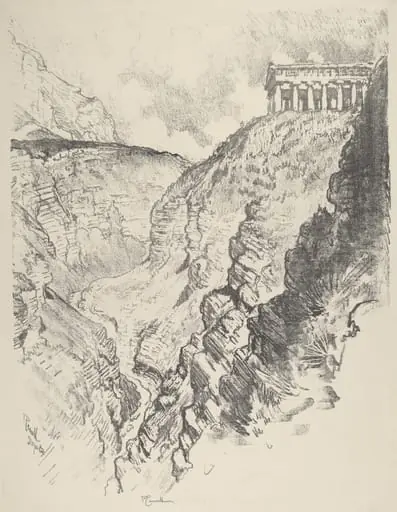
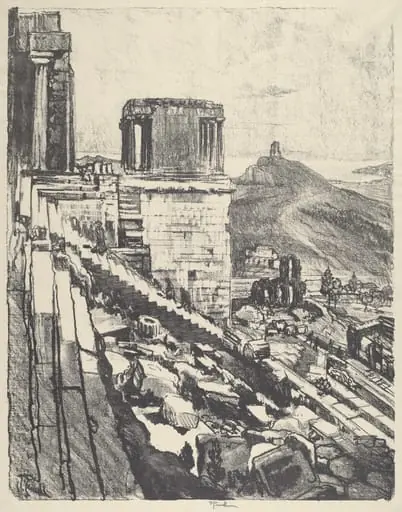
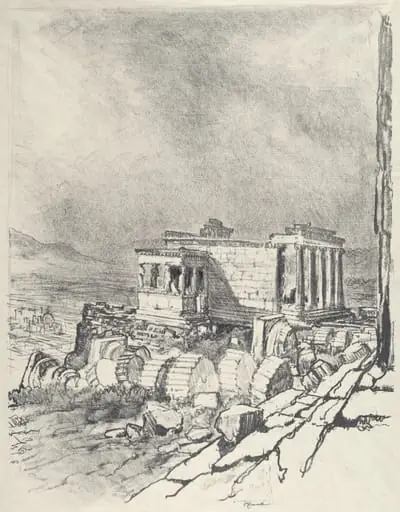
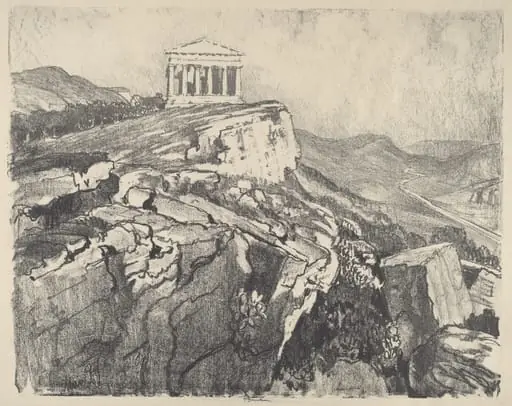
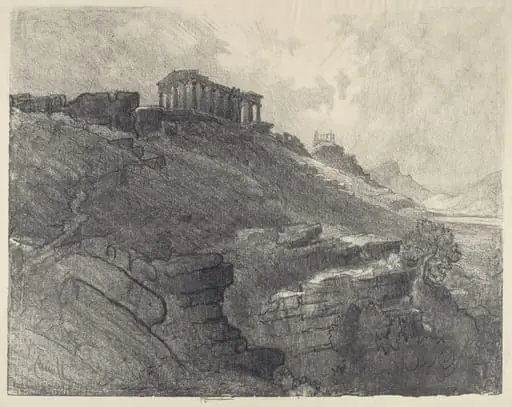
The Treasury of Athens, Delphi is an ink print by Joseph Pennell. It dates from 1913 and is held in the collection of the National Gallery of Art.
About this work
Overview
Pennell, known for his topographical precision, used lithography to convey both the weight of ancient stone and the ruggedness of the surrounding terrain.
Joseph Pennell produced this lithograph in 1913 as part of his extensive documentation of European architectural sites. The work captures the Treasury of Athens at Delphi, a structure from the classical period, rendered with careful attention to its placement within the natural landscape. Pennell, known for his topographical precision, used lithography to convey both the weight of ancient stone and the ruggedness of the surrounding terrain.
Subject & Meaning
The Treasury of Athens, built to house votive offerings, stands as a symbol of civic pride in ancient Greece. Pennell’s depiction emphasizes its isolation atop a steep, rocky slope, underscoring its role as a sacred waypoint along the sacred way to the Oracle. The path leading to it suggests a pilgrimage, reinforcing the site’s spiritual and cultural gravity without overt symbolism.
Technique & Style
Pennell employed lithography to achieve subtle tonal gradations, using ink washes to suggest the texture of weathered stone and the softness of distant mountains. The composition relies on strong horizontal lines of the platform and vertical columns, contrasting with the irregular contours of the hillside. The sky is rendered with minimal detail, allowing the architecture to dominate while retaining atmospheric depth.
History & Provenance
Pennell traveled extensively through Europe in the early 20th century, sketching and printing sites of historical interest. This lithograph emerged from his time in Greece, where he documented antiquities with scholarly intent. The work was likely produced for private collectors and institutions interested in architectural documentation, reflecting a broader trend of artists engaging with classical ruins as subjects of study rather than mere spectacle.
Context
In the early 1900s, European artists and scholars were increasingly drawn to the physical remains of antiquity as tangible links to cultural origins. Pennell’s work aligned with archaeological efforts underway at Delphi, which were then being systematically excavated. His focus on the site’s integration with the landscape echoed contemporary interests in how architecture responded to natural topography.
Legacy
Pennell’s lithographs of classical sites contributed to a visual archive that informed both artistic and academic understanding of ancient landscapes. His restrained, observational style avoided romanticization, offering instead a clear record of form and setting. This work remains part of a broader corpus used by historians to study how early 20th-century artists interpreted archaeological sites through printmaking.
Artist & collection
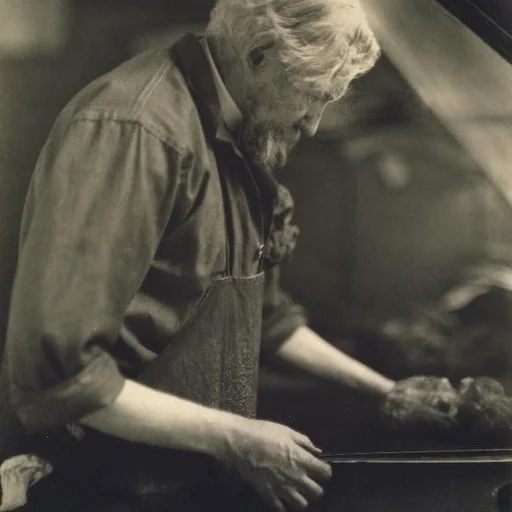
Artist
Joseph Pennell (July 4, 1857 – April 23, 1926) was an American draftsman, etcher, lithographer, and illustrator for books and magazines.