Artwork
Casa din Italia
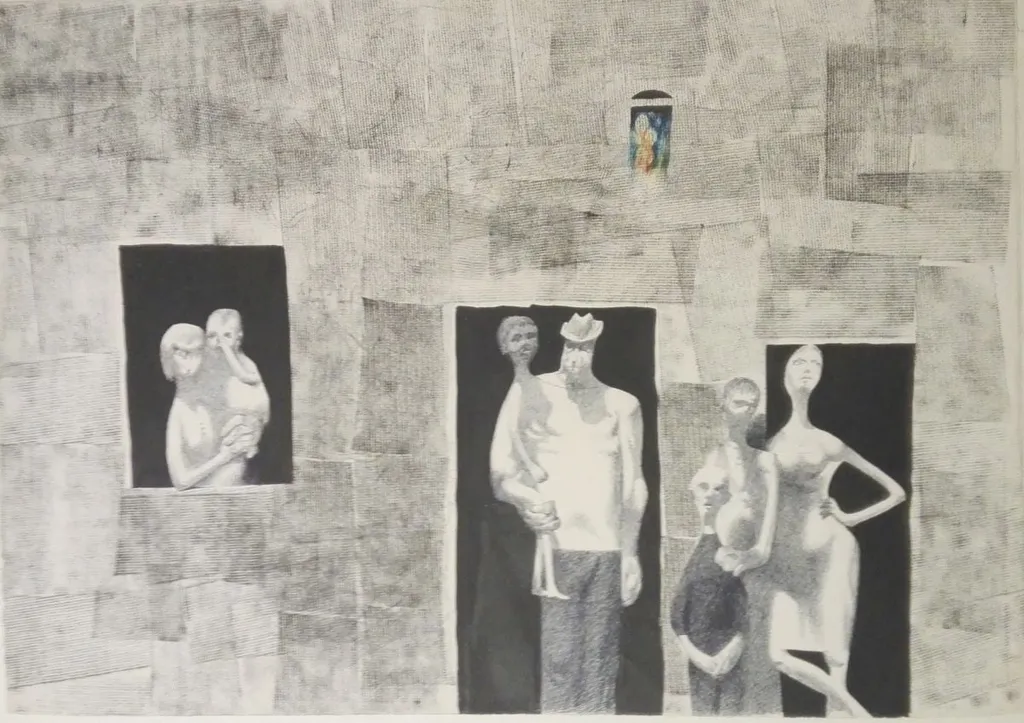
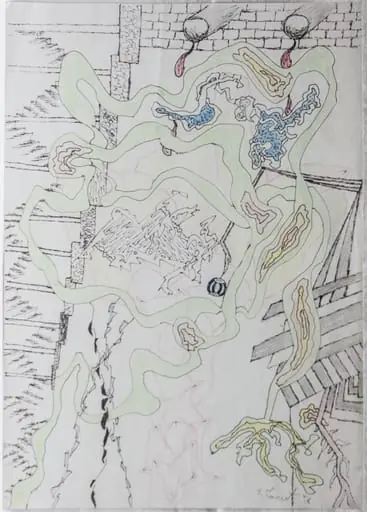
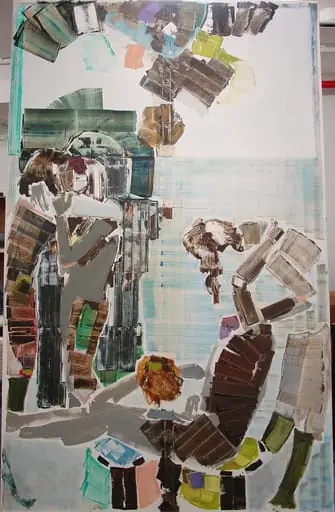
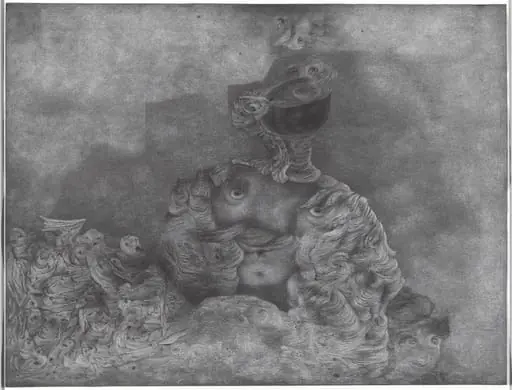
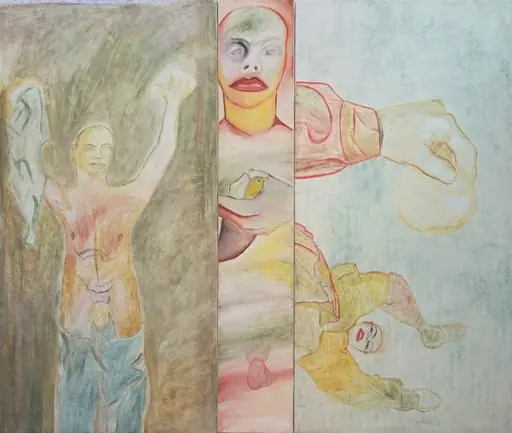
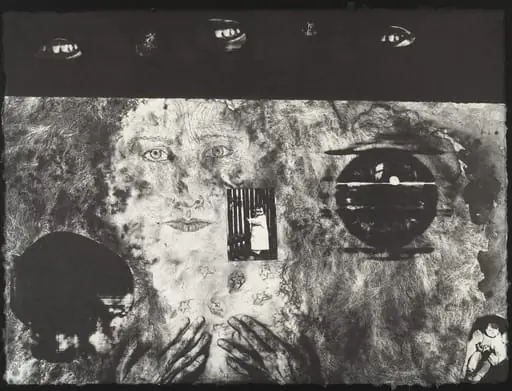
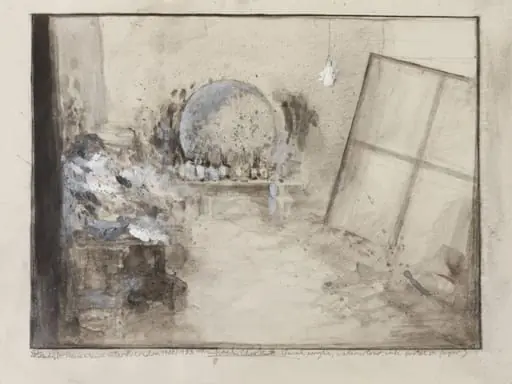
Casa din Italia is a drawing by Jules Perahim. It dates from 1972 and is held in the collection of the Bucharest Municipality Museum.
About this work
Overview
Casa din Italia, created around 1972 by Jules Perahim, is a graphite-on-paper drawing held in the collection of the Museum of Ethnography. The work presents an intimate interior scene with minimal color, relying on tonal variation to convey form and mood. Its quiet composition and restrained technique reflect a focus on domestic life rather than narrative drama.
Subject & Meaning
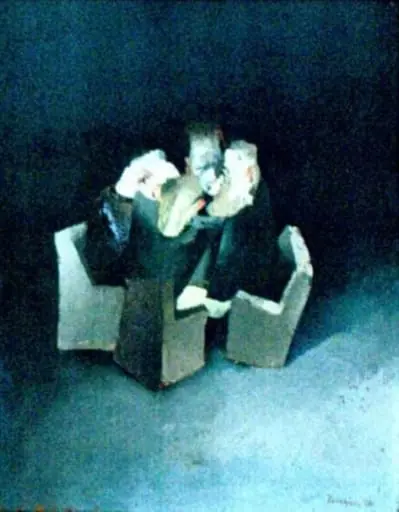
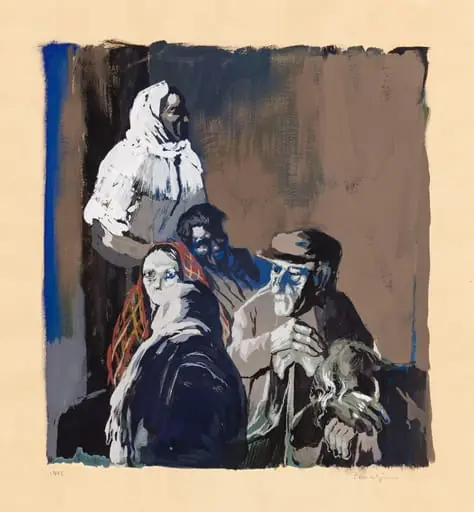
The drawing depicts four figures in a stone-walled room: a man stands centrally with a child, flanked by two women—one cradling an infant, the other with a hand on her hip. The arrangement suggests familial bonds and quiet responsibility. No overt action occurs; the stillness invites reflection on everyday endurance, possibly hinting at postwar rural life in southern Europe.
Technique & Style
Perahim employs cross-hatching and stippling to model form and suggest the rough texture of stone walls. The absence of color and the precision of line work create a sense of quiet gravity. Shadows are built gradually, enhancing depth without theatrical contrast. The technique emphasizes tactility, grounding the figures in a tangible, unadorned space.
History & Provenance
The work entered the Museum of Ethnography’s collection in the late 1970s, acquired as part of a broader effort to document vernacular life through contemporary art. Its origin as a personal study by Perahim, likely made during travels in Italy, aligns with his interest in regional domestic environments. No earlier exhibition history is documented.
Context
Created during a period when many European artists turned to intimate, non-monumental subjects, Casa din Italia reflects a shift away from grand historical themes. Perahim’s focus on ordinary interiors and unposed figures echoes contemporaneous documentary practices in photography and drawing, emphasizing authenticity over idealization.
Legacy
Though not widely exhibited, the work remains a quiet example of Perahim’s commitment to capturing unvarnished human presence. Its inclusion in an ethnographic museum underscores its value as a visual record of everyday life, contributing to broader discussions on how art can document social continuity rather than rupture.
Artist & collection
Artist
Jules Perahim made paintings and drawings in the 1930s and 1940s. Look at Casa din Italia and Olga Bancic: sharp lines and shadowed figures in everyday settings. The 1936 painting Consiliul de administrație shows a…