Artwork
A Virgem Maria
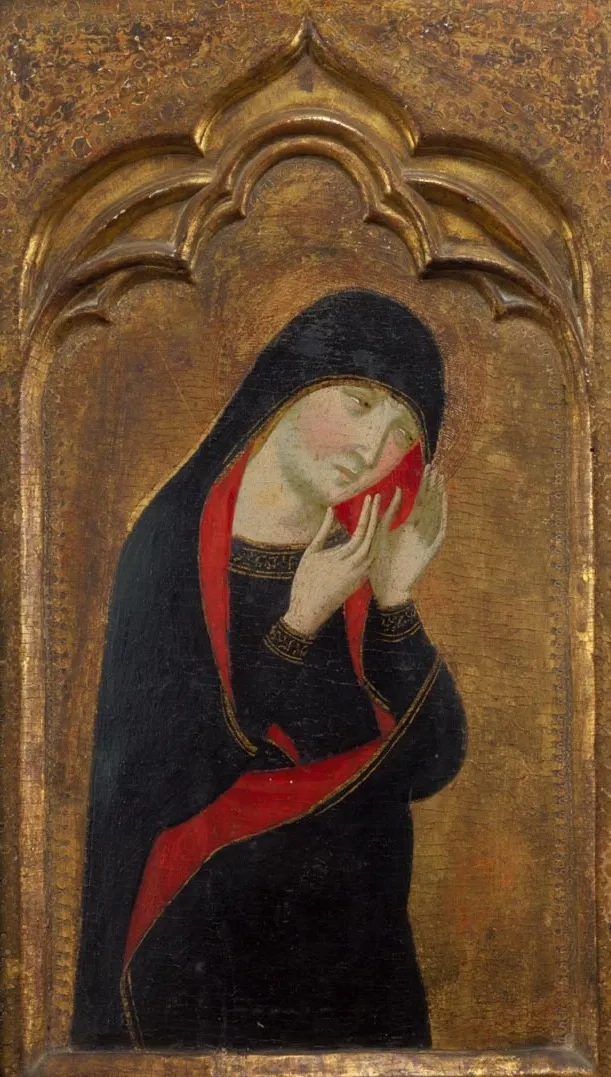
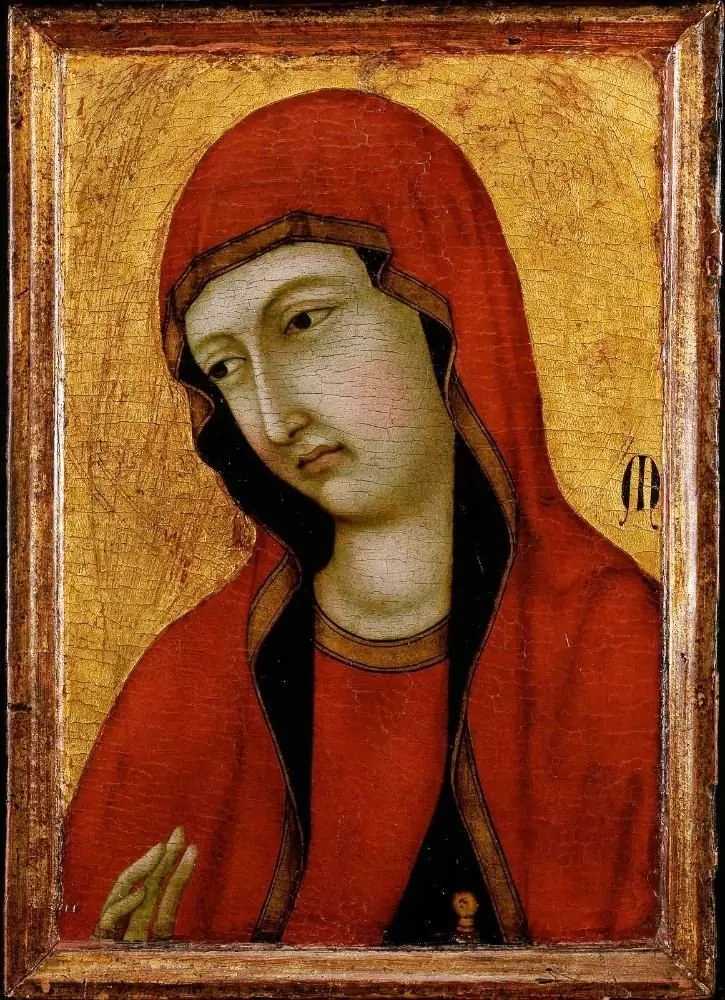
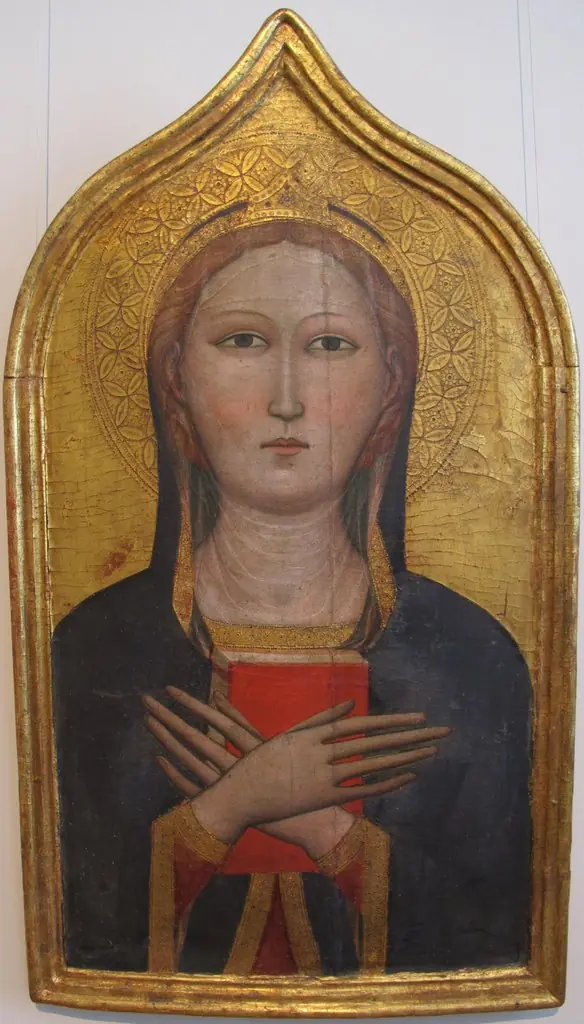
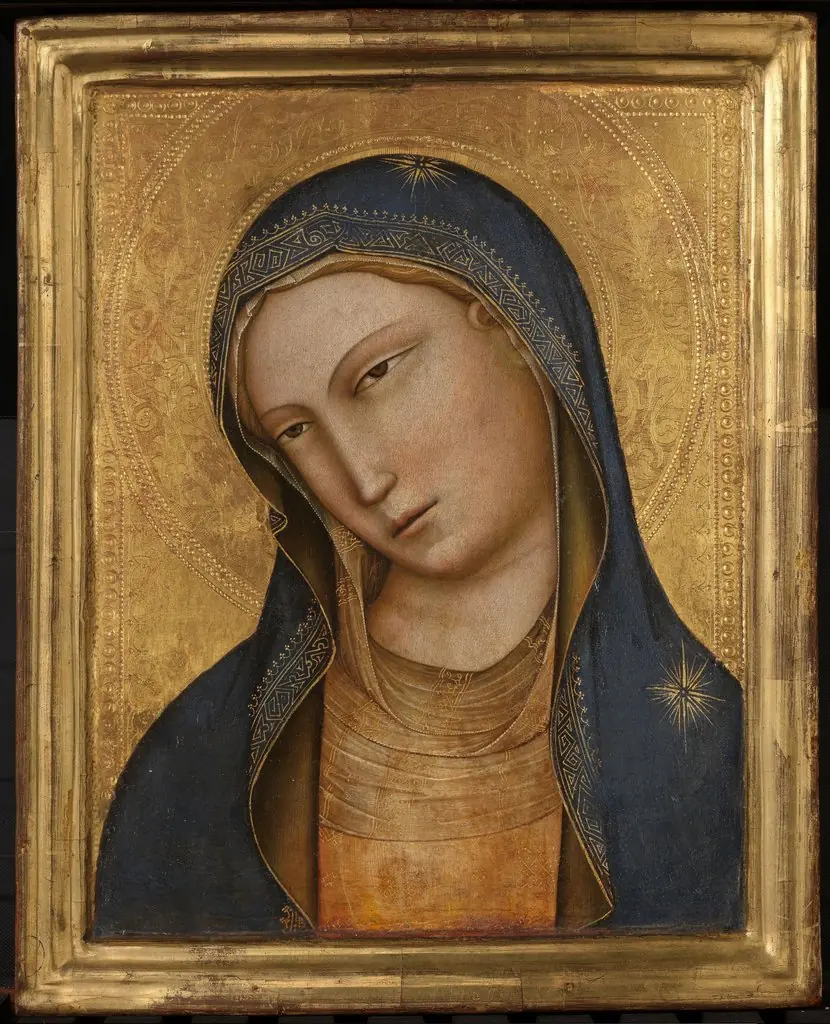
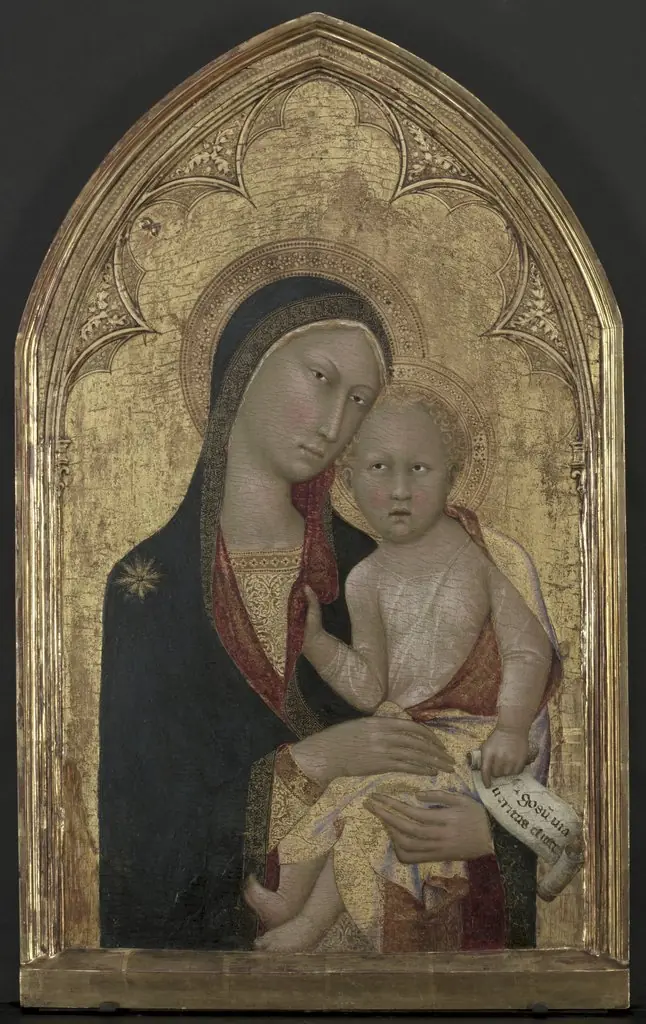
A Virgem Maria is a tempera painting by the Byzantine icon painting artist Pere Serra. It dates from 1340 and is held in the collection of the National Museum of Ancient Art.
About this work
Overview
It is now part of the collection at the National Museum of Ancient Art in Lisbon, where it remains a quiet testament to regional devotional art of the period.
Created around 1340 by the Catalan artist Pere Serra, this tempera painting portrays the Virgin Mary in a devotional pose. Executed in the late Gothic tradition with clear Sienese influences, the work exemplifies the religious iconography prevalent in 14th-century Catalonia. It is now part of the collection at the National Museum of Ancient Art in Lisbon, where it remains a quiet testament to regional devotional art of the period.
Subject & Meaning
The Virgin Mary is depicted with hands clasped beneath her chin, head bowed, and gaze lowered—an iconographic gesture of humility and contemplation. Her stillness and inward focus reflect a meditative piety common in Byzantine-derived imagery. The absence of narrative elements emphasizes her role as an object of veneration rather than a participant in a biblical scene, aligning with devotional practices of the time.
Technique & Style
Tempera on panel was the standard medium for religious panel paintings in this era, valued for its durability and luminous finish. Serra employed fine brushwork to define the folds of Mary’s robe and the subtle contours of her face. The golden background, typical of Byzantine and Italo-Gothic models, creates a timeless, sacred space, while the red lining of her black garment introduces a restrained chromatic contrast.
History & Provenance
The painting is attributed to Pere Serra, a member of a well-documented Catalan artistic family active in the mid-14th century. Its survival suggests it was likely commissioned for private or ecclesiastical use. It entered the National Museum of Ancient Art’s collection through institutional acquisitions, preserving it as one of the few surviving panel paintings from Serra’s workshop.
Context
In 14th-century Catalonia, religious imagery served both liturgical and personal devotional functions. Artists like Serra absorbed stylistic elements from Italian centers such as Siena, adapting them to local tastes. This painting reflects a broader trend of blending Byzantine solemnity with emerging Gothic naturalism, bridging Eastern icon traditions and Western devotional practices in a period of cultural exchange.
Legacy
Though not widely known outside regional art history, this work contributes to understanding the transmission of iconographic models across the Mediterranean. It stands as an example of how Catalan painters integrated Italian innovations into a conservative devotional framework. Its preservation allows study of tempera technique and religious aesthetics in pre-Renaissance Iberia.
Artist & collection
Artist
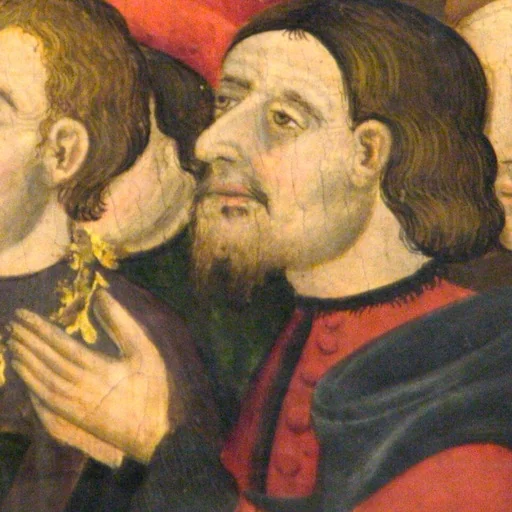
Pere Serra was a painter in Gothic-Italian style, who was active in Catalonia in 1357–1406.

![Saint Mary Magdalene, with an Angel [left panel], by Pietro Lorenzetti](https://artifactworldgallery.com/img/pietro-lorenzetti--saint-mary-magdalene-with-an-angel-left-panel--c015f106a0790d0d-w320.webp)