Artwork
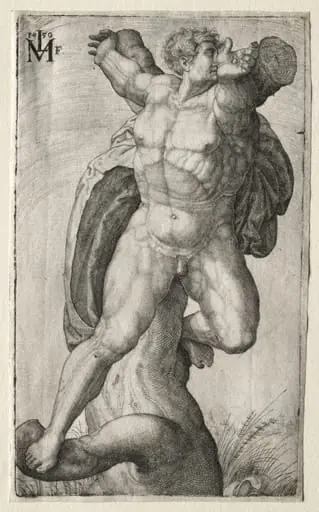
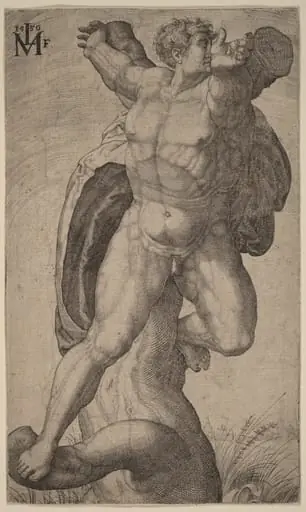
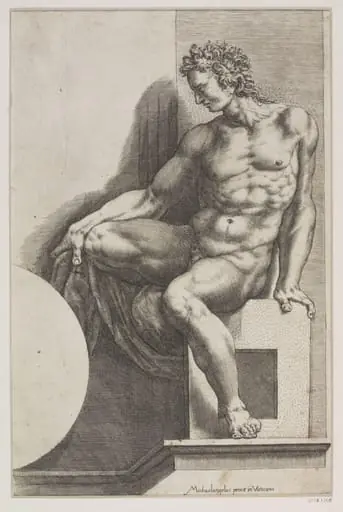
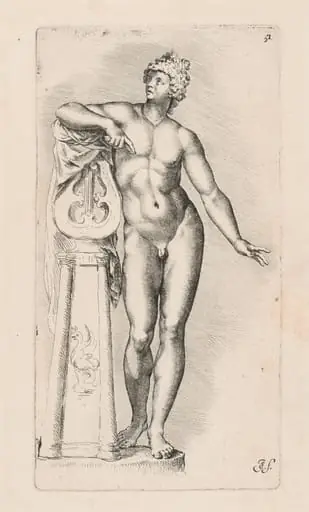
The Farnese Hercules, three-quarter view turned to left [plate 3]
![The Farnese Hercules, three-quarter view turned to left [plate 3], by François Perrier, ink, 1638](https://artifactworldgallery.com/img/francois-perrier--the-farnese-hercules-three-quarter-view-turned-to-left-plate--b0564bebaad016fa-w1024.webp)
The Farnese Hercules, three-quarter view turned to left [plate 3] is an ink print by the Baroque artist François Perrier. It dates from 1638 and is held in the collection of the National Gallery of Art.
About this work
Overview
François Perrier’s 1638 etching presents a three‑quarter profile of the Farnese Hercules, rendered on laid paper. The image belongs to a series of prints that reproduced celebrated ancient statues, offering a portable visual record of classical sculpture for a 17th‑century audience.
Subject & Meaning
The composition isolates the muscular figure of Hercules, his left forearm resting on a stone block and his right hand gripping a club, echoing the traditional iconography of the mythic hero. By focusing on the statue’s anatomical detail, the print emphasizes the ideal of heroic strength that classical art celebrated.
Technique & Style
Executed as an etching, Perrier incised fine lines into a copper plate, then transferred the image onto laid paper. The work relies on cross‑hatching and varied line density to model volume, creating a chiaroscuro effect that suggests the play of light across the figure’s flesh and the texture of the stone support.
History & Provenance
The print forms part of Perrier’s *Segmenta nobilium signorum et statuarum quae temporis dentem invidium evasere*, a collection intended to document notable ancient statues. Distributed among artists and collectors, these images circulated widely in Europe, shaping contemporary understandings of classical form.
Context
In early‑17th‑century France, reproductions of antiquities served both scholarly and decorative purposes. Perrier’s series responded to a growing demand for accurate visual references to classical models, aligning with the broader Baroque interest in antiquity and the emerging practice of studying ancient art through prints.
Legacy
Perrier’s etchings, including this view of the Farnese Hercules, provided a template for later artists who sought to emulate classical anatomy. The prints contributed to the diffusion of ancient motifs across Europe, influencing the visual language of academic art and the collections of connoisseurs for generations.
Artist & collection
Artist
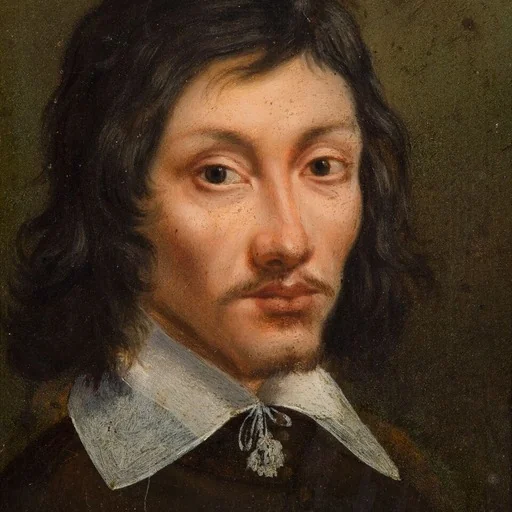
François Perrier (French pronunciation: ; 1590–1650) was a French painter, draftsman, and printmaker.

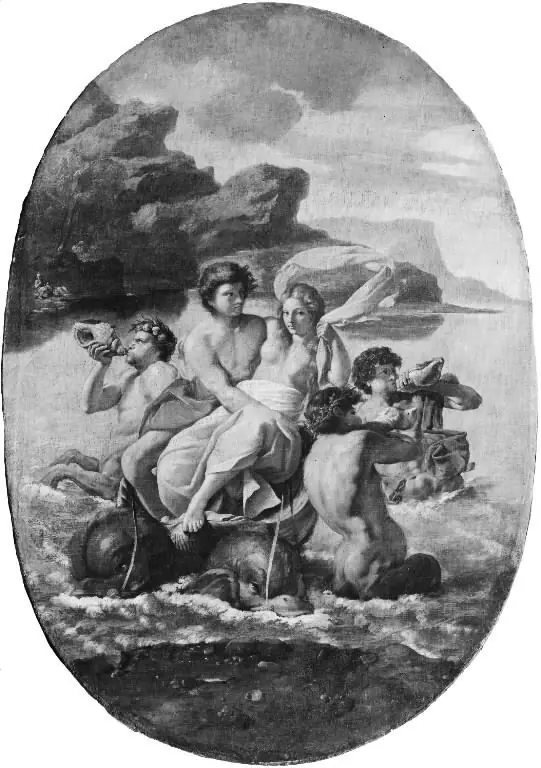 Acis and Galathea
![The Farnese Hercules, seen from behind [plate 4], by François Perrier](https://artifactworldgallery.com/img/francois-perrier--the-farnese-hercules-seen-from-behind-plate-4--075576b9459929be-w320.webp) The Farnese Hercules, seen from behind [plate 4]
The Farnese Hercules, seen from behind [plate 4]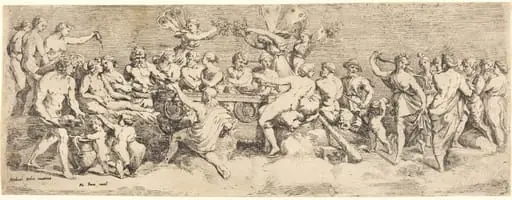 The Wedding Feast of Cupid and Psyche
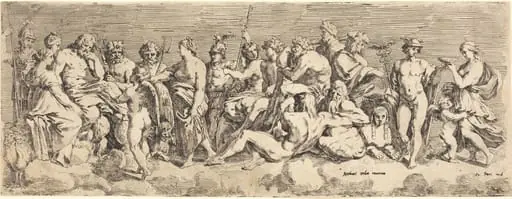 The Admission of Psyche to Olympia
![A Nude Fighting Man, side view, turned to left [plate 27], by François Perrier](https://artifactworldgallery.com/img/francois-perrier--a-nude-fighting-man-side-view-turned-to-left-plate-27--39122f796b85b2fb-w320.webp) A Nude Fighting Man, side view, turned to left [plate 27]
A Nude Fighting Man, side view, turned to left [plate 27]![The Borghese Gladiator, front view [plate 26], by François Perrier](https://artifactworldgallery.com/img/francois-perrier--the-borghese-gladiator-front-view-plate-26--5b649a5fe8c2f305-w320.webp) The Borghese Gladiator, front view [plate 26]
The Borghese Gladiator, front view [plate 26]![The Medici Wrestlers, side view, turned to left [plate 36], by François Perrier](https://artifactworldgallery.com/img/francois-perrier--the-medici-wrestlers-side-view-turned-to-left-plate-36--c50b05437f8744ca-w320.webp) The Medici Wrestlers, side view, turned to left [plate 36]
The Medici Wrestlers, side view, turned to left [plate 36]![The Farnese Hercules, front view [plate 2], by François Perrier](https://artifactworldgallery.com/img/francois-perrier--the-farnese-hercules-front-view-plate-2--cedb2cb031c3391b-w320.webp) The Farnese Hercules, front view [plate 2]
The Farnese Hercules, front view [plate 2]