Artwork
The Crucified Man
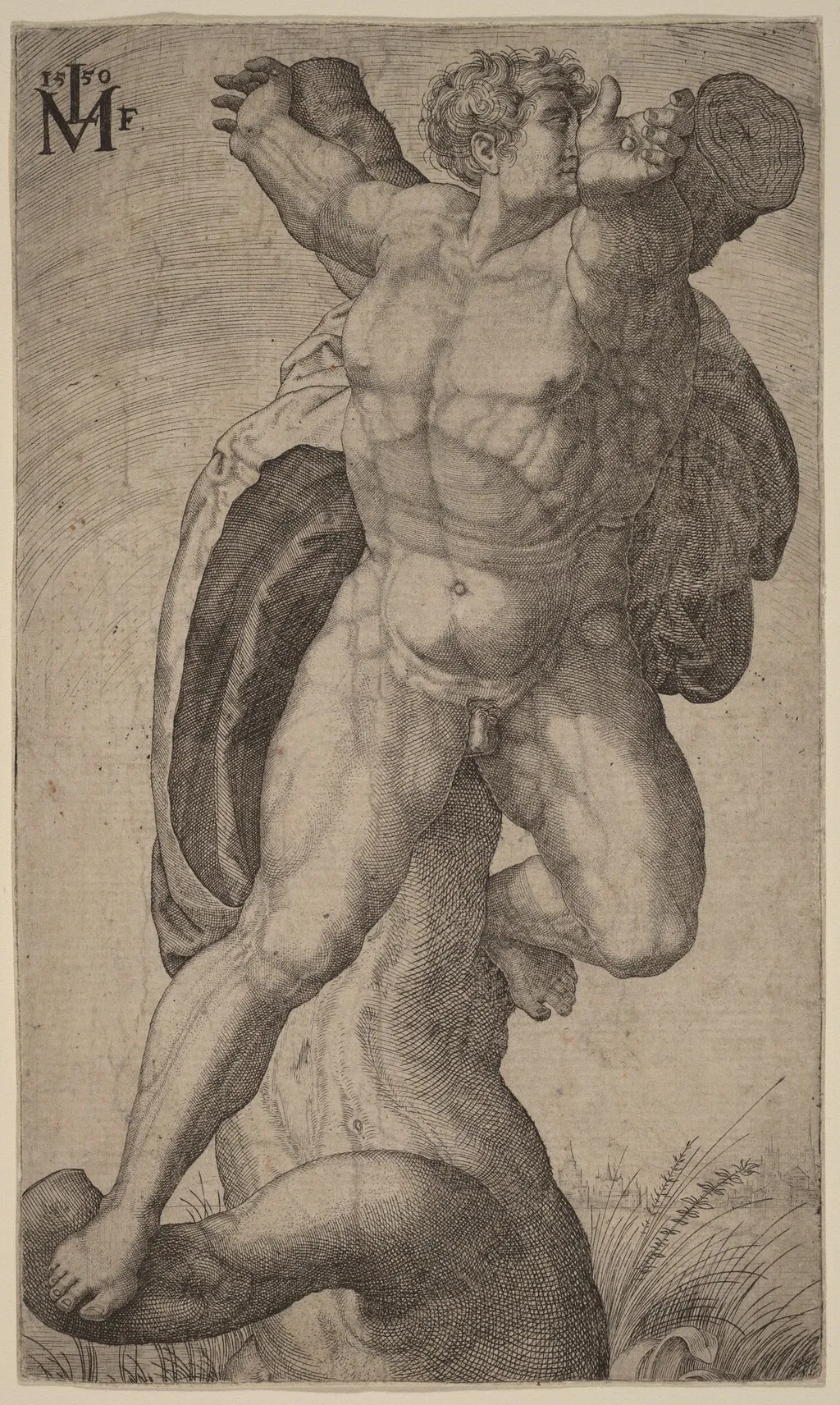
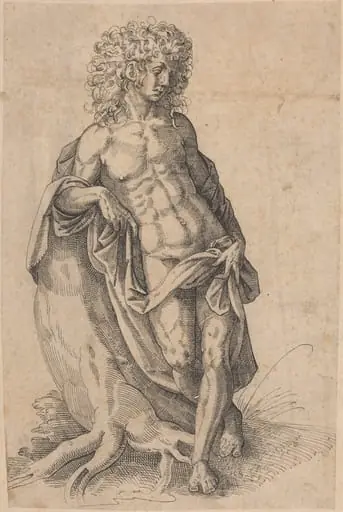
The Crucified Man is an ink print by the Renaissance artist Melchior Lorch. It dates from 1550 and is held in the collection of the National Gallery of Art.
About this work
Overview
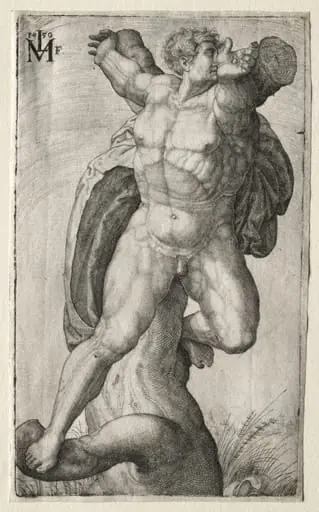
Melchior Lorch’s 1550 engraving, titled The Crucified Man, presents a stark depiction of the crucifixion. Rendered in black ink on paper, the image centers on a solitary figure of Jesus affixed to a wooden cross, set against an unlit backdrop that emphasizes the solemnity of the scene.
Subject & Meaning
The composition focuses on the moment of Christ’s suffering, highlighting his physical form and the wooden cross as symbols of sacrifice. The absence of surrounding narrative elements directs attention to the emotional weight of the crucifixion, inviting contemplation of its theological significance.
Technique & Style
Lorch employed fine incised lines on a metal plate, filling them with ink to produce the print. Through dense cross‑hatching, he generated tonal variation and depth without color, creating a pronounced chiaroscuro effect that accentuates the illuminated portions of the body against the surrounding darkness.
History & Provenance
Created in the mid‑16th century, the engraving reflects the period’s interest in devotional imagery for private contemplation. While specific ownership records are scarce, the work is attributed to Lorch, a German printmaker active during the Reformation, and survives in several museum collections.
Artist & collection


![The Farnese Hercules, three-quarter view turned to left [plate 3], by François Perrier](https://artifactworldgallery.com/img/francois-perrier--the-farnese-hercules-three-quarter-view-turned-to-left-plate--b0564bebaad016fa-w320.webp)
![The Farnese Hercules, front view [plate 2], by François Perrier](https://artifactworldgallery.com/img/francois-perrier--the-farnese-hercules-front-view-plate-2--cedb2cb031c3391b-w320.webp)