Artwork
View on the Outskirts of Granville
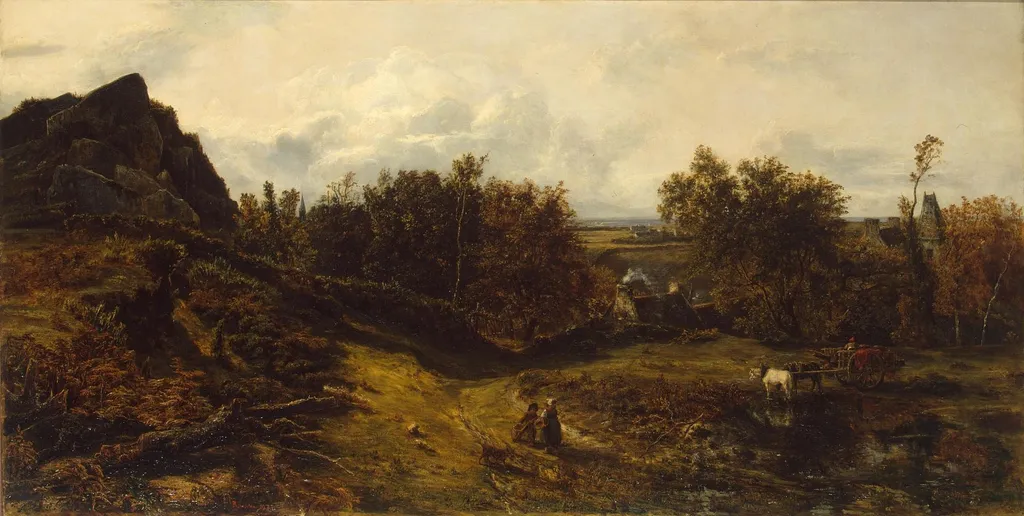
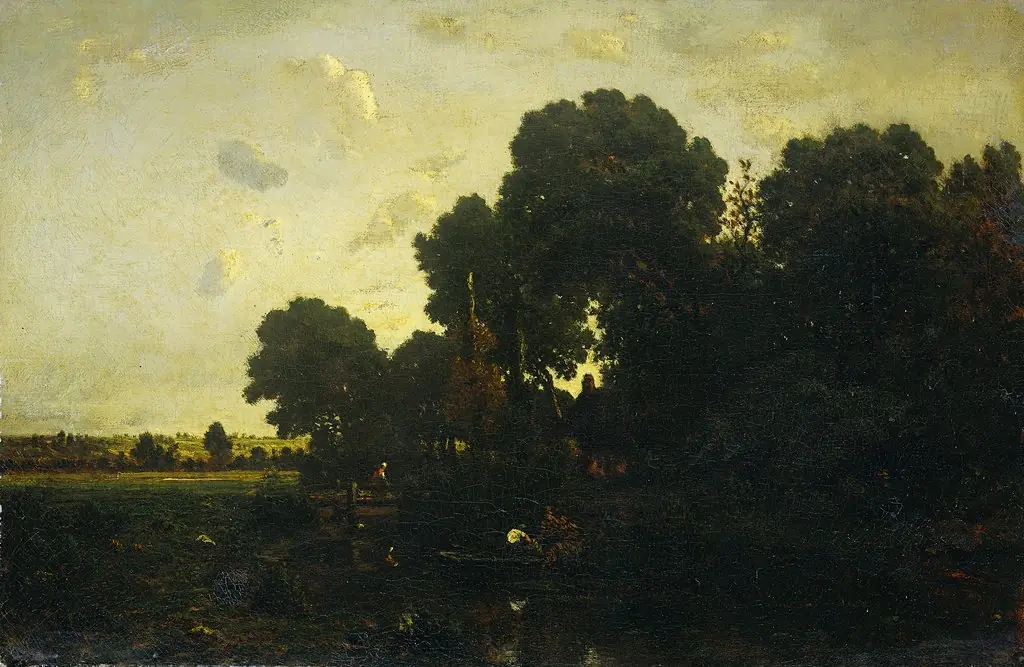
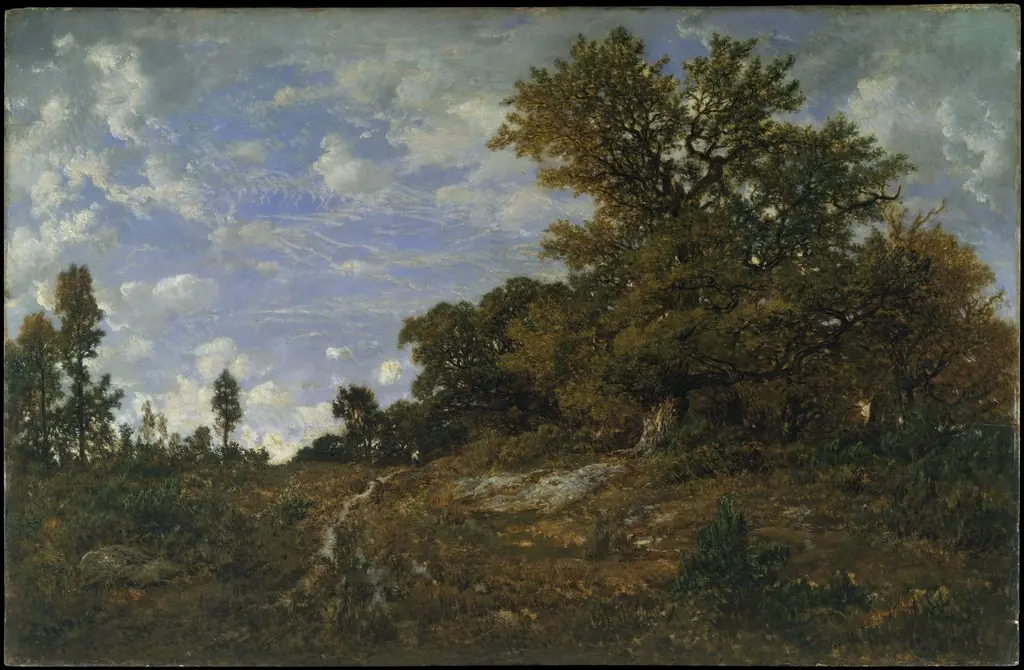
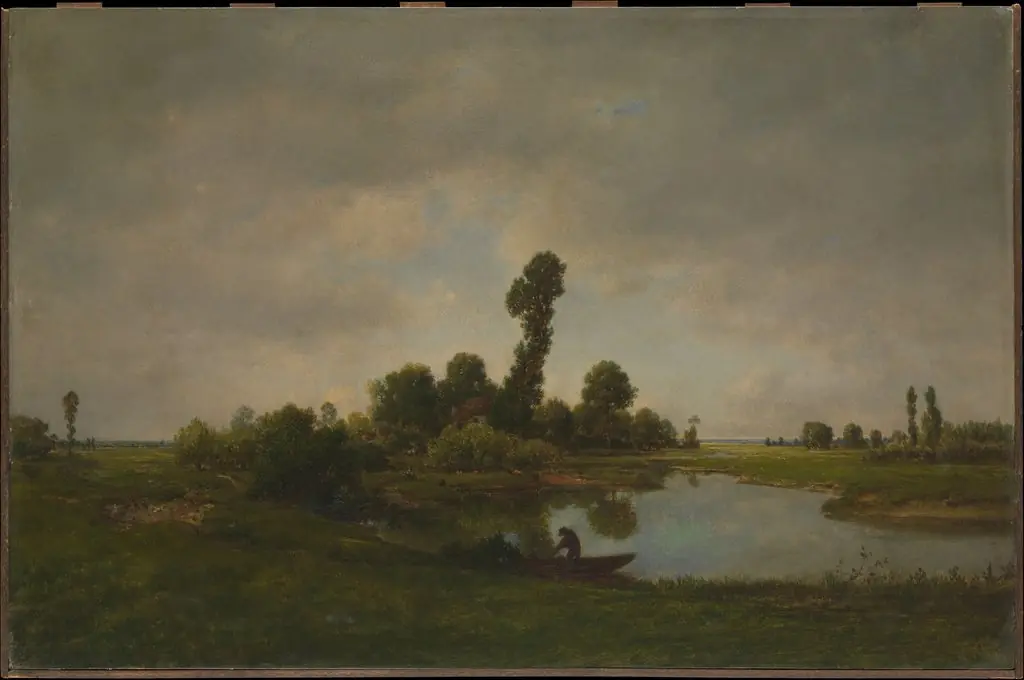
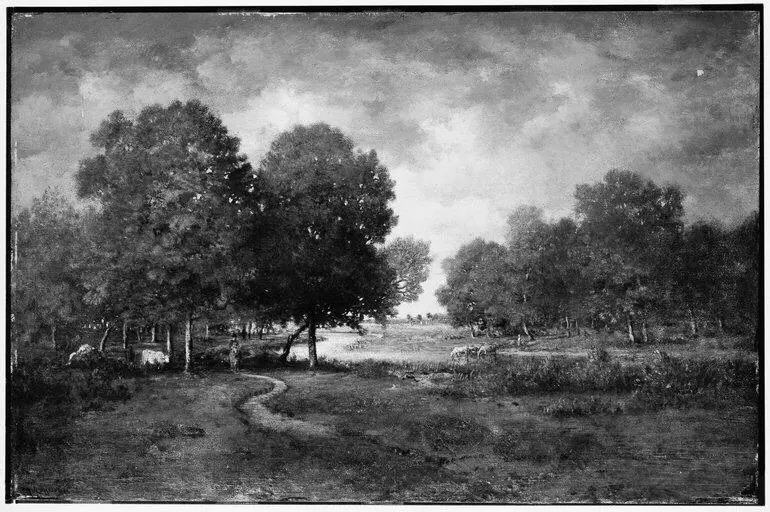
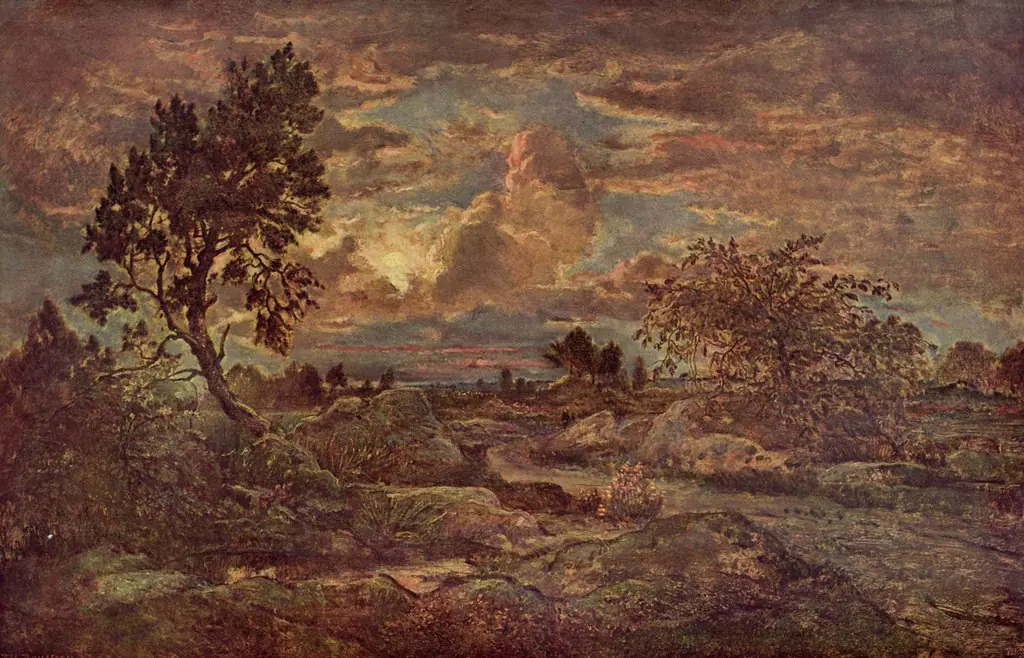
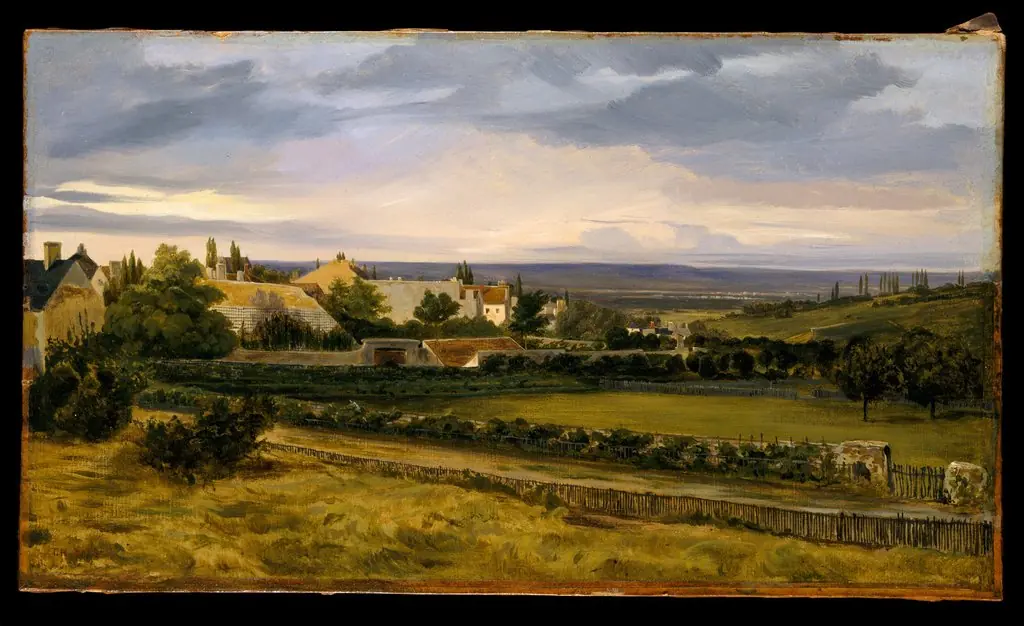
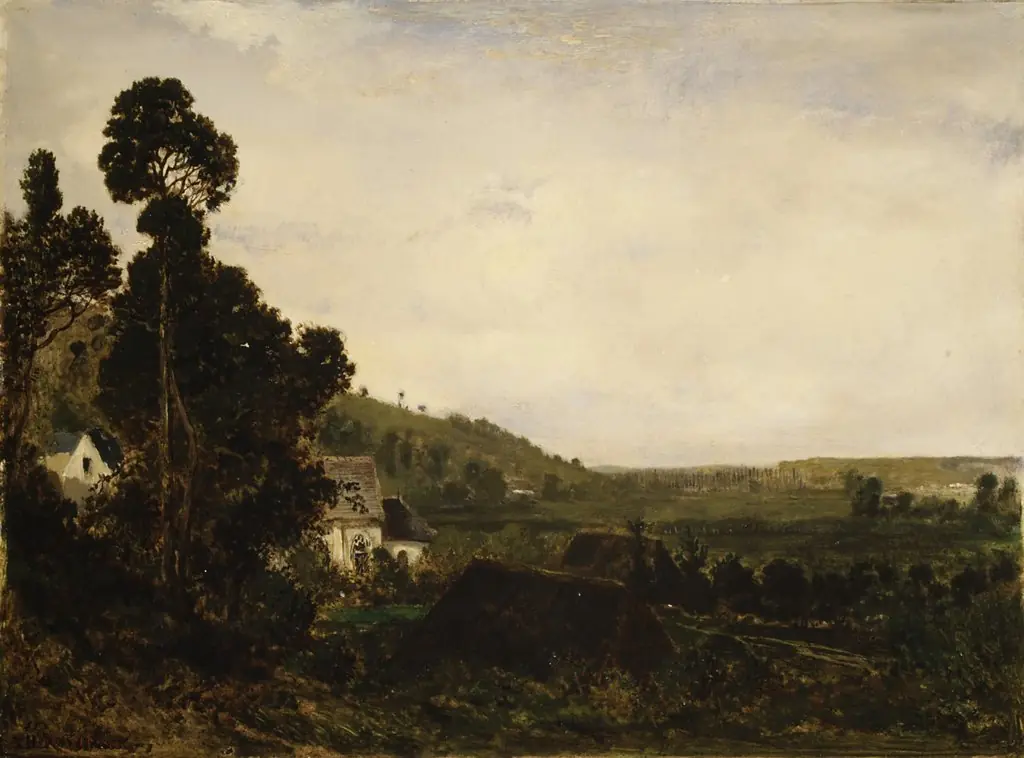
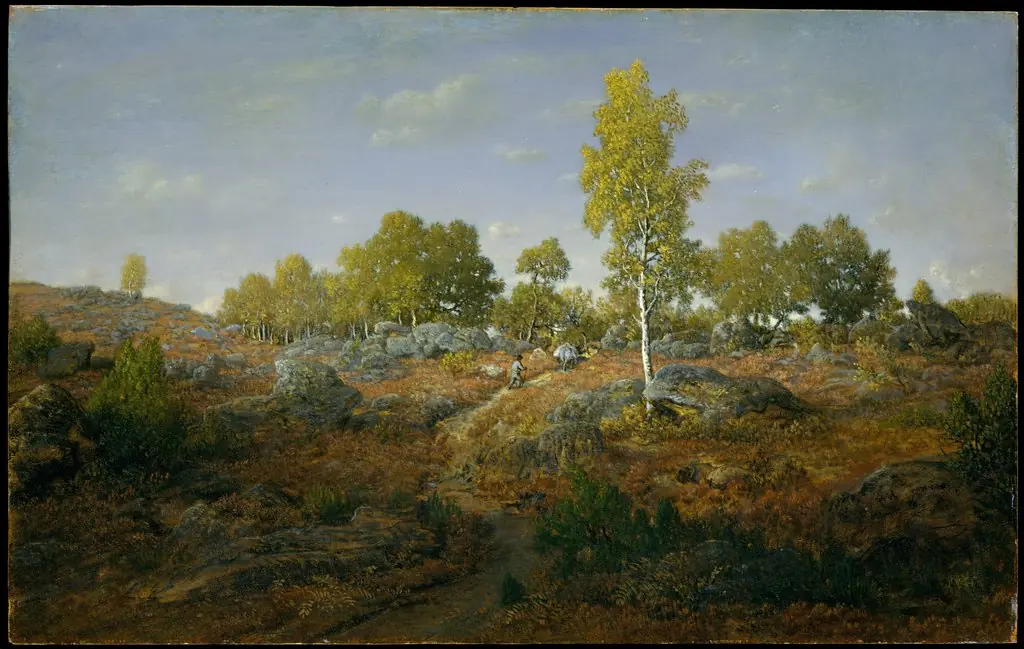
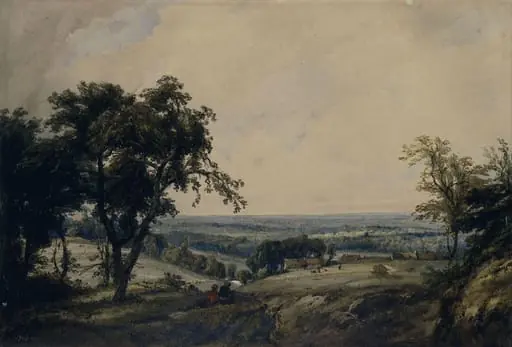
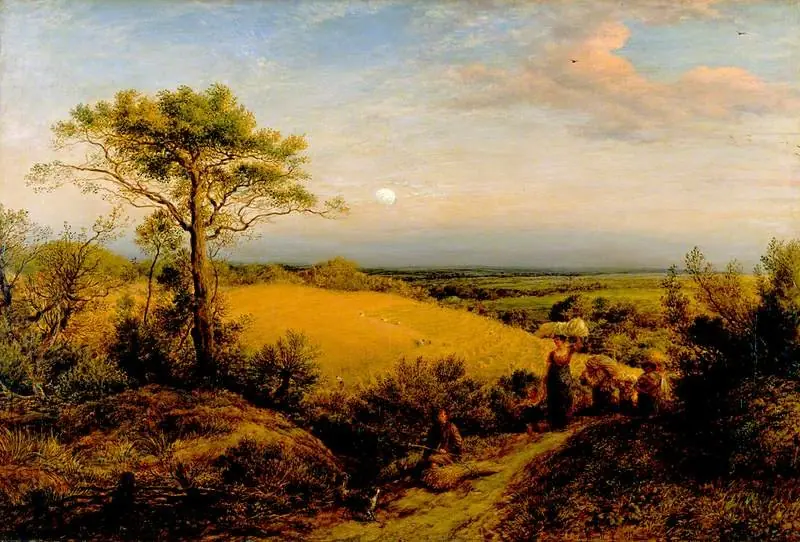
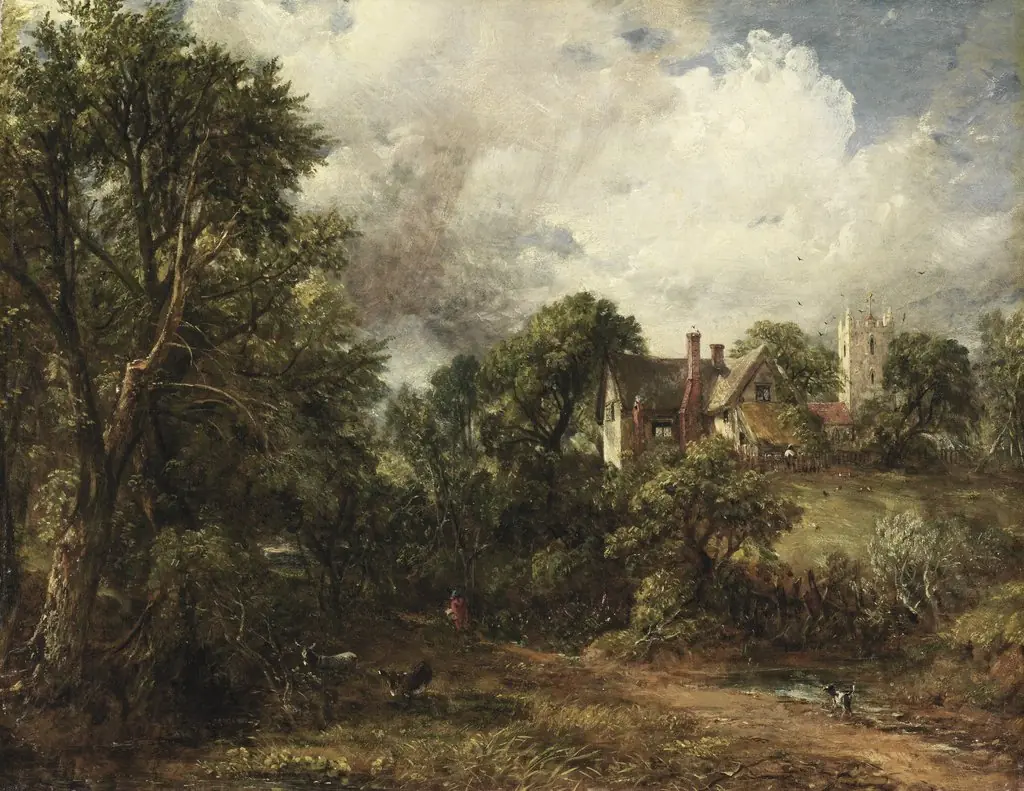
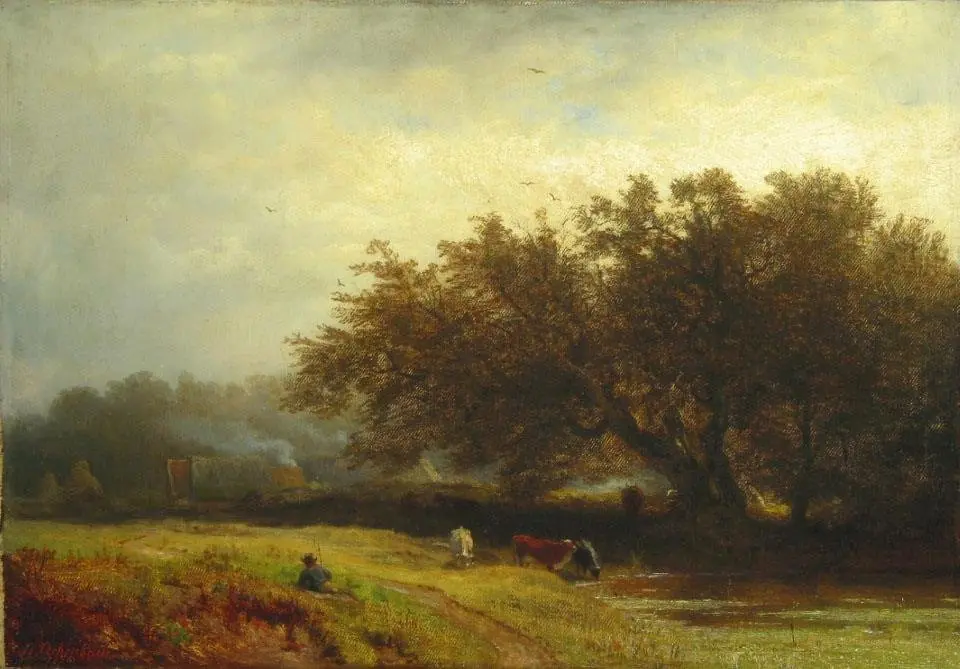
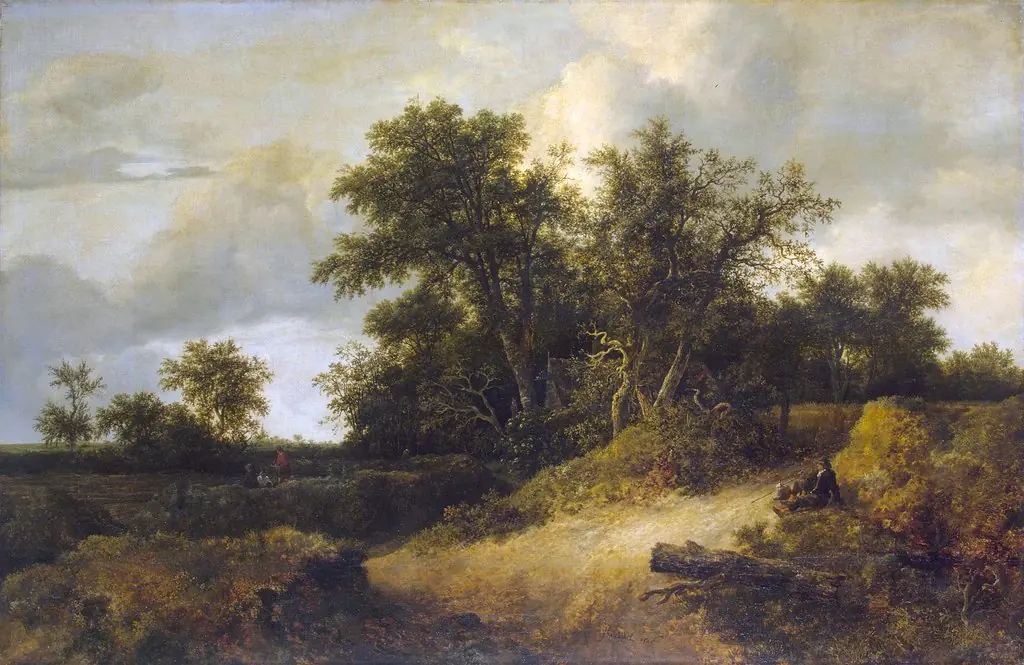
View on the Outskirts of Granville is an oil painting by the Barbizon school artist Théodore Rousseau. It dates from 1833 and is held in the collection of the Hermitage Museum.
About this work
Overview
The work’s subdued tones and unembellished composition reflect a growing interest in the ordinary and the authentic in French landscape painting.
Painted in 1833 by Théodore Rousseau, this oil on canvas depicts a quiet rural scene near Granville in Normandy. It belongs to the early phase of the Barbizon school, a movement that turned away from idealized landscapes toward direct observation of nature. The work’s subdued tones and unembellished composition reflect a growing interest in the ordinary and the authentic in French landscape painting.
Subject & Meaning
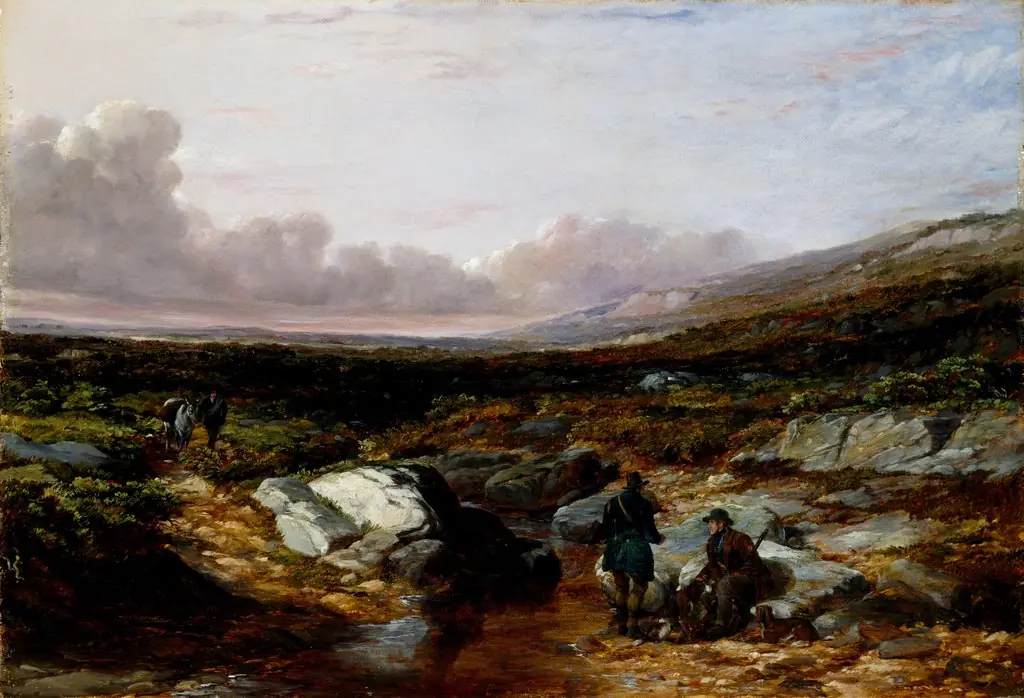
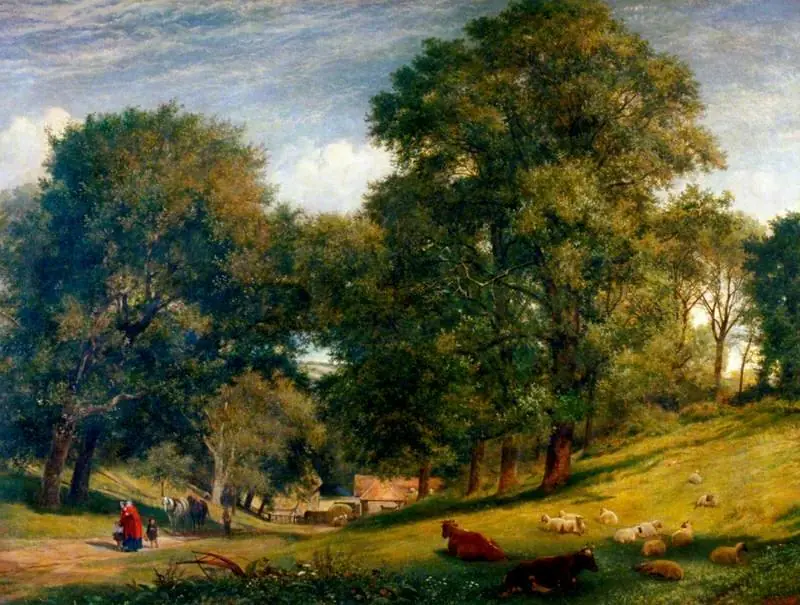
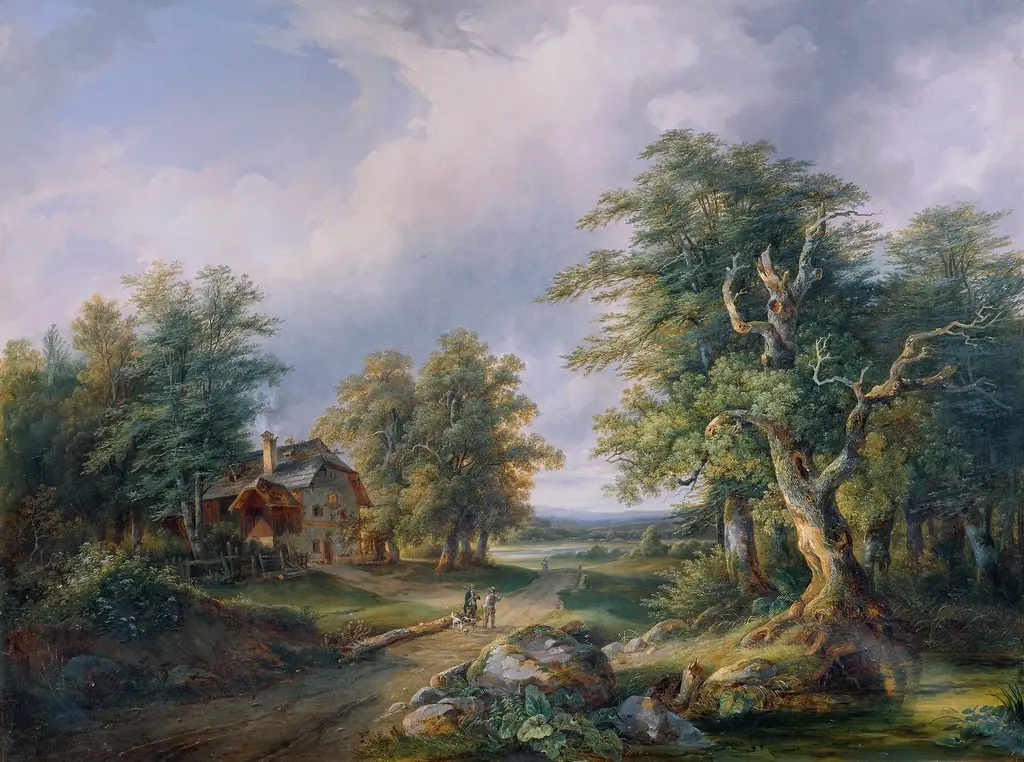
The painting presents a modest stretch of countryside, with a small village nestled in the distance and a lone figure guiding a cart drawn by a horse along a path. A massive rock formation anchors the left foreground, grounding the scene in tangible geography. There is no narrative drama—only the quiet rhythm of rural life and the enduring presence of the land, suggesting a reverence for nature’s quiet persistence.
Technique & Style
Rousseau applied oil paint with deliberate, visible brushwork, building texture through layered strokes rather than smooth blending. The palette is restrained, dominated by earthy browns, muted greens, and soft grays that mirror the overcast sky and weathered terrain. This approach rejects theatrical lighting and academic polish, favoring a tactile, observational realism that became a hallmark of the Barbizon style.
History & Provenance
Created during Rousseau’s formative years as a landscape painter, the work entered the collection of the State Hermitage Museum in the 19th century, likely through state acquisition or diplomatic exchange. Its presence in St. Petersburg underscores the international recognition of French naturalist painting during this period, even as it remained largely outside the official Salon system in France.
Context
In the early 1830s, French artists began rejecting historical and mythological subjects in favor of direct engagement with the countryside. Rousseau and his peers, gathering near the forest of Fontainebleau, sought to paint what they saw—not what tradition dictated. This painting, made before the formal establishment of the Barbizon colony, anticipates that shift, capturing rural life with unromanticized attention.
Legacy
Though not among Rousseau’s most celebrated works, this painting exemplifies the foundational principles of the Barbizon movement: fidelity to nature, rejection of academic conventions, and emotional restraint. It influenced later generations of landscape painters, including the Impressionists, who carried forward the practice of painting outdoors and valuing transient atmospheric effects.
Artist & collection
Artist
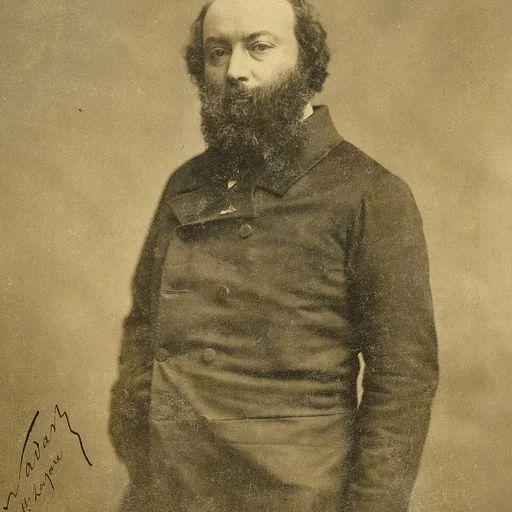
Étienne Pierre Théodore Rousseau (French pronunciation: ; 15 April 1812 – 22 December 1867) was a French painter of the Barbizon school.