Artwork
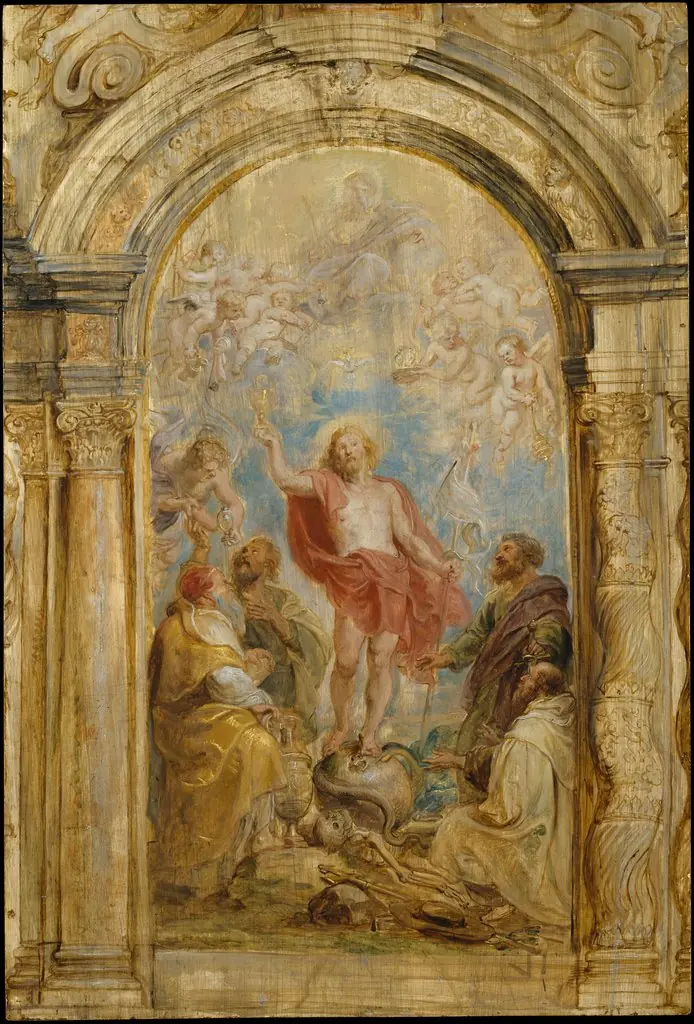
The Triumph of the Church
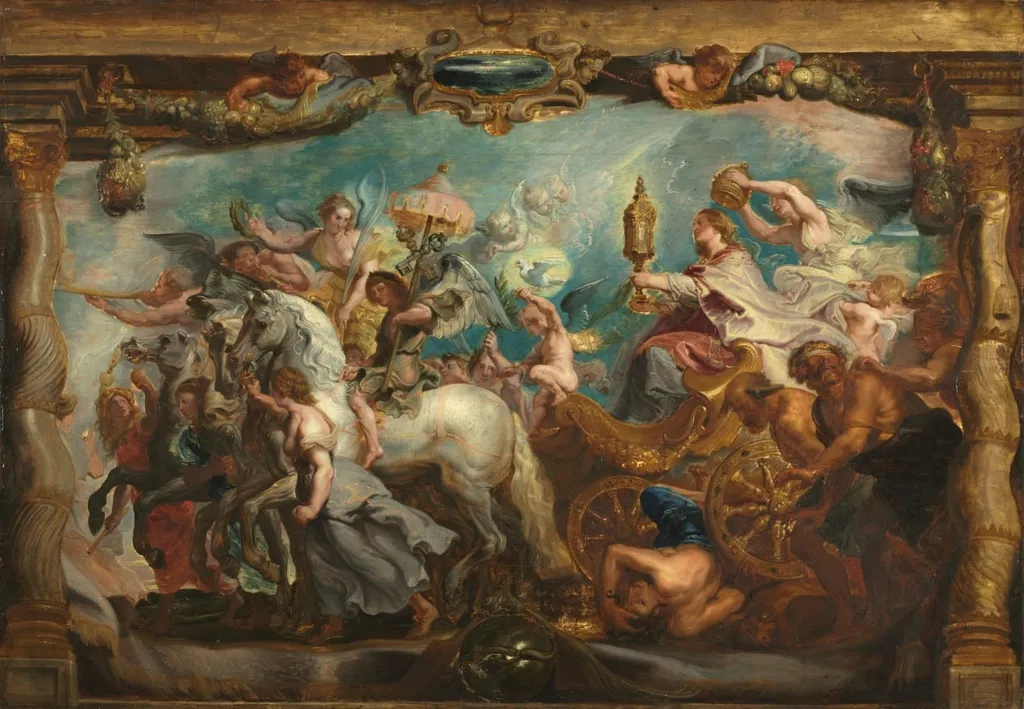
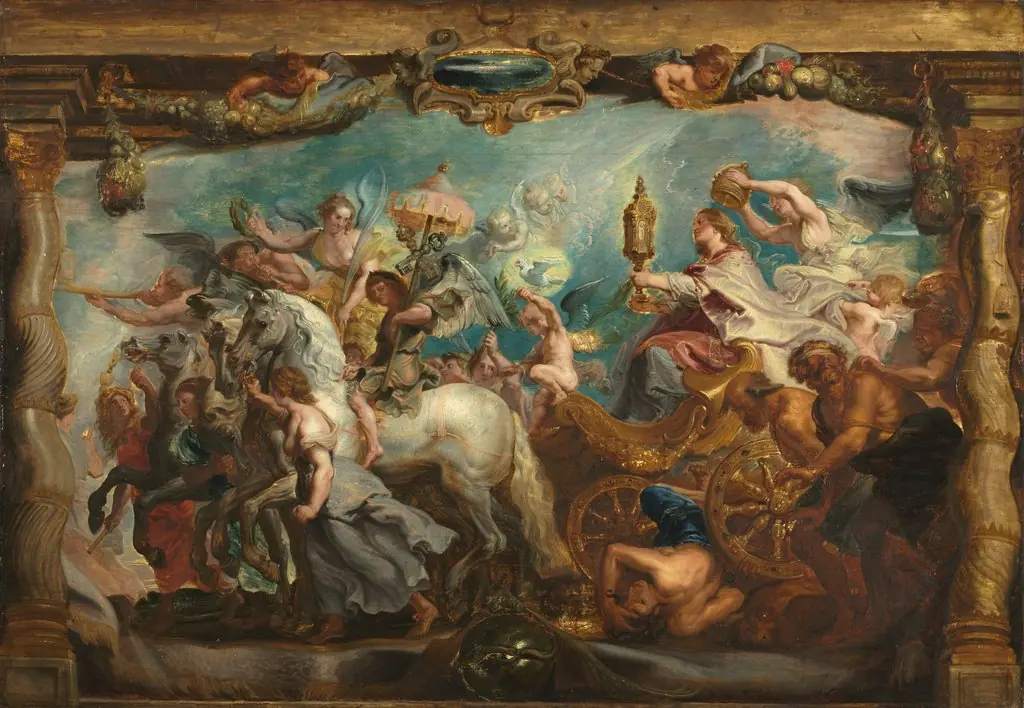
The Triumph of the Church is an unspecified painting by the Baroque artist Peter Paul Rubens. It dates from 1628 and is held in the collection of the Cleveland Museum of Art.
About this work
Overview
The painting is a modest-sized replica of an oil sketch by Peter Paul Rubens, created to guide the production of a large tapestry series titled "The Triumph of the Eucharist." The work depicts a dynamic assembly of robed figures, angels, and celestial clouds surrounding an illuminated altar, rendered in vivid hues reminiscent of stained glass.
Subject & Meaning
The composition celebrates the Catholic doctrine of the Eucharist, portraying a heavenly procession that underscores the sacrament’s spiritual significance. The central glowing altar serves as the focal point, symbolizing the divine presence that unites the celestial and earthly participants in reverence.
Technique & Style
Rubens employed a vigorous impasto technique in the original sketch, applying thick layers of paint to enhance the play of light and texture. This approach creates a sense of depth and movement, allowing the figures and clouds to appear to emerge from the surface with a tactile vitality.
History & Provenance
The tapestries derived from Rubens’s design were commissioned by Isabella, daughter of King Philip II of Spain, for a royal monastery in Madrid. The completed tapestries remain on display in that monastery, while the initial oil sketch that informed the work resides in the Museo del Prado, also in Madrid.
Context
Created during the Counter‑Reformation, the series reflects the Spanish monarchy’s support for Catholic orthodoxy. Rubens’s involvement illustrates the cross‑national artistic collaborations of the early 17th century, linking Flemish Baroque sensibilities with Spanish devotional patronage.
Artist & collection
Artist
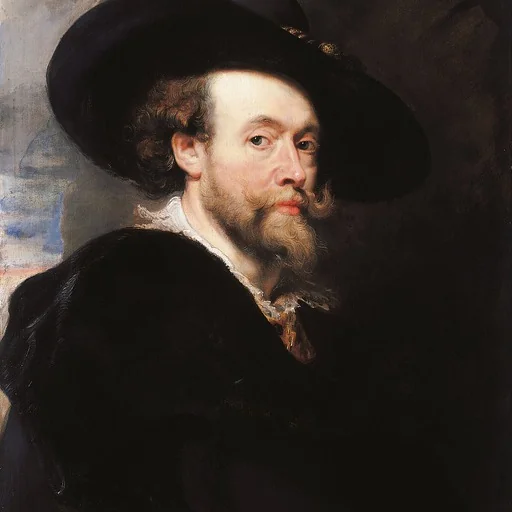
Sir Peter Paul Rubens ( ROO-bənz; Dutch: ; 28 June 1577 – 30 May 1640) was a Flemish artist and diplomat.

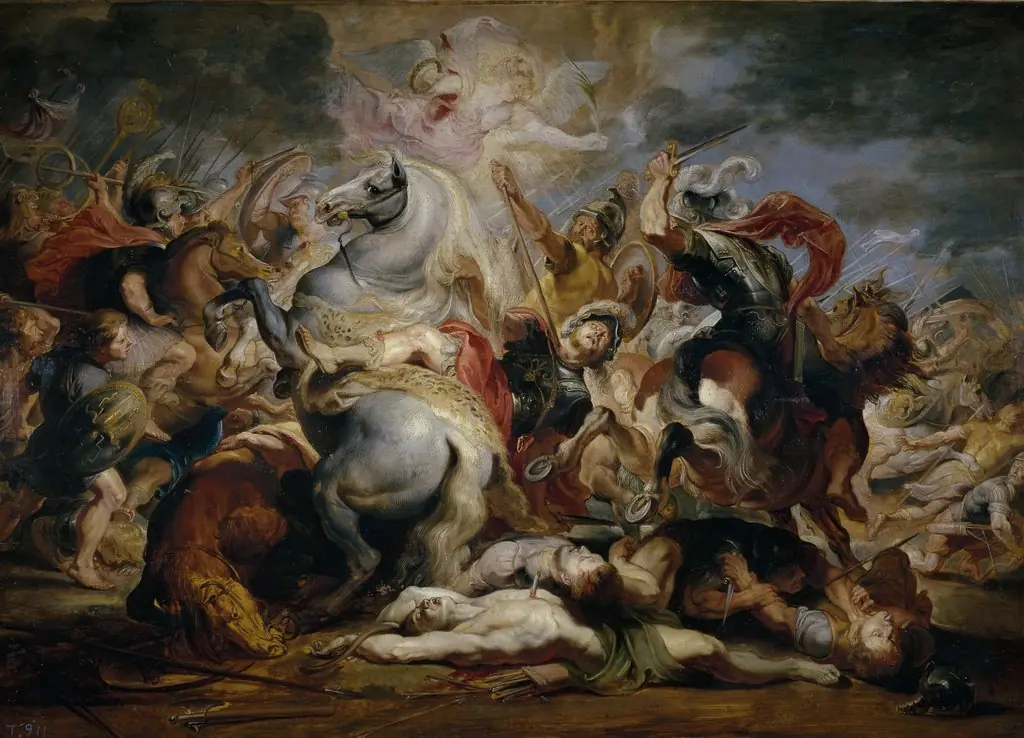 The Death of the Consul Decius
 The Triumph of the Church
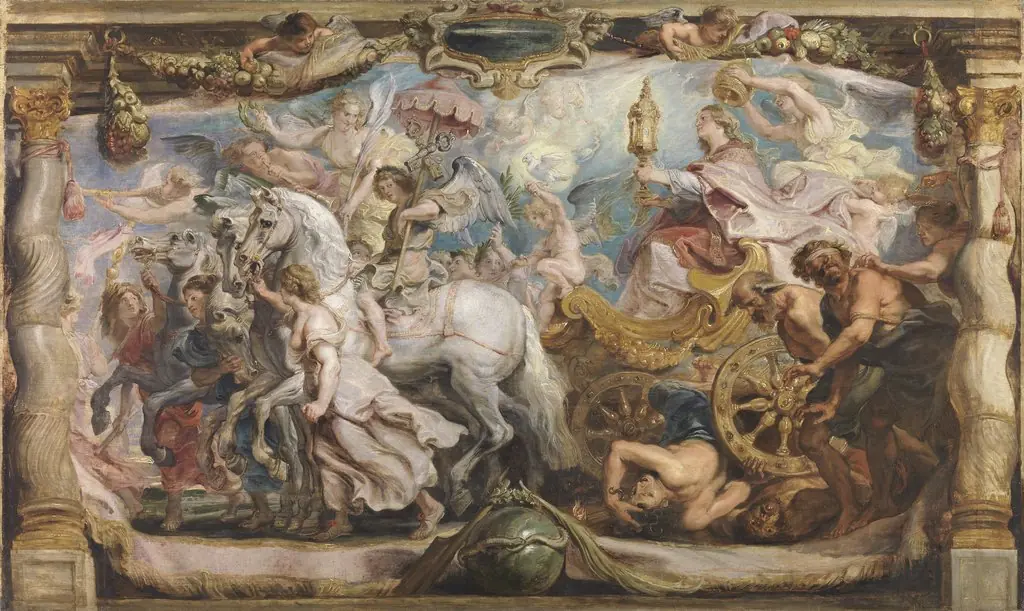 The Triumph of the Church
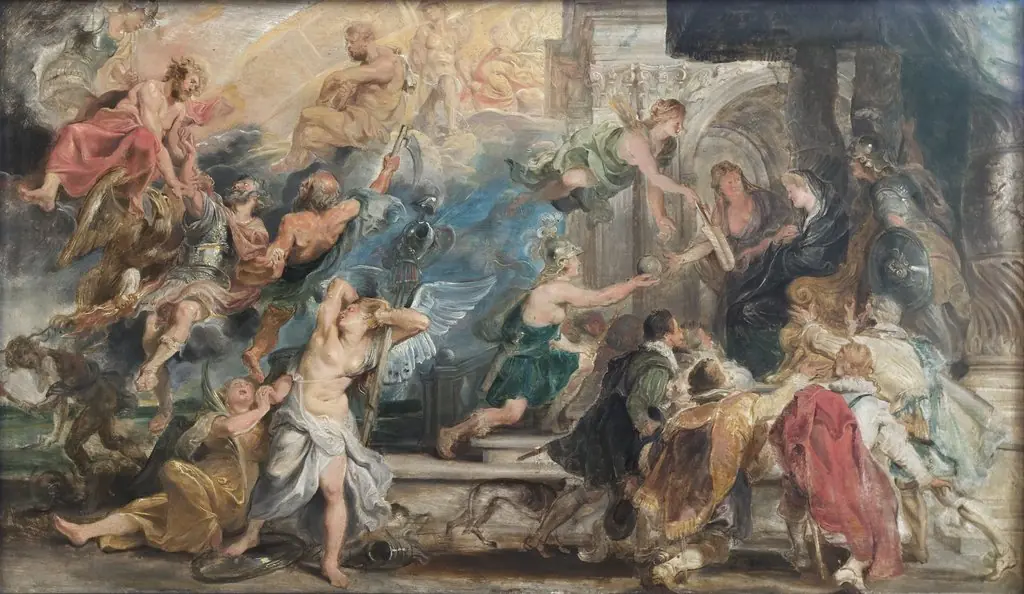 The Apotheosis of Henri IV
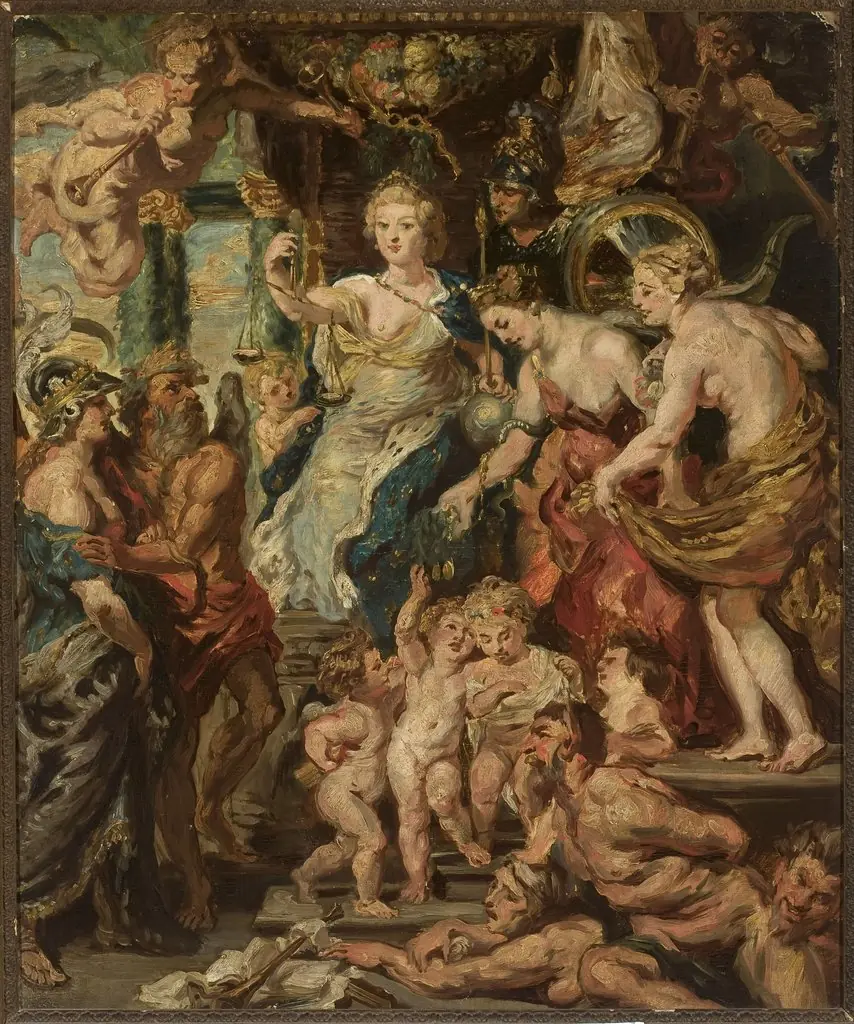 Apotheosis of Maria Medici
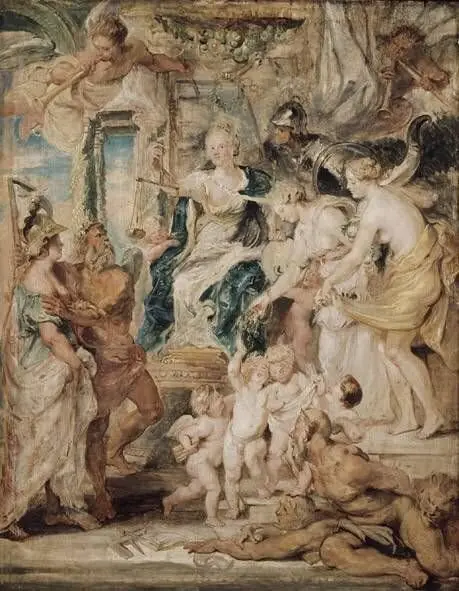 The Felicity of the Regency
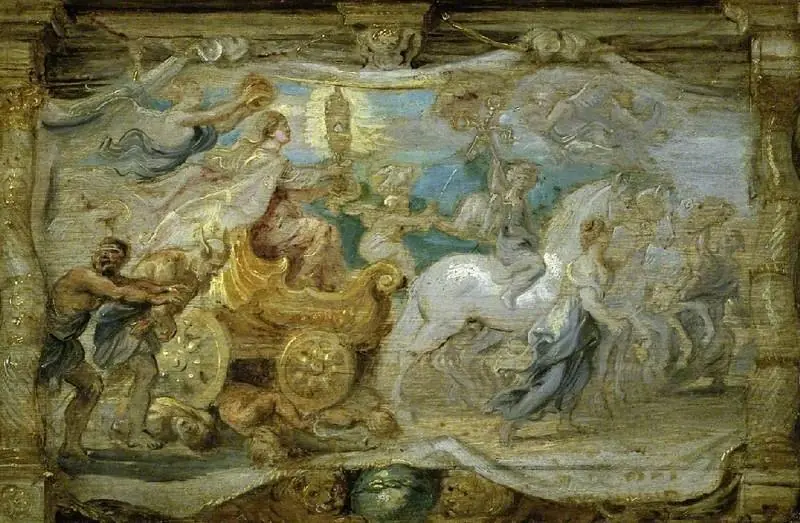 The Triumph of the Eucharist over Ignorance and Blindness
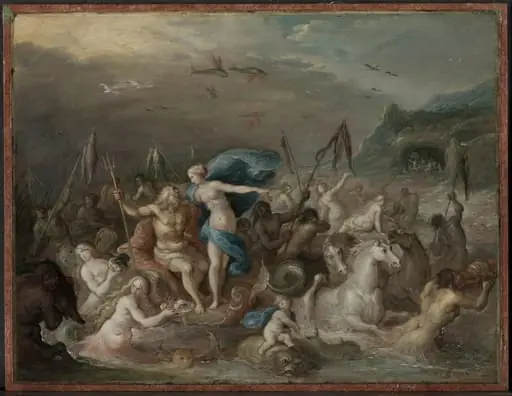 The Triumph of Neptune and Amphitrite
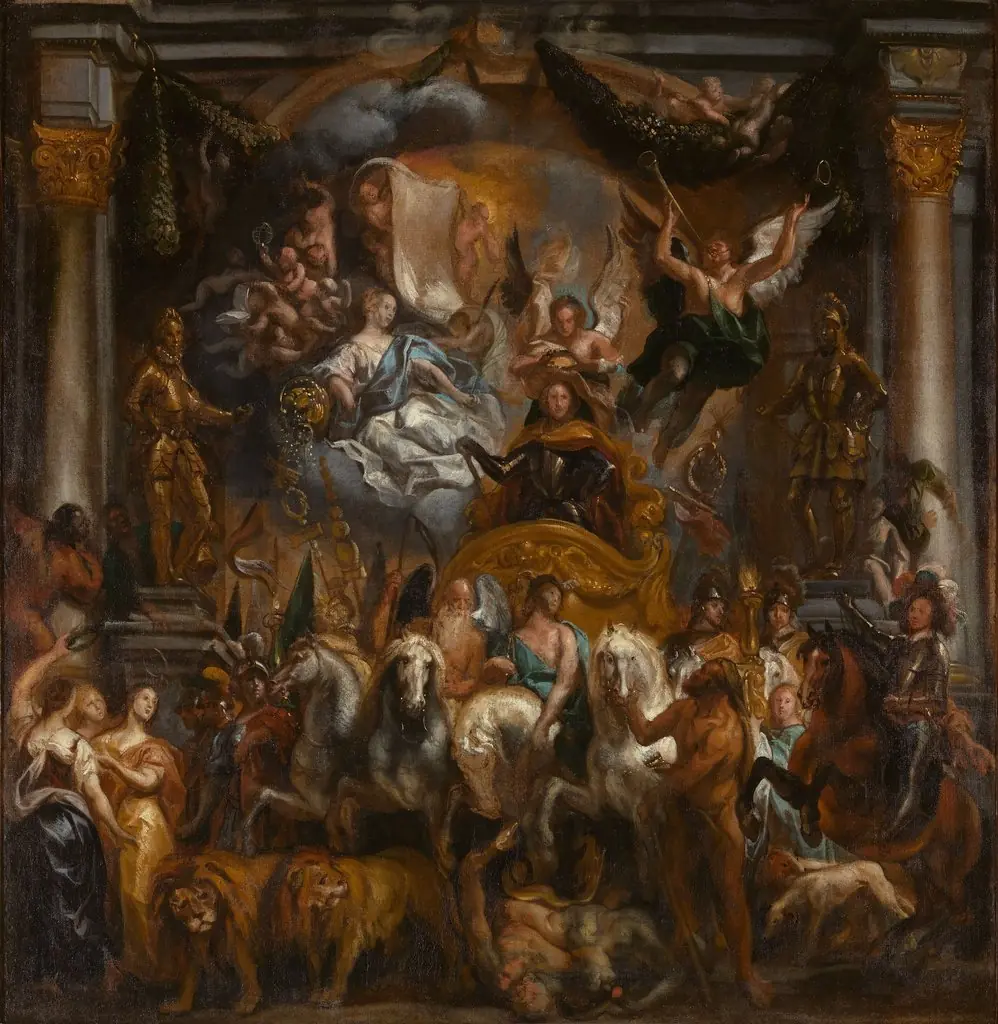 Triumph of Frederick Henry, Prince of Orange
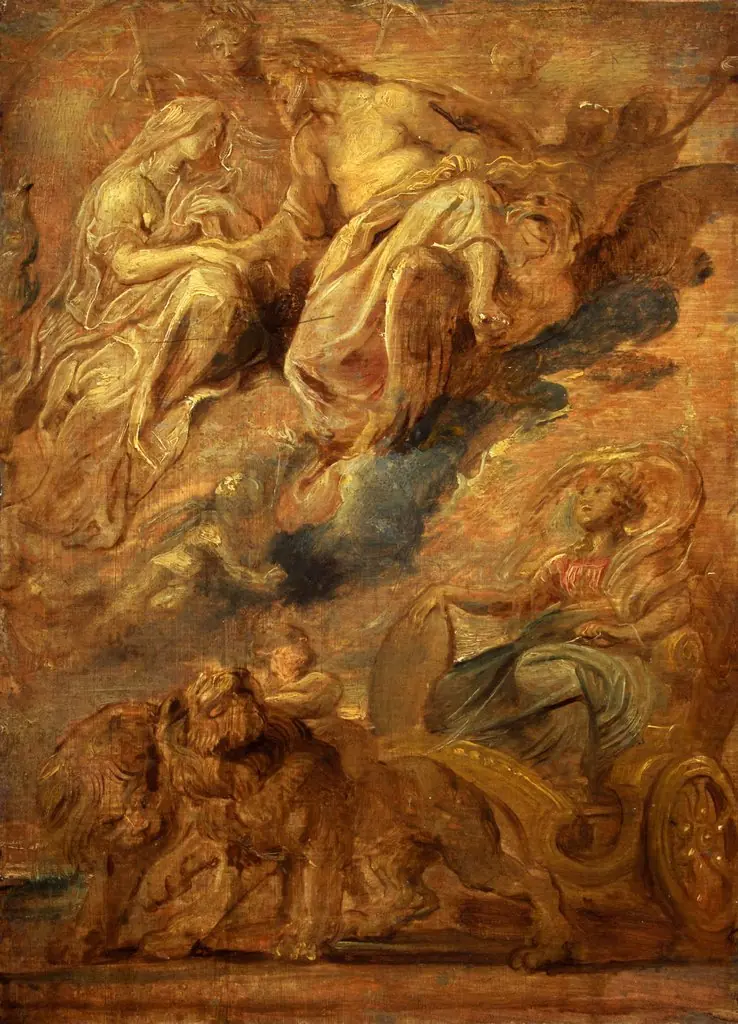 Arrival in Lyon
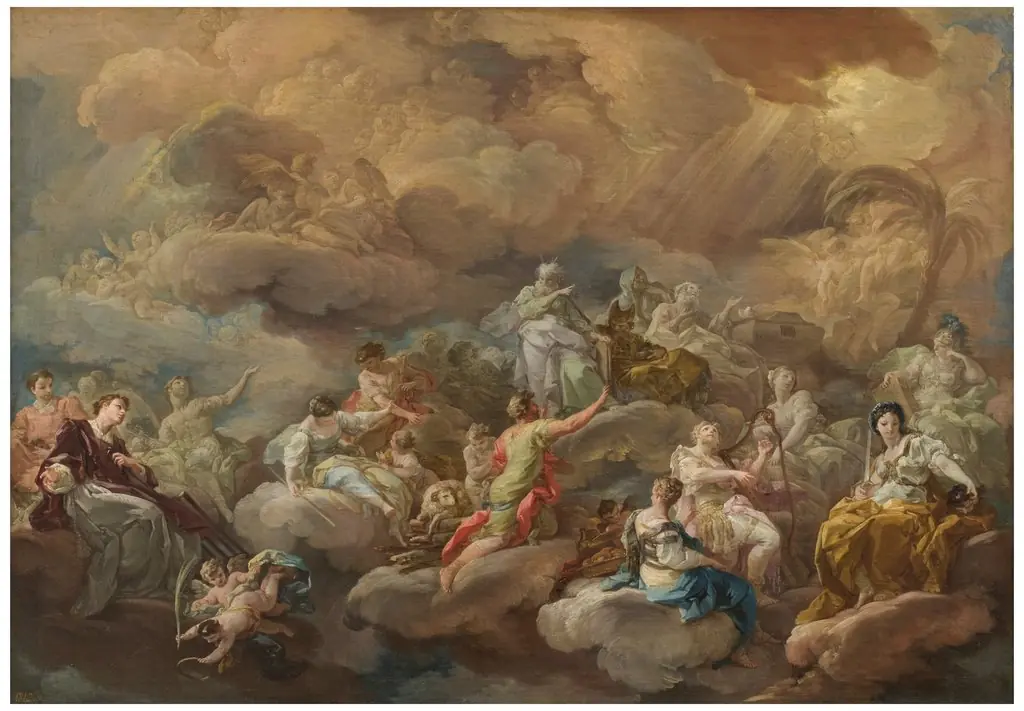 Gloria de santos
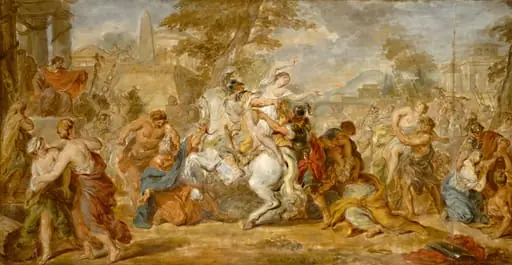 The Rape of the Sabine Women