Artwork
Lion
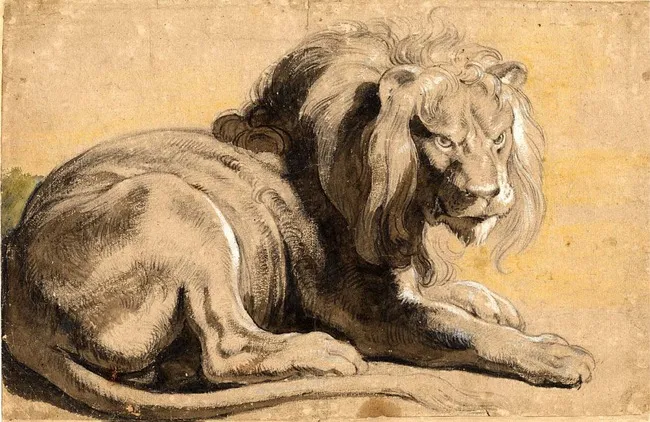
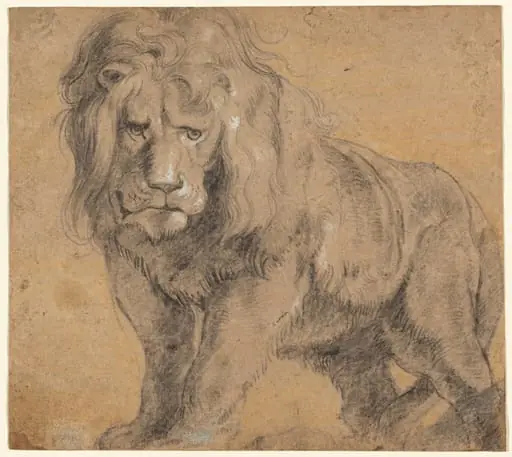
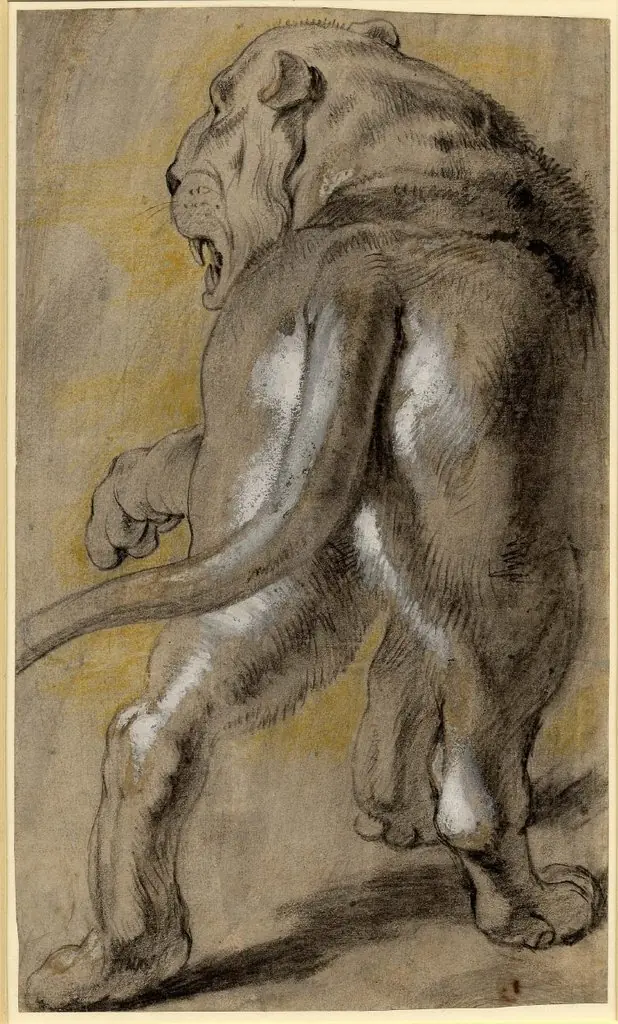
Lion is an unspecified painting by the Flemish Baroque painting artist Peter Paul Rubens. It dates from 1613 and is held in the collection of the British Museum.
About this work
Overview
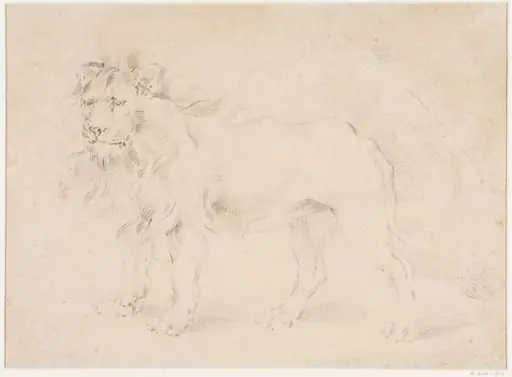
Created in 1613 by the Flemish painter and diplomat Peter Paul Rubens, this oil painting portrays a solitary lion at rest. The work belongs to the Flemish Baroque period, a style marked by dynamic composition and rich coloration. It is part of the British Museum’s collection, where it is displayed among other examples of Rubens’s varied subject matter.
Subject & Meaning
The canvas shows a lion lying on its side, its body oriented to the right while the head turns leftward, eyes lowered in a contemplative gaze. The animal’s relaxed posture and soft fur convey a sense of calm authority, reflecting Rubens’s interest in naturalistic representation of powerful creatures within a tranquil setting.
Technique & Style
Rubens employs a warm, yellowish background that frames the lion without competing for attention. Gentle, layered brushstrokes render the mane and coat, giving the fur a fluffy texture. The handling of light and colour emphasizes volume and movement, hallmarks of Rubens’s Baroque approach, while the overall composition remains balanced and restrained.
History & Provenance
The painting was produced during Rubens’s mature phase, when he was integrating classical and biblical motifs into a broad range of subjects, from landscapes to allegories. After changing hands over the centuries, it entered the British Museum’s holdings, where it remains a documented example of Rubens’s animal studies and his contribution to early 17th‑century Flemish art.
Artist & collection
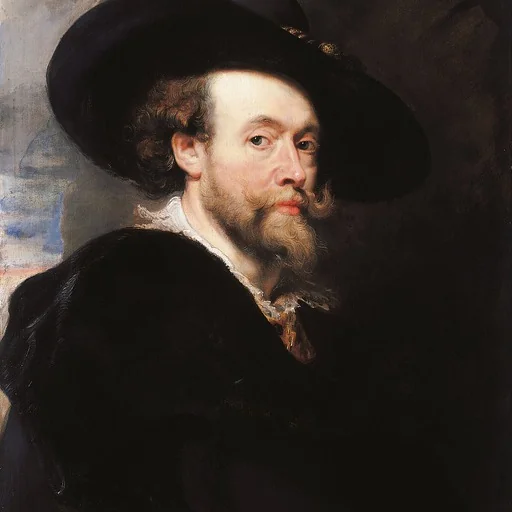
Artist
Sir Peter Paul Rubens ( ROO-bənz; Dutch: ; 28 June 1577 – 30 May 1640) was a Flemish artist and diplomat.