Artwork
Lion
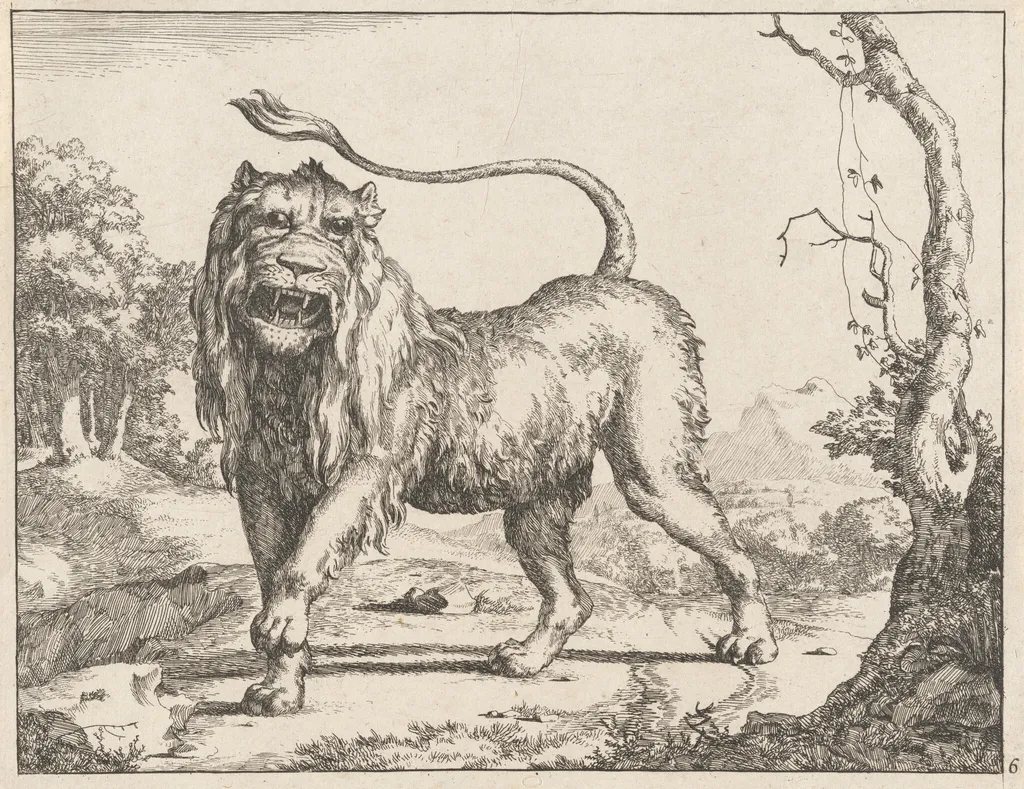
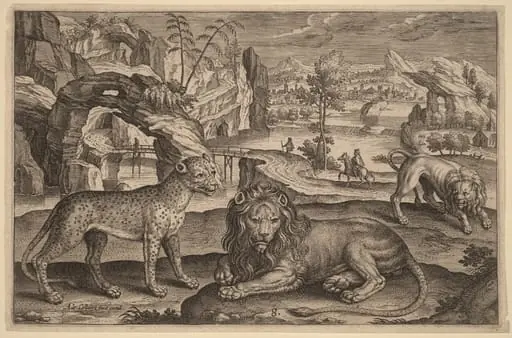
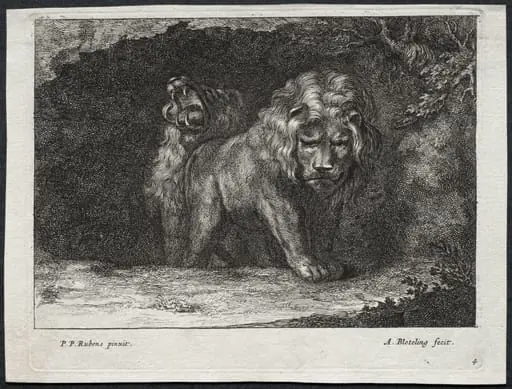
Lion is an ink print by the Baroque artist Marcus de Bye. It dates from 1664 and is held in the collection of the National Gallery of Art.
About this work
Overview
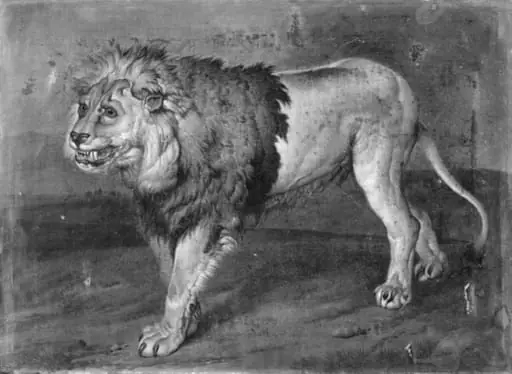
The composition centers on a powerful beast poised on a craggy surface, its open jaws and bristling mane dominating the visual field.
Marcus de Bye’s 1664 etching titled “Lion” presents a solitary animal rendered in stark black‑and‑white on laid paper. The composition centers on a powerful beast poised on a craggy surface, its open jaws and bristling mane dominating the visual field. The work is part of the National Gallery of Art’s collection in Washington, D.C., and exemplifies the artist’s engagement with animal subjects during the mid‑seventeenth century.
Subject & Meaning
The print depicts a lone lion caught in a moment of fierce display, its mouth agape and teeth exposed, suggesting both threat and vitality. The surrounding foliage—a few low bushes and a curling branch—offers minimal context, directing attention to the animal’s physicality and the raw energy associated with the king of beasts. The work conveys a sense of untamed strength without narrative elaboration.
Technique & Style
Created through the etching process, de Bye incised lines into a metal plate, which were then inked and transferred onto laid paper. The fine cross‑hatching and varied line weight articulate the lion’s fur, musculature, and the texture of the rocky ground. The dramatic chiaroscuro and dynamic pose align the piece with Baroque aesthetics, emphasizing movement and emotional intensity.
History & Provenance
The etching was produced in 1664, a period when de Bye was active in the Dutch Republic, known for his animal studies. After changing hands among private collectors, the print entered the National Gallery of Art’s holdings, where it remains accessible to the public. Its survival in good condition reflects careful preservation of the paper medium over more than three centuries.
Artist & collection