Artwork
Romulus and Titus Tatius
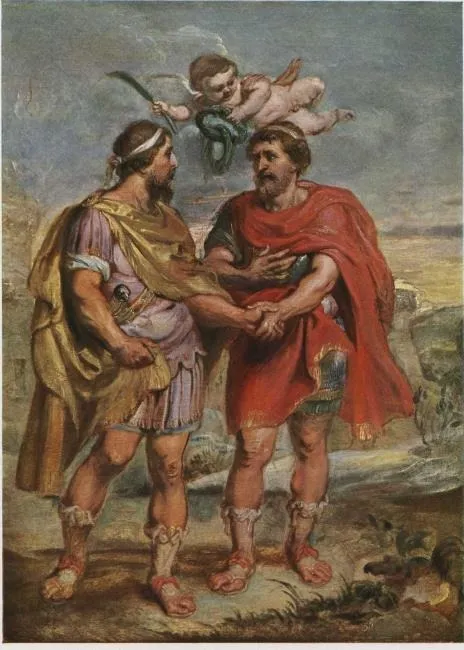
Romulus and Titus Tatius is an oil painting by the Flemish Baroque painting artist Peter Paul Rubens. It dates from 1630 and is held in the collection of the Israel Museum.
About this work
Overview
Painted in 1630 by Peter Paul Rubens, this work depicts the legendary reconciliation between Romulus, founder of Rome, and Titus Tatius, king of the Sabines.
Painted in 1630 by Peter Paul Rubens, this work depicts the legendary reconciliation between Romulus, founder of Rome, and Titus Tatius, king of the Sabines. Executed on wood panel, it reflects Rubens’s mastery of the Flemish Baroque style, characterized by dynamic composition and rich color. The scene captures a moment of political unity, rendered with the theatricality typical of Rubens’s historical narratives.
Subject & Meaning
The painting illustrates the treaty that ended conflict between the Romans and Sabines, symbolizing the fusion of two peoples into a single state. Romulus and Titus Tatius are shown clasping hands, their gestures conveying mutual respect. A cherub above them holds a green ribbon, suggesting divine sanction of the peace. The scene transforms a mythic political act into a visual allegory of harmony and state-building.
Technique & Style
Rubens employed oil on wood to achieve luminous flesh tones and vivid drapery, with red and yellow garments contrasting against the earthy landscape. His brushwork is fluid, emphasizing movement in the figures’ poses and the flow of fabric. The background features a distant horizon with water and rock, grounding the scene in a classical setting while maintaining the dramatic energy characteristic of Baroque history painting.
History & Provenance
Commissioned during Rubens’s mature period, the painting reflects his engagement with classical antiquity and political allegory. It likely originated in his Antwerp studio, where he produced numerous works for European patrons. While its early ownership is not fully documented, it remained within circles familiar with Rubens’s mythological and historical themes throughout the 17th century.
Context
Created during the Thirty Years’ War, the painting’s theme of reconciliation resonated with contemporary European efforts to resolve conflict. Rubens, who served as a diplomat, often infused his art with political undertones. The choice of a Roman alliance mirrored contemporary hopes for peace, aligning classical precedent with current diplomatic concerns in the Habsburg territories.
Legacy
The work exemplifies Rubens’s enduring influence on Baroque narrative painting, particularly in how mythological subjects were used to convey civic ideals. Though less widely exhibited than his larger compositions, it remains a key example of his ability to merge historical narrative with symbolic gesture. Later artists studied his handling of gesture and color in similar allegorical scenes.
Artist & collection
Artist
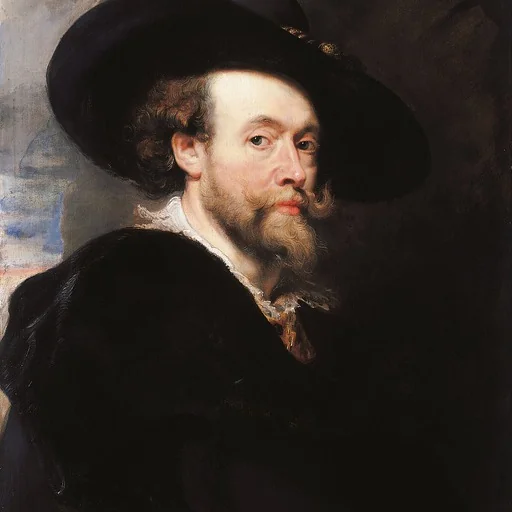
Sir Peter Paul Rubens ( ROO-bənz; Dutch: ; 28 June 1577 – 30 May 1640) was a Flemish artist and diplomat.

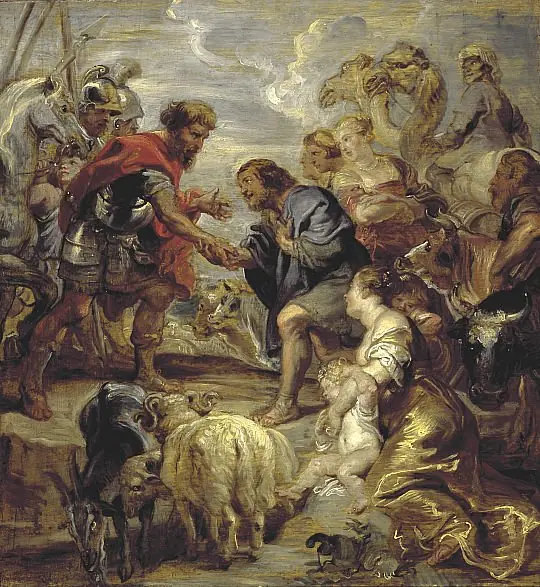 The Reconciliation of Jacob and Esau
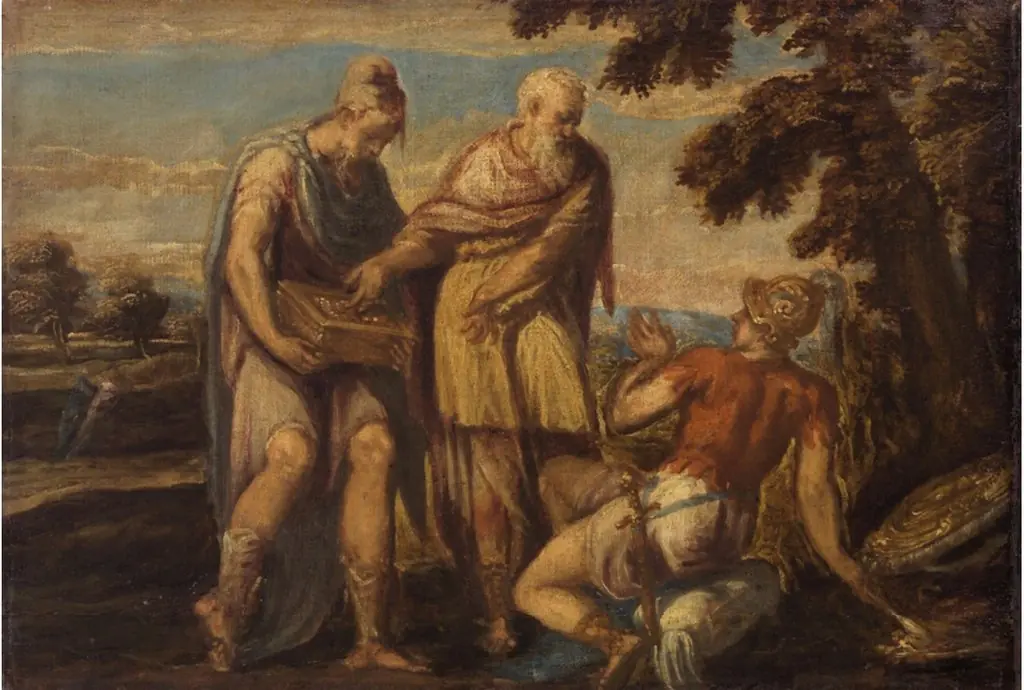 Marius Curius Dentatus
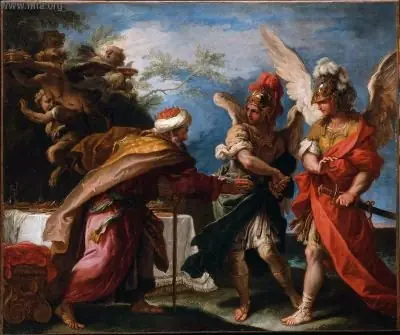 Phineas and the Sons of Boreas
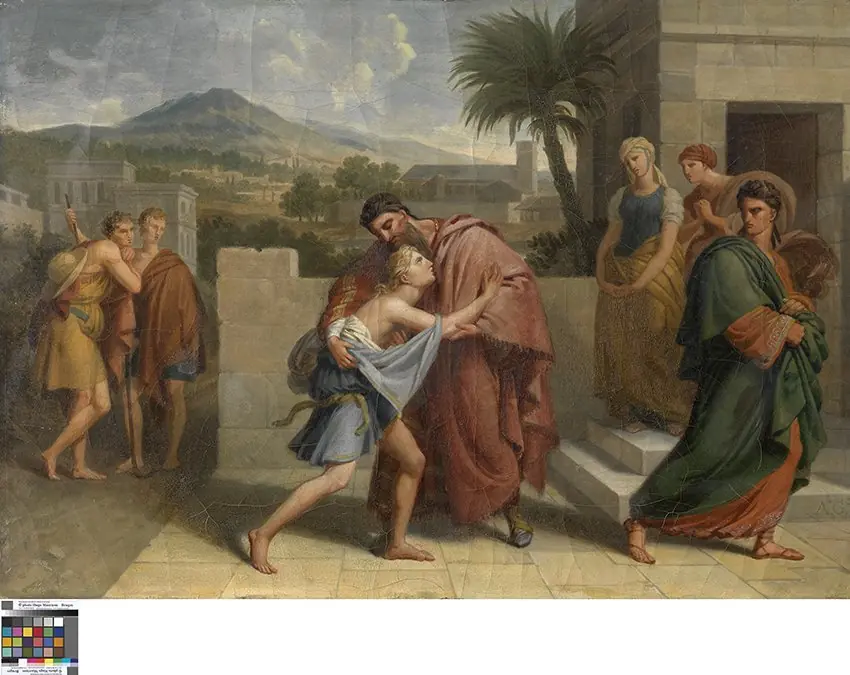 De thuiskomst van de verloren zoon
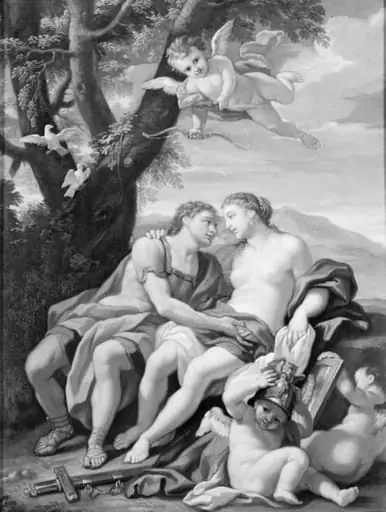 Mars, Venus og Amor
 Mars, Venus og Amor
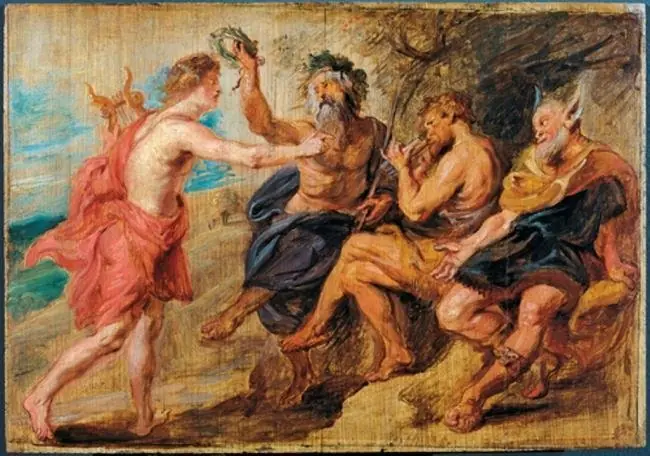 Apollo as Victor over Pan (sketch for the Torre de la Parada)
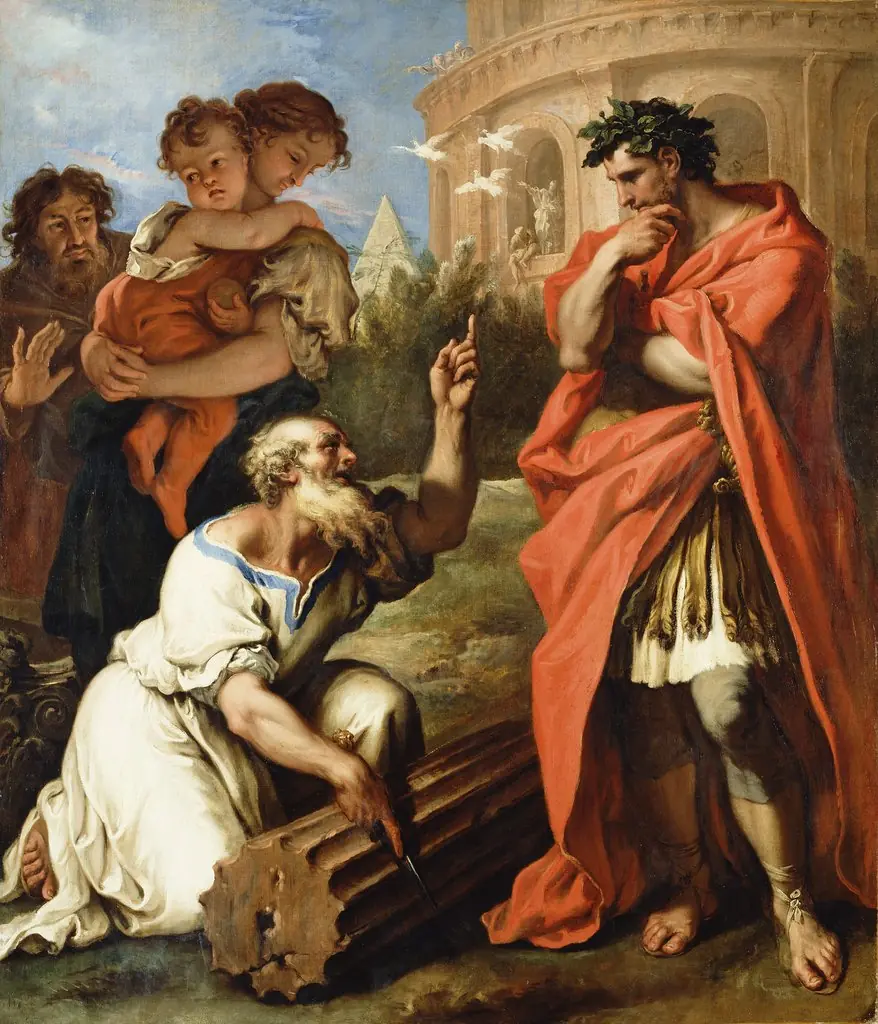 Tarquin the Elder Consulting Attius Navius
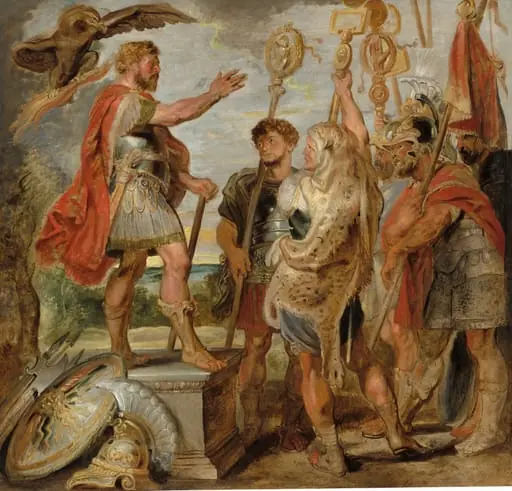 Decius Mus Addressing the Legions
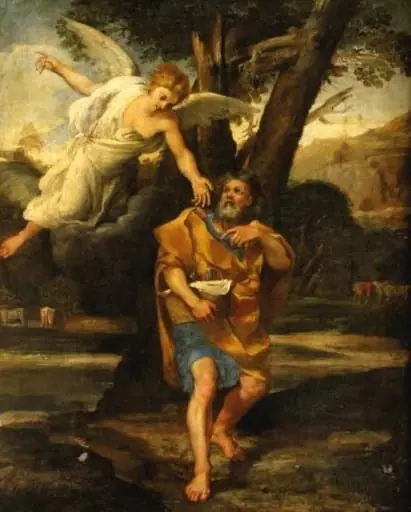 Habacuc în pustiu
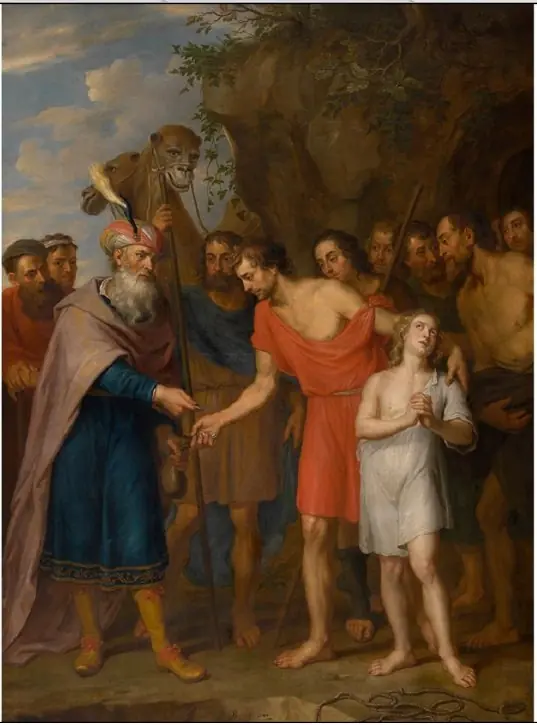 Joseph Sold by his Brothers
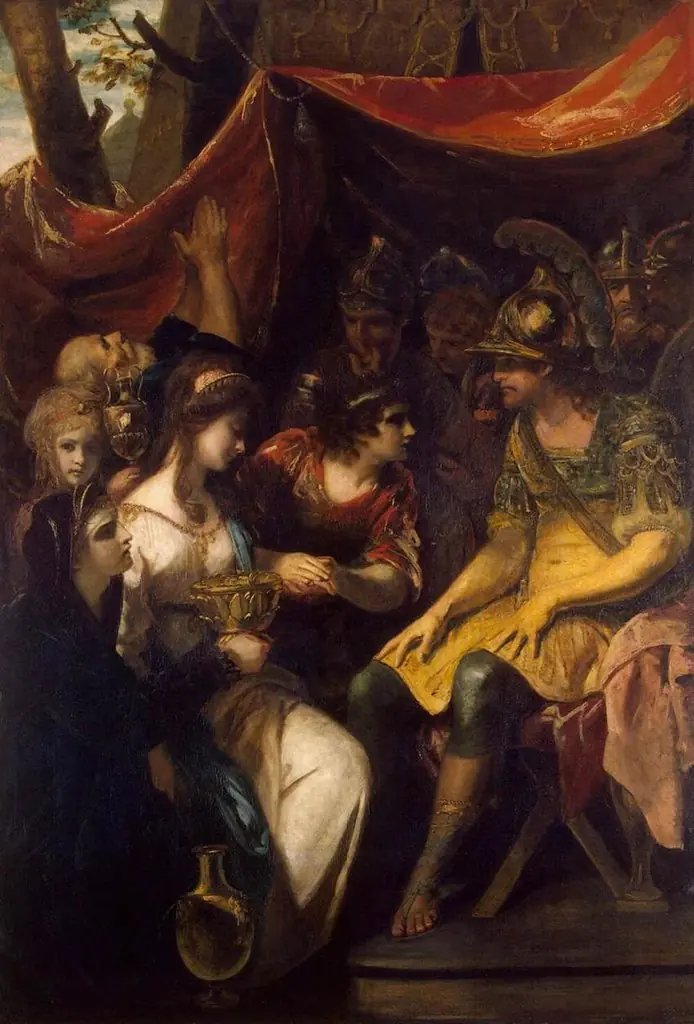 Continence of Scipio