Artwork
The Reconciliation of Jacob and Esau
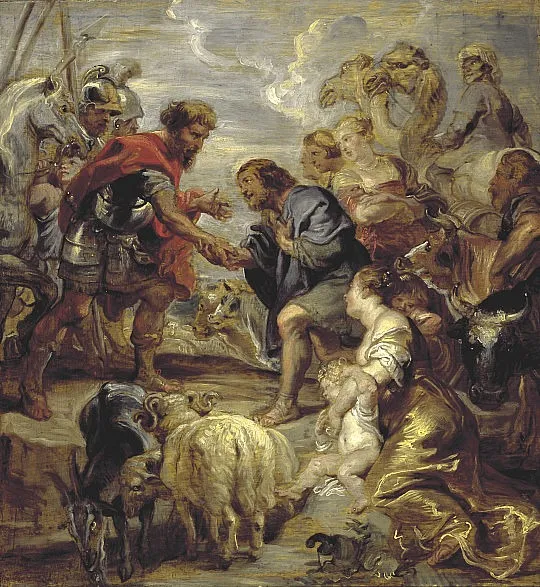
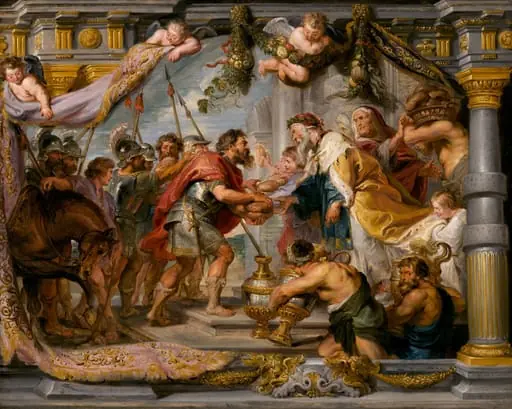
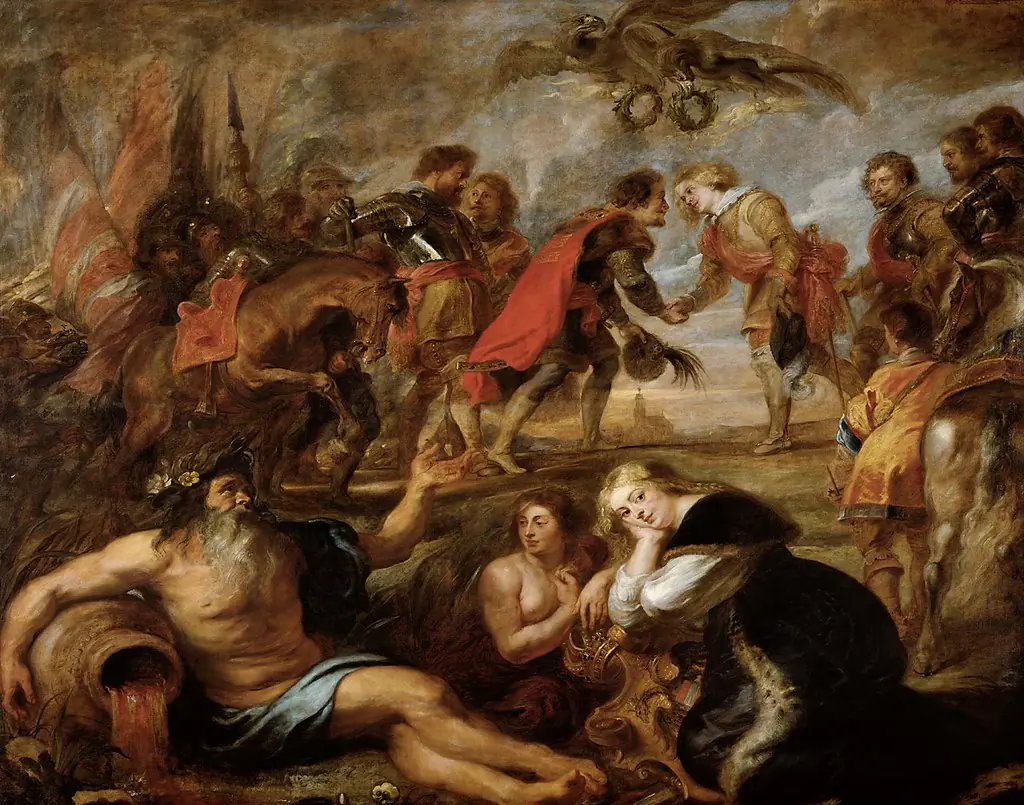
The Reconciliation of Jacob and Esau is an oil painting by the Flemish Baroque painting artist Peter Paul Rubens. It dates from 1624 and is held in the collection of the National Galleries Scotland.
About this work
Overview
Peter Paul Rubens painted *The Reconciliation of Jacob and Esau* in 1624. Executed in oil on canvas, the work belongs to the Flemish Baroque tradition, noted for its vigorous composition and saturated palette. Today the painting is part of the Scottish National Gallery’s permanent collection, where it is displayed among other 17th‑century European works.
Subject & Meaning
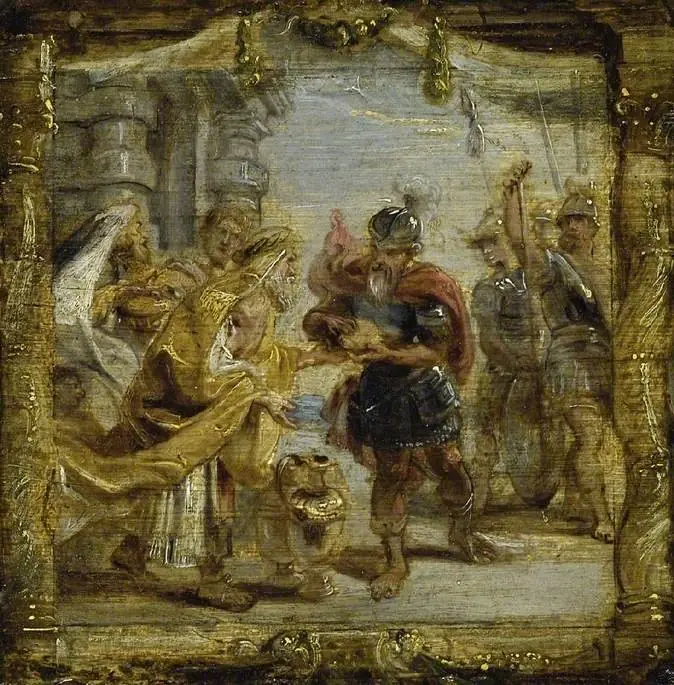
The canvas illustrates the biblical encounter between Jacob and Esau described in Genesis, when the estranged brothers meet after years of separation.
The canvas illustrates the biblical encounter between Jacob and Esau described in Genesis, when the estranged brothers meet after years of separation. Central figures—Jacob in a red cloak and Esau in a blue robe—extend a handshake, symbolizing forgiveness and the restoration of familial bonds. Surrounding onlookers and livestock underscore the public nature of the reconciliation and the narrative’s moral emphasis on peace.
Technique & Style
Rubens employs the dramatic chiaroscuro typical of Baroque painting, contrasting illuminated bodies against a cloud‑filled sky to heighten emotional intensity. His vigorous brushwork and rich, layered pigments generate a sense of movement, while meticulous rendering of textiles, flesh, and animal fur demonstrates his mastery of naturalistic detail. The composition funnels the eye toward the central handshake, reinforcing the scene’s focal point.
History & Provenance
Completed in Rubens’ mature period, the painting entered the Scottish National Gallery’s holdings in the early 20th century after passing through several private collections in Europe. Documentation traces its ownership from a Dutch aristocratic family to a British collector before its acquisition by the museum, where it has remained on public view for over a century.
Context
Rubens frequently turned to Old Testament subjects, integrating theological themes with the grand, theatrical style favored by the Counter‑Reformation. Created shortly after his diplomatic missions in Spain and England, the work reflects his exposure to courtly patronage and the era’s appetite for biblical narratives that conveyed moral instruction through visual splendor.
Artist & collection
Artist
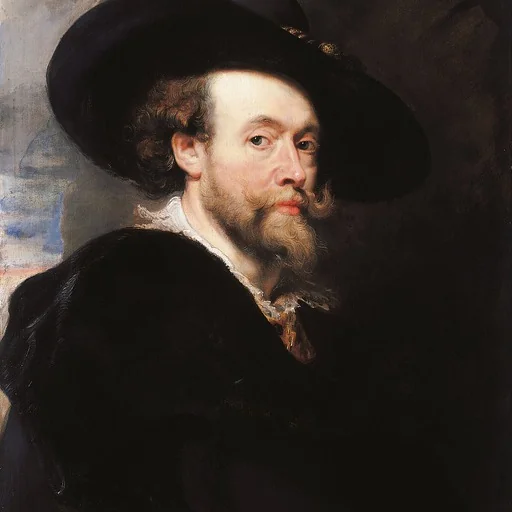
Sir Peter Paul Rubens ( ROO-bənz; Dutch: ; 28 June 1577 – 30 May 1640) was a Flemish artist and diplomat.