Artwork
The Crucifixion
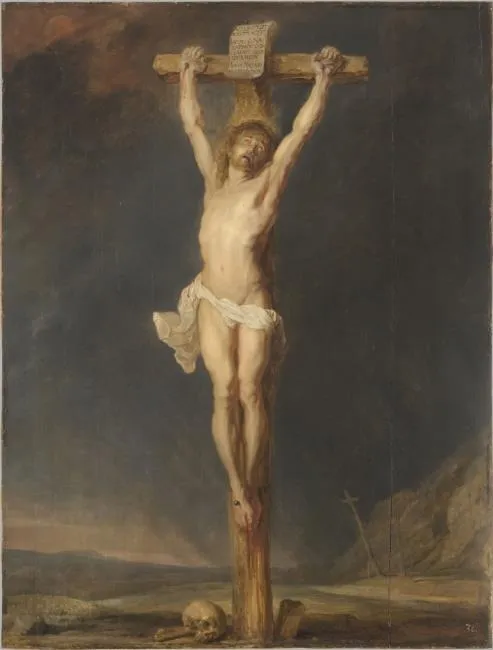
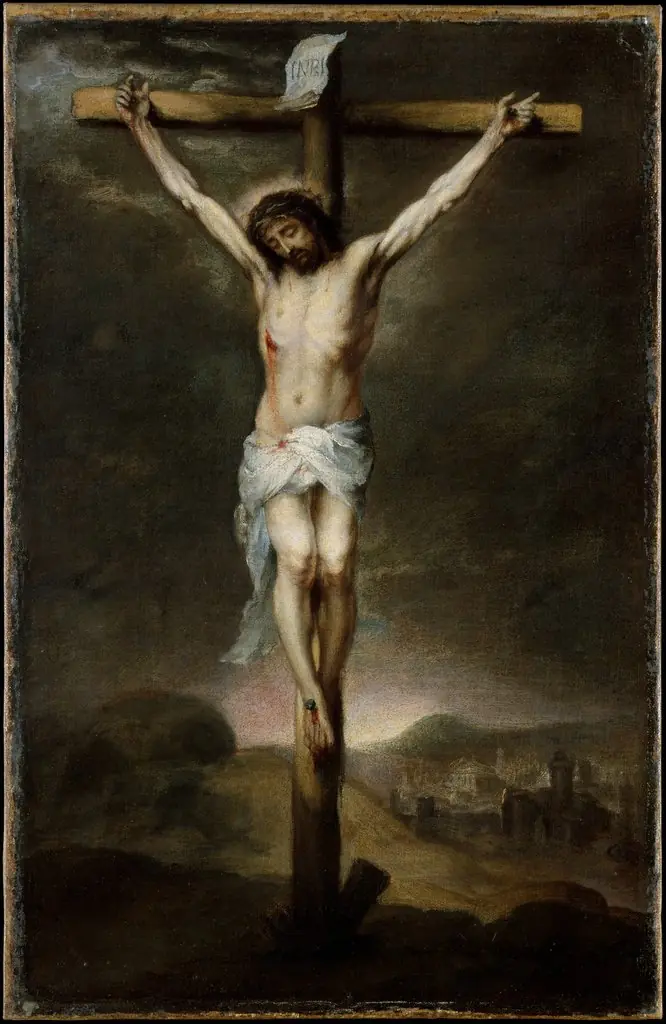
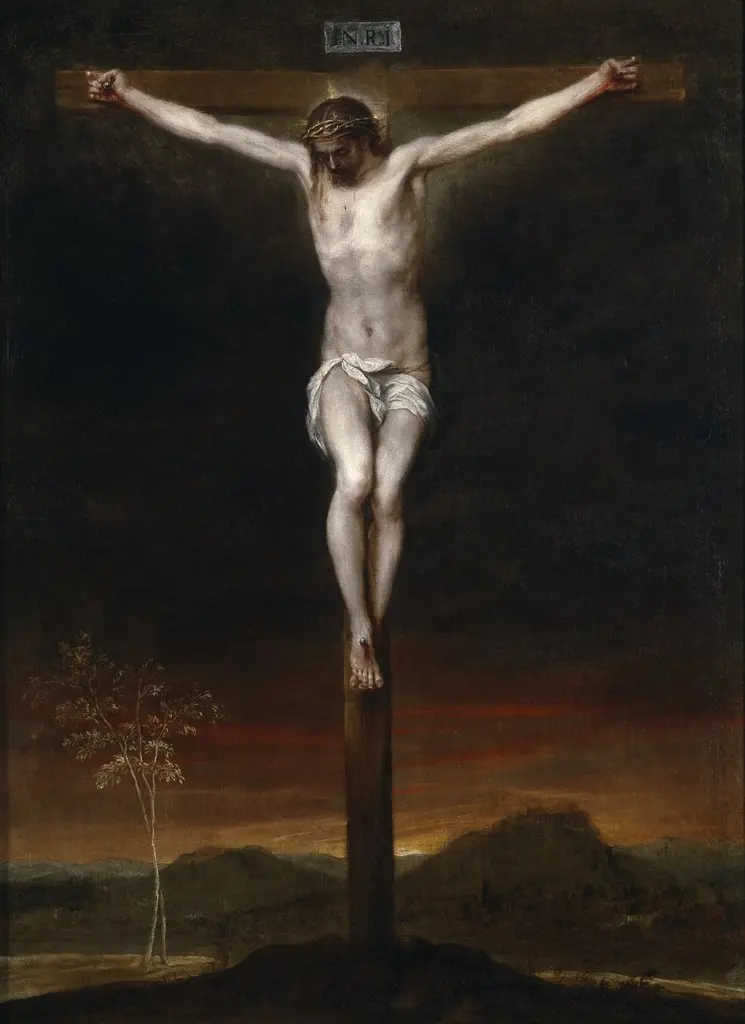
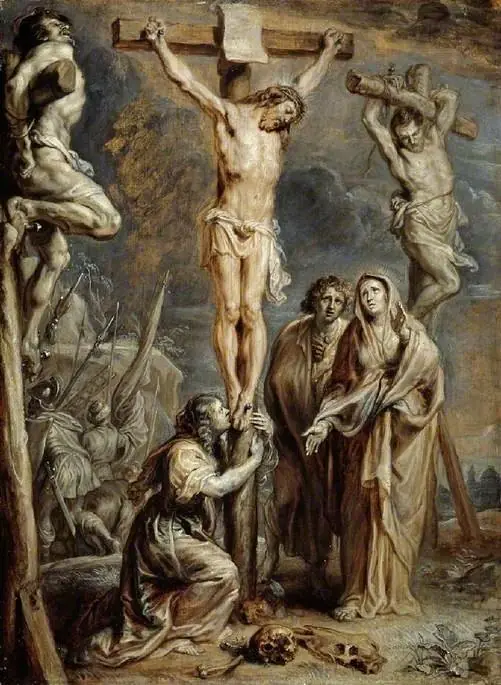
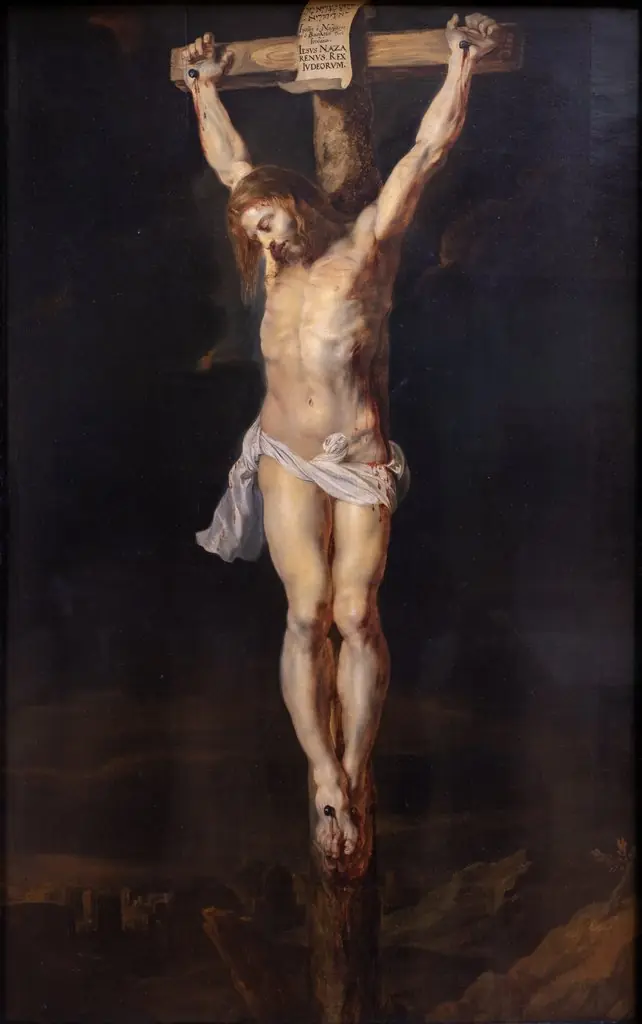
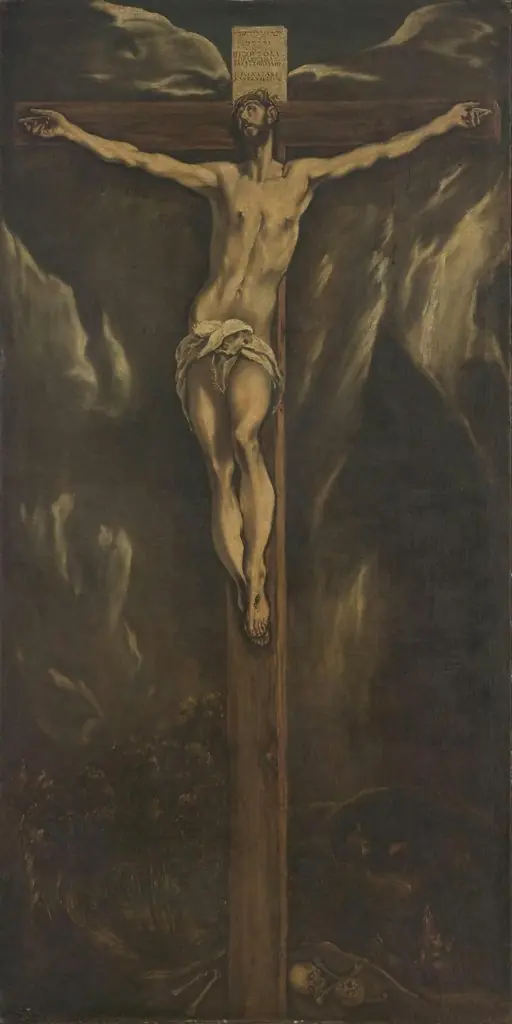
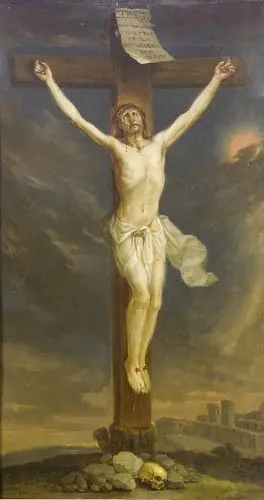
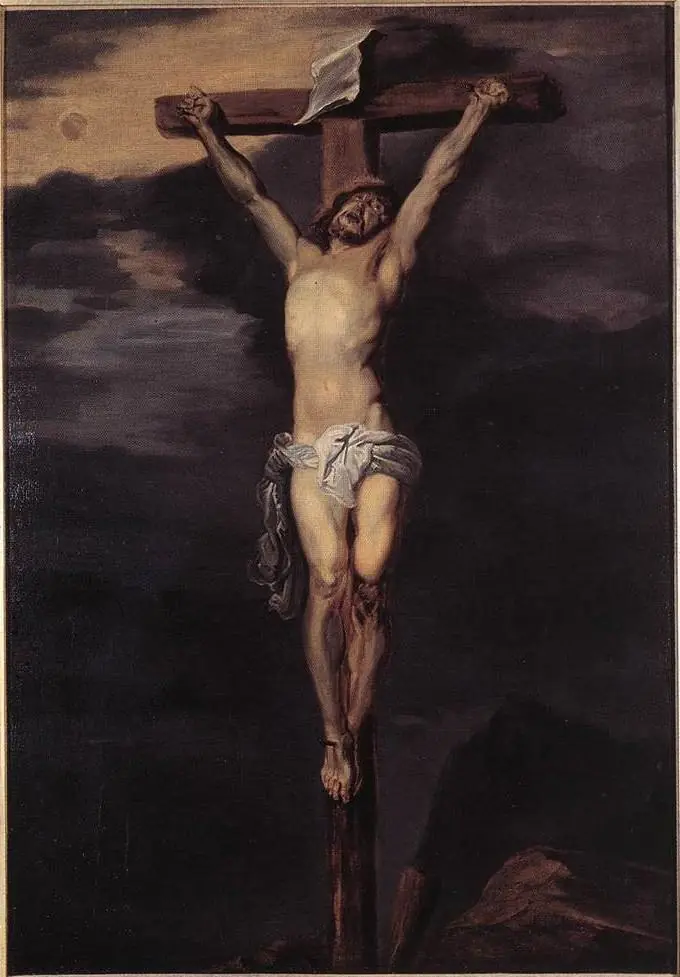
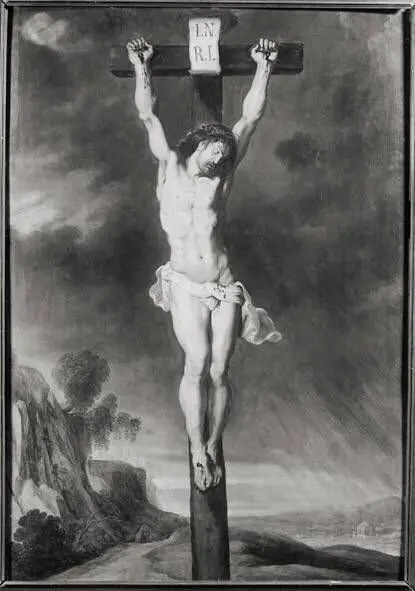
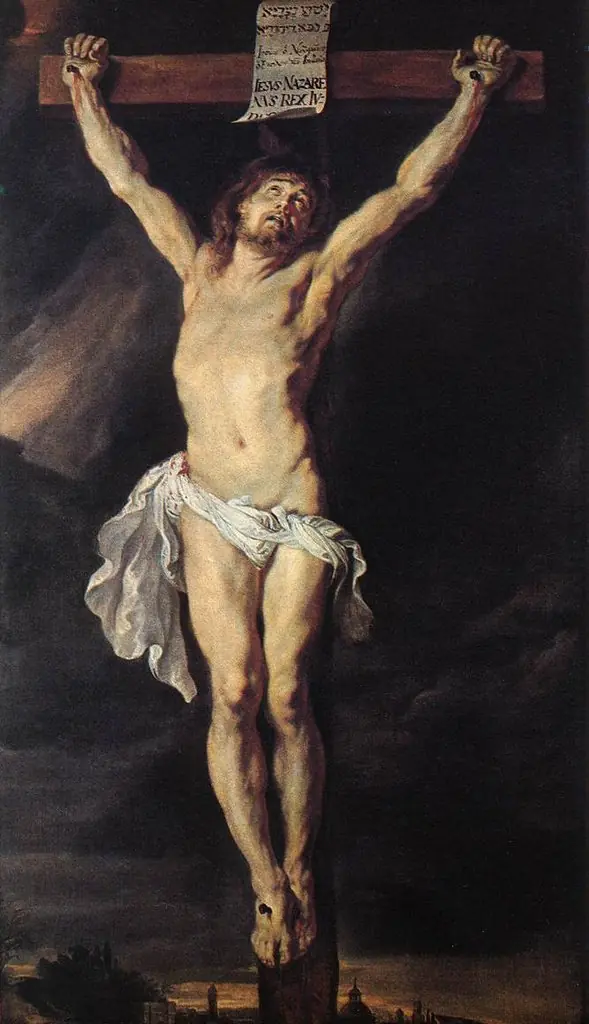
The Crucifixion is an oil painting by the Flemish Baroque painting artist Peter Paul Rubens. It dates from 1630 and is held in the collection of the Philadelphia Museum of Art.
About this work
Overview
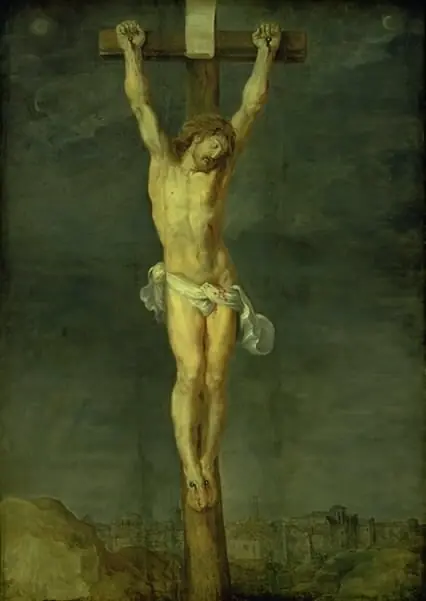
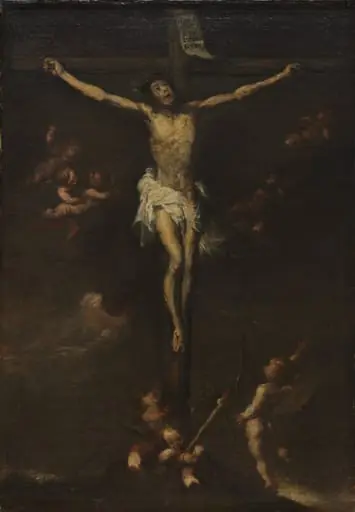
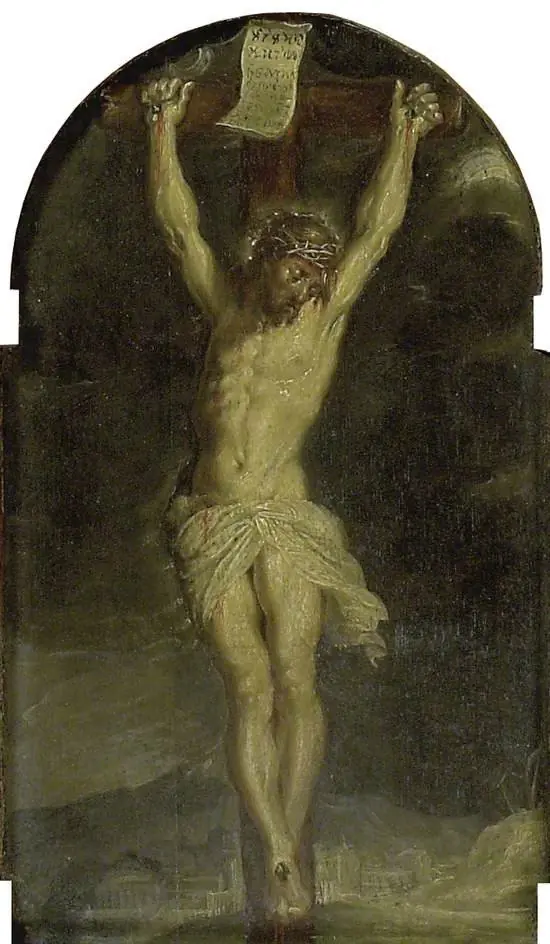
Painted in 1630 by Peter Paul Rubens, this oil-on-canvas work presents the crucifixion of Christ as a solemn, physically intense moment. Executed in the Flemish Baroque style, it emphasizes emotional gravity through dynamic composition and vivid tonal contrasts. The painting resides in the Philadelphia Museum of Art, where it remains a key example of Rubens’s mature religious imagery.
Subject & Meaning
The scene centers on Christ’s body suspended on a cross, his pale form rendered with anatomical precision. Below, a skull rests at the base of the cross, referencing Golgotha—the place of the skull—and symbolizing Adam’s burial site, a traditional allusion to redemption through Christ’s sacrifice. The inscription above his head and the somber sky reinforce the theological weight of the moment.
Technique & Style
Rubens employs chiaroscuro to model Christ’s body with stark light and deep shadow, heightening the sense of physical weight and suffering.
Rubens employs chiaroscuro to model Christ’s body with stark light and deep shadow, heightening the sense of physical weight and suffering. The texture of the loincloth and the metallic glint of the nails are rendered with meticulous detail, while the dark, turbulent sky contrasts with a faint horizon glow. His brushwork balances realism with expressive energy, characteristic of Baroque sensibility.
History & Provenance
Commissioned during Rubens’s later years, the painting reflects his deep engagement with Counter-Reformation themes. It entered the Philadelphia Museum of Art’s collection in the early 20th century, having passed through private European collections after its creation. Its preservation has allowed continued study of Rubens’s approach to sacred subject matter in his final decade.
Context
Created during a period of religious turmoil in Europe, the painting aligns with Catholic efforts to evoke visceral devotion through art. Rubens, fluent in both artistic and diplomatic circles, synthesized Italian Renaissance ideals with Northern European detail. His depiction of Christ’s humanity, rather than idealized divinity, responded to contemporary spiritual demands for emotional immediacy.
Legacy
The work exemplifies how Baroque artists used physical realism to convey spiritual narratives. Its influence extended to later religious painters who sought to merge anatomical accuracy with emotional intensity. Though not widely exhibited, it remains a reference point in studies of Rubens’s theological vision and his mastery of oil technique.
Artist & collection
Artist
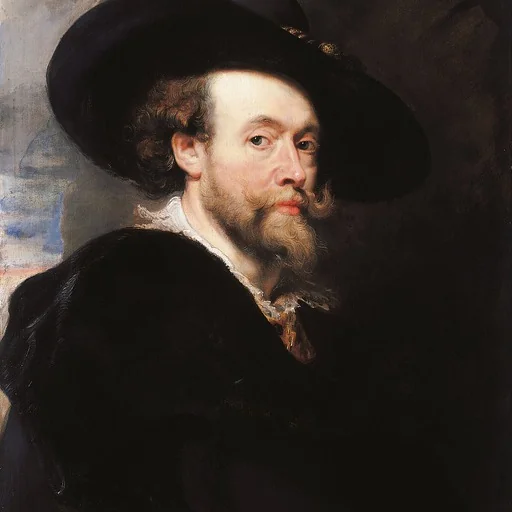
Sir Peter Paul Rubens ( ROO-bənz; Dutch: ; 28 June 1577 – 30 May 1640) was a Flemish artist and diplomat.