Artwork
The Fruit Garland
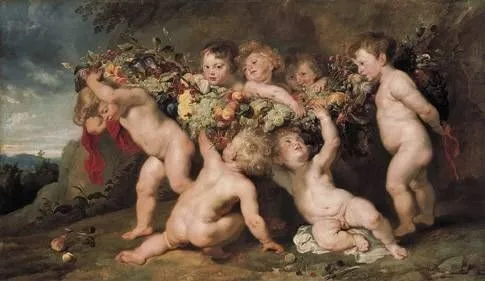
The Fruit Garland is an oil painting by the Flemish Baroque painting artist Peter Paul Rubens. It dates from 1616 and is held in the collection of the Bavarian State Painting Collections.
About this work
Overview
Painted in 1616 by Peter Paul Rubens, this oil-on-canvas work presents a lush arrangement of fruit suspended by putti, blending still-life elements with figural composition. Though rooted in the tradition of Flemish still life, the painting diverges by integrating human figures as active participants in the display, reflecting Rubens’s ability to merge genres. It resides today in the Alte Pinakothek in Munich.
Subject & Meaning
A group of cherubic figures, rendered with lifelike motion and individual expression, interact with a heavy garland of seasonal fruits. Their playful postures suggest celebration or offering, evoking themes of abundance and earthly pleasure. The imagery aligns with Counter-Reformation ideals that embraced sensory richness as a path to divine wonder, though no overt religious symbols are present.
Technique & Style
Rubens employs chiaroscuro to model the putti’s forms, lending volume and tactile presence to their flesh and the fruit’s surfaces.
Rubens employs chiaroscuro to model the putti’s forms, lending volume and tactile presence to their flesh and the fruit’s surfaces. Brushwork varies between smooth transitions in skin and textured impasto in foliage and peel. The muted background isolates the garland, directing focus to the interplay of light, color, and movement. The composition balances asymmetry with rhythmic repetition, characteristic of Baroque dynamism.
History & Provenance
Commissioned during Rubens’s mature period, the painting emerged from his Antwerp studio, where he frequently collaborated with specialists in still life. It entered the Bavarian royal collection in the early 19th century and has remained in the Alte Pinakothek since its founding. No significant alterations or restorations are documented, preserving its original condition.
Context
In early 17th-century Flanders, still-life paintings often carried moral or allegorical weight, but Rubens’s integration of putti reflects a broader trend of blending mythological and domestic imagery. His work responded to Catholic patrons’ preference for vivid, emotionally engaging art, distinguishing Flemish Baroque from Northern European austerity. This piece exemplifies the period’s fascination with nature’s bounty as both physical and symbolic.
Legacy
Rubens’s fusion of figural and still-life traditions influenced later artists in both the Netherlands and Italy, expanding the possibilities of genre painting. While not widely replicated, the painting’s compositional approach—animating nature through human presence—became a reference point in Baroque decorative cycles. It remains a key example of how Flemish artists redefined still life beyond mere observation.
Artist & collection
Artist
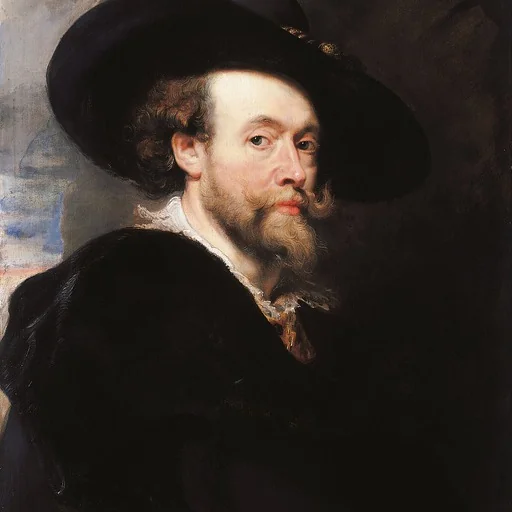
Sir Peter Paul Rubens ( ROO-bənz; Dutch: ; 28 June 1577 – 30 May 1640) was a Flemish artist and diplomat.

 The Feast of the Gods
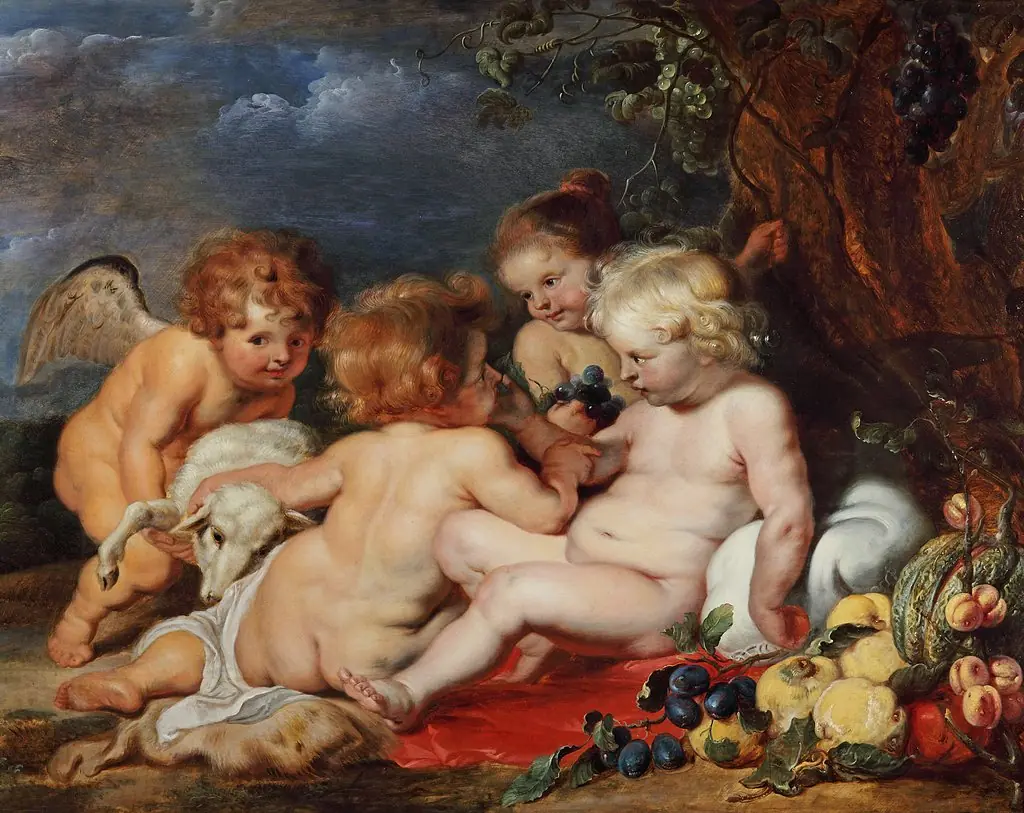 Christ with Young St. John and Angels
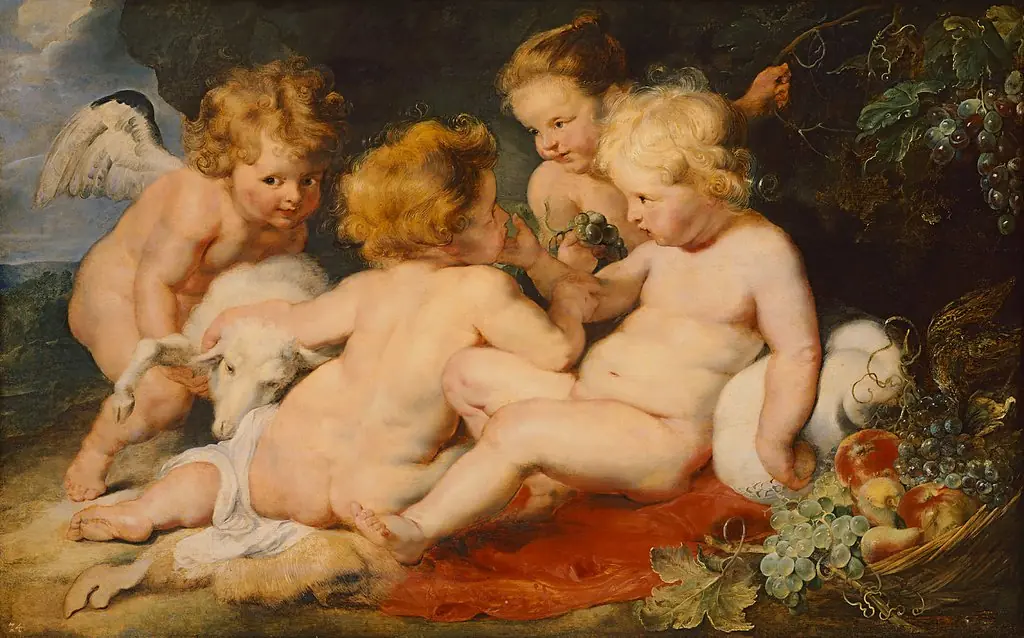 Christ and John the Baptist as children and two angels
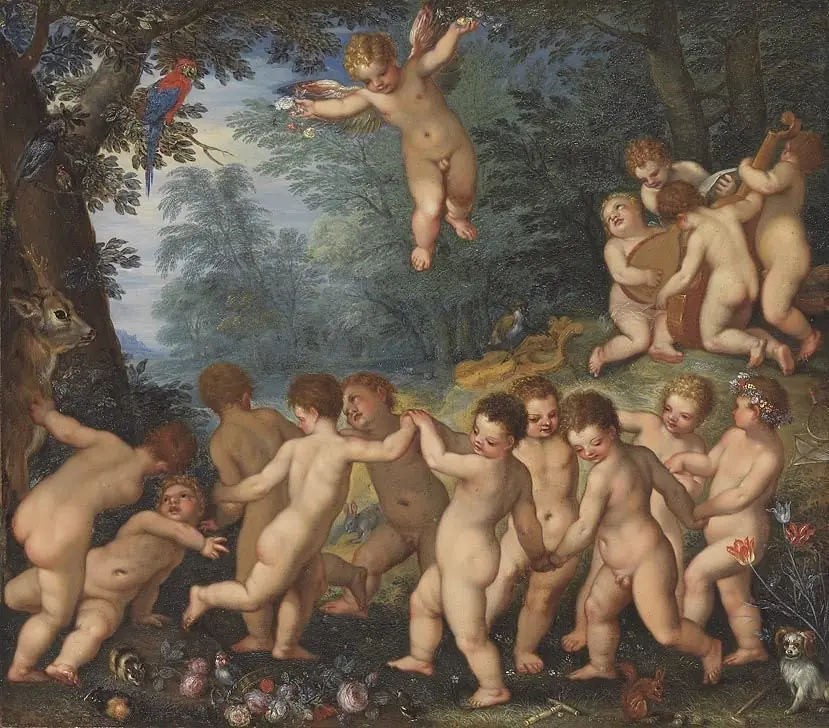 Ring of Children
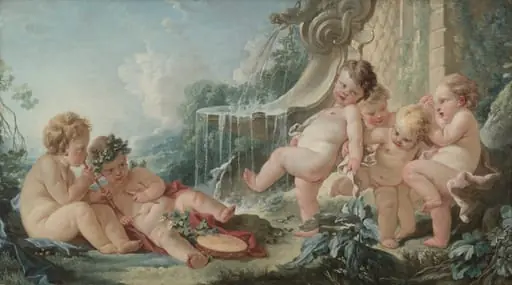 Music and Dance
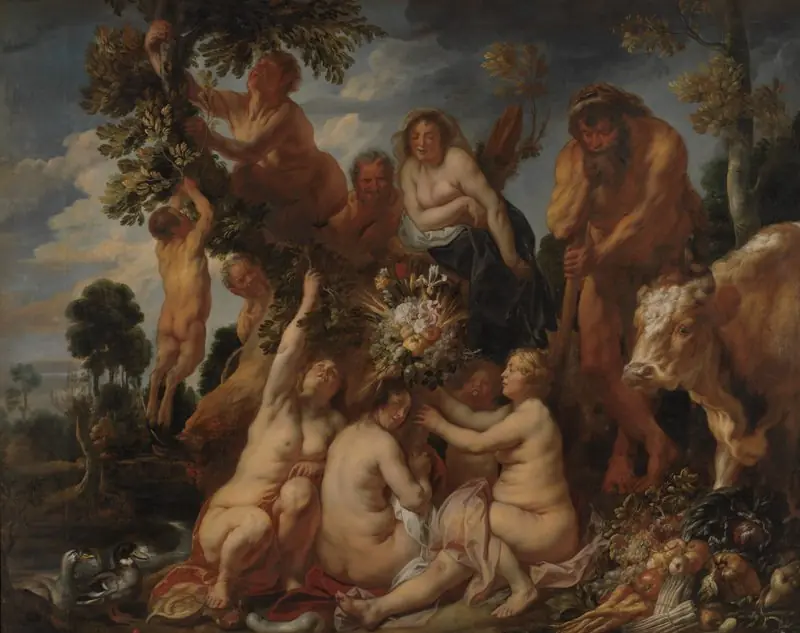 Achelous Defeated by Hercules. The Origin of the Cornucopia. (Allegory of Fruitfulness)
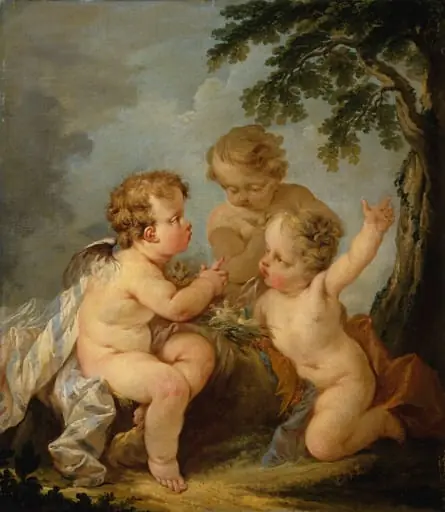 Kolme linnunpesällä leikkivää amoriinia
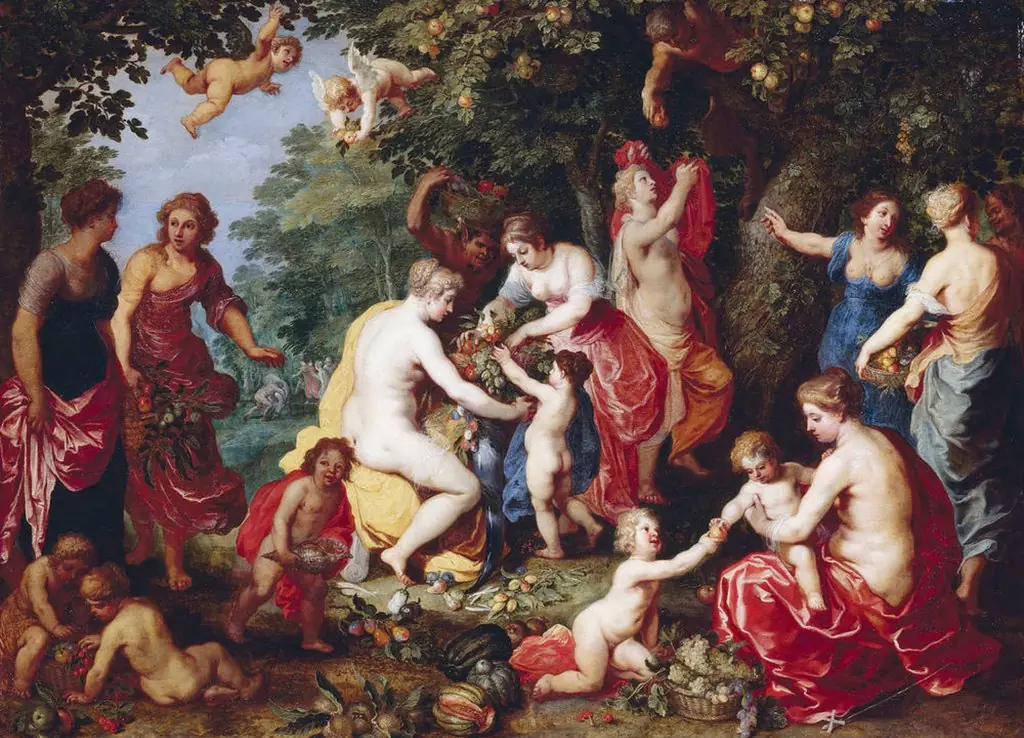 Nymphs and children under fruit trees (Naiads fill the cornucopia)
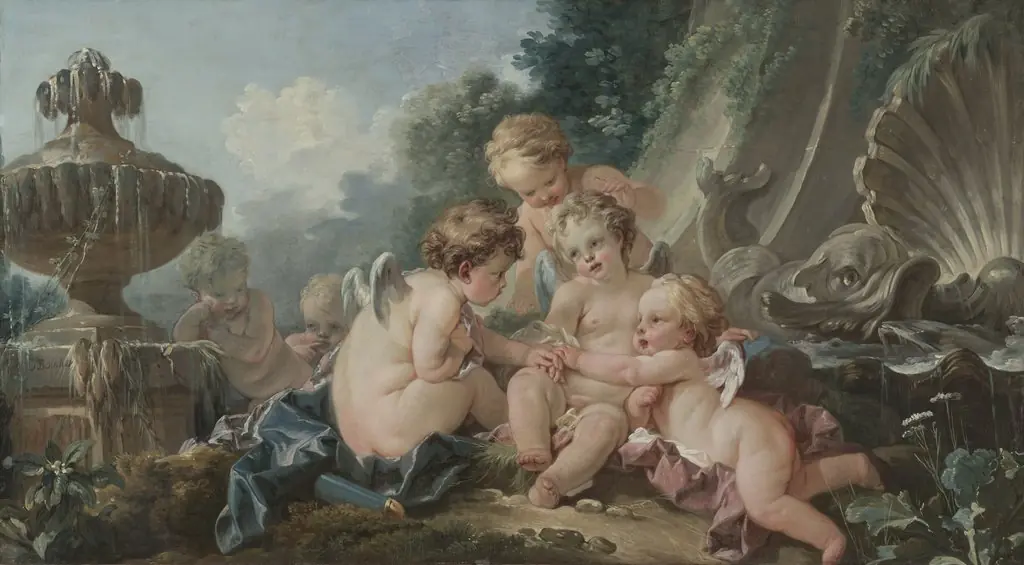 Cupids in Conspiracy
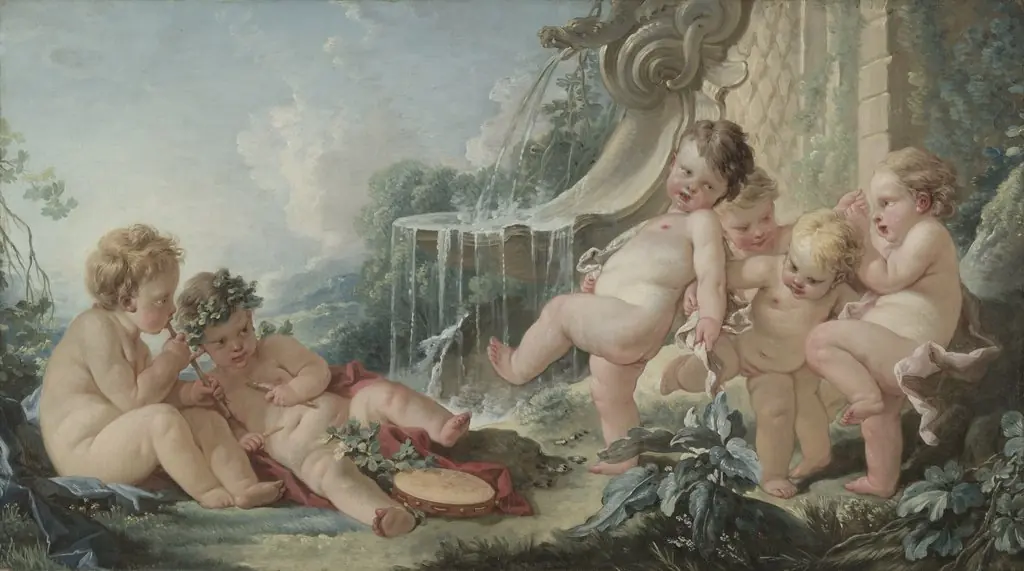 Music and Dance
 Cupids in Conspiracy
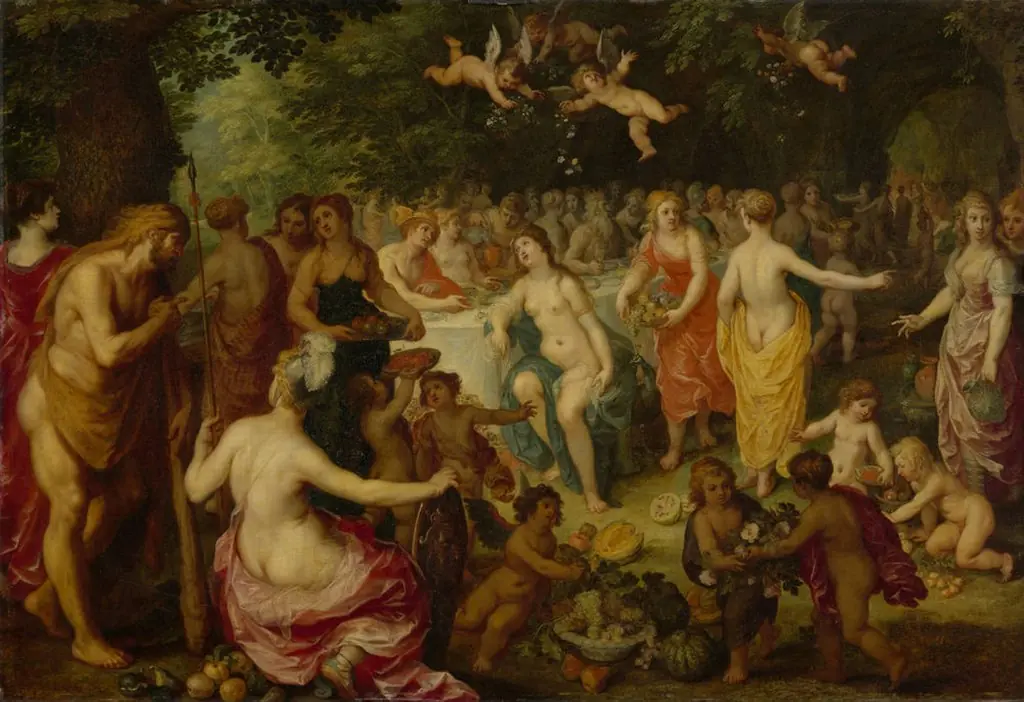
 The wedding banquet of Bacchus and Ariadne