Artwork
The Meeting of Abraham and Melchizedek
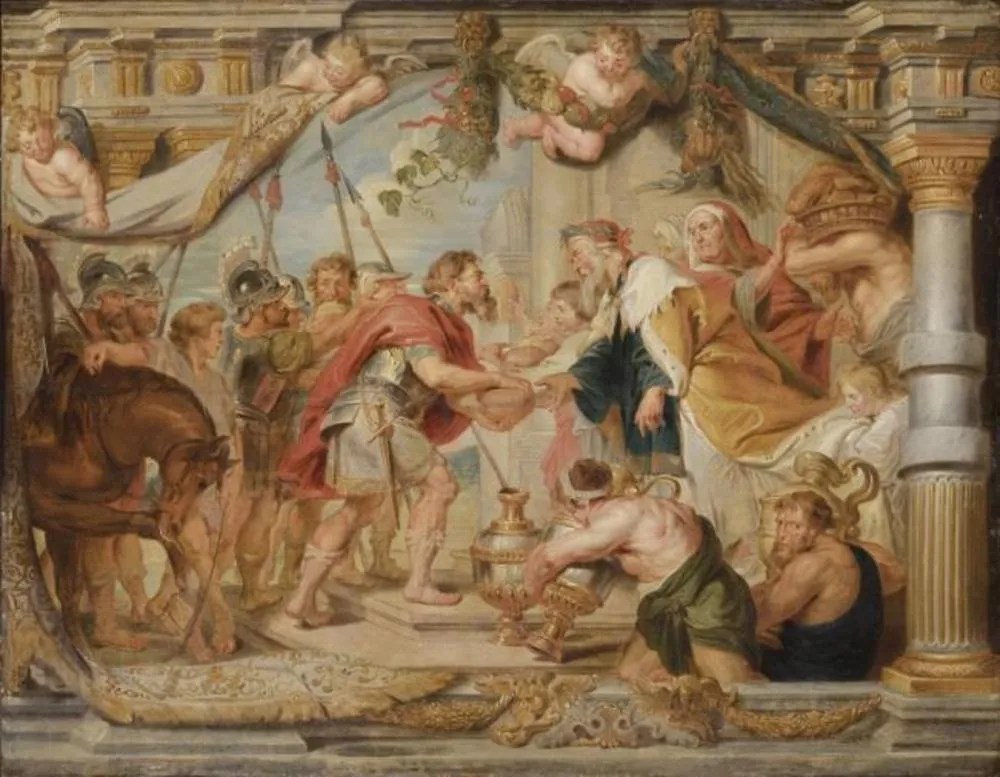
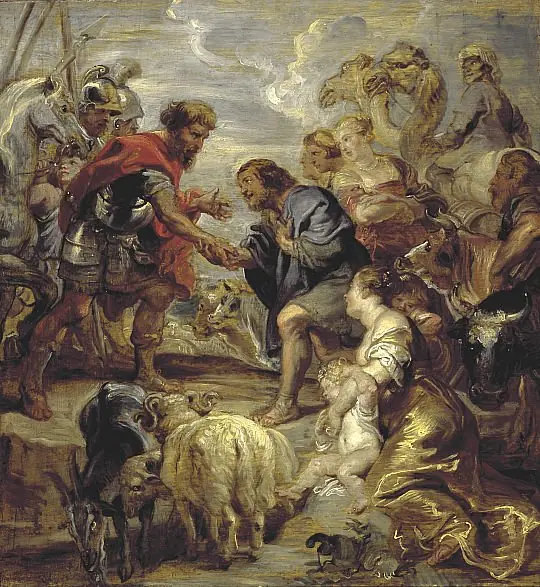
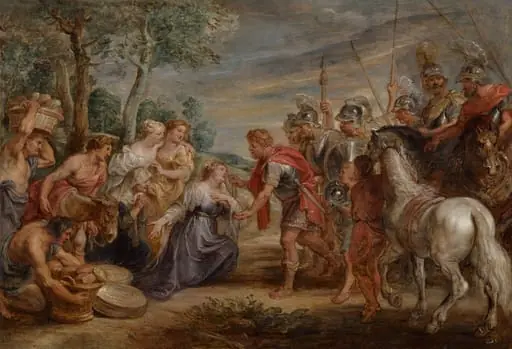
The Meeting of Abraham and Melchizedek is an oil painting by the Flemish Baroque painting artist Peter Paul Rubens. It is held in the collection of the Philadelphia Museum of Art.
About this work
Overview
Painted in 1662, *The Meeting of Abraham and Melchizedek* is an oil-on-canvas work by Peter Paul Rubens, reflecting the late phase of his career.
Painted in 1662, *The Meeting of Abraham and Melchizedek* is an oil-on-canvas work by Peter Paul Rubens, reflecting the late phase of his career. It belongs to the Flemish Baroque tradition, characterized by dynamic composition and rich chromatic harmony. The painting illustrates a biblical episode from Genesis, rendered with the grandeur typical of Rubens’s religious and historical subjects. It is currently held in the collection of the Philadelphia Museum of Art.
Subject & Meaning
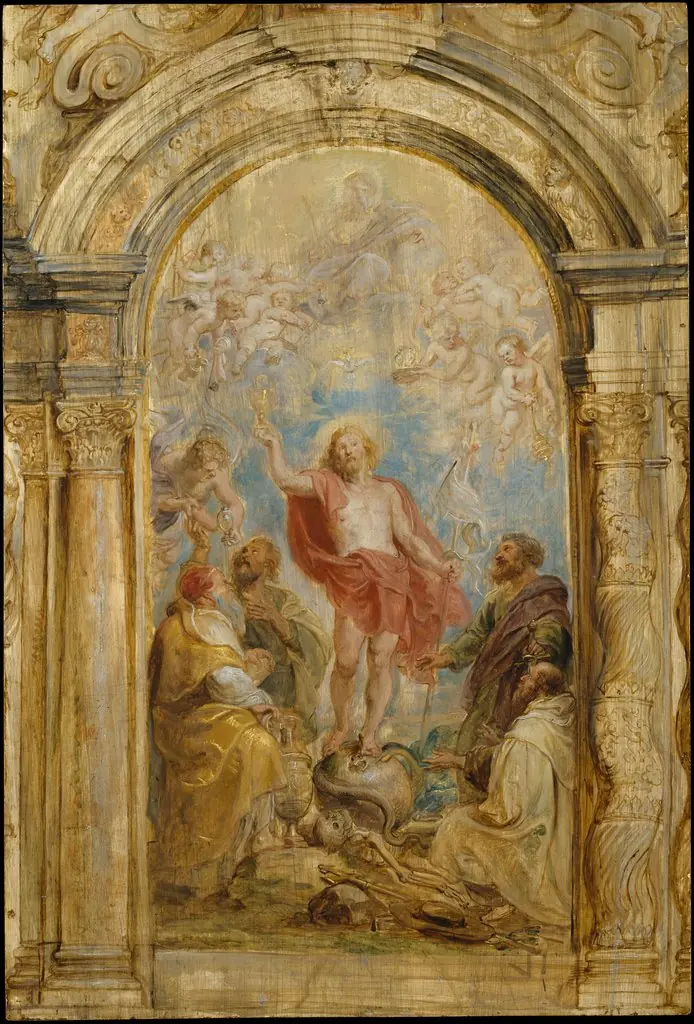
The scene depicts the encounter between Abraham, returning from battle, and Melchizedek, king of Salem and priest of God Most High. Melchizedek offers bread and wine, symbolizing divine blessing, while Abraham gives him tithes. Rubens emphasizes the solemnity of this moment through the gesture of their clasped hands, framing it as a sacred covenant. The surrounding figures and architecture reinforce the ritual’s significance within Christian typology.
Technique & Style
Rubens employs vigorous brushwork and layered glazes to render textures of fabric, skin, and stone with lifelike depth. His use of warm, saturated hues—particularly the red cape of Melchizedek—draws the eye to the central figures. The composition balances movement and stillness: horses and attendants flank the scene, while the two protagonists remain poised in quiet interaction. Classical architecture in the background lends structural gravity to the narrative.
History & Provenance
Commissioned during Rubens’s later years, the painting was likely intended for private devotion or ecclesiastical use. It entered the Philadelphia Museum of Art’s collection in the early 20th century, having passed through several European collections since its creation. Its survival in good condition reflects careful stewardship, and it remains one of the few late works by Rubens in American public collections.
Context
Created during the Counter-Reformation, the painting aligns with Catholic efforts to use visual art to convey theological truths with emotional clarity. Rubens, a devout Catholic and diplomat, often fused biblical narratives with classical forms to affirm spiritual authority. This work fits within a broader corpus of altarpieces and history paintings he produced for churches and patrons across Europe, reinforcing doctrinal themes through visual storytelling.
Legacy
Though less frequently exhibited than Rubens’s earlier works, this painting exemplifies his enduring command of narrative and composition in his final decade. It influenced later artists in the Baroque tradition who sought to merge religious gravity with theatrical realism. Its presence in Philadelphia underscores the transatlantic reach of Flemish art and the continued scholarly interest in Rubens’s late style.
Artist & collection
Artist
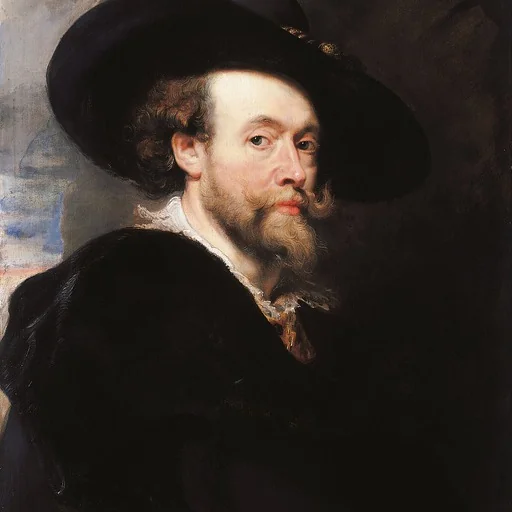
Sir Peter Paul Rubens ( ROO-bənz; Dutch: ; 28 June 1577 – 30 May 1640) was a Flemish artist and diplomat.