Artwork
The Reconciliation of the Romans and Sabines
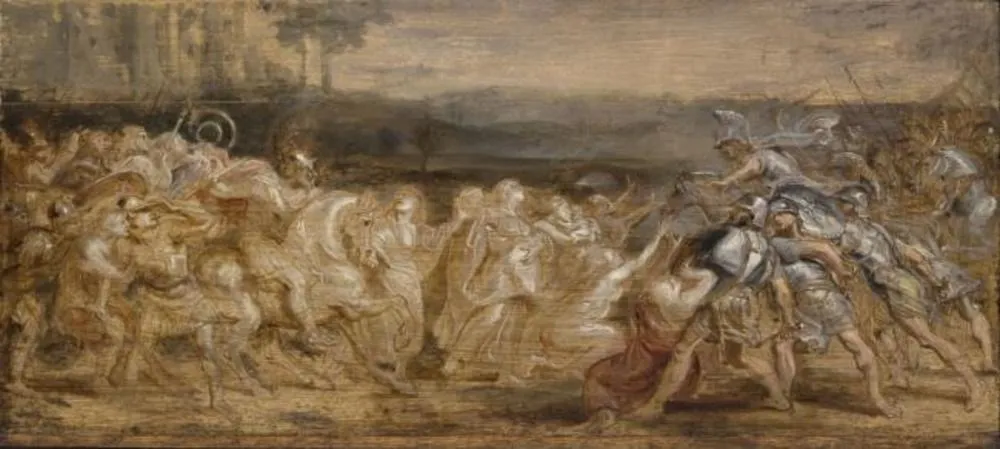
The Reconciliation of the Romans and Sabines is an oil painting by the Flemish Baroque painting artist Peter Paul Rubens. It dates from 1638 and is held in the collection of the Philadelphia Museum of Art.
About this work
Overview
Painted in 1638 by Peter Paul Rubens, this oil-on-canvas work illustrates a legendary moment of peace between the Romans and Sabines.
Painted in 1638 by Peter Paul Rubens, this oil-on-canvas work illustrates a legendary moment of peace between the Romans and Sabines. Created during the height of Rubens’s career, it reflects his engagement with classical narratives and his role as a diplomat-artist. The painting belongs to the Flemish Baroque tradition, characterized by dynamic composition and emotional intensity. Its scale and subject align with Rubens’s broader practice of merging historical myth with political allegory.
Subject & Meaning
The scene depicts the intervention of the Sabine women—abducted earlier by Roman men—who step between their Roman husbands and Sabine fathers to halt a violent clash. Their presence symbolizes reconciliation, transforming conflict into unity. Rubens draws on the myth recounted by Roman historians, using the moment to underscore themes of civic harmony and the moral authority of women in mediating strife. The tension among figures conveys the fragility of peace, rendered with psychological nuance.
Technique & Style
Rubens employs rich, layered oil paint to model muscular forms in motion, with fluid drapery and varied gestures creating rhythmic energy across the canvas. Earthy tones dominate, softened by subtle chiaroscuro that defines volume without harsh contrast. The background recedes into hazy architecture and foliage, focusing attention on the central human drama. His brushwork balances precision with spontaneity, capturing both anatomical vigor and emotional immediacy in a manner typical of his mature style.
History & Provenance
Commissioned by the Spanish Habsburg court, the painting was intended for a royal residence in Madrid. It remained in Spanish royal collections until the early 19th century, later entering the Louvre’s holdings. Its journey reflects Rubens’s international reputation and the political use of art to convey ideals of unity under monarchical rule. The work’s survival through wars and transfers underscores its enduring significance in European collections.
Context
Created during the Thirty Years’ War, the painting resonated with contemporary desires for peace amid widespread conflict. Rubens, who had served as a diplomat for the Spanish Netherlands, infused the scene with his firsthand understanding of negotiation and diplomacy. The myth of the Sabine women, long used in European art to symbolize reconciliation, gained renewed relevance as rulers sought to legitimize stability through classical precedent.
Legacy
The painting influenced later artists through its synthesis of classical narrative and Baroque dynamism. Its emphasis on emotional resolution over violence became a model for historical painting in the 18th and 19th centuries. While Rubens’s style evolved over time, this work remains a key example of how myth could be adapted to address urgent political concerns, cementing his role as a bridge between antiquity and early modern statecraft.
Artist & collection
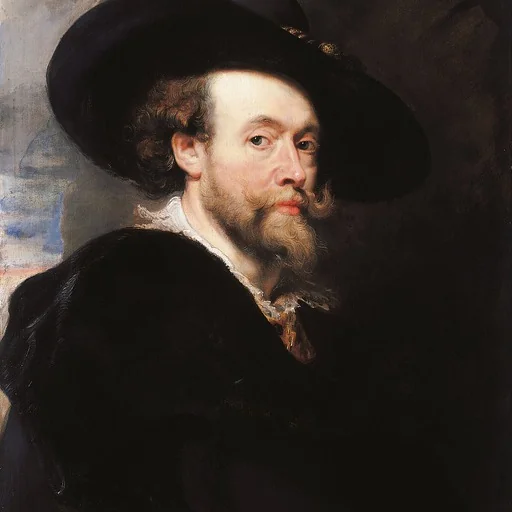
Artist
Sir Peter Paul Rubens ( ROO-bənz; Dutch: ; 28 June 1577 – 30 May 1640) was a Flemish artist and diplomat.

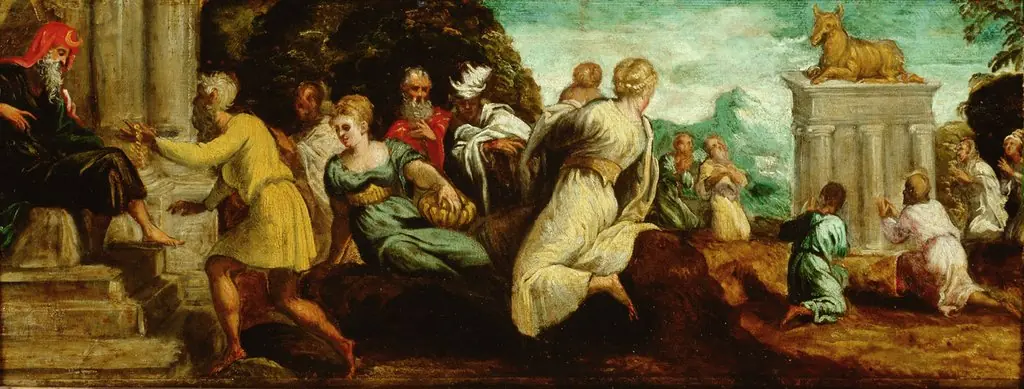 Anbetung des Goldenen Kalbes
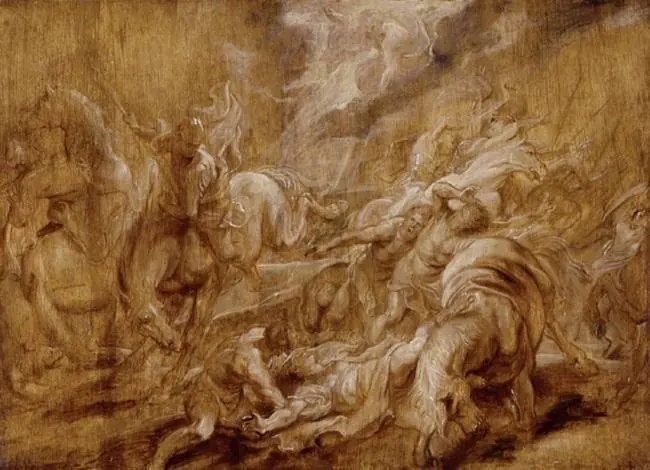 The Conversion of St Paul
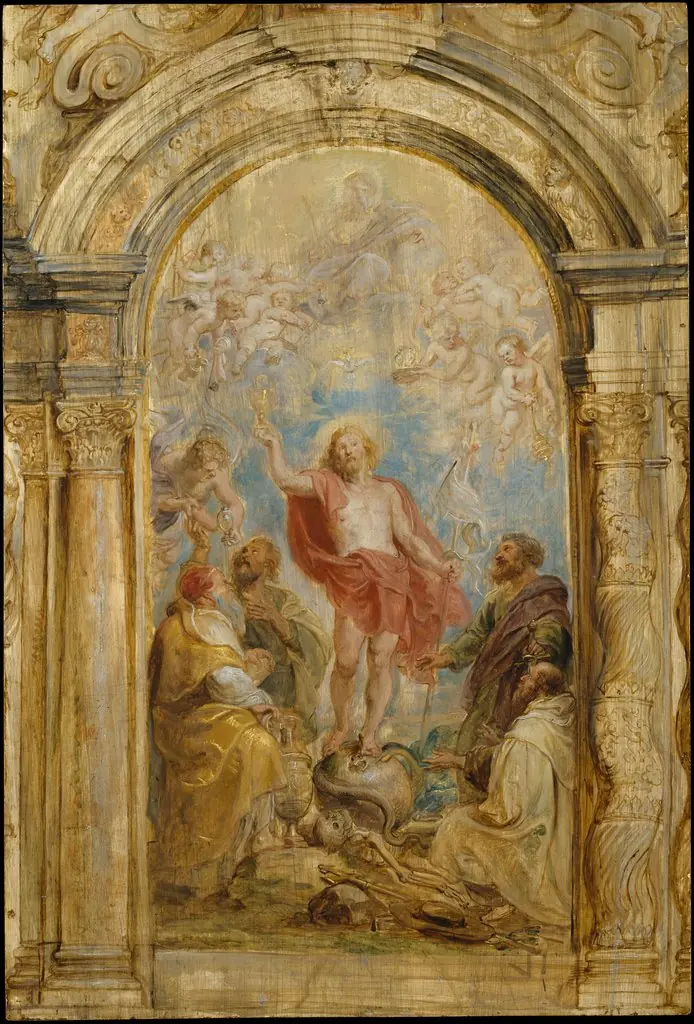
 The Triumph of the Eucharist over Philosophy and Science
 Evening landscape with cattle and shepherds
 Königin von Saba vor Salomon
 The Fire of London
 Achilles Discovered among the Daughters of Lycomedes
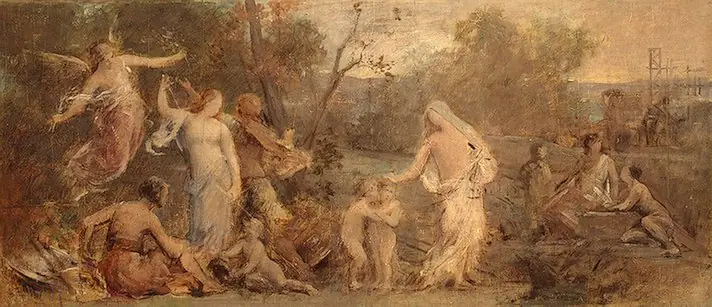 Allegory of Life
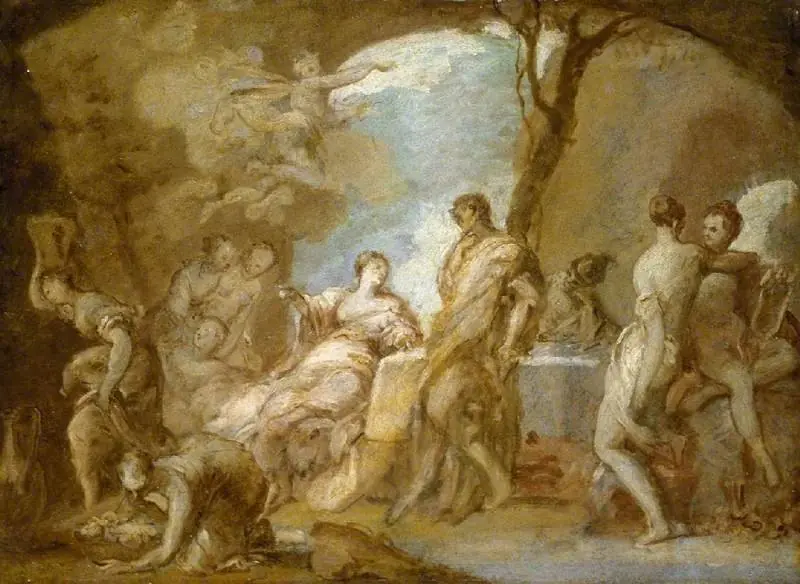 Telemachus on Calypso's Island
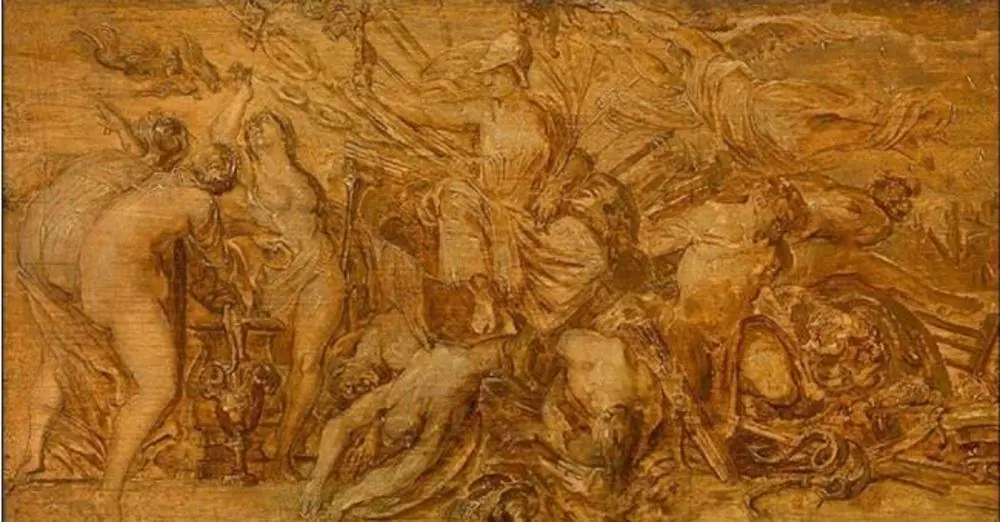 Bellona
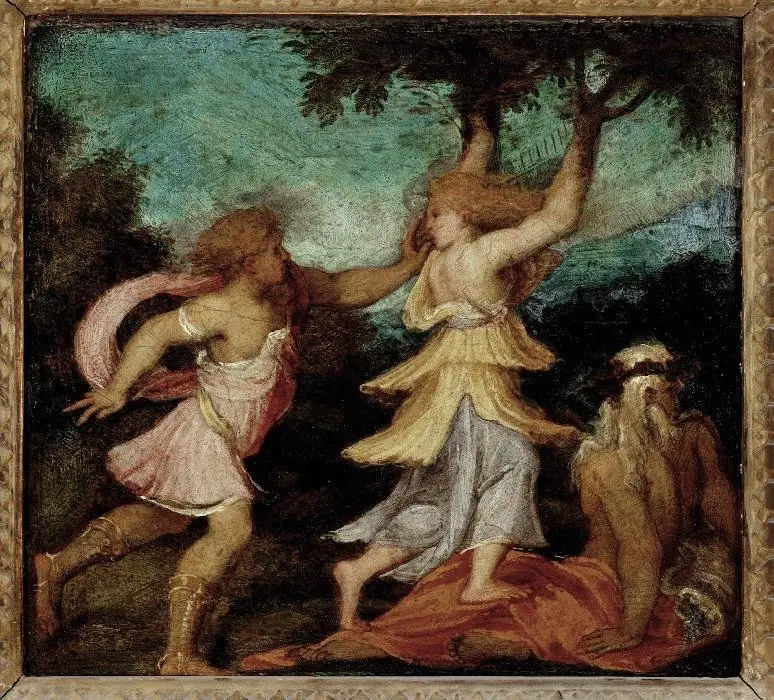 Apollo and Daphne
 St Barbara pursued by her Father