Artwork
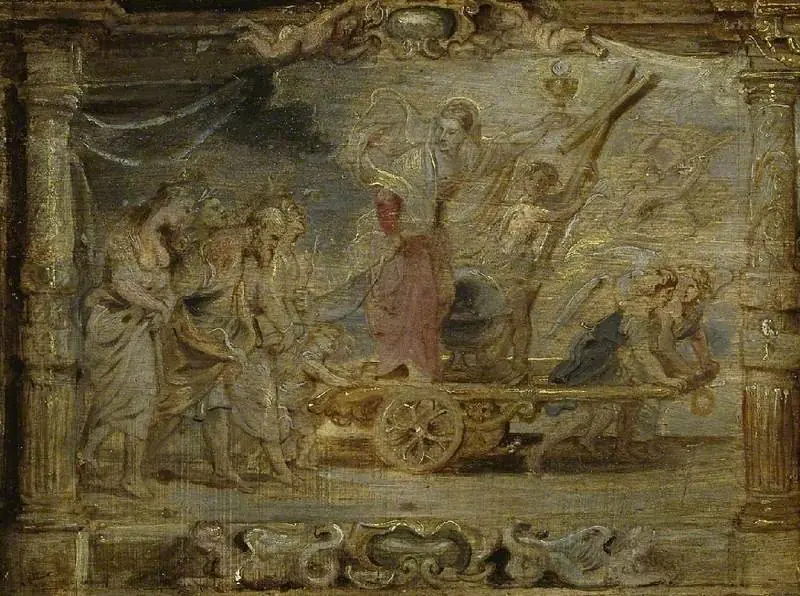
The Triumph of Divine Love
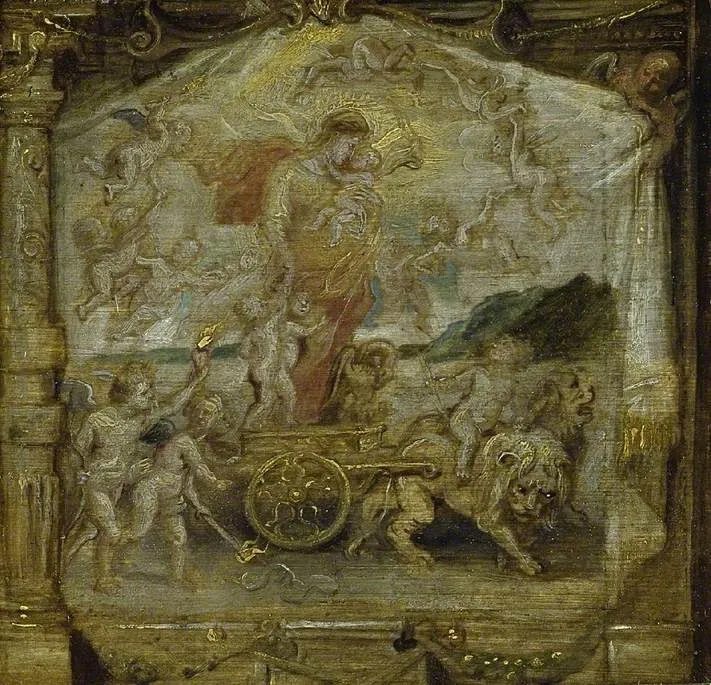
The Triumph of Divine Love is an oil painting by Peter Paul Rubens. It is held in the collection of the Fitzwilliam Museum.
About this work
Overview
The Triumph of Divine Love is an oil painting created by Peter Paul Rubens around 1650, exemplifying the Flemish Baroque style. It belongs to the religious genre and is housed in the Fitzwilliam Museum.
Subject & Meaning
The painting depicts a chariot pulled by a lion, occupied by a standing figure, set against a dynamic backdrop of clouds and cherubs. This scene conveys themes of divine power and triumph, aligning with Counter-Reformation ideals through its emphasis on movement, rich color, and sensuality.
Technique & Style
Rubens employed a muted color palette dominated by browns and golds, with meticulous attention to detail in elements like the lion's mane and the figure's attire. The use of chiaroscuro creates strong light and dark contrasts, enhancing the painting's depth and sense of motion.
History & Provenance
Created circa 1650, the work is characteristic of Rubens's fusion of classical and Christian influences. It is part of the Fitzwilliam Museum's collection.
Context
This painting reflects the artistic and religious climate of its time, combining Baroque dynamism with the thematic requirements of the Counter-Reformation, which sought to emotionally engage the viewer through vivid and powerful imagery.
Legacy
As a representative of Flemish Baroque, *The Triumph of Divine Love* contributes to Rubens's legacy in influencing religious art of the period, though its specific impact or notable exhibitions are not highlighted in available information.
Artist & collection
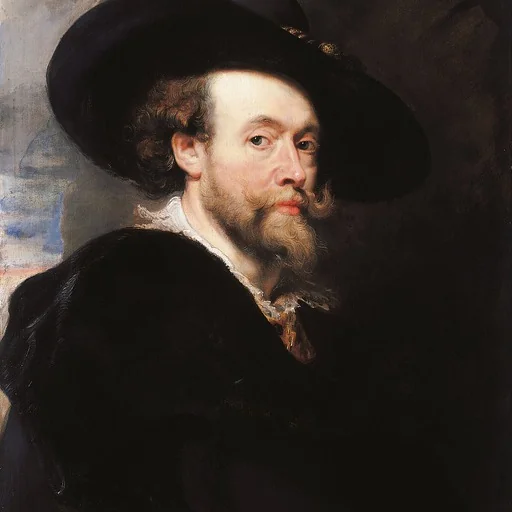
Artist
Sir Peter Paul Rubens ( ROO-bənz; Dutch: ; 28 June 1577 – 30 May 1640) was a Flemish artist and diplomat.

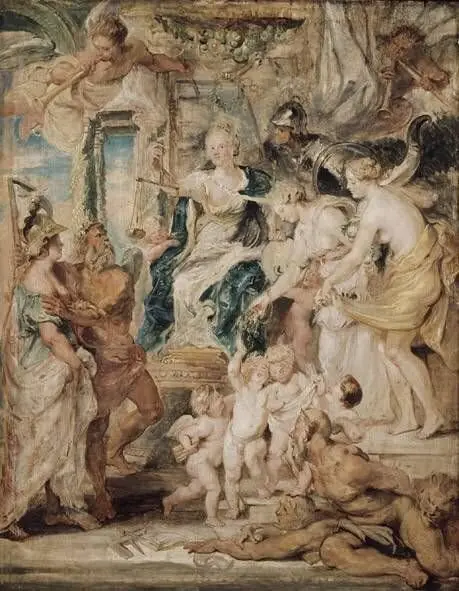 The Felicity of the Regency
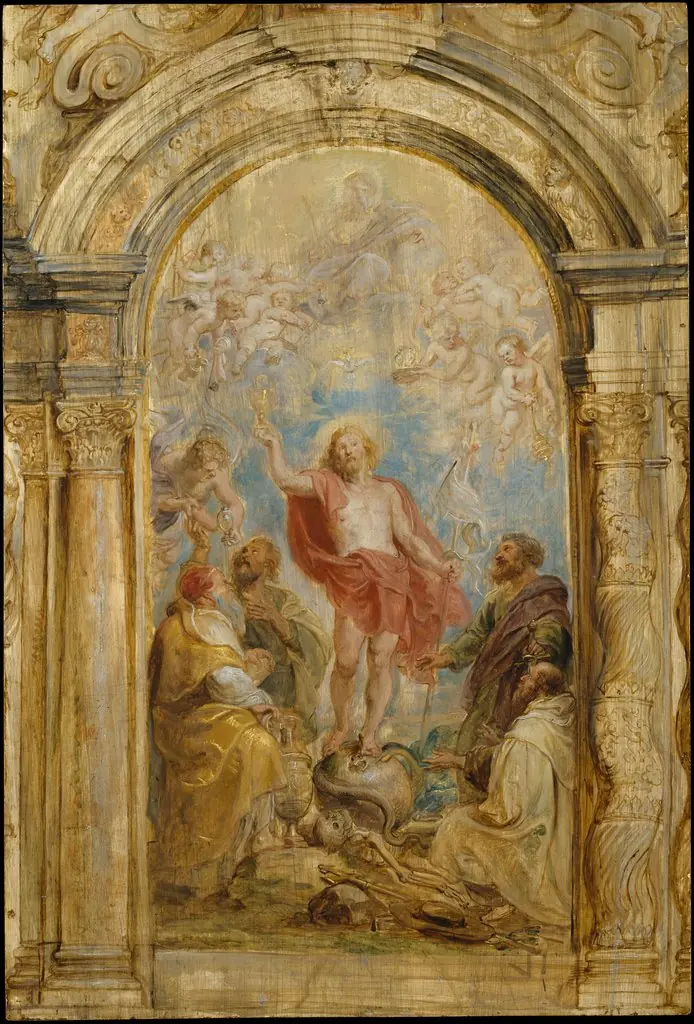
 The Triumph of the Eucharist over Philosophy and Science
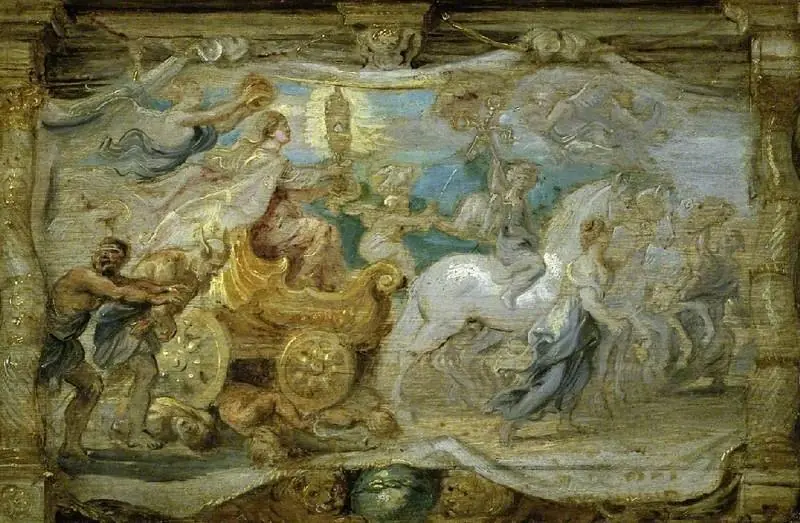 The Triumph of the Eucharist over Ignorance and Blindness
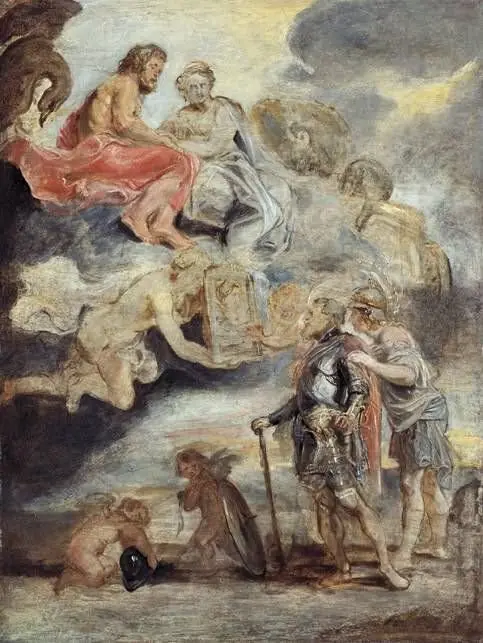 Minerva presents the portrait of Maria de' Medici to King Henry IV of France (sketch)
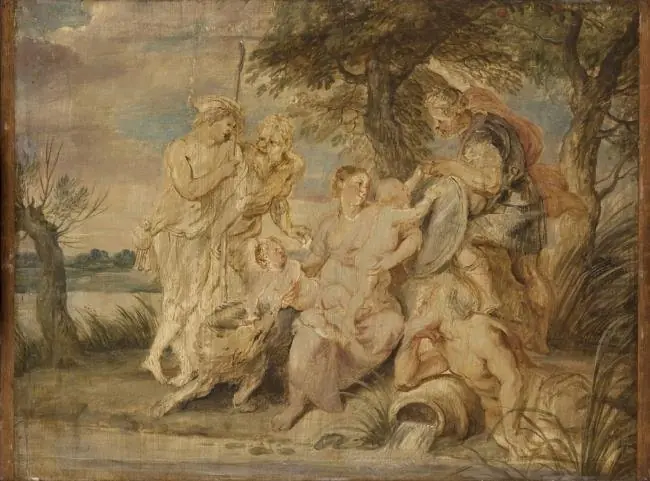 Romulus and Remus
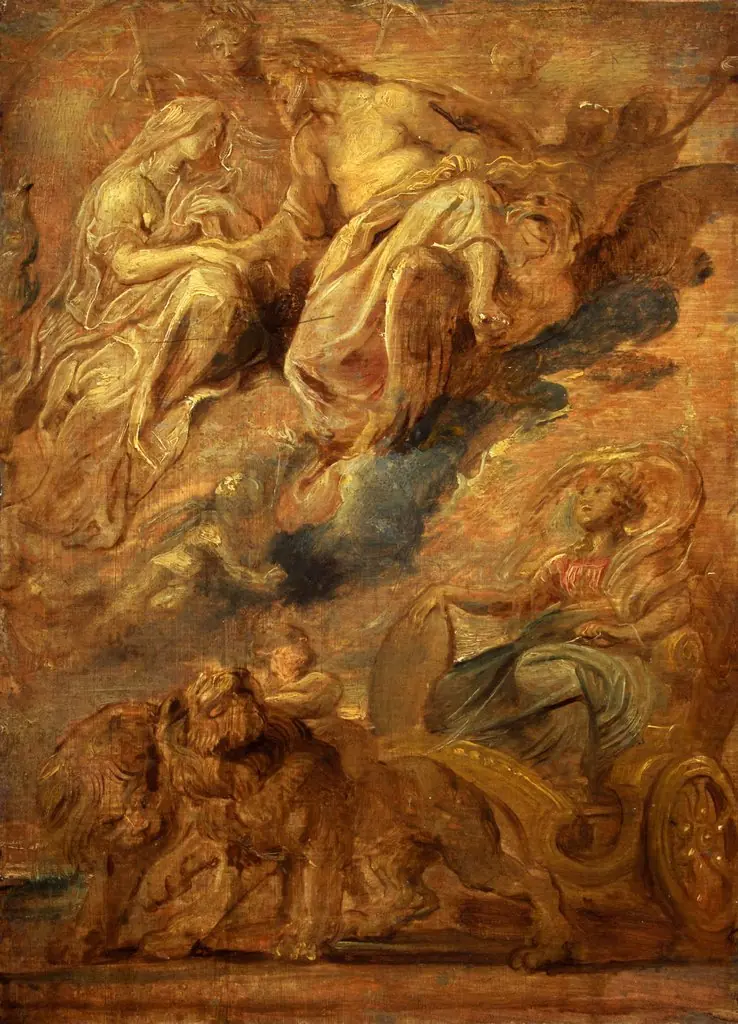 Arrival in Lyon
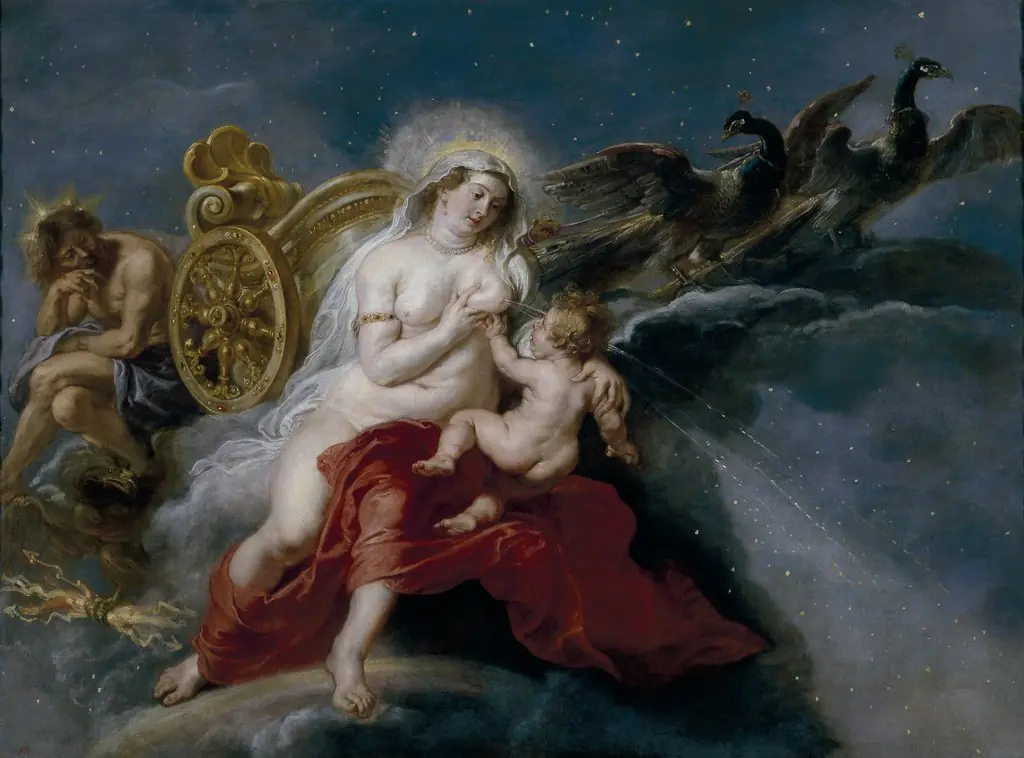
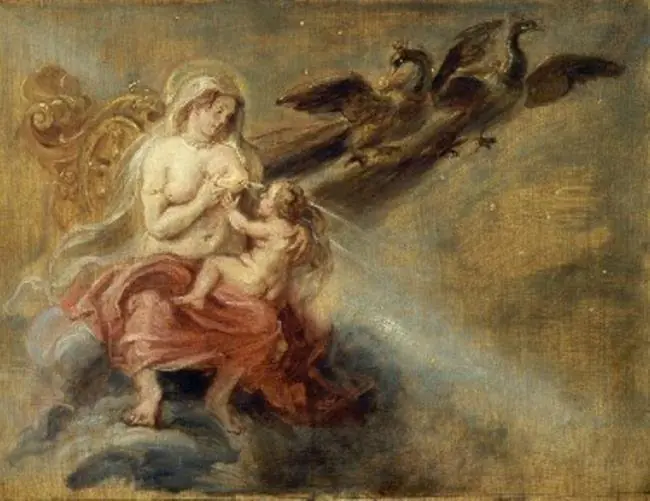 The Origin of the Milky Way (sketch for the Torre de la Parada
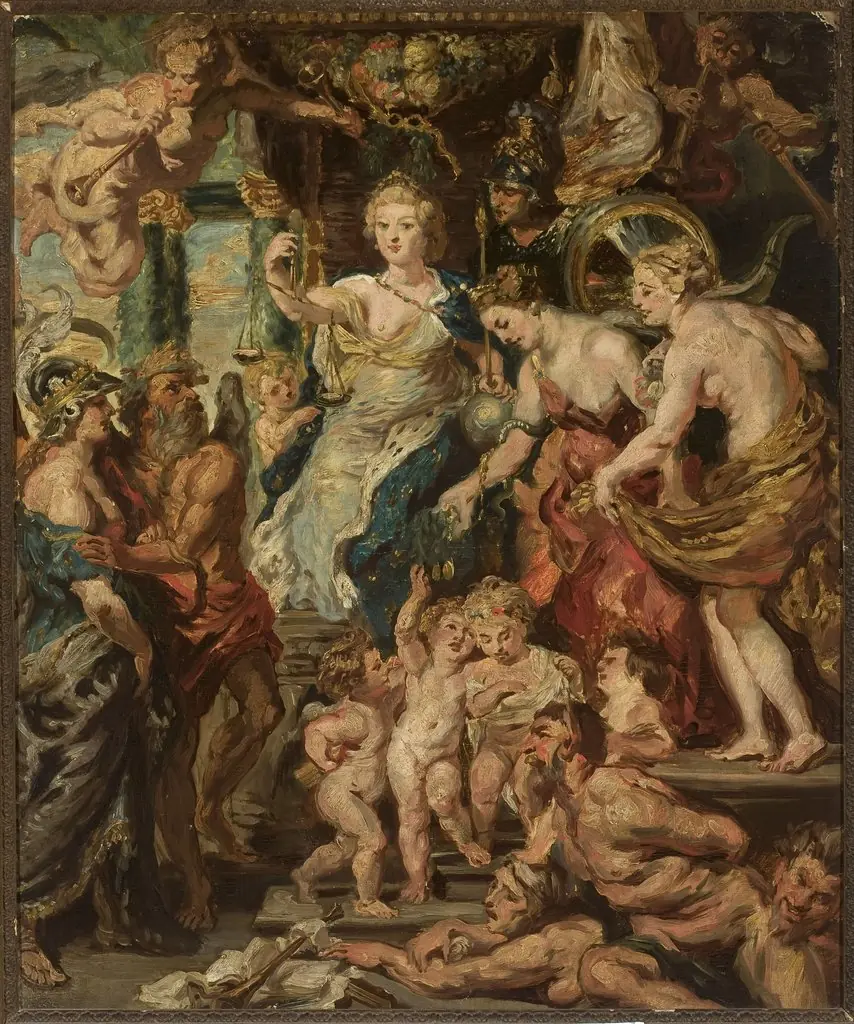 Apotheosis of Maria Medici
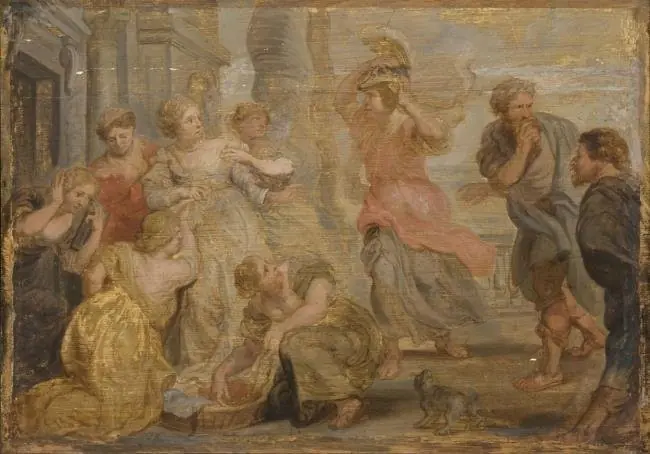 Achilles Discovered among the Daughters of Lycomedes