Artwork
Mikhail Lermontov
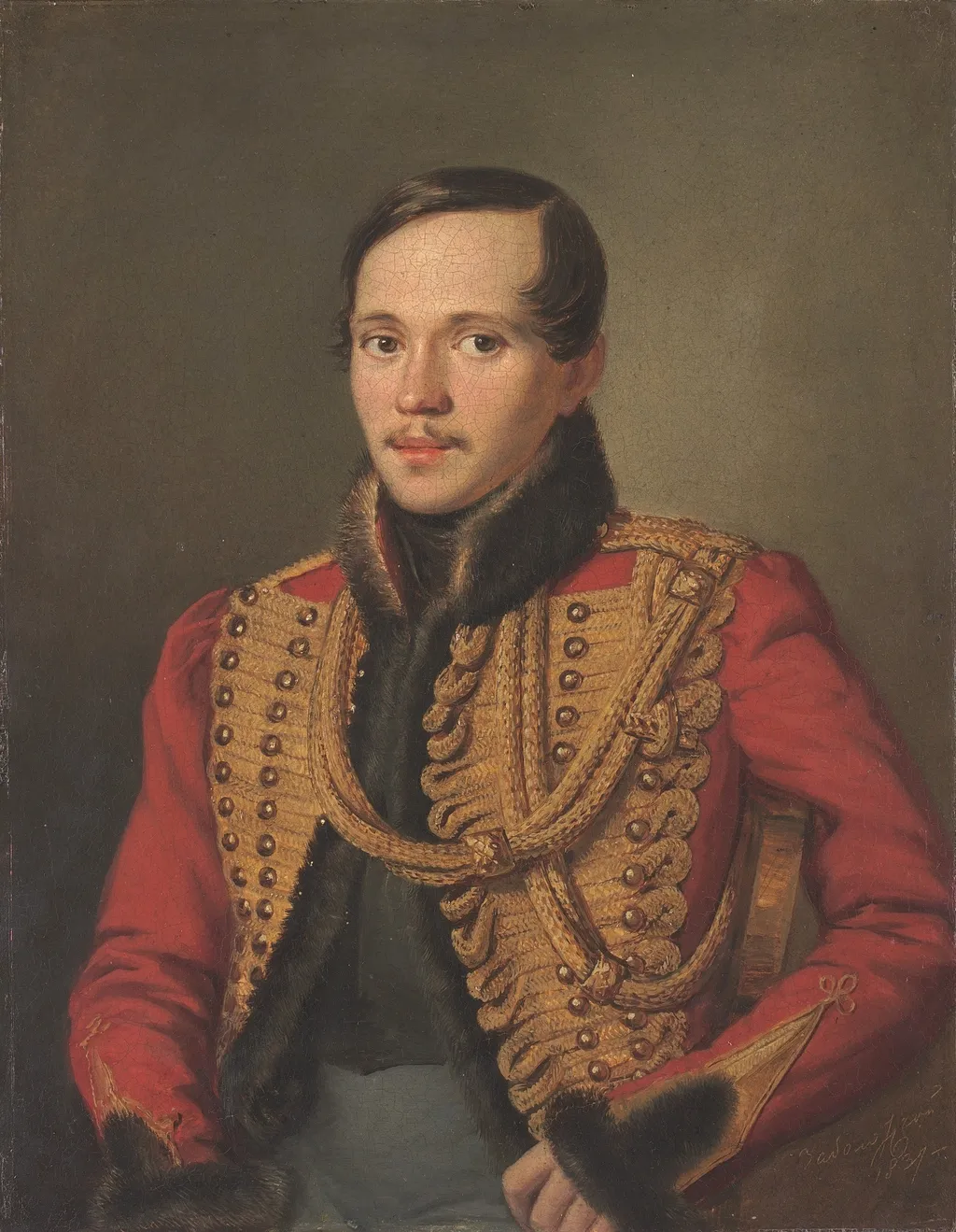
Mikhail Lermontov is an oil painting by Petr Zabolotskiy. It dates from 1837 and is held in the collection of the Tretyakov Gallery.
About this work
Overview
Painted in 1837 by Pyotr Yefimovich Zabolotskiy, this oil portrait captures the Russian poet Mikhail Lermontov shortly after the death of Alexander Pushkin.
Painted in 1837 by Pyotr Yefimovich Zabolotskiy, this oil portrait captures the Russian poet Mikhail Lermontov shortly after the death of Alexander Pushkin. Zabolotskiy, a painter associated with the academic tradition of Nicholas I’s reign, rendered Lermontov in formal military attire, reflecting both his status and the era’s cultural climate. The work resides today in the Tretyakov Gallery, where it stands as one of the few contemporary visual records of the poet.
Subject & Meaning
Lermontov is depicted as a young officer in a red military coat with gold embellishments, a uniform he wore as a cadet in the Life Guards Hussar Regiment. His clenched right hand and intense gaze suggest inner tension, possibly alluding to his turbulent personality and the political unrest of the time. The portrait avoids idealization, instead conveying a brooding intensity that aligns with his literary reputation as a voice of disillusionment and defiance.
Technique & Style
Zabolotskiy employed precise brushwork to render the texture of the uniform, particularly the metallic sheen of the buttons and trim, while the background remains subdued to focus attention on the figure. Facial features are rendered with careful modeling, avoiding theatricality. The composition follows academic conventions of the period—centered subject, controlled lighting, and restrained palette—emphasizing dignity over emotional display.
History & Provenance
Commissioned shortly after Lermontov’s rise to literary prominence, the portrait was likely intended to document his public image. It remained in private hands until entering the Tretyakov Gallery’s collection in the late 19th century. Zabolotskiy, who became an Academician of the Imperial Academy of Arts in 1857, produced few portraits of literary figures, making this work a rare intersection of literary and visual culture in mid-19th-century Russia.
Context
The portrait was created during a period of heightened state surveillance and literary repression under Tsar Nicholas I. Lermontov, recently exiled for his poem 'Death of the Poet,' was viewed with suspicion by authorities. The military uniform in the painting may reflect an attempt to present him as a loyal subject, even as his writings challenged the regime. The portrait thus exists at the intersection of personal identity and political constraint.
Legacy
As one of the earliest and most recognizable images of Lermontov, the portrait has shaped his public iconography. It is frequently reproduced in literary histories and museum displays, serving as a visual anchor for his legacy. Though Zabolotskiy’s broader oeuvre is less known today, this single work endures as a key artifact linking Russian Romantic poetry with its visual representation.
Artist & collection
Artist
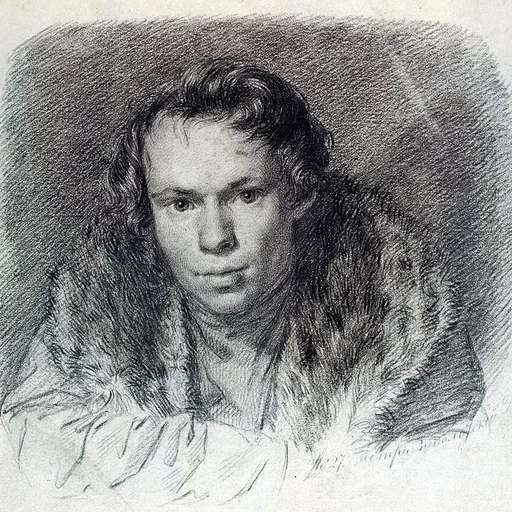
Pyotr Yefimovich Zabolotskiy (Russian: Пётр Ефи́мович Заболо́тский or Заболоцкий; 1803 — March 12 1866) was a Russian portrait painter, representative of the romantic academicism of the Nicholas era, author of the…

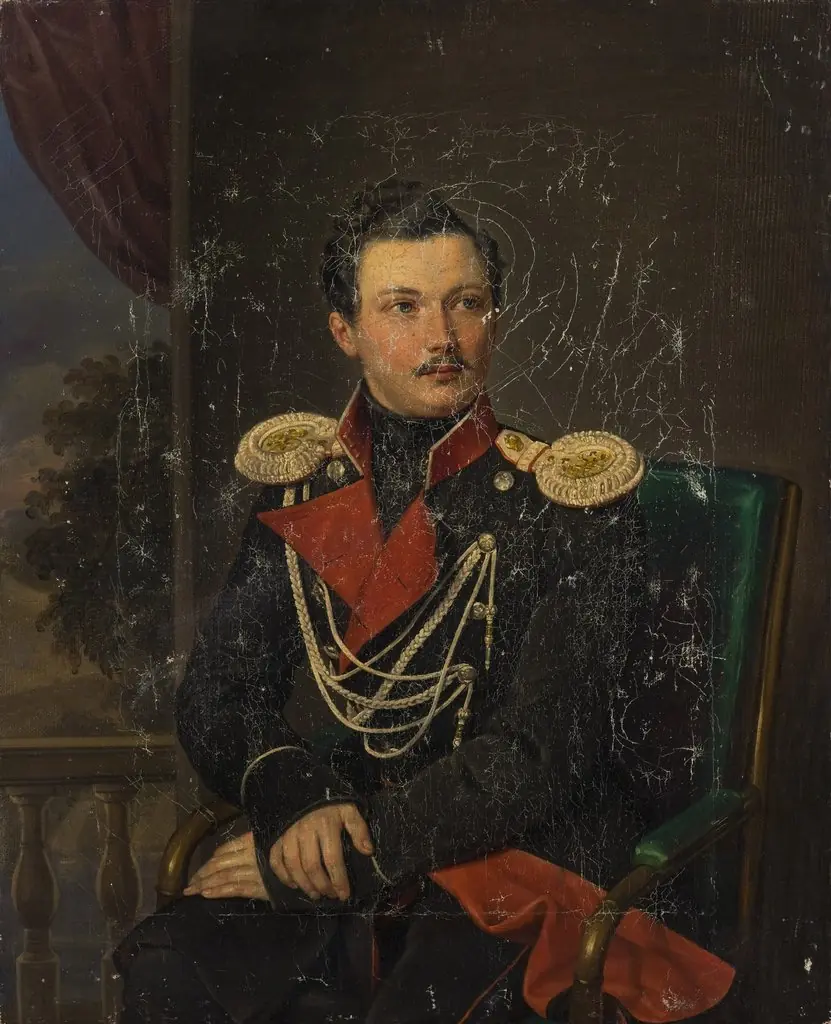 Portrait of Aide-de-camp of of His Imperial Majesty Pyotr A. Balashov (1811-1845)
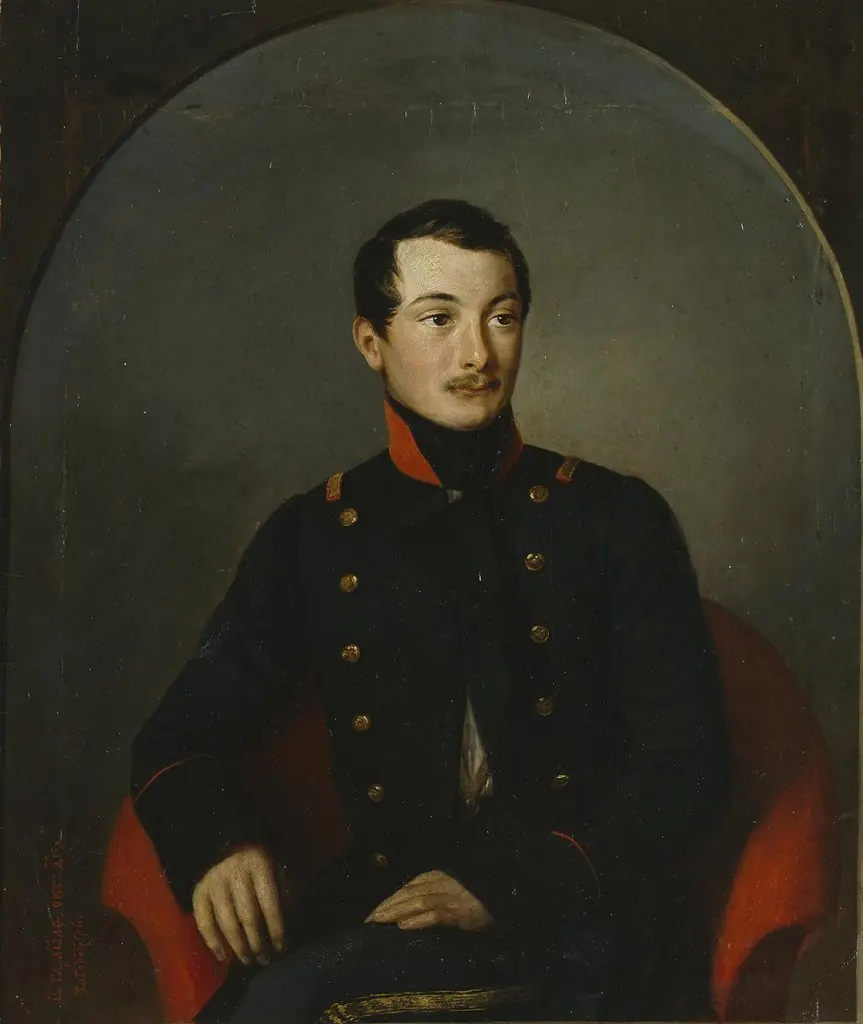 Portrait of a Hussar Guards Officer
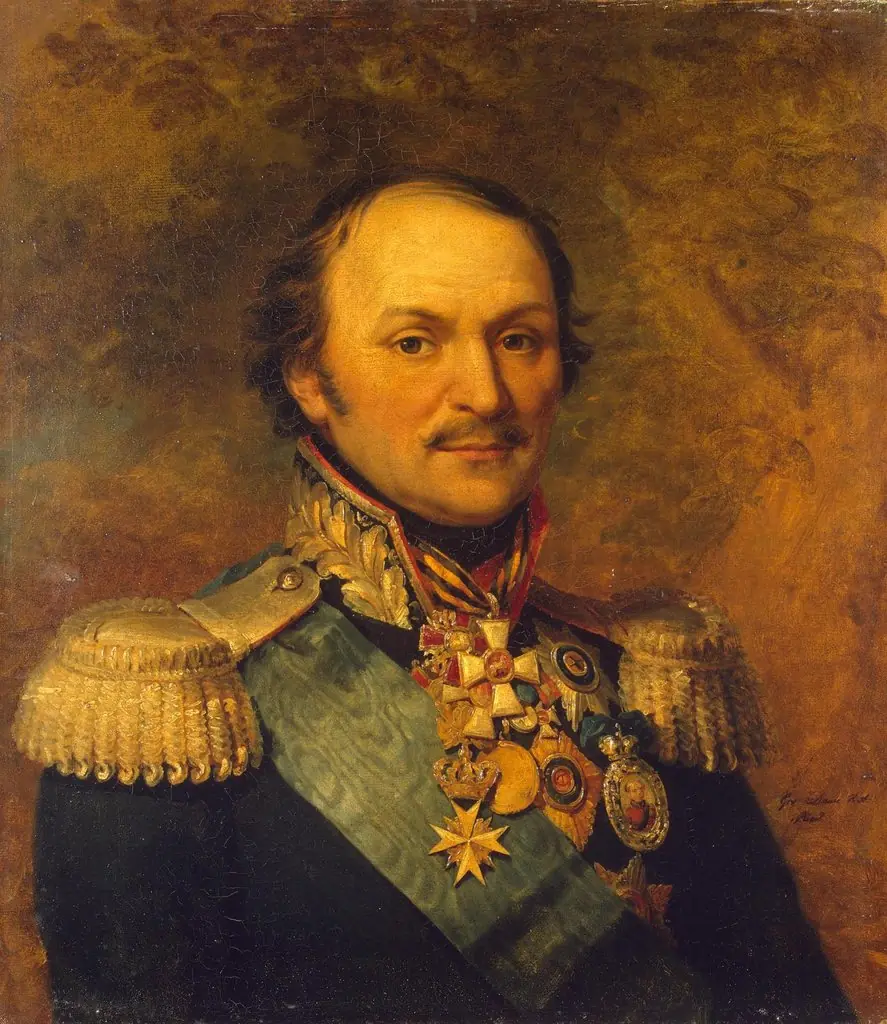 Portrait of Matvey I. Platov (1753-1818) (copy after the 1814 original made in Britain ?)
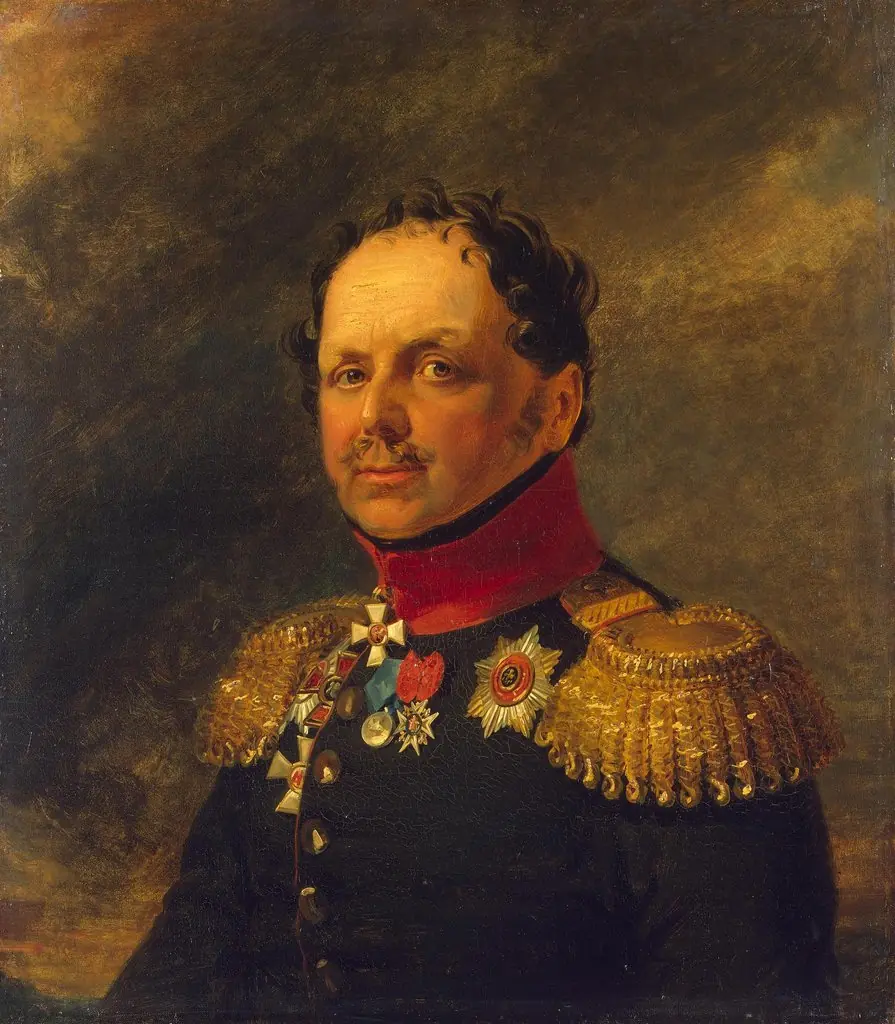 Portrait of Ilya I. Alexeyev (1772-1830)
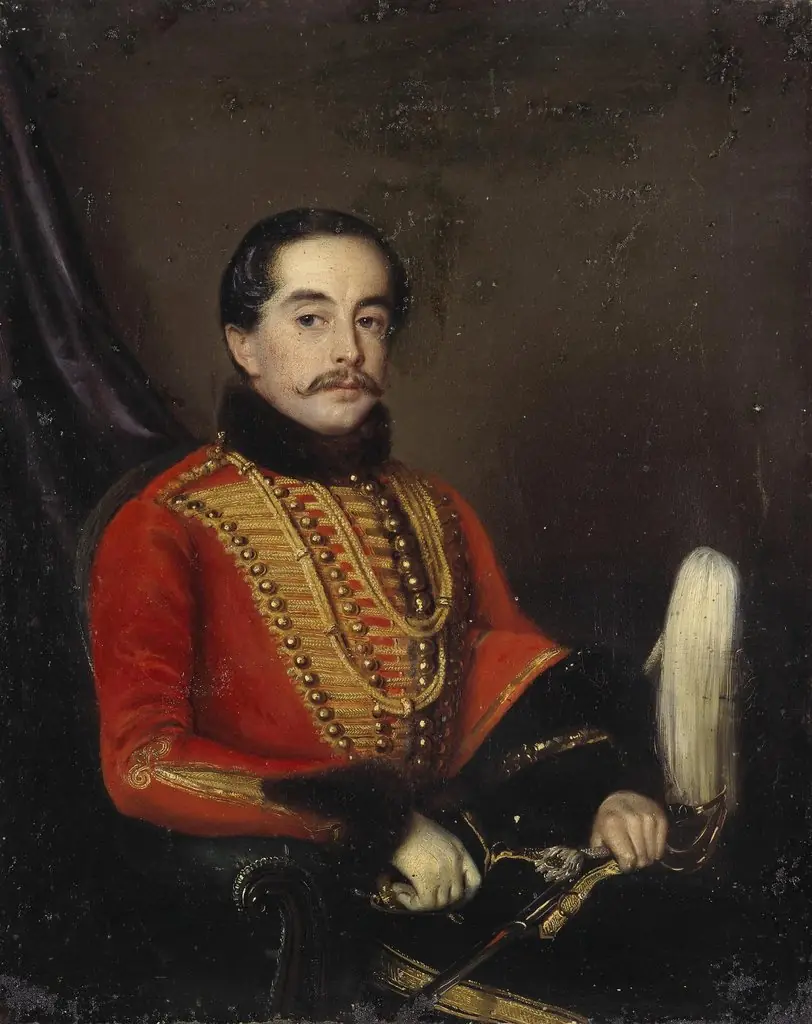 Portrait of Konstantin Monsey
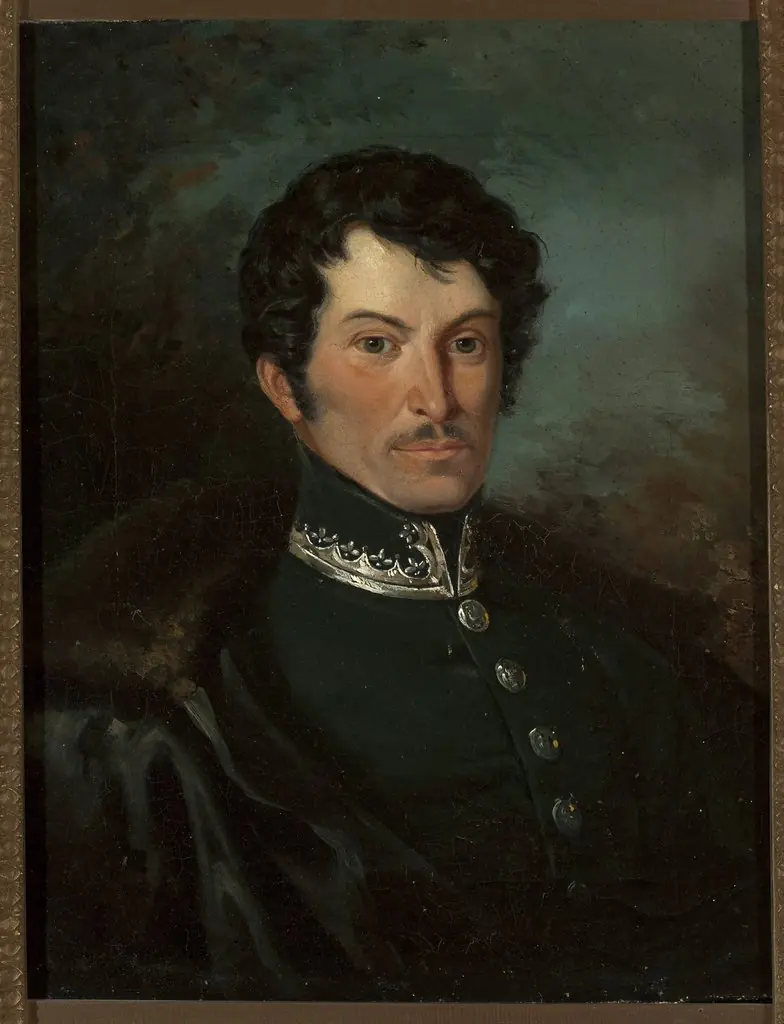 Portrait of Friedrich Christoph Dietrich
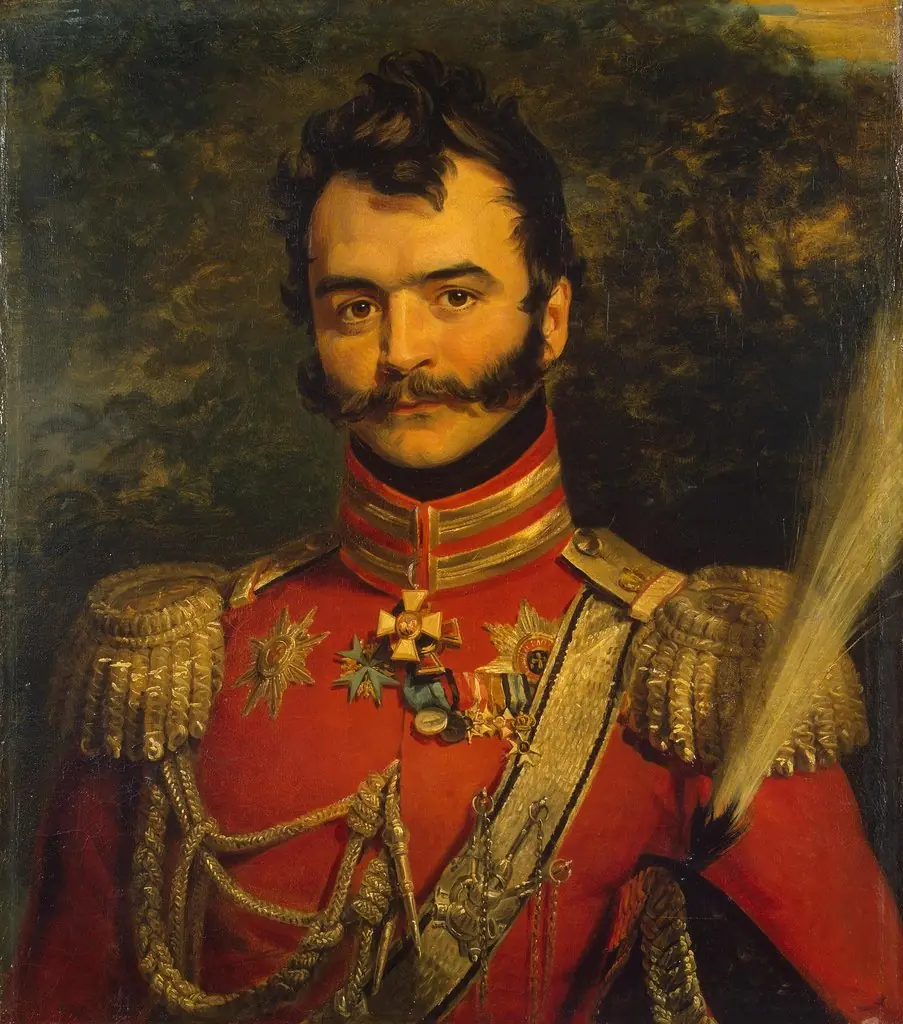 Portrait of Vasily V. Orlov-Denisov (1775-1843)
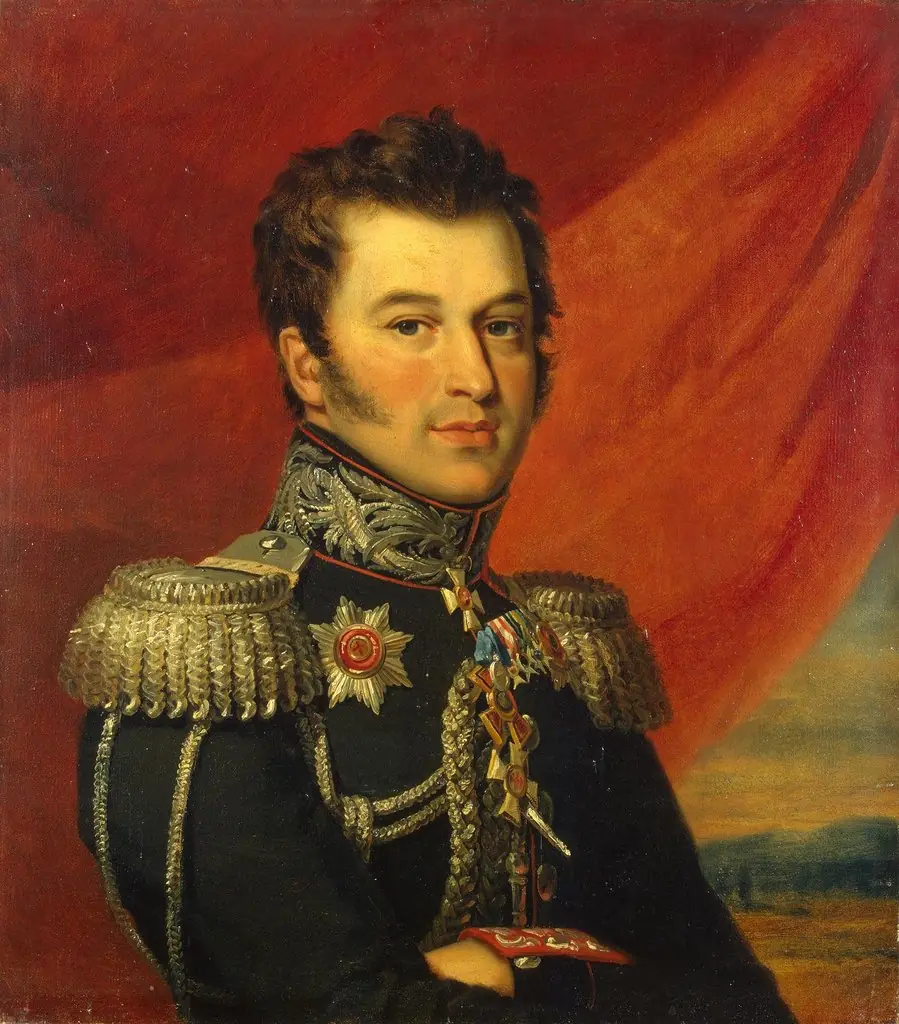 Portrait of Paisy S. Kaisarov (1783-1844)
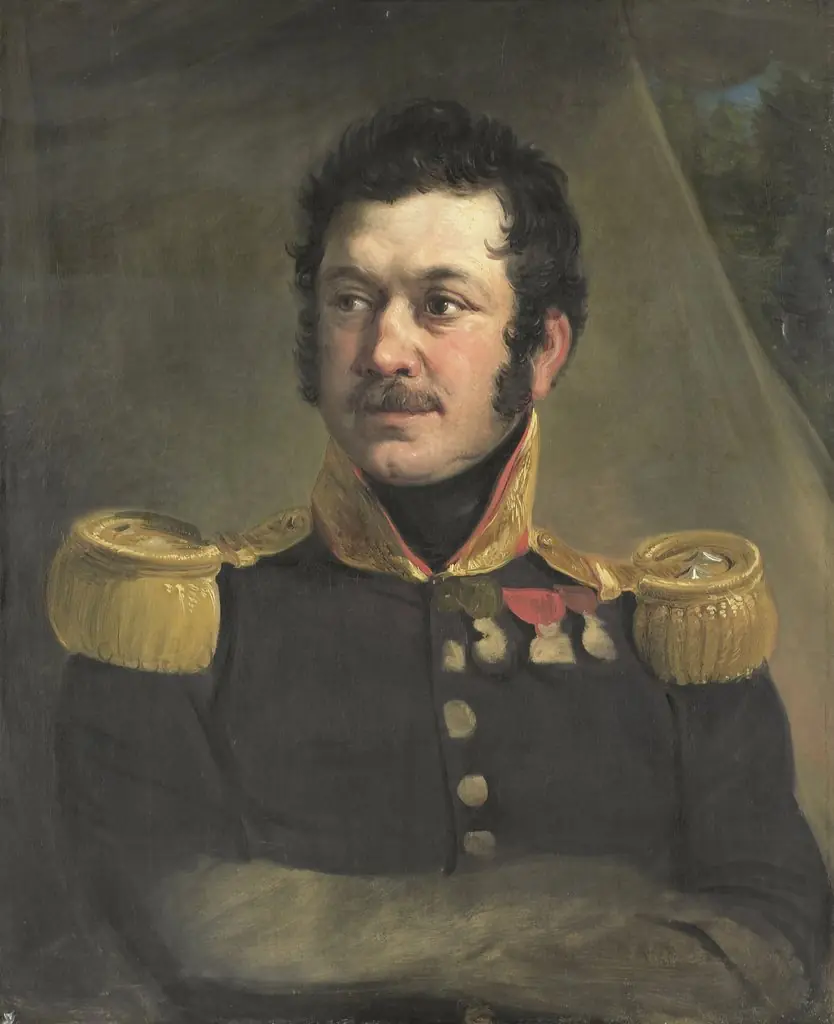 Portrait of Lieutenant-General Frederik Knotzer
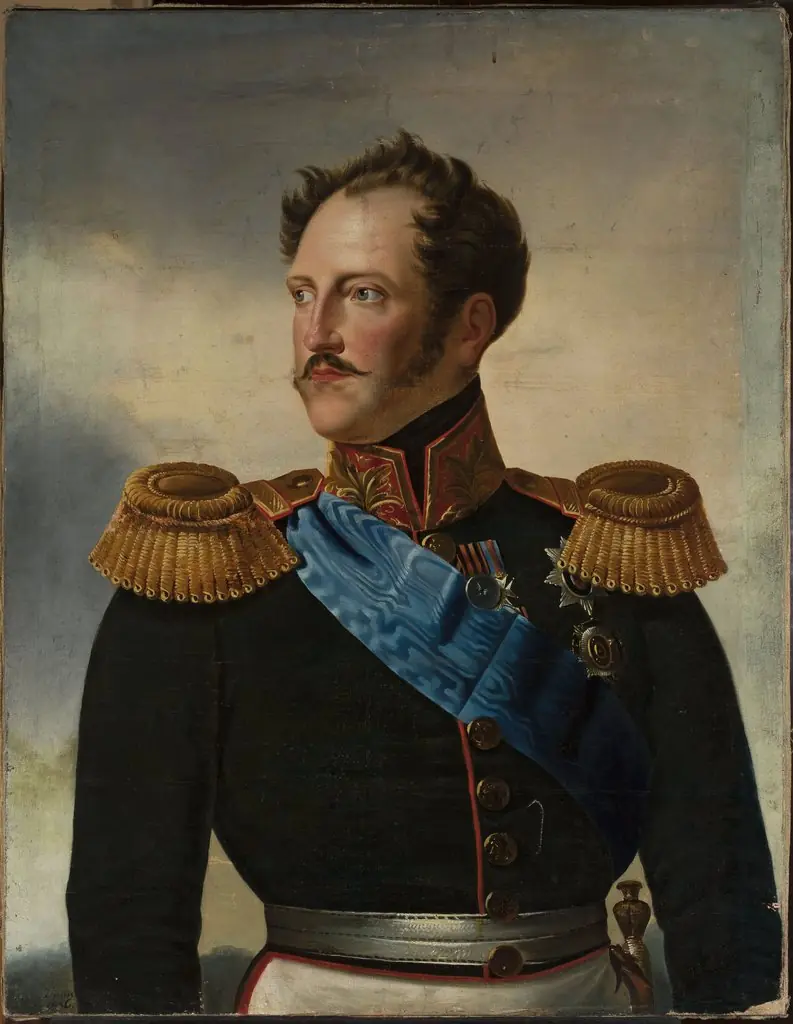 Portrait of Tsar Nicholas I