Artwork
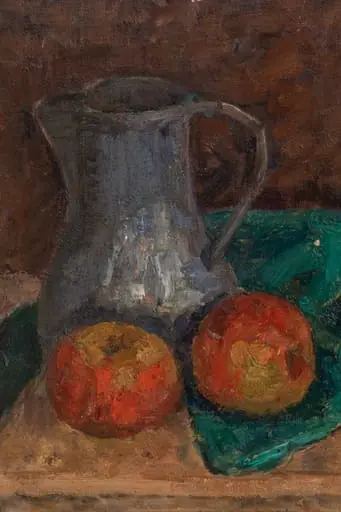
Cană și mere
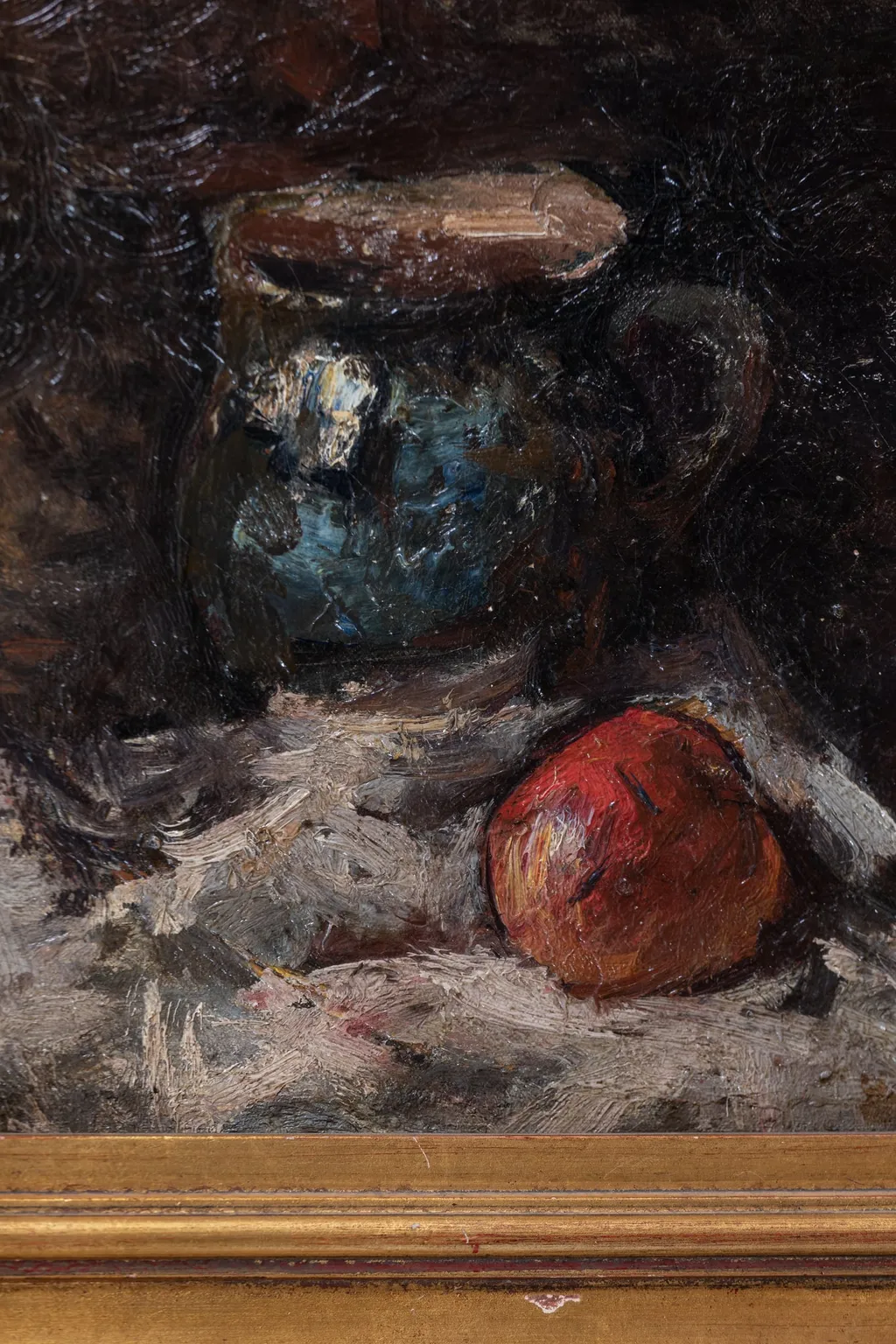
Cană și mere is a print by Gheorghe Petrașcu. It dates from 1850 and is held in the collection of the Moldova National Museum Complex.
About this work
Overview
Gheorghe Petrașcu, born in 1872 in Tecuci, Romania, painted *Cană și mere* in the early 20th century, not 1850 as sometimes misstated.
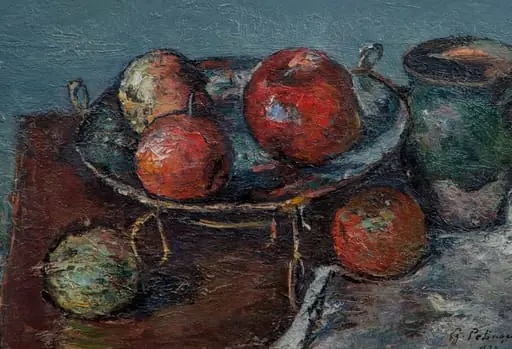
Gheorghe Petrașcu, born in 1872 in Tecuci, Romania, painted *Cană și mere* in the early 20th century, not 1850 as sometimes misstated. The work is a still life featuring a dark vessel and two red apples, rendered with vigorous brushwork and a tactile surface. Petrașcu, known for his quiet, introspective compositions, developed a distinctive style that balanced realism with expressive texture, distinguishing him among Romanian interwar painters.
Subject & Meaning
The painting presents a modest arrangement of everyday objects: a heavy, ambiguous vessel and two ripe apples. There is no narrative or symbolic overtone; the focus lies in the quiet presence of the items. The composition, centered and unadorned, invites contemplation of form, color, and materiality rather than metaphor, reflecting a preference for the ordinary over the theatrical.
Technique & Style
Petrașcu applied paint thickly, building texture through layered, directional brushstrokes that catch the light and create a sense of physical depth. The dark background, partially scraped and reworked, reveals glimpses of underpainting, while the apples glow with saturated reds, their surfaces rendered with deliberate gloss. The pitcher’s material remains indeterminate, its form suggested rather than defined, emphasizing the artist’s interest in perception over precision.
History & Provenance
The painting’s early ownership is undocumented, but it was likely held in private Romanian collections before entering institutional care. Petrașcu exhibited widely during his lifetime, and *Cană și mere* aligns with the still lifes he produced between 1900 and 1930. After his death in 1949, the work gained renewed attention through retrospectives, including those organized by the Romanian Academy, where he was elected in 1936.
Context
Petrașcu worked during a period of national cultural consolidation in Romania, when artists sought to define a distinct visual language rooted in local experience. While influenced by French Post-Impressionism, he avoided overt modernism, favoring a personal, tactile approach to still life. His work stood apart from academic traditions, offering a more intimate, materially grounded alternative to grand historical themes.
Legacy
Though not widely known outside Romania, Petrașcu’s still lifes, including *Cană și mere*, are regarded as significant for their emotional restraint and material sensitivity. His emphasis on texture and quiet observation influenced later generations of Romanian painters. The painting endures as an example of how ordinary subjects, treated with deliberate craftsmanship, can sustain visual interest across time.
Artist & collection
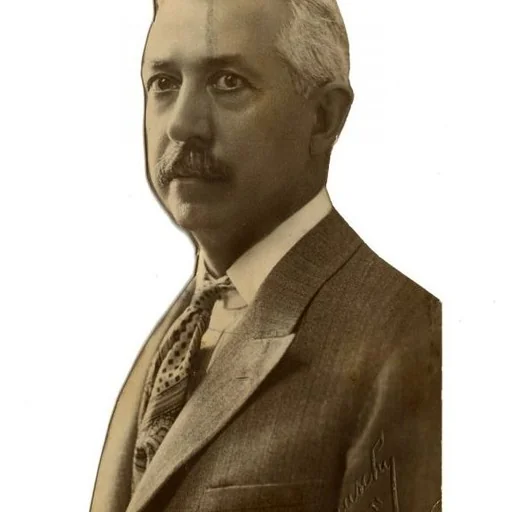
Artist
Gheorghe Petrașcu (Romanian pronunciation: ; 20 November 1872, Tecuci – 1 May 1949, Bucharest) was a Romanian painter.