Artwork
Ulcică cu flori de câmp
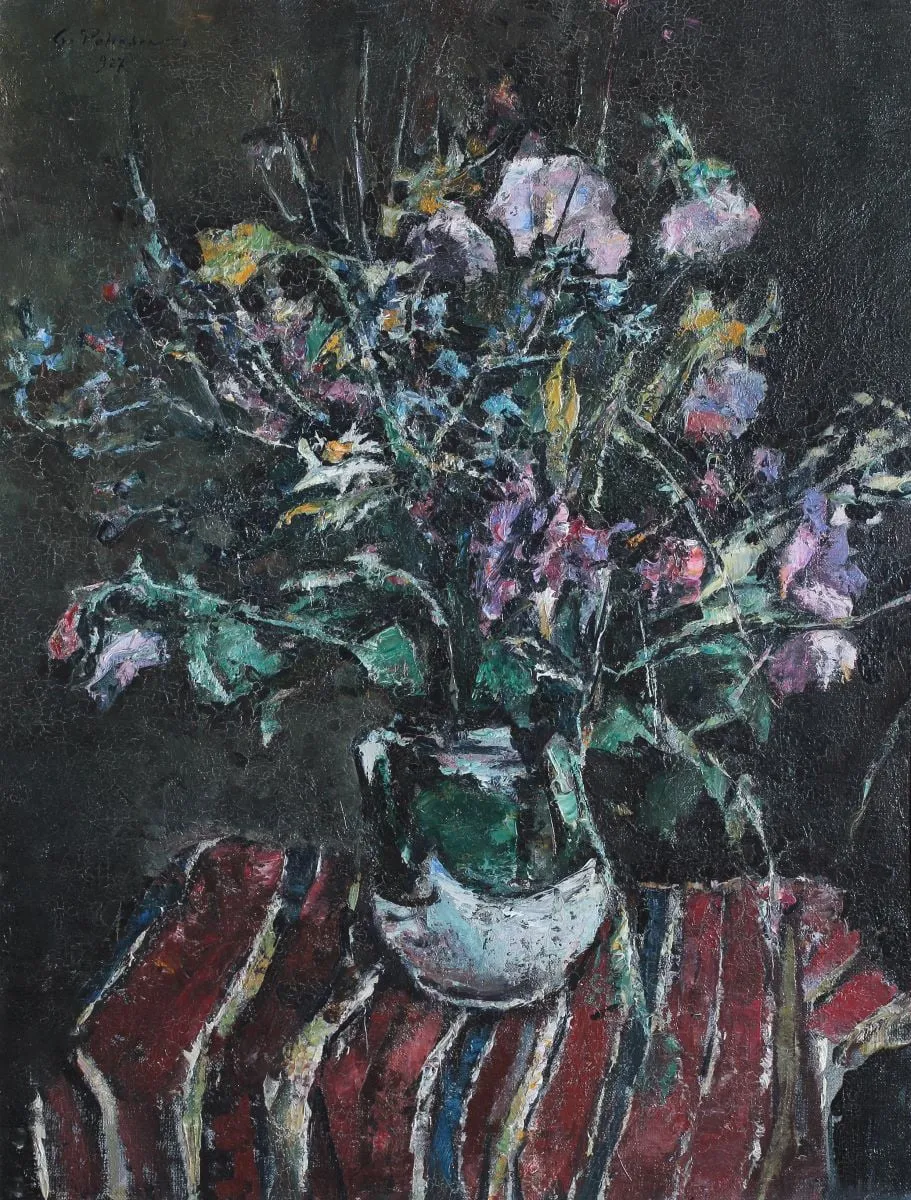
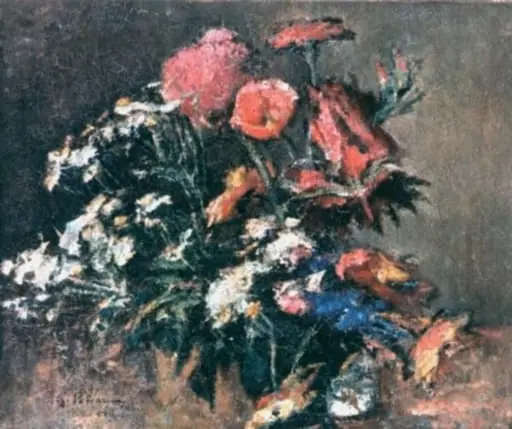
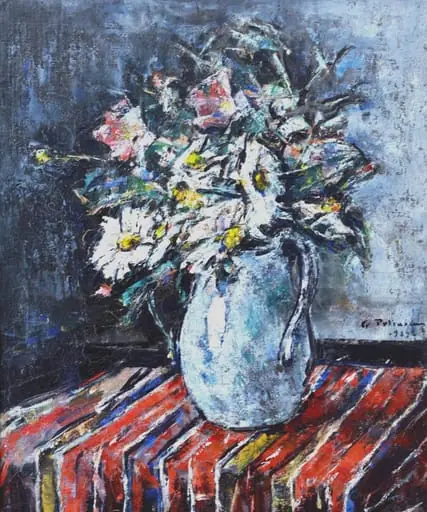
Ulcică cu flori de câmp is a print by Gheorghe Petrașcu. It dates from 1920 and is held in the collection of the Museum of Art Cluj-Napoca.
About this work
Overview
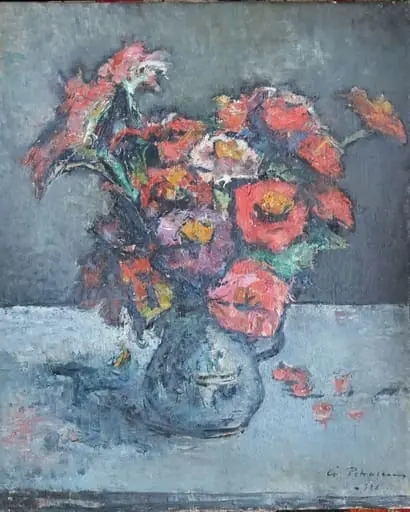
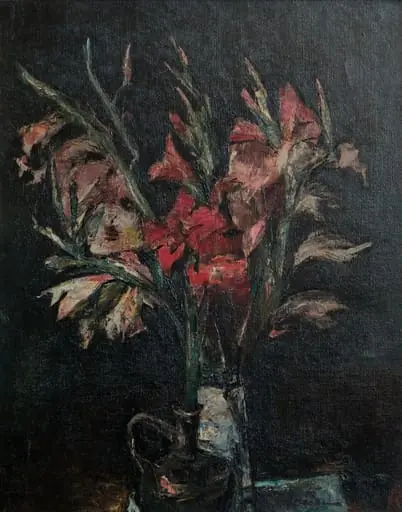
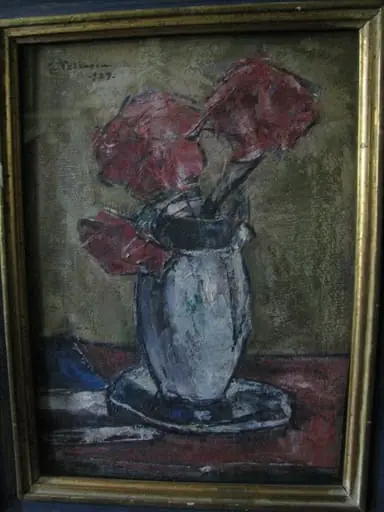
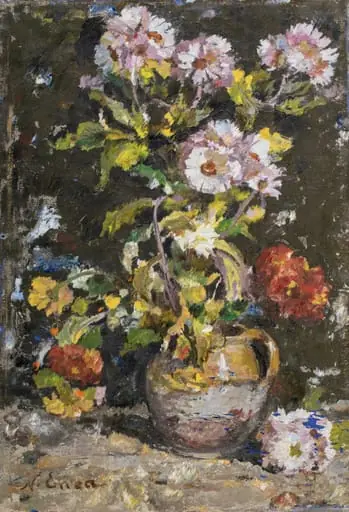
Created circa 1920, *Ulcică cu flori de câmp* is a modest still‑life that presents a white vase brimming with an assorted bouquet of wildflowers. The composition rests on a red‑and‑white striped cloth, while a darkened backdrop accentuates the vivid hues of the blossoms, giving the work a restrained yet refined presence.
Subject & Meaning
The painting captures a simple domestic scene, focusing on the transient beauty of meadow flowers gathered in a vase. By juxtaposing delicate petals against a somber background, the artist emphasizes the fleeting nature of natural splendor and invites contemplation of everyday elegance within an ordinary setting.
Technique & Style
Petrașcu employs a muted palette for the surroundings, allowing the bright colors of the flowers to dominate. Brushwork varies between broader strokes for the vase and tablecloth and finer, more detailed handling of individual petals, creating a subtle contrast between form and texture that enhances the three‑dimensional effect.
History & Provenance
The work belongs to the collection of the Museum of Ethnography, where it has been displayed since its acquisition. After Petrașcu’s death, the painting featured in several international showcases, including the Paris International Exhibition and the Venice Biennale, extending its audience beyond Romania.
Context
Gheorghe Petrașcu (1872‑1949), a native of Tecuci with familial roots in Fălciu County, was a prominent figure in early‑20th‑century Romanian art. His election to the Romanian Academy in 1936 reflected his standing in the national cultural sphere, and this still‑life exemplifies the domestic subjects that populated his broader oeuvre.
Artist & collection
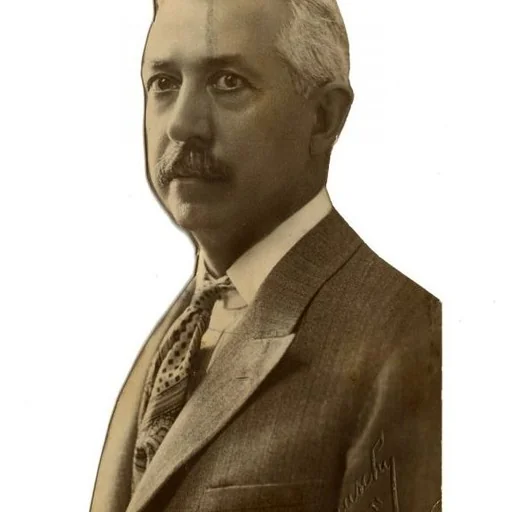
Artist
Gheorghe Petrașcu (Romanian pronunciation: ; 20 November 1872, Tecuci – 1 May 1949, Bucharest) was a Romanian painter.