Artwork
Băneasa
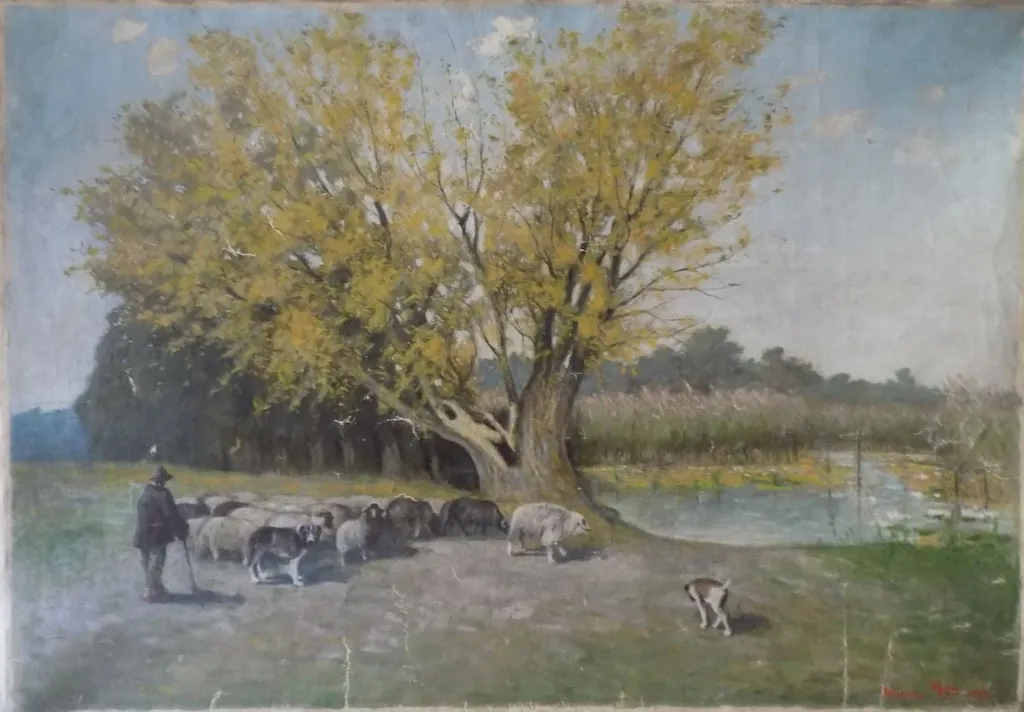
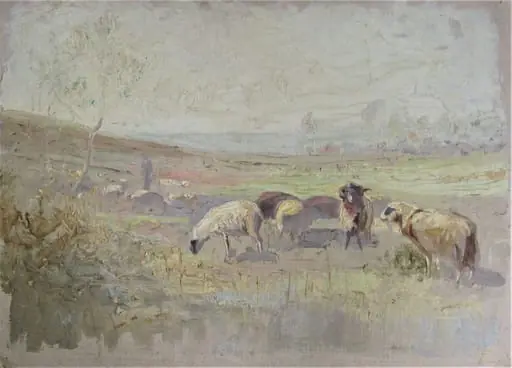
Băneasa is an unspecified painting by Nicolae Mogoș Petrescu. It dates from 1930 and is held in the collection of the Bucharest Municipality Museum.
About this work
Overview
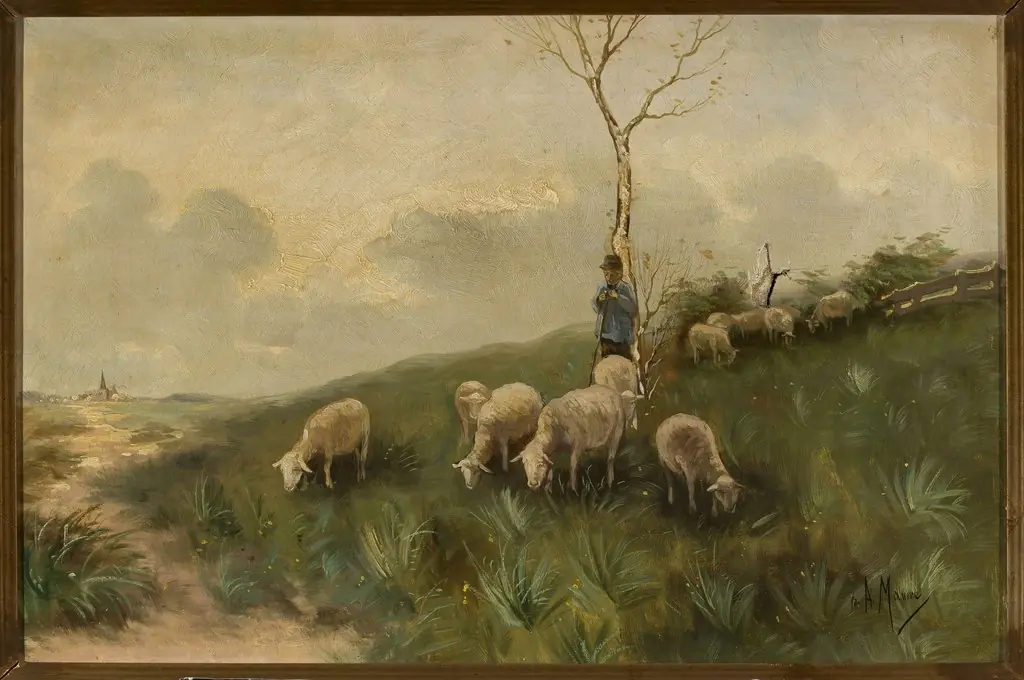
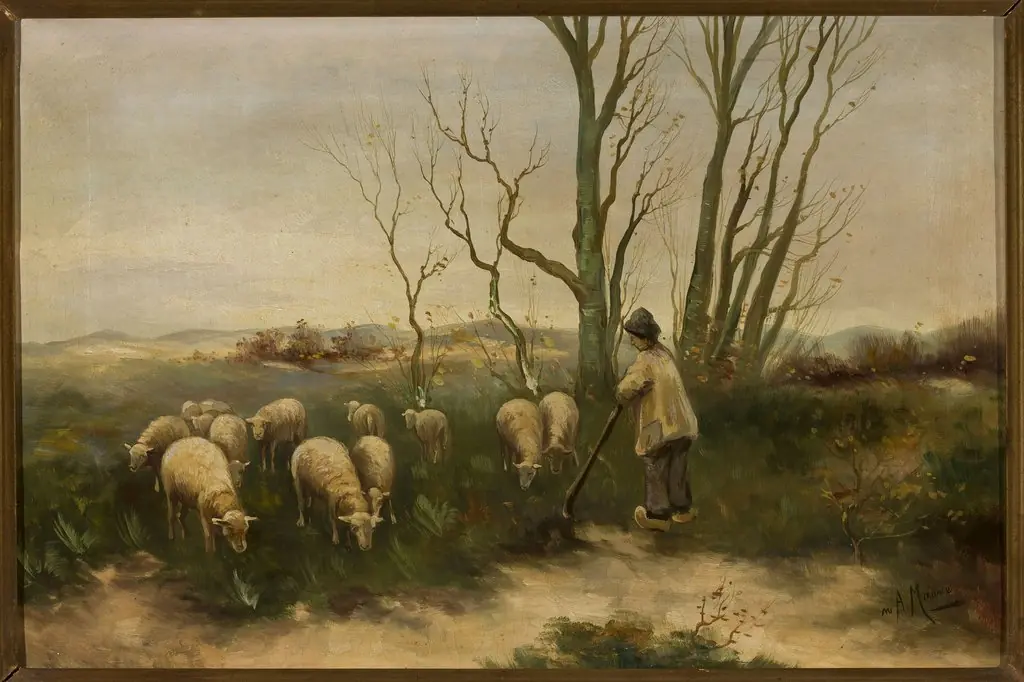
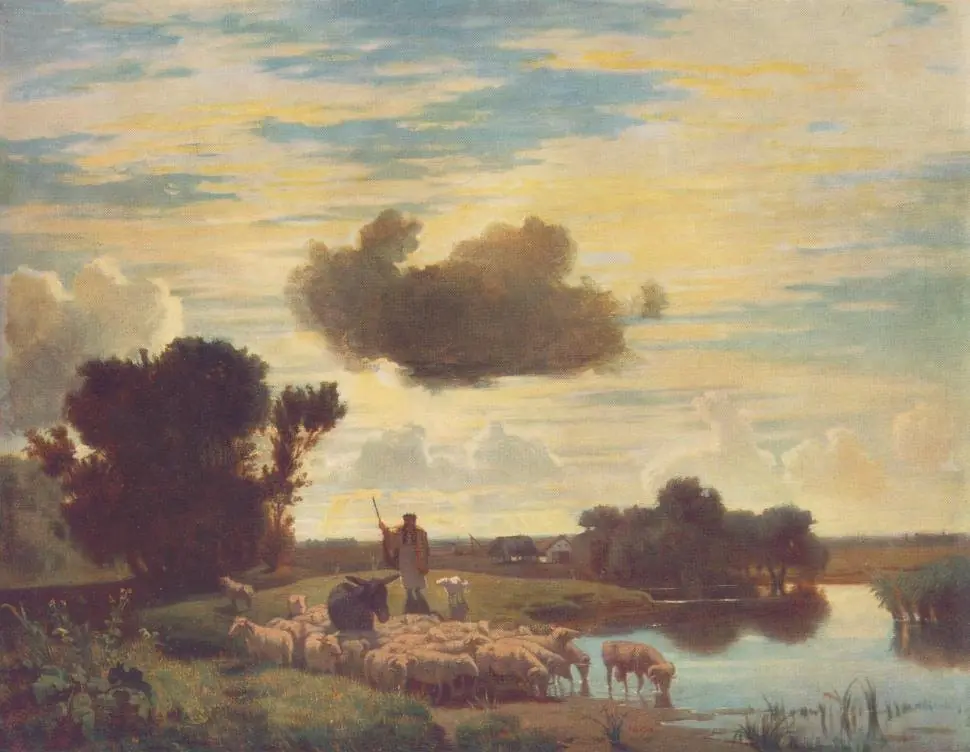
Nicolae Mogoș Petrescu’s 1930 oil painting titled Băneasa is part of the collection of the Museum of Ethnography. The work portrays a rural tableau in which a shepherd, accompanied by a small dog, watches over a flock of sheep beneath a tree whose yellow foliage stands out against a muted landscape.
Subject & Meaning
The composition centers on a lone shepherd, his staff and the wool of the sheep rendered in subdued, earthy hues. The presence of the dog, a familiar working breed, underscores the interdependence of humans and animals in traditional pastoral life, while the damp ground and marshy reeds suggest a season of transition.
Technique & Style
Mogoș Petrescu employs a restrained palette, allowing the bright yellow leaves to become a focal point that illuminates the surrounding tones. Brushwork is modest and precise, especially in the rendering of the shepherd’s stick and the sheep’s fleece, creating a sense of calm realism without overt dramatization.
History & Provenance
Created in 1930, Băneasa entered the Museum of Ethnography’s holdings during the mid‑20th century, where it has remained on display as an example of Romanian rural genre painting. The museum’s acquisition records indicate the work was donated by a private collector interested in preserving depictions of agrarian culture.
Context
The painting reflects the everyday environment of Romanian shepherding communities, where working dogs—often referred to as cani familiari—played a crucial role in managing flocks. By situating the scene near a marshy area with reeds, the artist hints at the varied terrain that shepherds navigated throughout the year.
Artist & collection
Artist
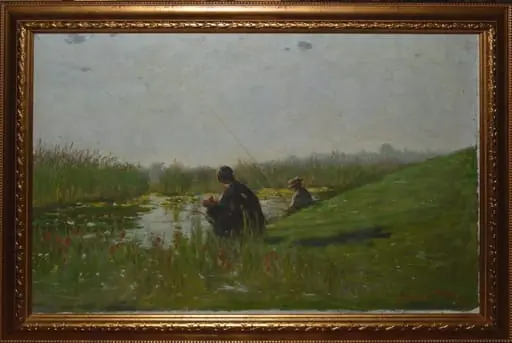
Nicolae Mogoș Petrescu made prints and paintings in late-19th-century Bucharest. Two works in this set show his range: the print La pescuit (Băneasa) captures anglers by the river, while the painting Carol I portrays…