Artwork
Elisabeta
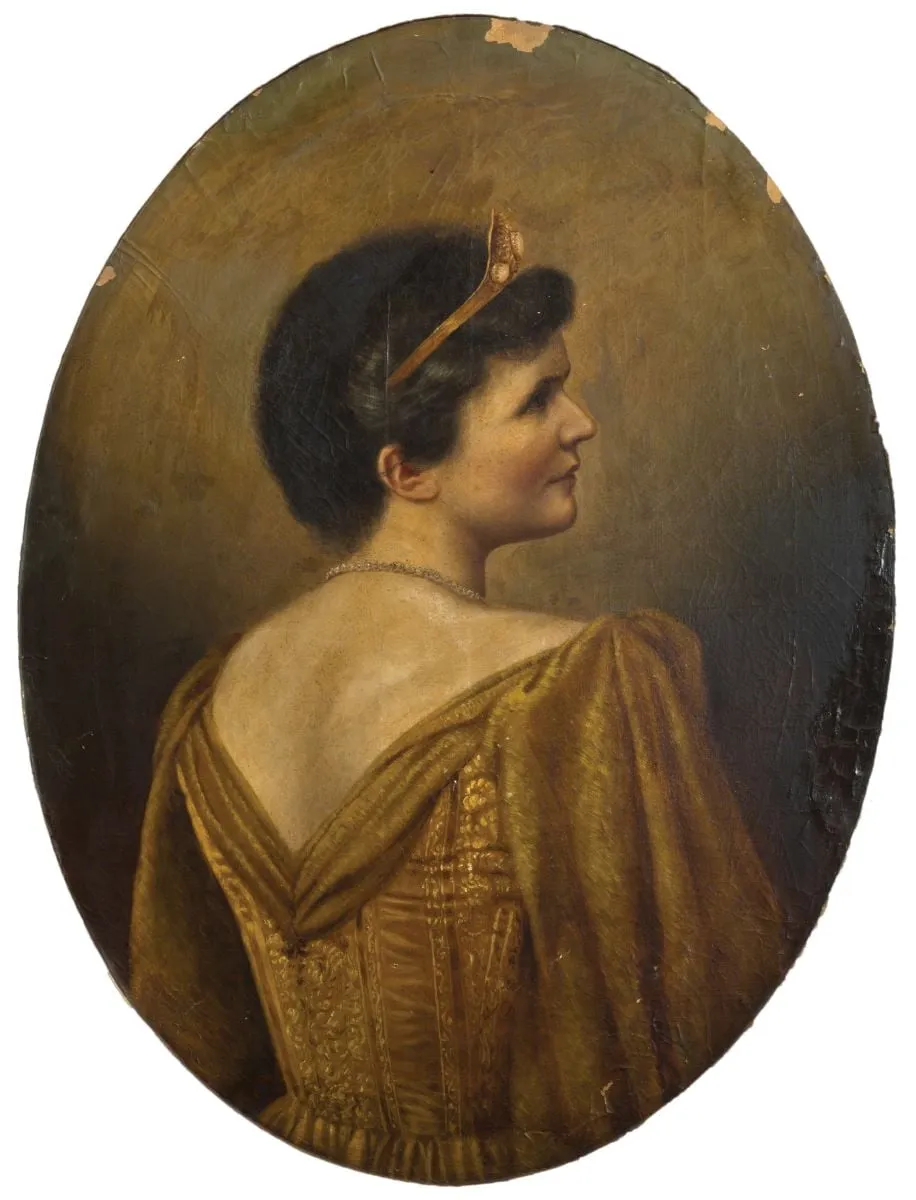
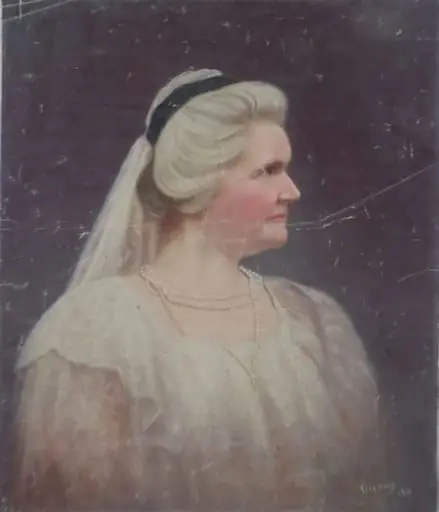
Elisabeta is a print by Nicolae Mogoș Petrescu. It is held in the collection of the Bucharest Municipality Museum.
About this work
This portrait painting features a woman with dark hair, adorned with a gold headband and a matching gold dress.
This portrait painting features a woman with dark hair, adorned with a gold headband and a matching gold dress. The dress has a low back and a high neckline, with a delicate silver necklace around her neck. The background of the painting is a muted brown color.
The woman's face is turned to the right, and her expression is serene. The painting appears to be an oil on canvas, with visible brushstrokes and texture. The overall effect is one of elegance and refinement.
The painting is a beautiful example of a portrait from the early 20th century. To learn more about the artist's use of chiaroscuro, look up the technique next.
Overview
This oil on canvas portrait depicts a woman named Elisabeta, rendered with quiet composure and refined detail. The composition emphasizes stillness and dignity, with the subject turned slightly to the right, her gaze directed away from the viewer. The muted brown background isolates her form, allowing the gold and silver adornments to draw attention without distraction. Visible brushwork suggests a deliberate, tactile approach to surface and texture.
Subject & Meaning
Elisabeta is portrayed in formal attire, suggesting social standing or ceremonial significance. The gold headband and dress, paired with a slender silver necklace, indicate wealth and attention to personal adornment. Her serene expression conveys calm self-possession rather than emotional display. The low back and high neckline reflect a balance between modesty and elegance, typical of early 20th-century portraiture that valued restraint and grace.
Technique & Style
The artist employs oil paint with noticeable brushstrokes, creating subtle texture across fabric and skin. Light falls gently on the gold elements, suggesting a controlled use of chiaroscuro to model form without dramatic contrast. The muted background enhances the luminosity of the dress and jewelry, while the smooth rendering of the face contrasts with the more expressive handling of the clothing. This interplay between precision and texture defines the painting’s quiet realism.
History & Provenance
The painting’s origin and early ownership are not documented in the provided details. It is attributed to the early 20th century, a period when portraiture remained a respected genre despite the rise of modernist movements. Its survival and preservation suggest it was valued by private collectors or institutions, though its specific history prior to current custody remains unclear.
Context
Created during a time of shifting artistic priorities, this portrait stands apart from avant-garde trends by adhering to traditional techniques and formal composition. While European and American artists were experimenting with abstraction and expressionism, many continued to produce refined likenesses for elite patrons. Elisabeta’s depiction reflects this enduring preference for elegance and individual dignity in portraiture.
Legacy
Though not widely known outside its immediate context, the painting contributes to the broader record of early 20th-century portraiture that valued subtlety over spectacle. Its preservation offers insight into aesthetic values of the time—how identity, status, and poise were visually articulated through dress, posture, and light. It remains a quiet example of a genre that persisted alongside modernist innovation.
Artist & collection
Artist
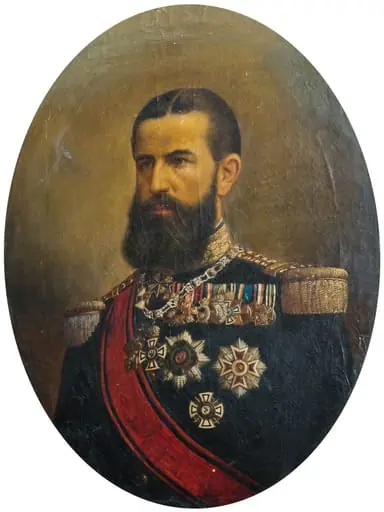
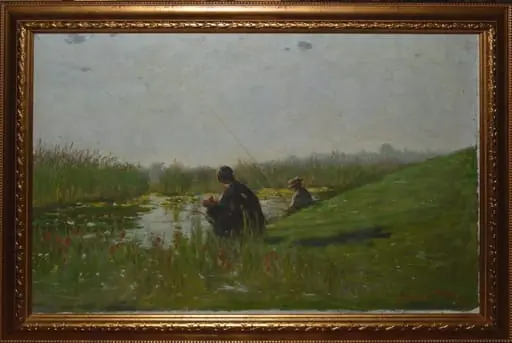
Nicolae Mogoș Petrescu made prints and paintings in late-19th-century Bucharest. Two works in this set show his range: the print La pescuit (Băneasa) captures anglers by the river, while the painting Carol I portrays…
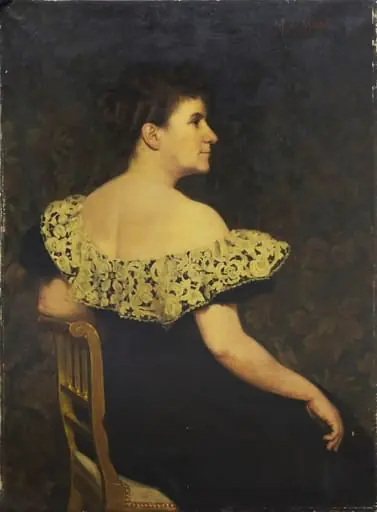 Portret de femeie
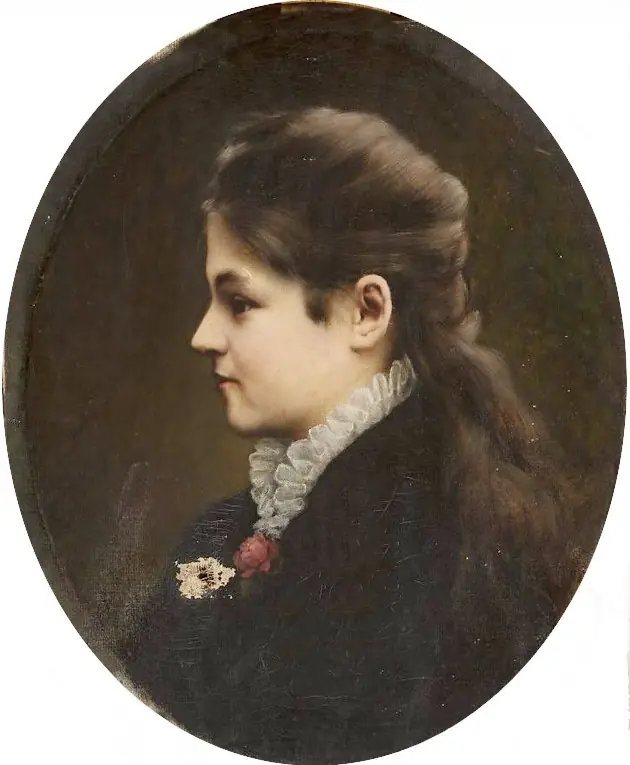 Portrait of a woman in profile
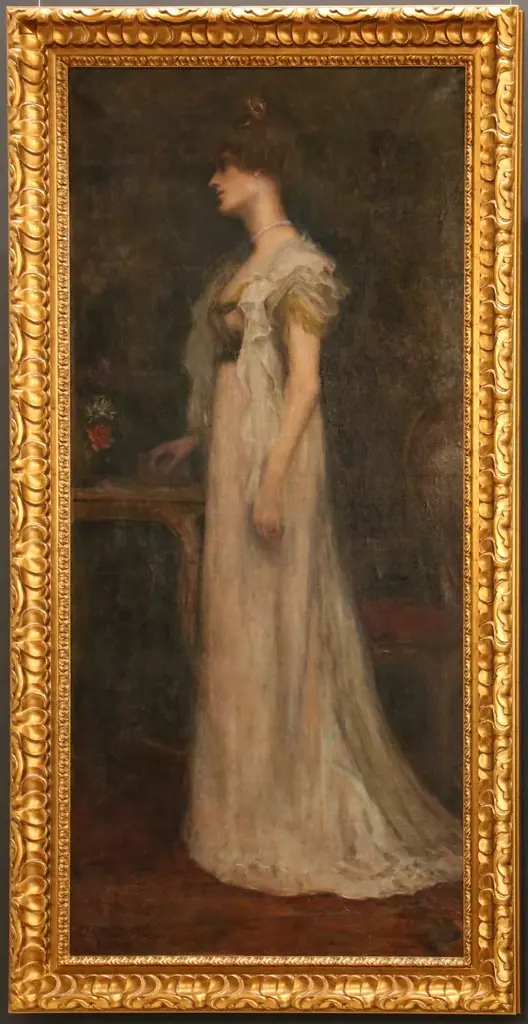 Countess Markievicz, artist and revolutionary
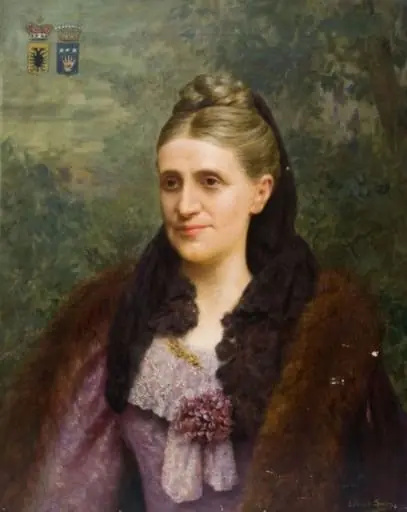 Alexandrina George Manu (născută Cantacuzino)
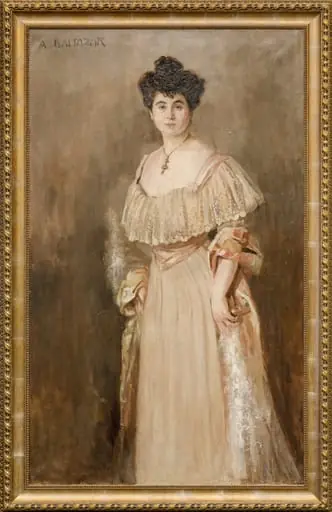 Portret de femeie
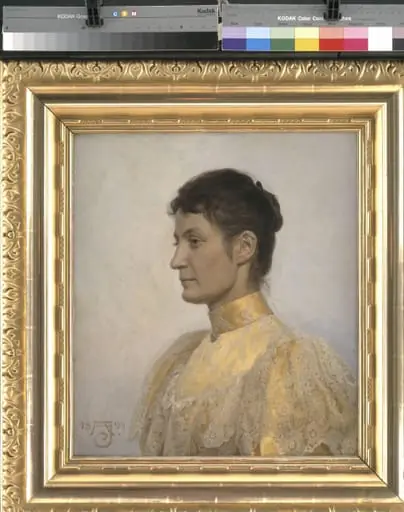 Portrait of Marie Oppermann
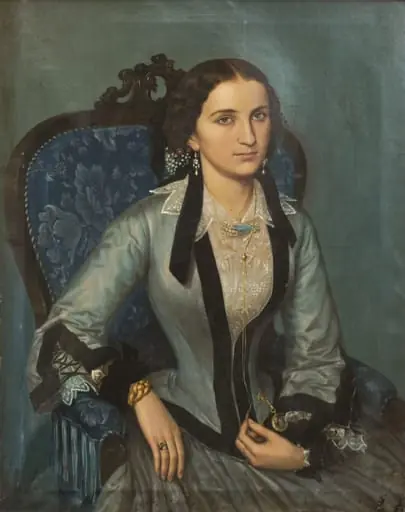 Portretul Alexandrinei Assan
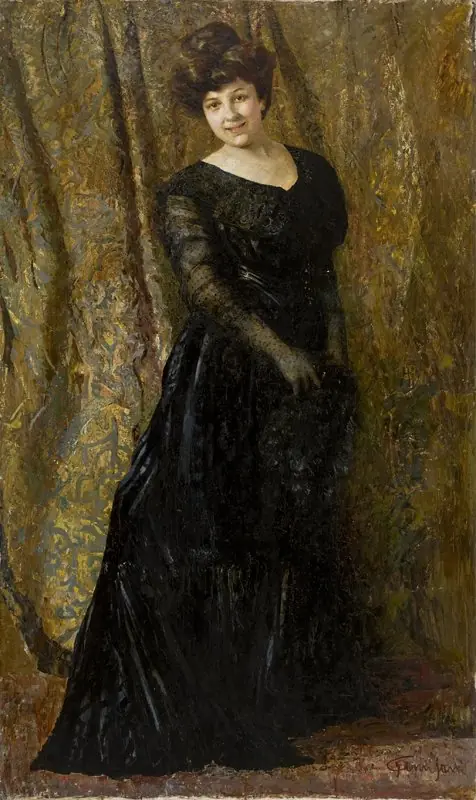 Standing lady
 Retrato de la esposa del autor
 Bildnis Leonie Scheller-Kuhn
 Portrait of Violet Osborne, Mrs Stockley (b.1866), Sister of Walter Osborne
 Elisabeta