Artwork
Lilium Superbum
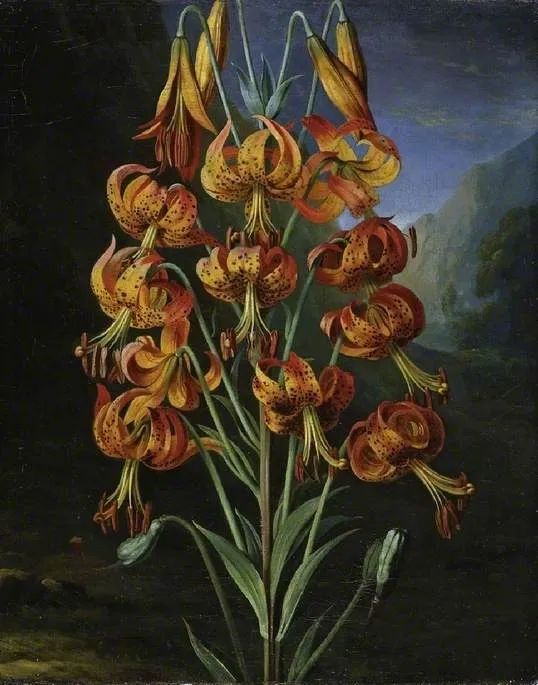
Lilium Superbum is an oil painting by Philip Reinagle the younger. It dates from 1817 and is held in the collection of the Fitzwilliam Museum.
About this work
Overview
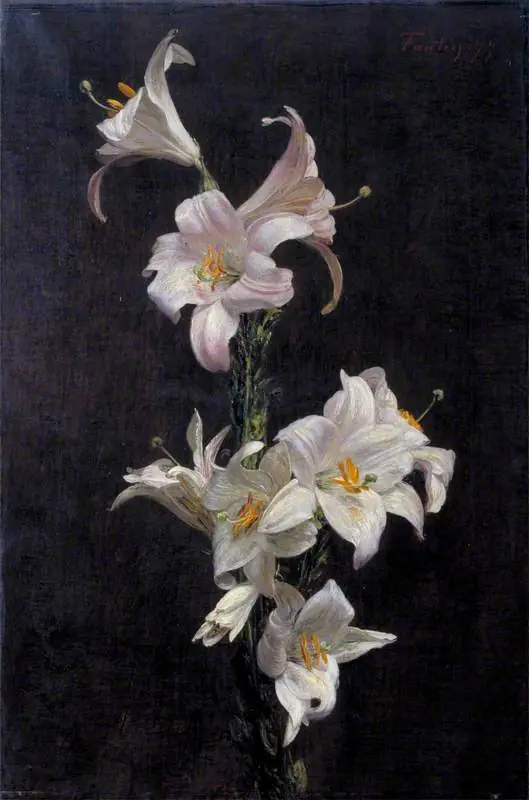
Created around 1817, this oil painting by Philip Reinagle the younger depicts a modest bouquet of tiger lilies. The composition is set against a deep brown ground, which heightens the vivid orange and yellow petals and the green foliage. The work is part of the Fitzwilliam Museum’s collection and exemplifies early‑19th‑century British flower painting.
Subject & Meaning
The canvas presents several tiger lilies arranged in a natural, informal cluster. Some blossoms face the viewer directly while others turn sideways, suggesting a spontaneous gathering rather than a formal arrangement. The choice of bright, warm hues against a dark backdrop emphasizes the flowers’ vitality and may reflect the period’s interest in botanical accuracy combined with aesthetic appeal.
Technique & Style
Reinagle employed a glazing method, layering thin, translucent oil washes to build depth and luminous colour. This approach allows the orange and yellow petals to glow while preserving the richness of the brown background. The brushwork remains delicate, especially in the rendering of leaf veins and petal edges, contributing to the painting’s refined yet restrained elegance.
History & Provenance
The painting entered the Fitzwilliam Museum’s holdings, though the precise acquisition details are not recorded in the available sources. Its attribution to Reinagle the younger, a noted English flower painter, aligns with his documented output in the early 1800s, when botanical subjects were popular among collectors and scientific societies.
Context
During the early nineteenth century, British art saw a surge in interest in natural history, spurred by expanding botanical exploration. Artists like Reinagle catered to both scientific and decorative markets, producing works that combined accurate plant depiction with compositional grace. This piece reflects that dual purpose, serving as both a study of the tiger lily and a decorative object.
Artist & collection