Artwork
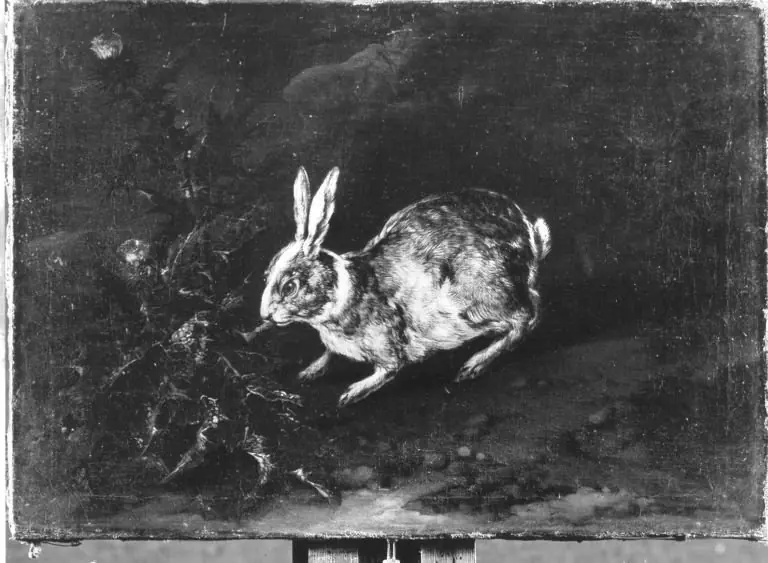
Damwild, Steinbock und Hase
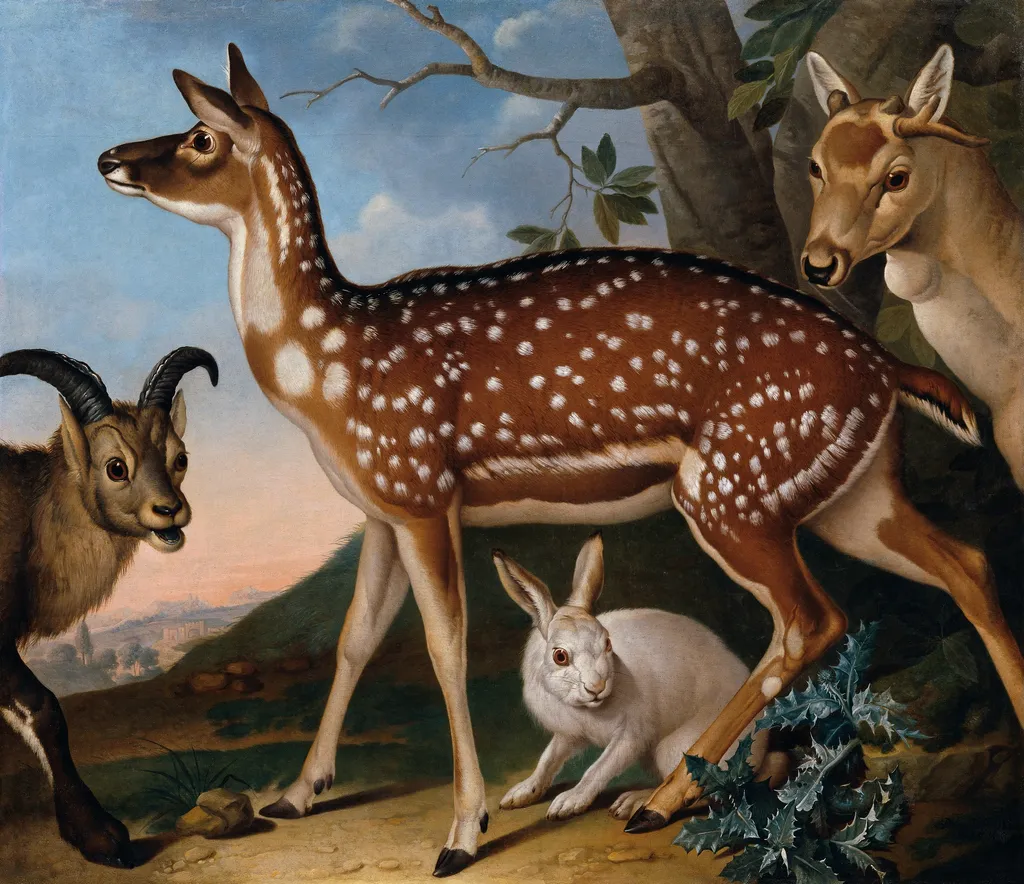
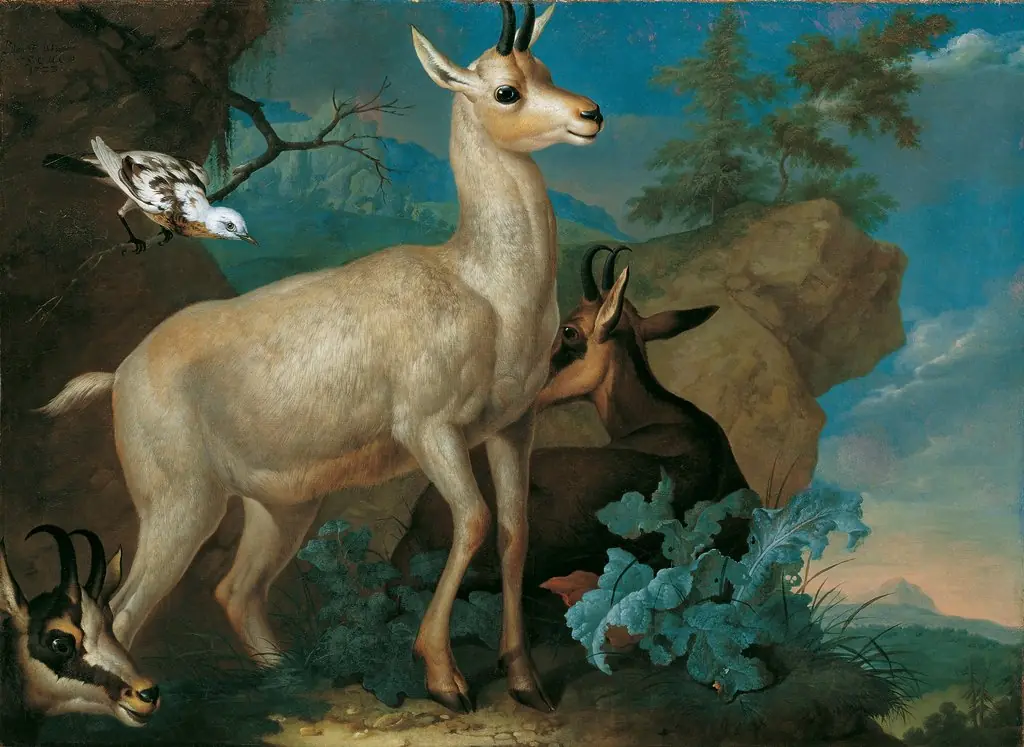
Damwild, Steinbock und Hase is an oil painting by the Rococo painting artist Philipp Ferdinand de Hamilton. It dates from 1723 and is held in the collection of the Kunsthistorisches Museum.
About this work
Overview
Philipp Ferdinand de Hamilton, a painter active in the early 18th century, completed the oil painting *Damwild, Steinbock und Hase* in 1723. The work is part of the Rococo tradition and is presently housed in the Kunsthistorisches Museum in Vienna.
Subject & Meaning
The canvas presents a small hunting tableau: a spotted deer stands prominently on a dirt track, accompanied by a younger deer, a chamois positioned to the left, and a white rabbit seated before them. The animals are set against a clear blue sky dotted with clouds and a few distant trees, suggesting a tranquil natural environment.
Technique & Style
Executed in oil on canvas, the painting demonstrates Hamilton’s precise handling of texture and light, characteristic of Rococo’s decorative yet naturalistic approach. Fine brushwork renders the fur of the deer and the softness of the rabbit, while the atmospheric background is rendered with loose, airy strokes.
History & Provenance
Created in 1723, the work entered the collection of the Kunsthistorisches Museum, where it remains on display. Its provenance traces back to the artist’s activity in Austria after his training in the Southern Netherlands, reflecting the cross‑regional artistic exchanges of the period.
Own this work as a print
Artist & collection
Artist
Philipp Ferdinand de Hamilton (c. 1664 – 1750), was an 18th-century painter from the Southern Netherlands active in Austria.

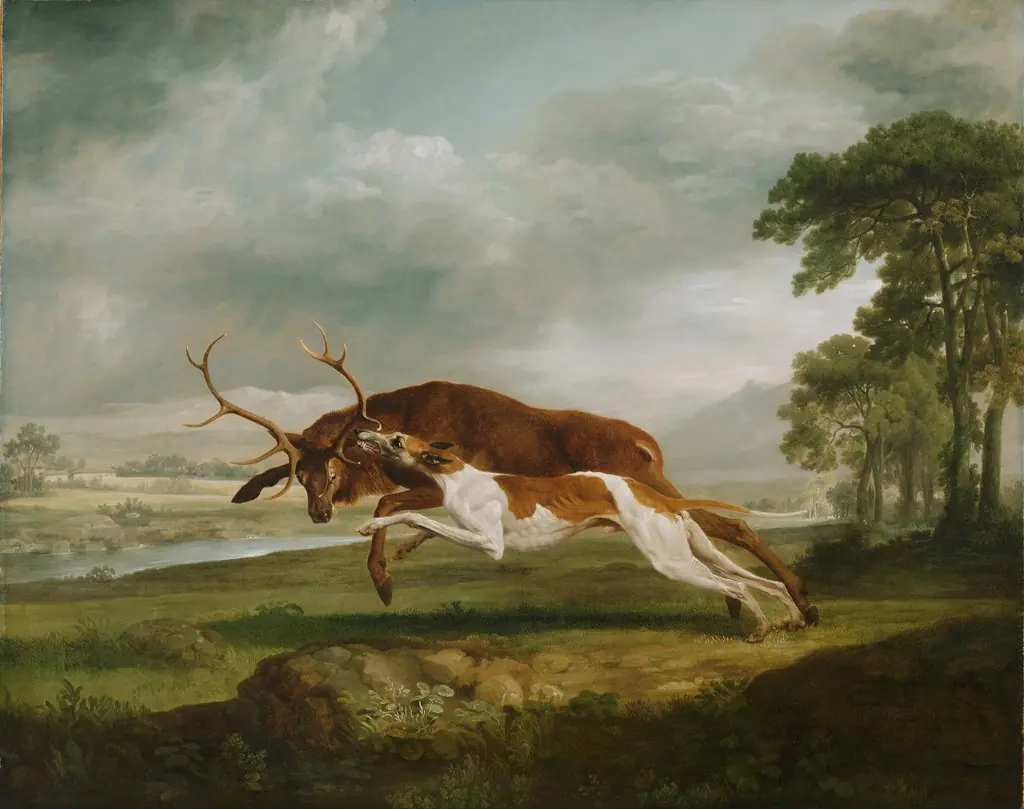 Hound Coursing a Stag
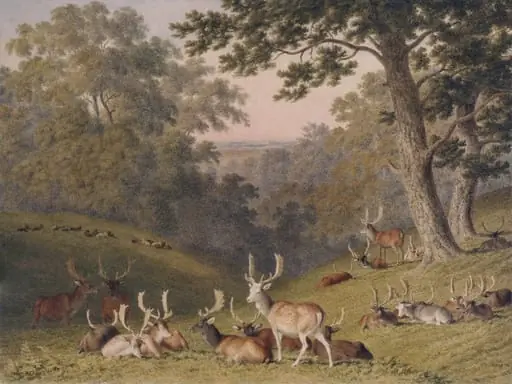 Stags in Knole Park, near Sevenoaks, Kent
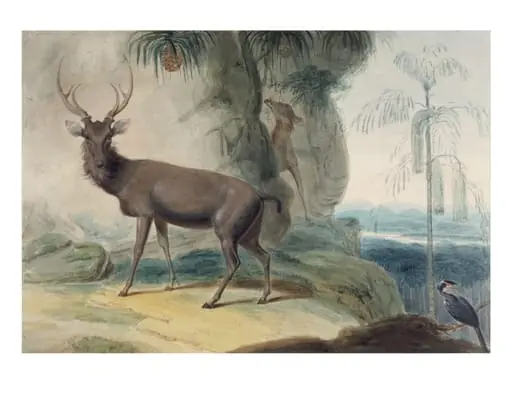 Elks (Gona), wild pineapple, caryota palm and rhinoceros bird
 Arctic Hare
 Stag Hunt
 Gazel (Gazelle)
 Plate 20: Three Types of Stags with a Dormouse(?)
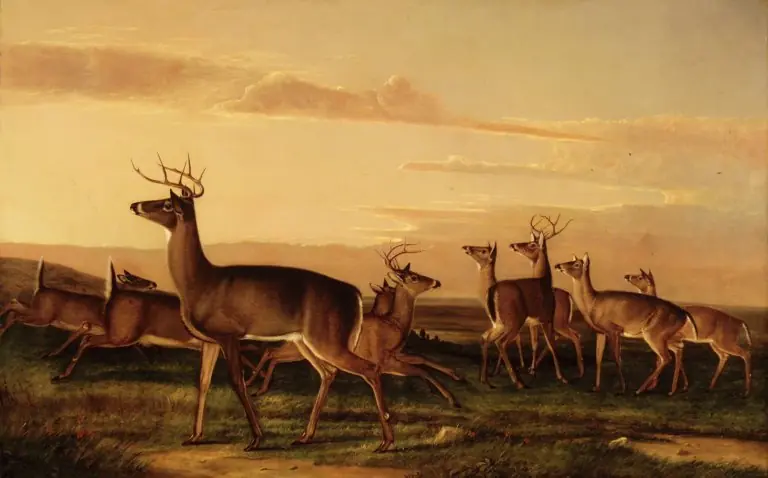 Startled Deer--A Prairie Scene
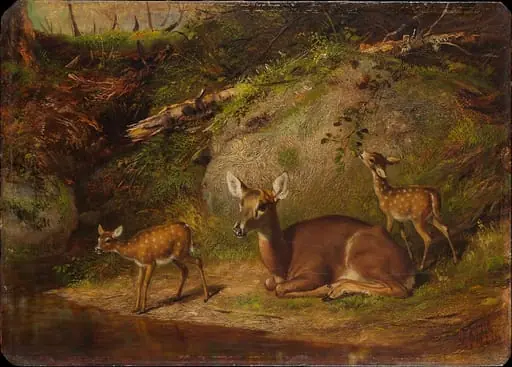 Doe and Two Fawns
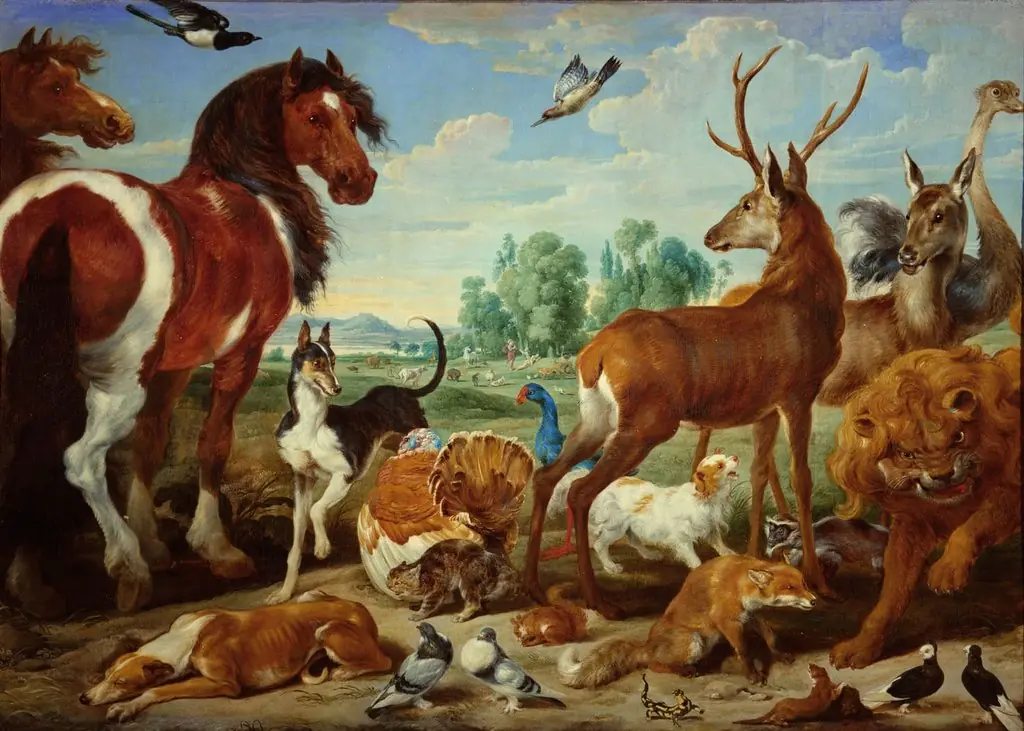 Paradise
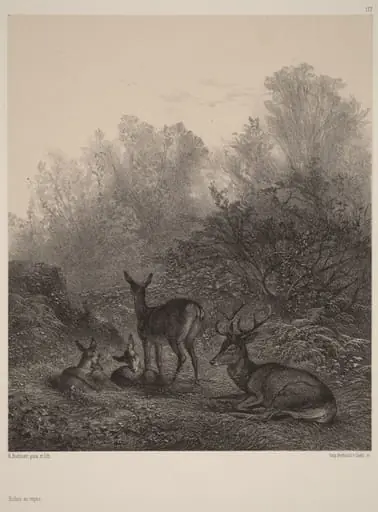 Biches au repos
 Drei Gemsen und eine Amsel