Artwork
Baumlandschaft
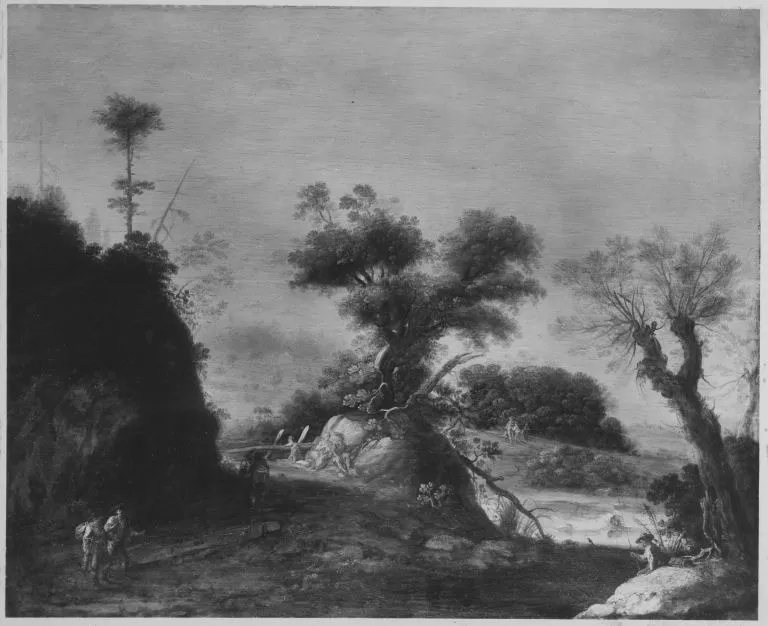
Baumlandschaft is an unspecified painting by the Rococo painting artist Philipp Hieronymus Brinckmann. It dates from 1734 and is held in the collection of the Bavarian State Painting Collections.
About this work
Overview
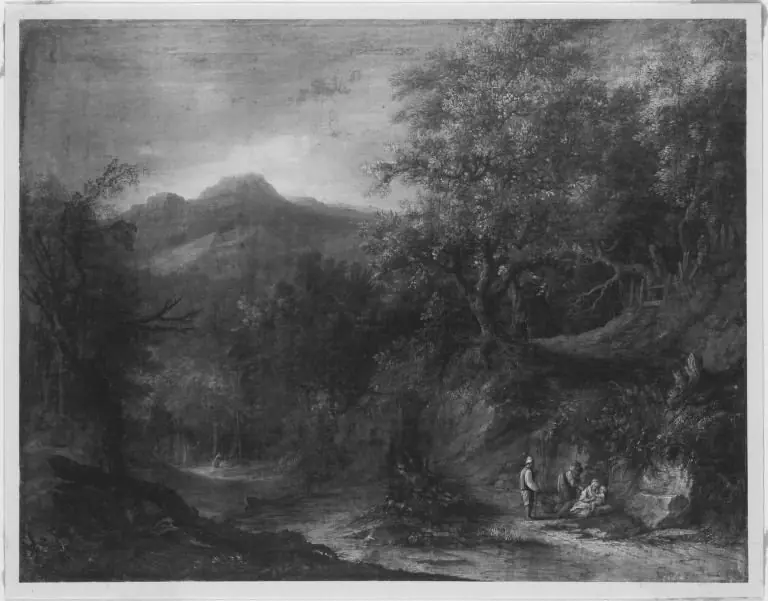
The composition is anchored by a rocky rise on the left, a solitary pine atop it, and a narrow path that guides the eye through the forest.
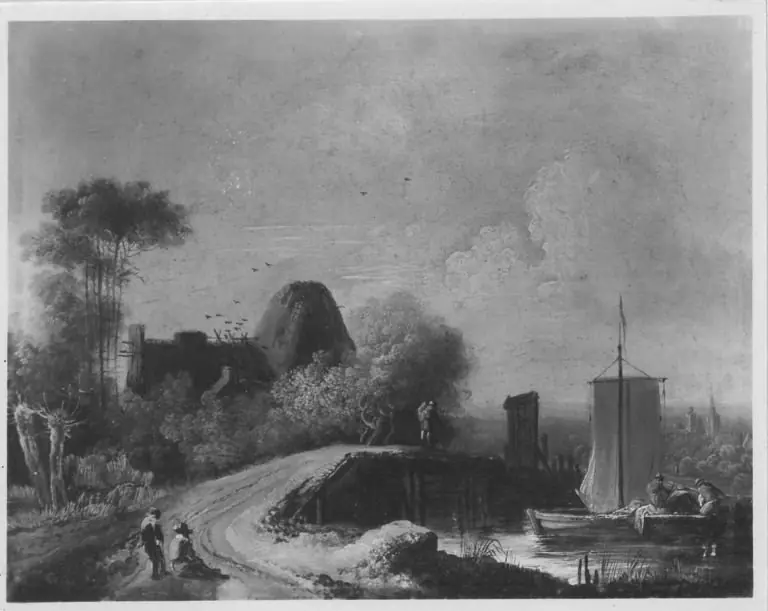
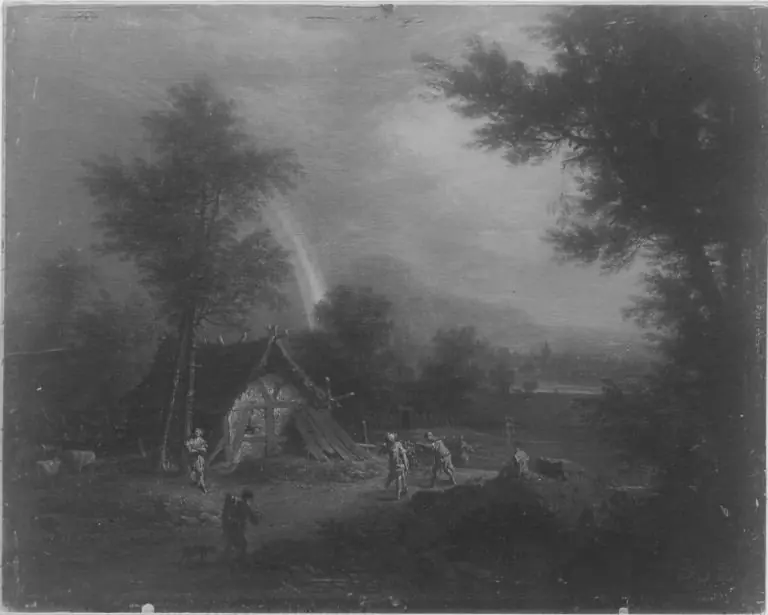
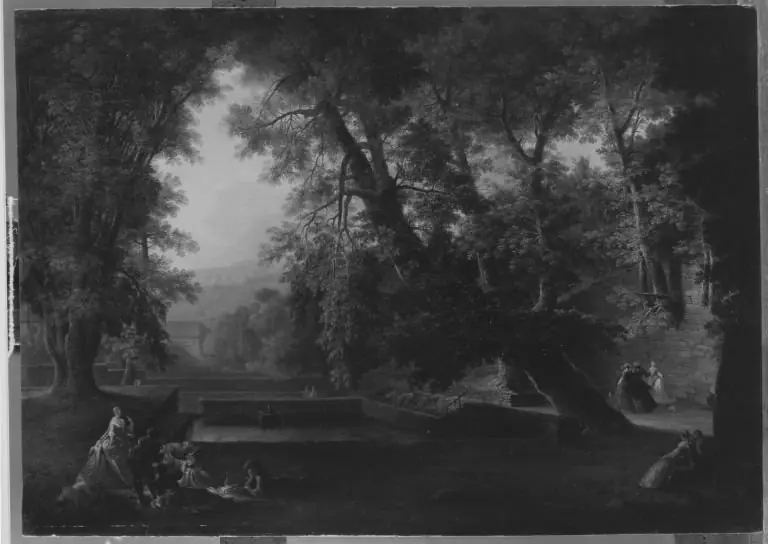
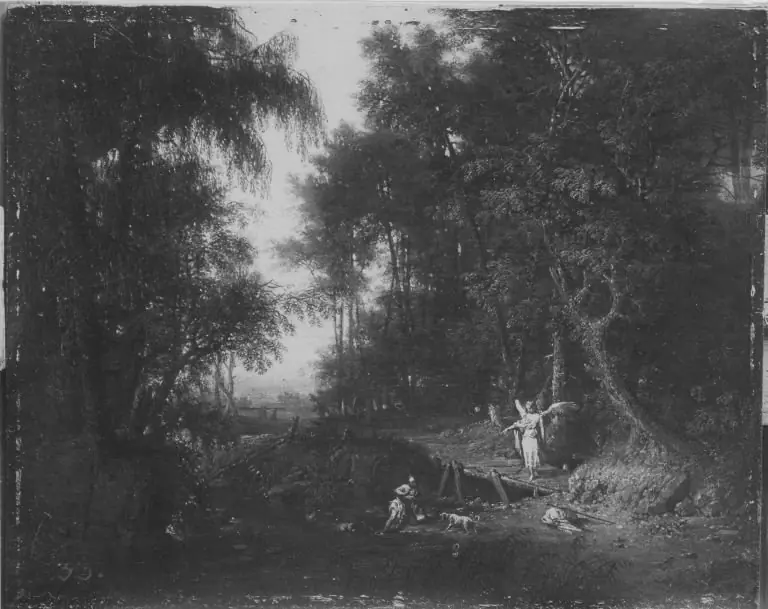
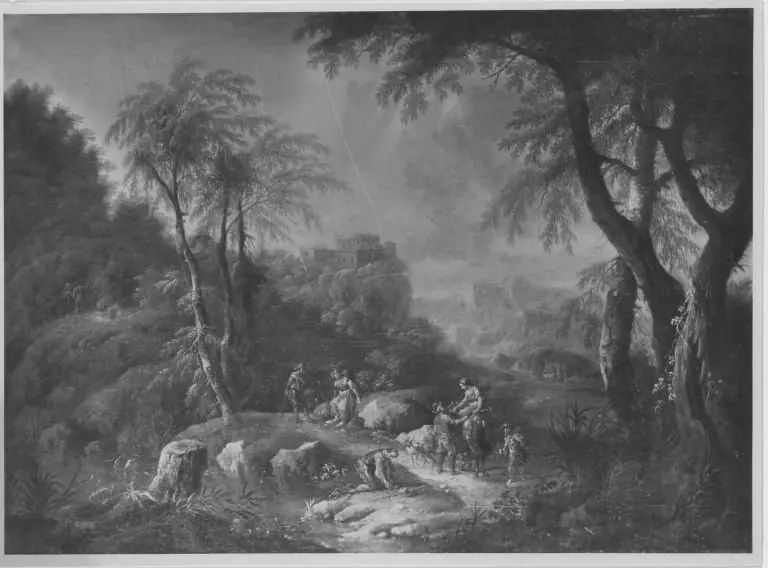
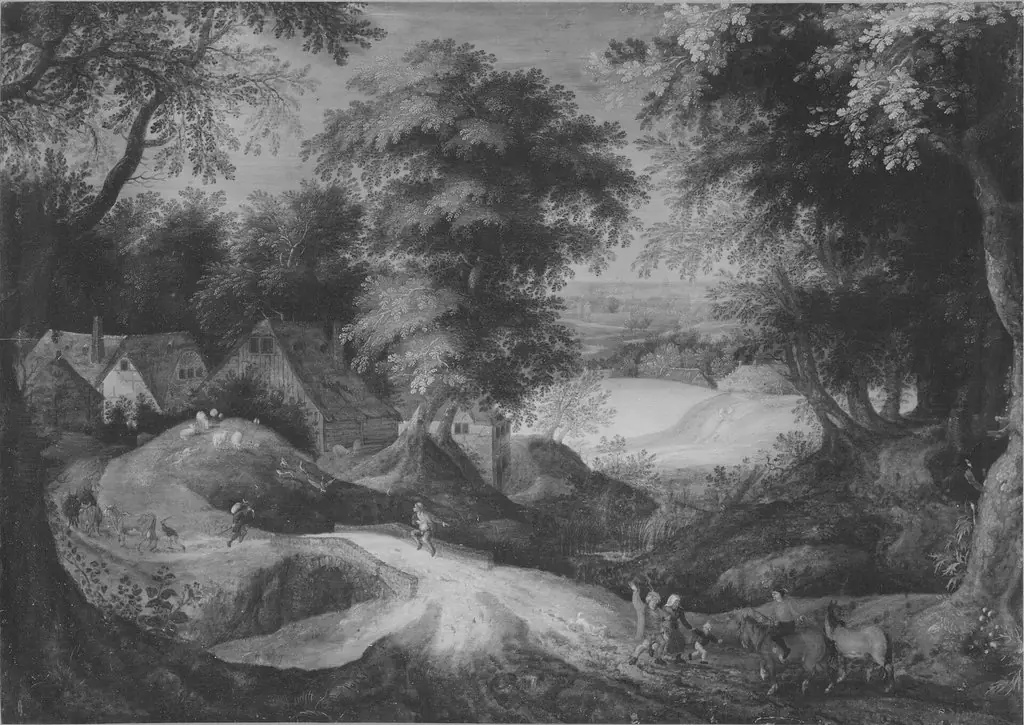
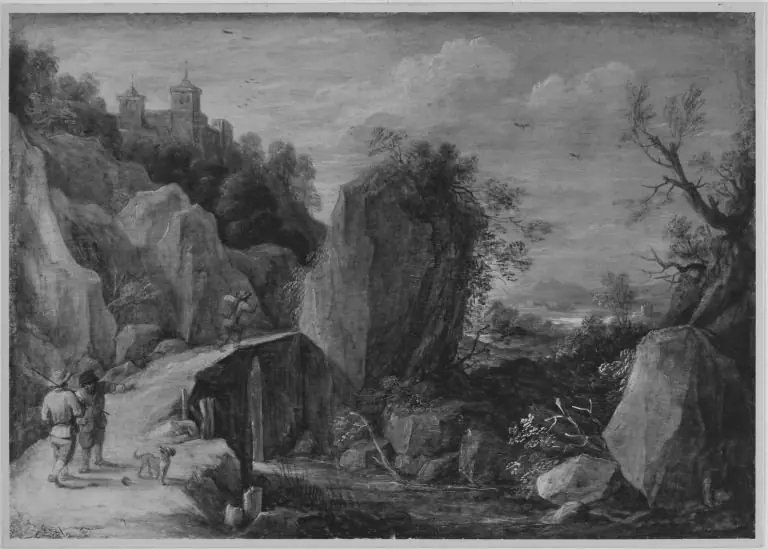
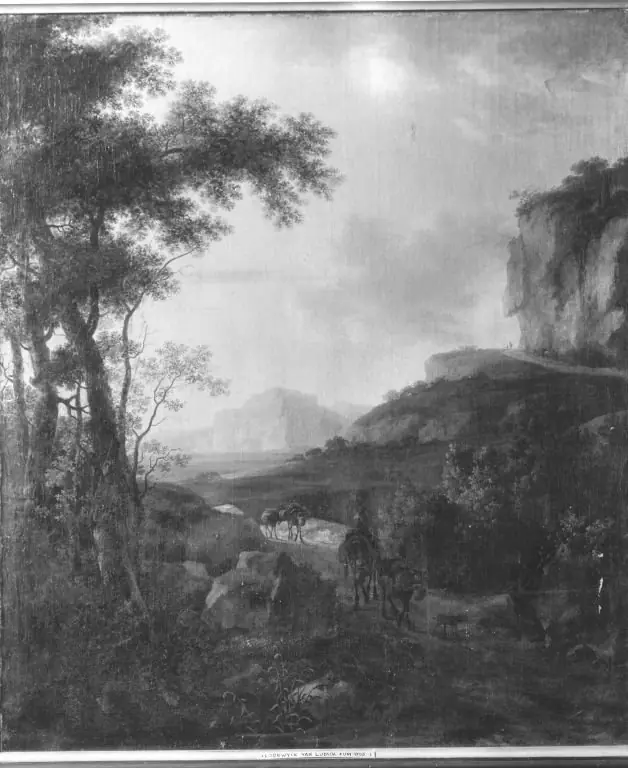
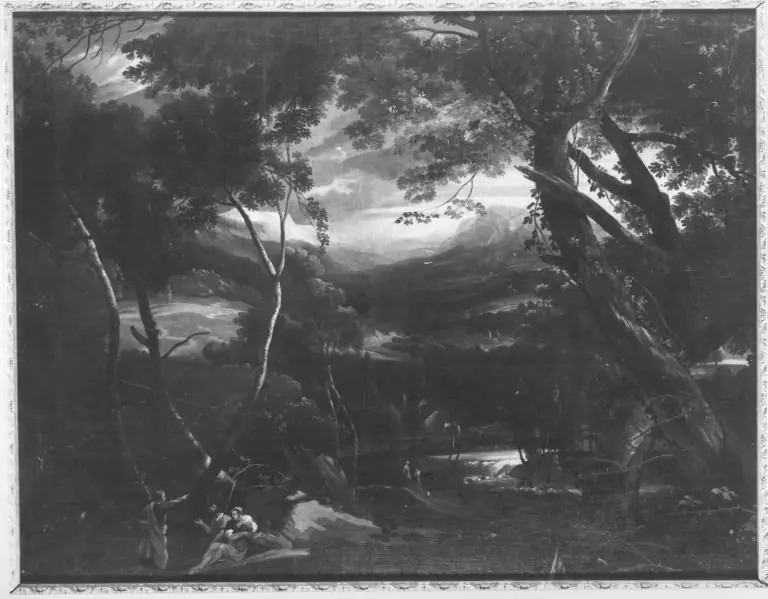
Baumlandschaft, executed in 1734 by the German painter Philipp Hieronymus Brinckmann, presents a tranquil woodland vista. The composition is anchored by a rocky rise on the left, a solitary pine atop it, and a narrow path that guides the eye through the forest. Small figures populate the scene, moving along the trail or pausing beneath the trees, while a muted sky merges with distant foliage, lending the work a soft, atmospheric quality.
Subject & Meaning
The painting depicts a quiet, natural setting where human presence is minimal and secondary to the surrounding landscape. The diminutive figures emphasize the scale and serenity of the forest, suggesting a contemplative relationship between people and nature. The solitary pine and the mist‑laden horizon may evoke themes of solitude and the timelessness of the natural world, inviting viewers to experience the calm of an untouched woodland.
Technique & Style
Brinckmann employs a subtle chiaroscuro, using contrasts of light and shadow to model the rocks, trees, and foliage, creating a sense of depth. The palette is restrained, with dark, twisted trunks set against a pale, diffused sky that softens the edges of distant forms. The figures are rendered in a diminutive, almost anecdotal manner, reinforcing the dominance of the environment and enhancing the overall feeling of spaciousness.
History & Provenance
Created in the early eighteenth century, Baumlandschaft entered the collection of the Alte Pinakothek in Munich, where it remains on display. The work reflects Brinckmann’s mature period, during which he produced several landscape pieces for patrons interested in idyllic, pastoral scenes. Its acquisition by the museum underscores the institution’s commitment to representing German Baroque landscape painting.
Context
The painting belongs to a broader tradition of German Baroque landscape art, which often combined realistic observation with idealized natural settings. Brinckmann’s work aligns with contemporaries who emphasized atmospheric effects and the interplay of light and shadow to evoke mood. In the early 1700s, such scenes catered to a growing appreciation for the picturesque and the contemplative experience of nature among aristocratic and bourgeois audiences.
Artist & collection
Artist
Philipp Hieronymus Brinckmann (1709–1760) was an artist, born in Speyer.