Artwork
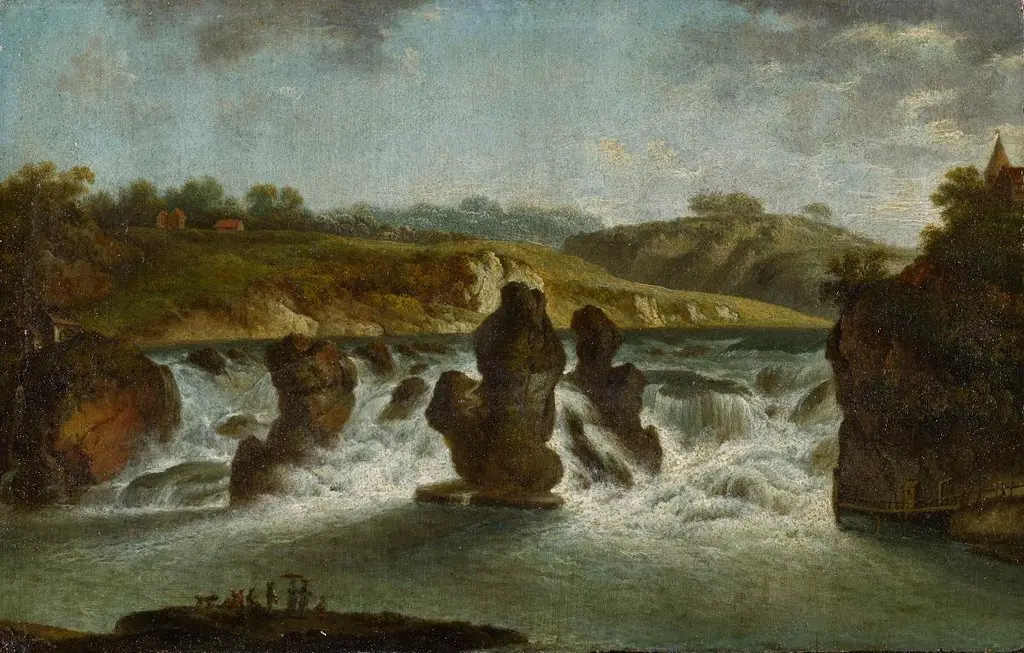
Der Rheinfall bei Schaffhausen mit Kurfürst Karl Theodor von der Pfalz und Gefolge
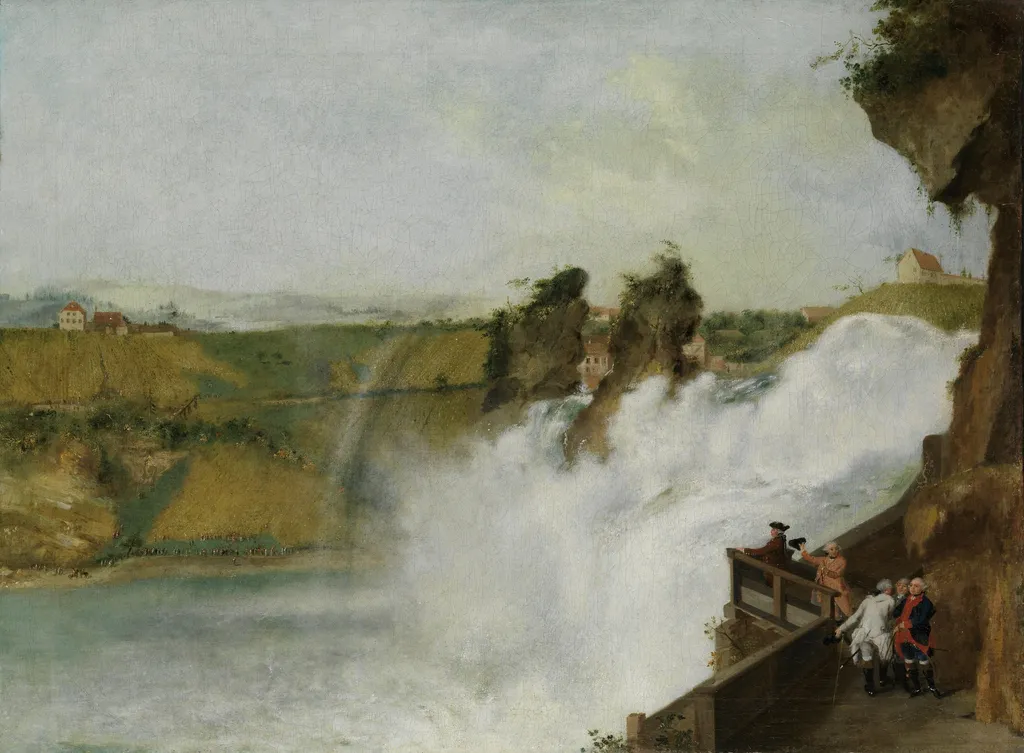
Der Rheinfall bei Schaffhausen mit Kurfürst Karl Theodor von der Pfalz und Gefolge is an oil painting by the Rococo painting artist Philipp Hieronymus Brinckmann. It dates from 1759 and is held in the collection of the Bavarian State Painting Collections.
About this work
Overview
In the immediate foreground, a wooden viewing platform hosts a group of figures, led by Elector Karl Theodor of the Palatinate.
Painted in 1759 by Philipp Hieronymus Brinckmann, this oil on canvas work captures the Rhine Falls near Schaffhausen, a prominent natural landmark in Switzerland. The composition balances a grand landscape with a specific historical narrative, placing the viewer at a vantage point where the turbulent waters of the Rhine cascade dramatically in the middle ground. In the immediate foreground, a wooden viewing platform hosts a group of figures, led by Elector Karl Theodor of the Palatinate. Dressed in elaborate 18th-century attire, the Elector and his entourage observe the spectacle, their postures and gestures directing the viewer's attention toward the churning water. The painting functions as both a topographical record and a celebration of aristocratic leisure, reflecting the 18th-century European tradition of the Grand Tour and the growing interest in sublime natural phenomena. Brinckmann, a German artist active during this period, utilizes the scene to document a specific moment of cultural engagement with nature, merging the precision of a landscape view with the portraiture of a distinguished patron. The work stands as a testament to the era's fascination with documenting travel experiences and the power of the natural world through the lens of the ruling class.
Subject & Meaning
The work captures a moment of aristocratic leisure, illustrating the 18th‑century fascination with natural spectacles as sites of cultural pilgrimage. By placing the Elector and his companions in direct view of the falls, the painting underscores the interplay between human authority and the sublime power of nature.
Technique & Style
Brinckmann employs chiaroscuro to separate the foreground figures from the luminous backdrop, using strong light on the platform against deeper shadows in the surrounding foliage. The palette balances muted earth tones with a soft blue sky, while the brushwork renders both the turbulent water and the tranquil atmosphere with careful detail.
History & Provenance
Completed in 1759, the canvas entered the collection of the Alte Pinakothek, where it remains on display. Its acquisition reflects the museum’s 19th‑century effort to assemble representative works of German landscape painting and courtly portraiture.
Artist & collection
Artist
Philipp Hieronymus Brinckmann (1709–1760) was an artist, born in Speyer.