Artwork
A Road through the Woods
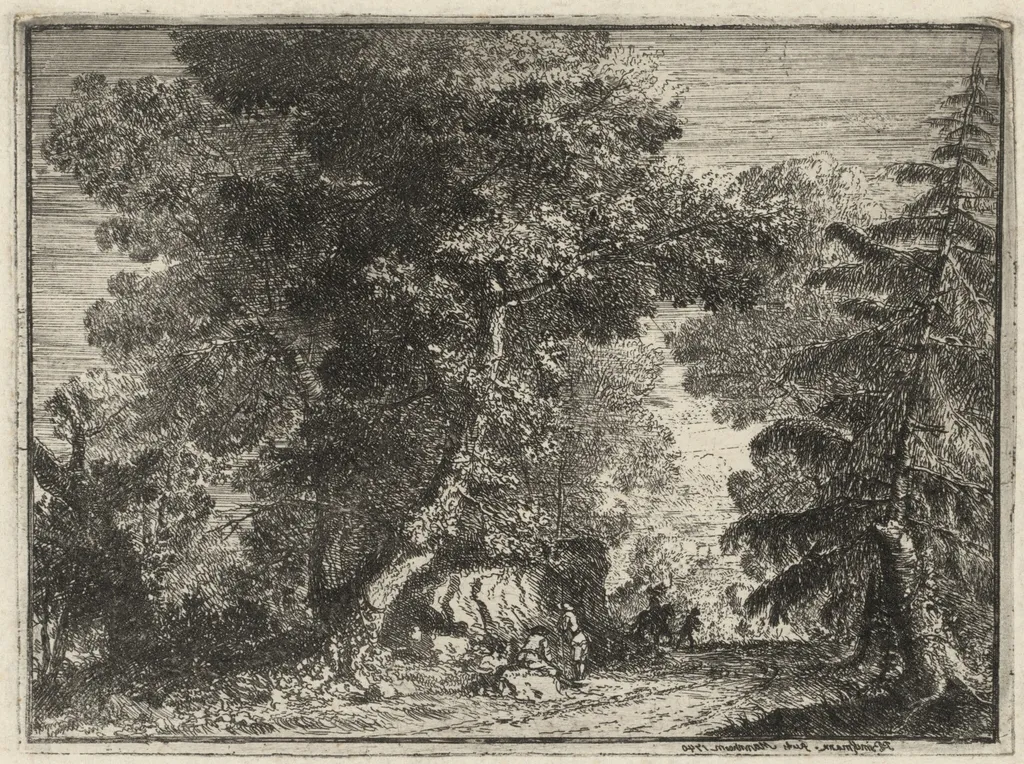
A Road through the Woods is an ink print by the Baroque artist Philipp Hieronymus Brinckmann. It dates from 1740 and is held in the collection of the National Gallery of Art.
About this work
Overview
A Road through the Woods is an etching by Philipp Hieronymus Brinckmann, dated 1740. Executed on laid paper, it captures a narrow path winding through a dense woodland, receding into a hazy distance. The composition emphasizes depth through layered foliage and subtle tonal gradations, typical of printmaking techniques of the early eighteenth century.
Subject & Meaning
The scene depicts a quiet, unpopulated forest path, devoid of human figures or overt narrative. The road, partially obscured by undergrowth and leaning trees, suggests passage rather than destination. The stillness and lack of intervention imply a contemplative engagement with nature, reflecting a growing eighteenth-century interest in natural solitude over idealized landscapes.
Technique & Style
Brinckmann used fine, controlled etching lines to render the texture of bark, foliage, and rocky edges. The tonal range is achieved through cross-hatching and varying line density, creating atmospheric perspective. The paper’s laid texture subtly enhances the organic feel, while the absence of color focuses attention on form and light modulation.
History & Provenance
The work originates from Brinckmann’s active period in the German Rhineland, where he produced topographical and landscape prints. Few of his etchings survive in public collections, and this piece is among the better-documented examples. Its early provenance likely traces to private German collectors interested in regional scenery and print culture.
Context
Created during the late Baroque era, the work diverges from the era’s theatricality, aligning instead with emerging naturalist tendencies in Northern European printmaking. While contemporaries emphasized grandeur, Brinckmann favored intimate, unembellished views, anticipating the quiet realism of later landscape traditions.
Legacy
Brinckmann’s etching contributes to a modest but significant body of German landscape prints that prioritized observation over ornament. Though not widely influential in its time, it remains a representative example of regional printmaking that valued quietude and technical precision over spectacle.
Own this work as a print
Artist & collection
Artist
Philipp Hieronymus Brinckmann (1709–1760) was an artist, born in Speyer.

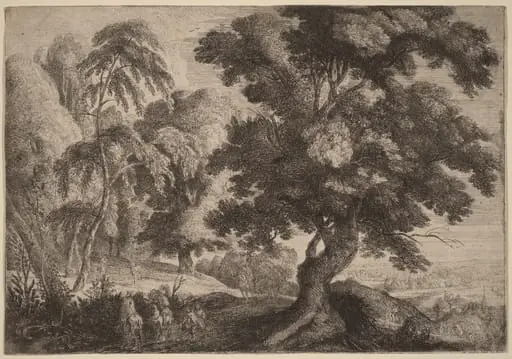 Landscape with Two Deer
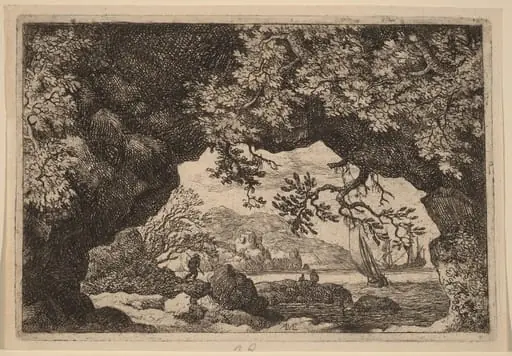 View through a Pierced Rock
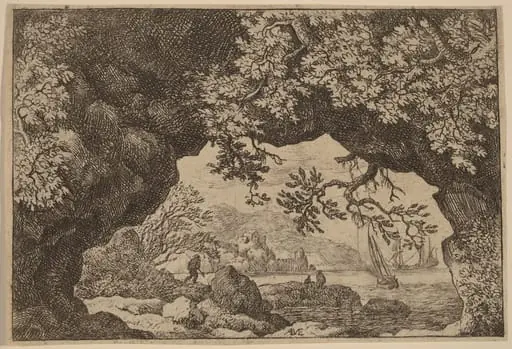 View through a Pierced Rock
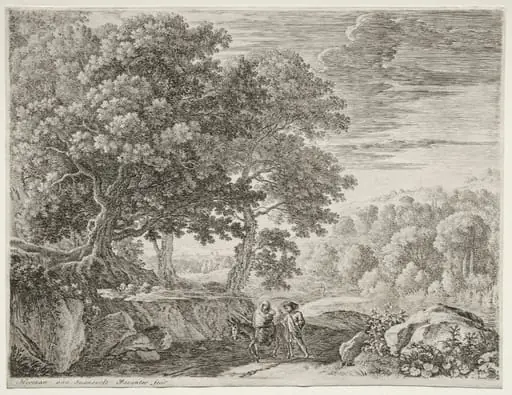 The Flight into Egypt: The Holy Family
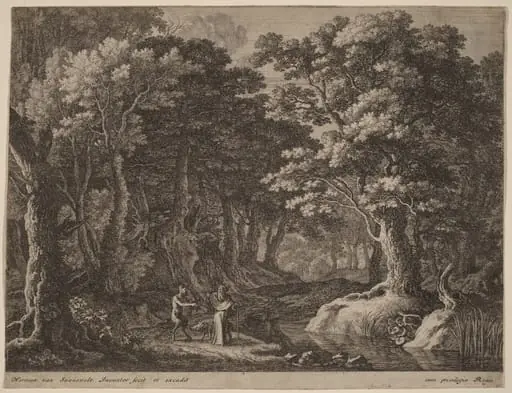 Devil Tempting St. Anthony
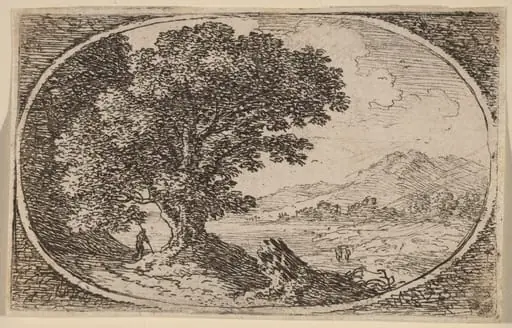 Path to Left of a Large Tree and a Stump
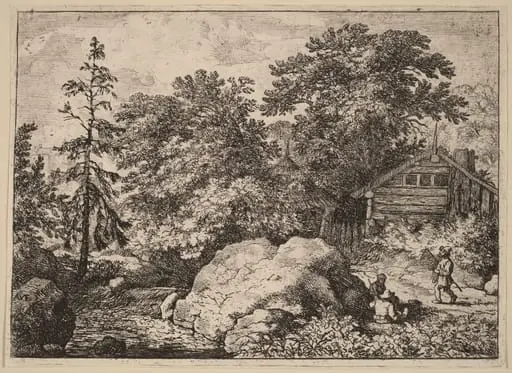 The Knoll
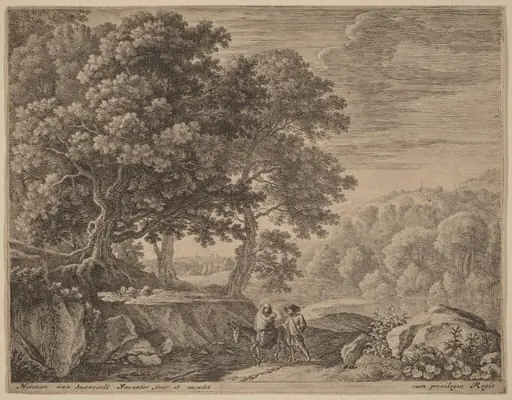 The Little Angels on the Hill
 Landscape with Man Pushing a Cart
 Landscape with Broken Tree
 Salmacis and Hermaphroditus
 Forest with Travelers by a Road