Artwork
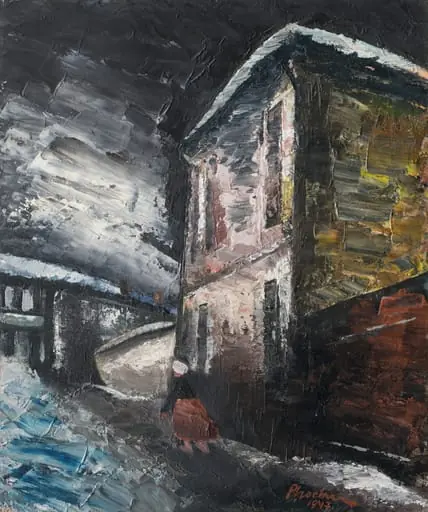
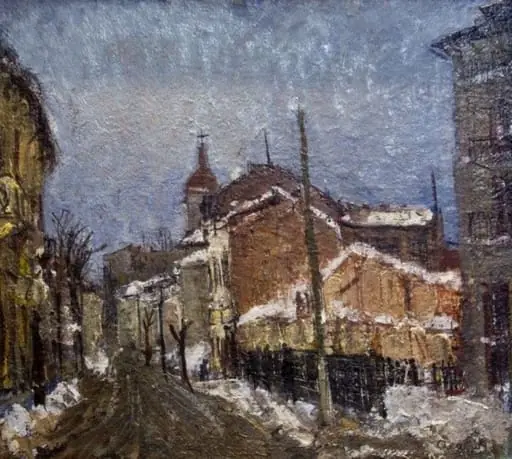
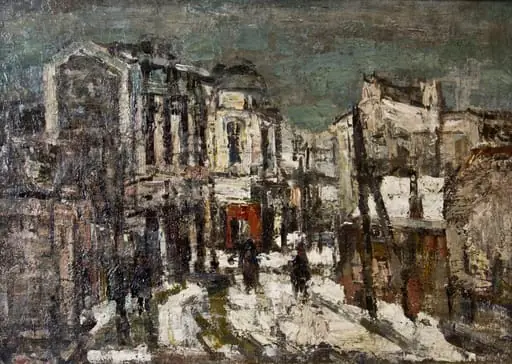
Peisaj bucureștean
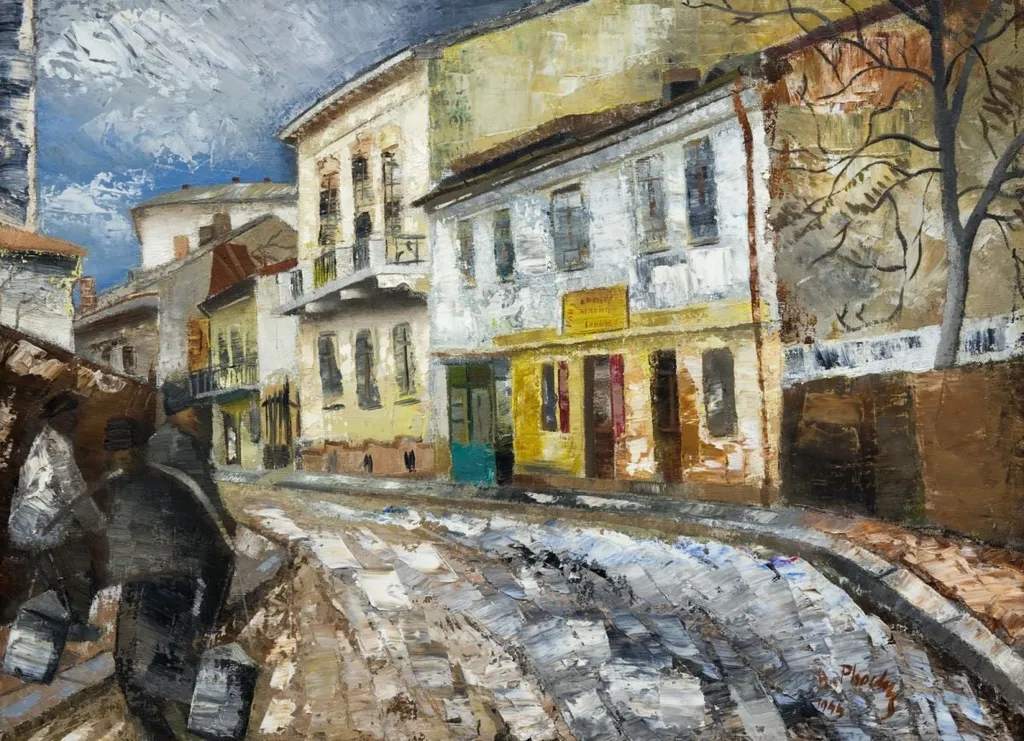
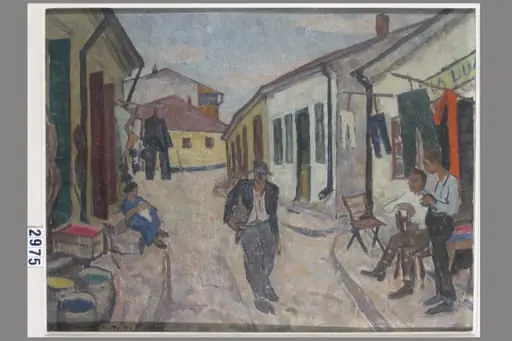
Peisaj bucureștean is a print by Alexandru Phoebus. It dates from 1944 and is held in the collection of the National Museum of Art of Romania.
About this work
Overview
Alexandru Phoebus’s 1944 canvas titled *Peisaj bucureștean* captures a modest urban street in Bucharest. The composition centers on a cobblestone road flanked by low-rise structures rendered in muted yellows, whites and browns, beneath a clear blue sky. A solitary figure in dark attire stands with their back to the viewer, adding a human presence to the otherwise tranquil scene.
Subject & Meaning
The work depicts an everyday moment in the Romanian capital, emphasizing the quiet rhythm of city life during the mid‑twentieth century. By placing the lone pedestrian at the edge of the frame, Phoebus invites contemplation of anonymity and the passage of time, while the sparse vegetation and empty street convey a sense of stillness.
Technique & Style
Phoebus employs a restrained palette, allowing the subtle variations of yellow, white and brown to define the façades. The brushwork is smooth and controlled, particularly in the rendering of the cobblestones and sky, which creates a calm, almost photographic clarity. The figure is suggested rather than detailed, reinforcing the overall minimalist approach.
History & Provenance
Created in 1944, the painting entered the collection of the Museum of Ethnography, where it remains on display. Its acquisition reflects the institution’s interest in documenting Romanian visual culture and urban environments alongside its ethnographic holdings.
Context
The piece emerges from a period marked by World War II’s impact on Romania, yet Phoebus chooses a serene, unremarkable street rather than overtly political subject matter. This focus on ordinary scenery aligns with broader trends in Romanian art of the era, which often sought to preserve national identity through depictions of familiar locales.
Artist & collection