Artwork
Calea Griviței
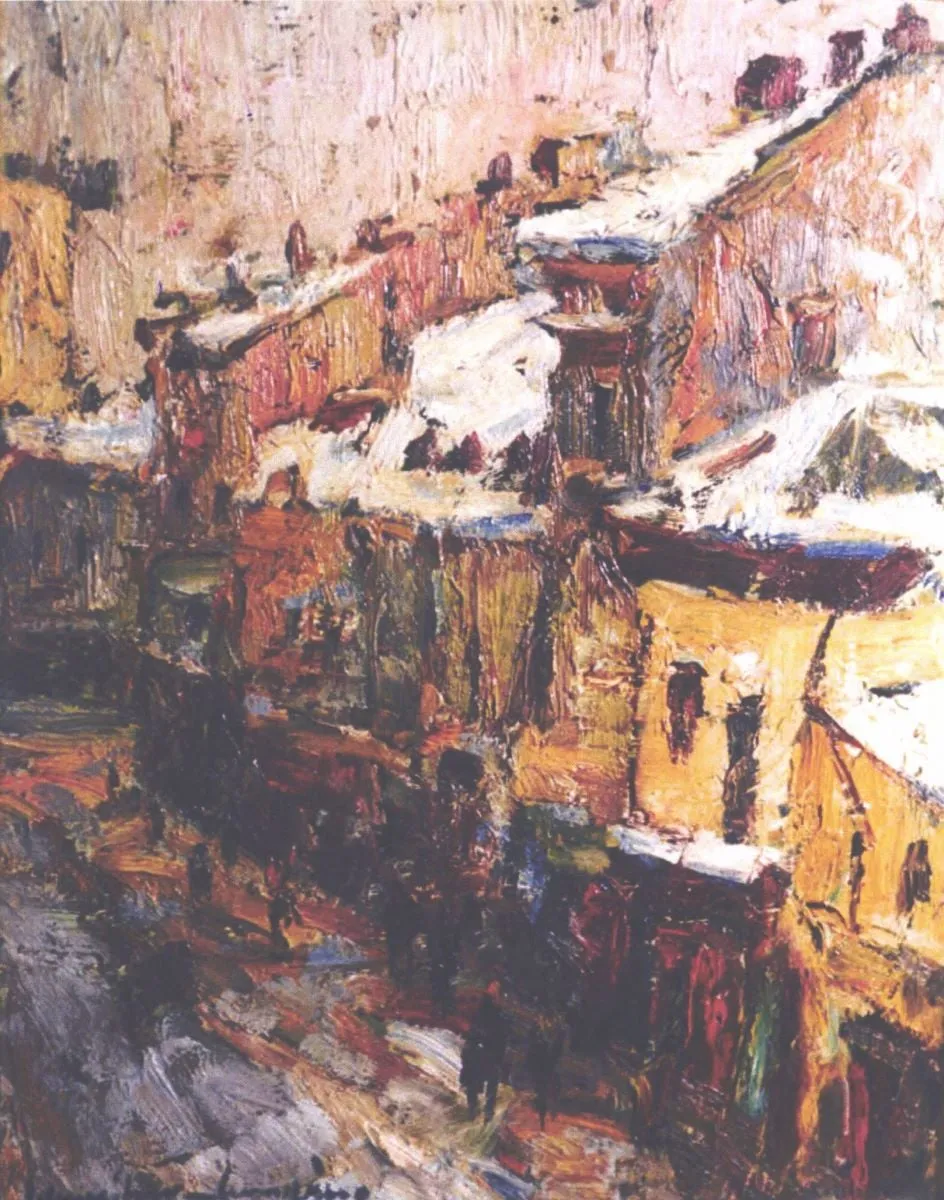
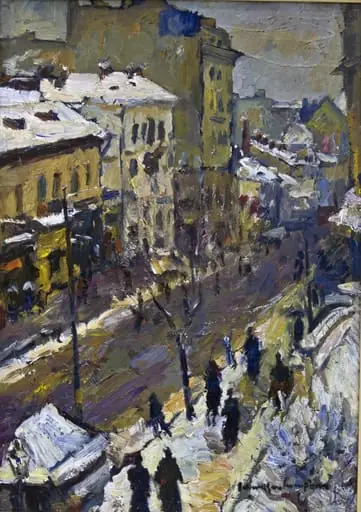
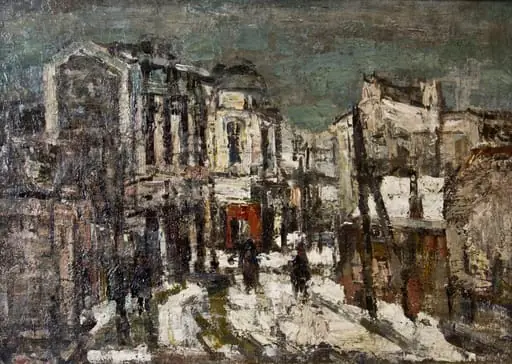
Calea Griviței is a print by Rudolf Schweitzer-Cumpăna. It dates from 1930 and is held in the collection of the Bucharest Municipality Museum.
About this work
Overview
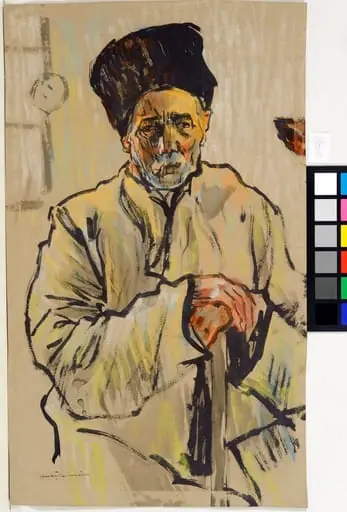
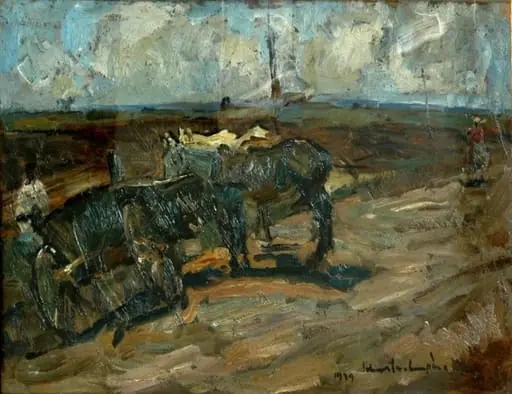
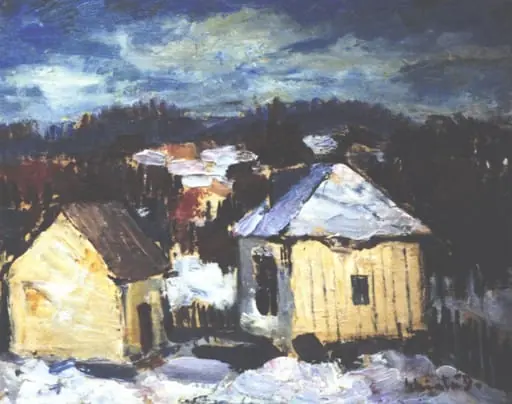
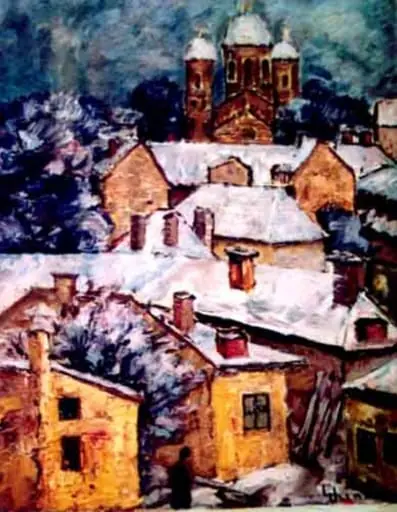
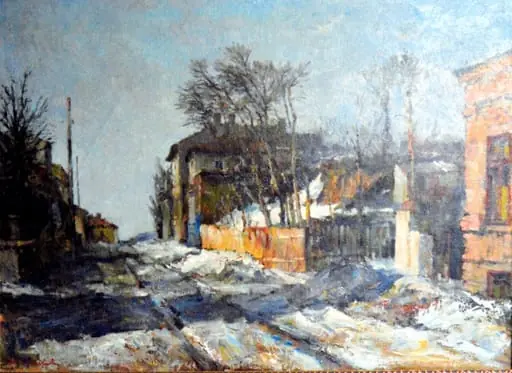
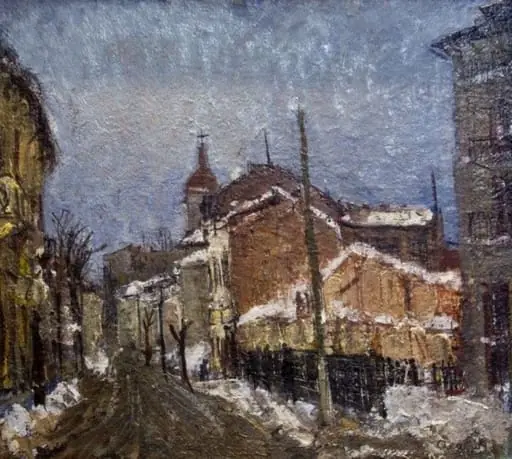
Calea Griviței, painted around 1930 by Romanian artist Rudolf Schweitzer‑Cumpăna, is part of the collection of the Museum of Ethnography. The work presents an urban scene rendered in a loose, gestural manner, with a palette of muted browns, yellows and greys that convey a sense of wear and decay.
Subject & Meaning
The composition depicts a crowded street or alley, its forms reduced to smudged blocks and indistinct silhouettes. The lack of a clear focal point suggests an emphasis on atmosphere over narrative, inviting viewers to contemplate the anonymity and bustle of early‑twentieth‑century city life.
Technique & Style
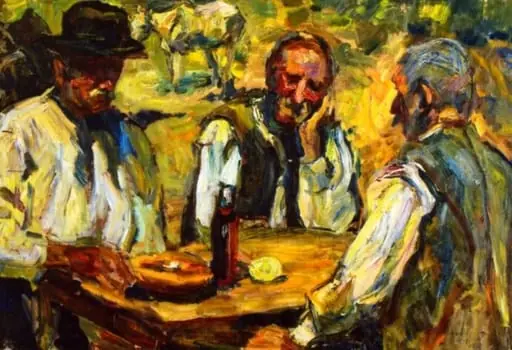
Schweitzer‑Cumpăna employs thick, uneven brushstrokes that give the surface a textured, impasto quality. The application of paint is rapid and heavy, creating a rough, almost tactile surface that reinforces the visual impression of a weathered, lived‑in environment.
History & Provenance
Created circa 1930, the painting entered the Museum of Ethnography’s holdings at an unspecified date, where it remains accessible to the public. Its inclusion in the museum’s collection reflects the institution’s interest in documenting Romanian visual culture beyond traditional folk art.
Context
The work emerges from a period when Romanian artists were negotiating modernist influences and local traditions. Schweitzer‑Cumpăna’s urban subject matter contrasts with the rural themes commonly associated with ethnographic collections, highlighting the expanding scope of cultural representation in the interwar era.
Artist & collection
Artist
Rudolf Schweitzer-Cumpăna was a Romanian painter. Born in Pitești into an ethnic German family, he finished high school in his native town before attending the Royal Academy of Arts at Berlin from 1904 to 1909, studying…