Artwork
Peisaj cu case
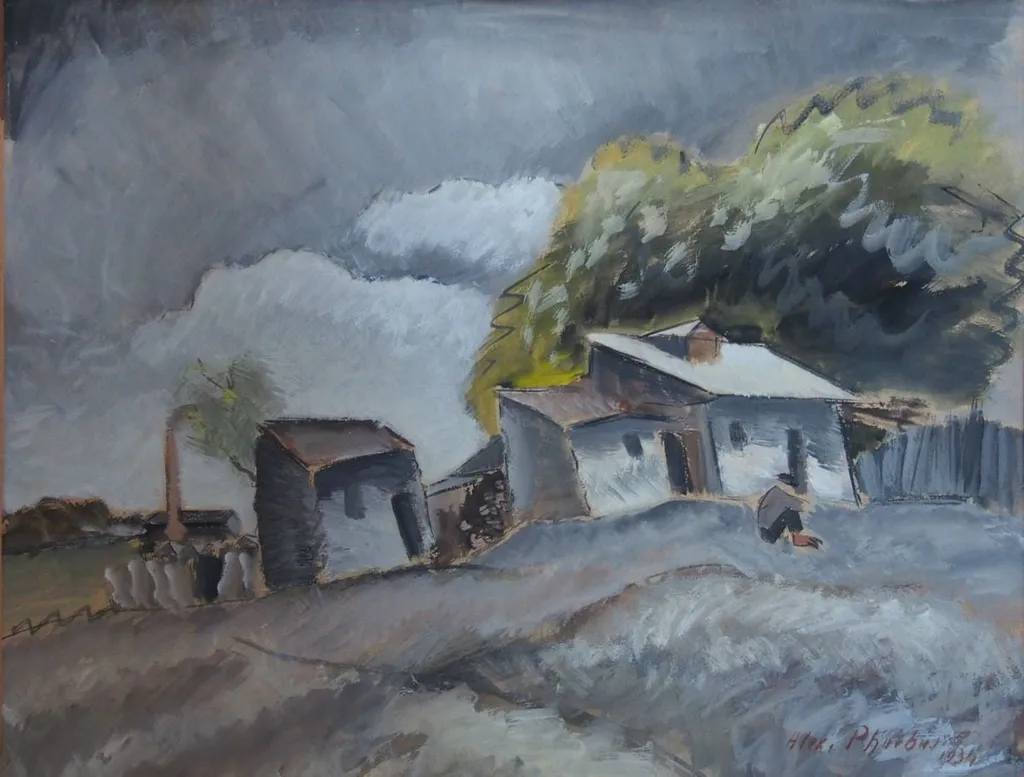
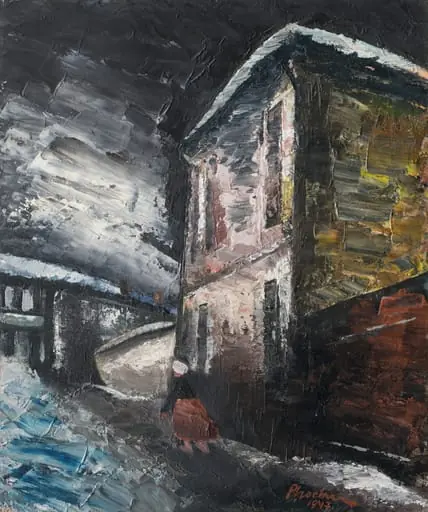
Peisaj cu case is a print by Alexandru Phoebus. It dates from 1934 and is held in the collection of the Bucharest Municipality Museum.
About this work
Overview
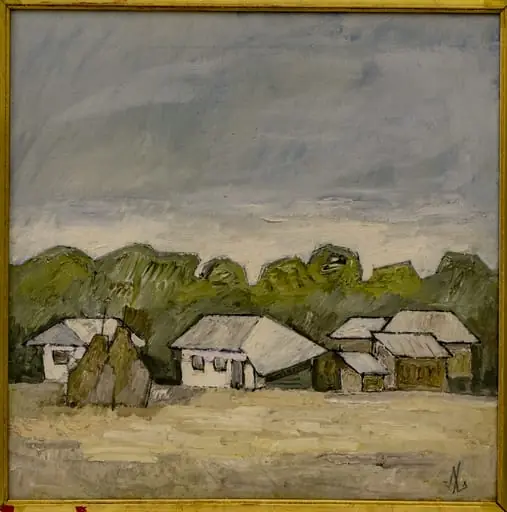
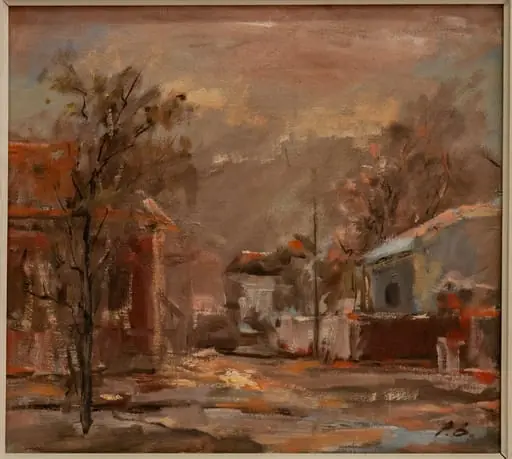
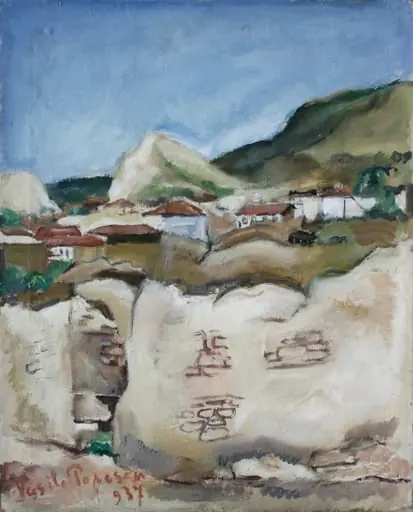
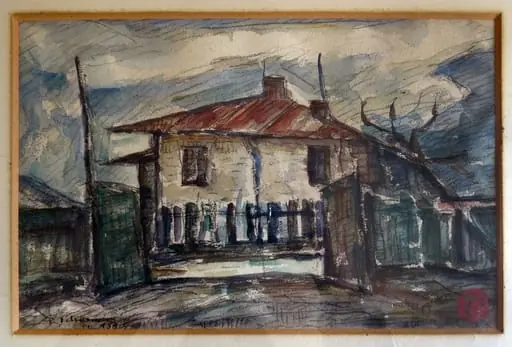
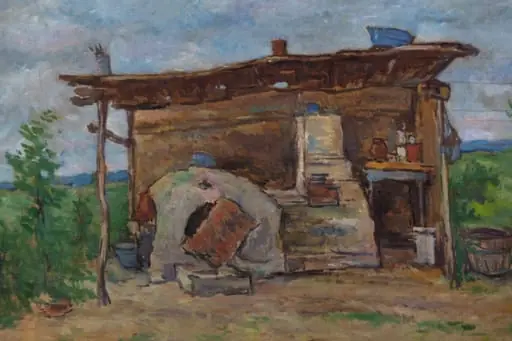
Painted in 1934 by Alexandru Phoebus, Peisaj cu case is a quiet landscape rendering that prioritizes emotional tone over precise detail.
Painted in 1934 by Alexandru Phoebus, Peisaj cu case is a quiet landscape rendering that prioritizes emotional tone over precise detail. Executed in a loose, expressive manner, the work captures a rural scene with minimal structural definition. Its restrained palette and simplified forms reflect an interest in mood rather than topographical accuracy, aligning with broader interwar tendencies toward atmospheric expression in Romanian art.
Subject & Meaning
The painting depicts a modest cluster of dwellings nestled among trees in a subdued countryside setting. There is no indication of human activity; the absence of figures enhances the sense of stillness. The buildings, rendered in muted grays and whites, blend into the environment, suggesting harmony between architecture and nature. The work evokes solitude and quiet endurance, characteristic of rural life in early 20th-century Romania.
Technique & Style
Phoebus employs broad, deliberate brushstrokes and a limited palette of grays, whites, and faint greens. Forms are suggested rather than meticulously defined, with sky and land merging through soft transitions. The paint application is economical, favoring gesture over refinement. This approach creates a sense of immediacy, as if the scene were observed and recorded in a single, contemplative moment rather than constructed over time.
History & Provenance
The painting has been held since its creation by the Museum of Ethnography in Bucharest, where it remains part of the institution’s modern Romanian art collection. Its presence there reflects an early institutional interest in documenting vernacular landscapes as cultural artifacts. No record of prior ownership or exhibition history beyond the museum’s custody is publicly documented.
Context
Created during a period of national introspection in interwar Romania, the work aligns with a broader artistic movement that sought to capture the essence of rural life amid rapid modernization. While not overtly political, its quiet depiction of modest dwellings resonates with contemporaneous efforts to define a Romanian identity rooted in the land and its quiet, enduring structures.
Legacy
Peisaj cu case exemplifies Phoebus’s contribution to Romanian modernism through its emotional restraint and formal economy. Though not widely reproduced, it stands as a representative example of a generation of artists who favored atmospheric suggestion over realism. Its continued presence in a national ethnographic museum underscores its role as a cultural document as much as an artistic one.