Artwork
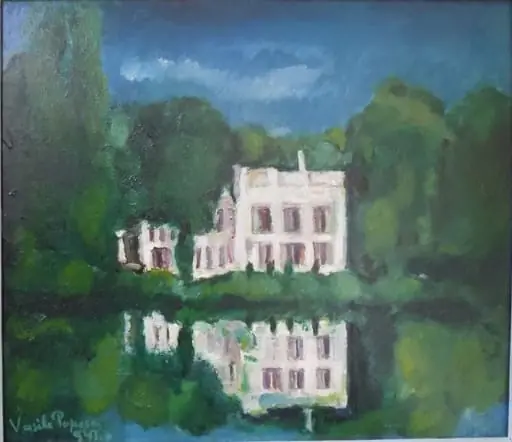
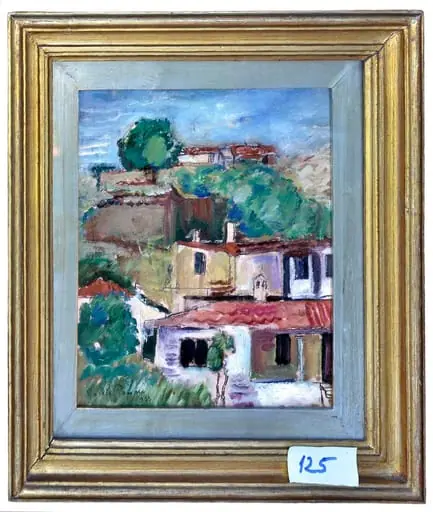
Peisaj cu case
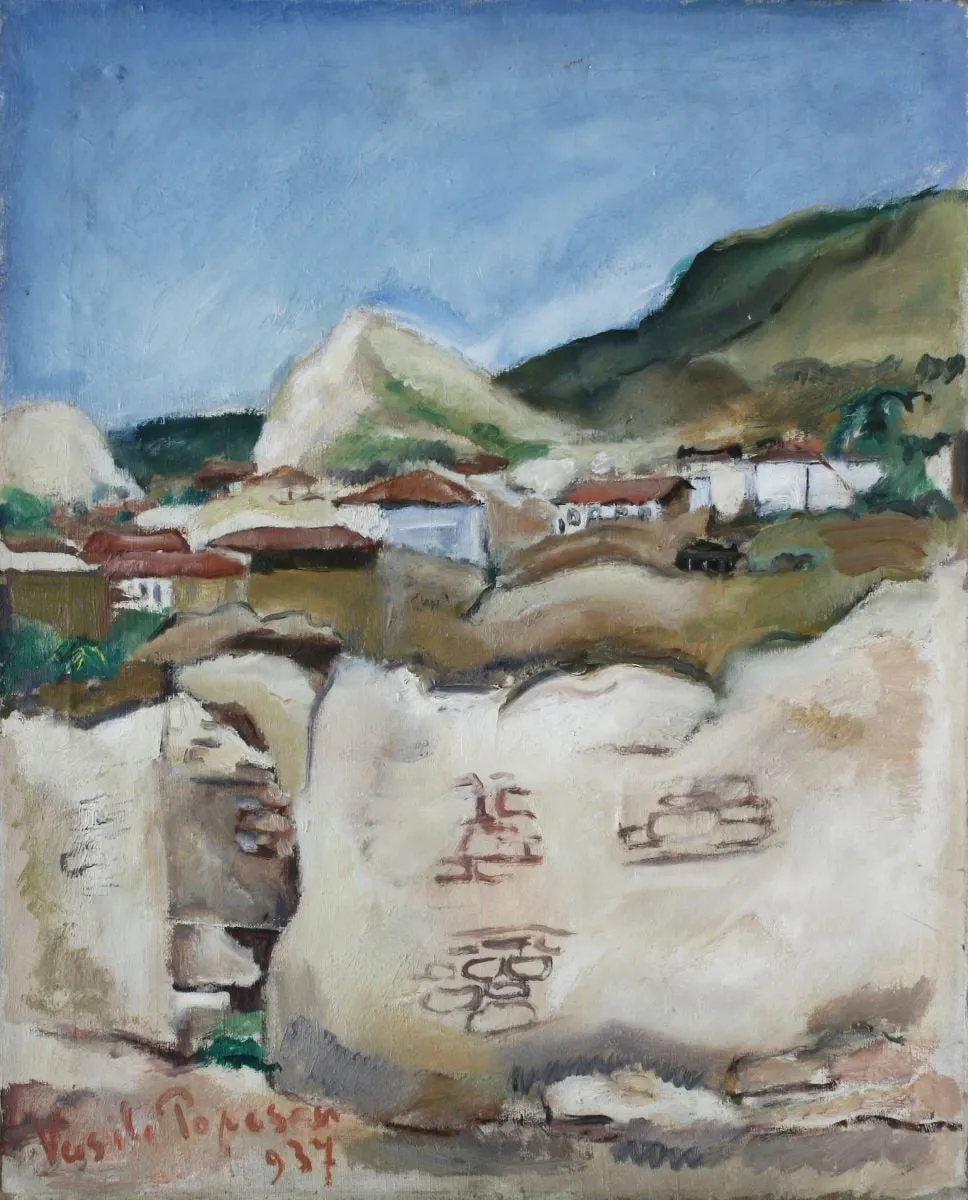
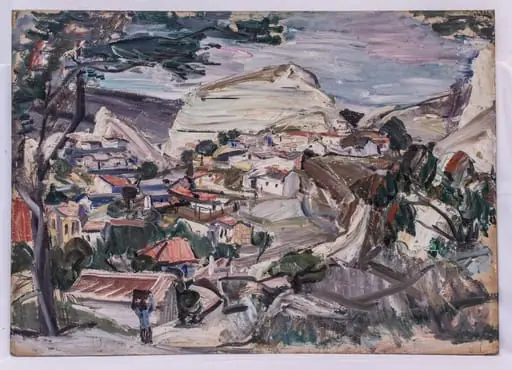
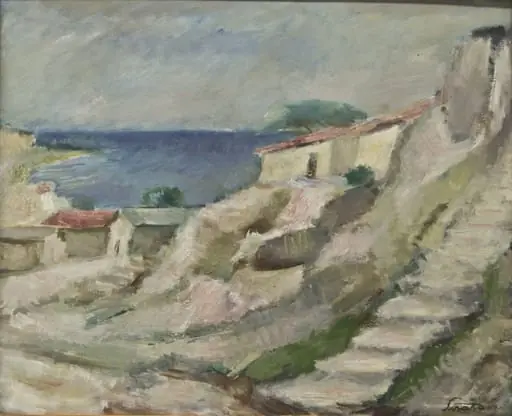
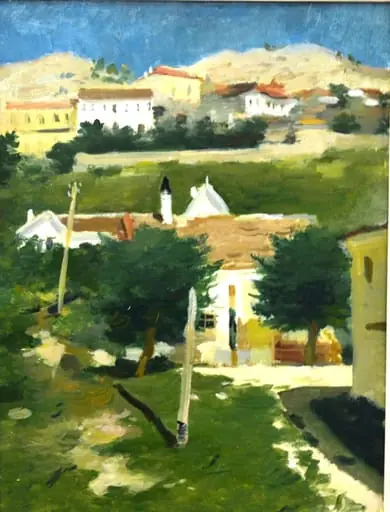
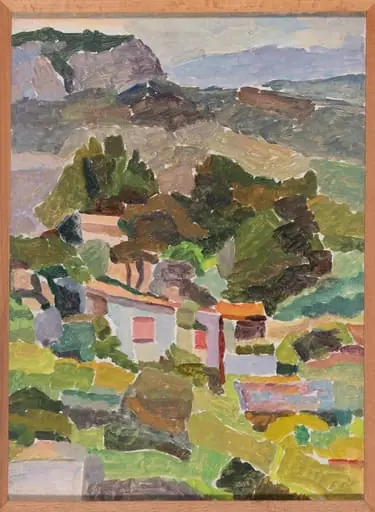
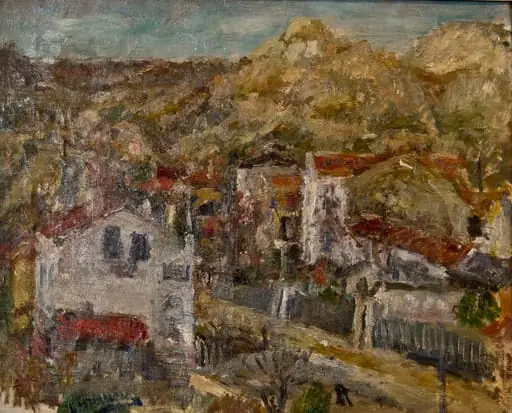
Peisaj cu case is an unspecified painting by the Post-Impressionist artist Vasile Popescu. It dates from 1937 and is held in the collection of the Gavrilă Simion Eco-Museum Research Institute Tulcea - Art Museum.
About this work
Overview
Created in 1937 by Romanian artist Vasile Popescu, this landscape depicts a rural village nestled among gentle hills. The painting is part of the Museum of Ethnography’s collection and reflects a quiet, unidealized view of peasant life in interwar Romania. Its subdued palette and tactile brushwork convey a sense of stillness and groundedness, avoiding romanticism in favor of observed reality.
Subject & Meaning
The scene centers on a cluster of modest dwellings with red-tiled roofs, tightly packed as if shaped by necessity rather than design. A dominant white wall in the foreground partially obscures the view, suggesting boundaries—physical or social—between the observer and the village. The composition invites contemplation of isolation, continuity, and the quiet endurance of rural existence.
Technique & Style
Popescu employed thick, expressive brushstrokes, building texture through impasto to give the surfaces of walls, hills, and roofs a tactile quality. Colors are restrained—muted greens, soft blues, and earthy reds—creating a hushed, atmospheric tone. The loose handling avoids detail, favoring emotional resonance over precision, aligning the work with regional modernist tendencies of the time.
History & Provenance
Painted in 1937, the work entered the Museum of Ethnography’s holdings shortly after its creation, likely through direct acquisition or donation. Its inclusion in an ethnographic institution, rather than a fine arts museum, signals its perceived value as a document of vernacular life. The painting has remained in the museum’s collection without public record of significant ownership changes.
Context
In late 1930s Romania, artists increasingly turned to rural subjects amid rising nationalism and interest in folk identity. Popescu’s approach diverged from idealized depictions common in official art; instead, he captured the unadorned rhythm of village architecture and terrain. This work reflects a broader cultural shift toward valuing authenticity over spectacle in visual representation.
Legacy
Though not widely exhibited beyond institutional circles, the painting stands as a quiet example of Romanian modernism rooted in regional observation.
Though not widely exhibited beyond institutional circles, the painting stands as a quiet example of Romanian modernism rooted in regional observation. Its emphasis on texture and restraint influenced later generations of artists seeking to portray rural life without sentimentality. It remains a reference point for studies of interwar Romanian visual culture and the intersection of ethnography and art.
Artist & collection
Artist
Vasile Popescu was a Romanian basketball player who competed in the 1952 Summer Olympics.
Museum
Gavrilă Simion Eco-Museum Research Institute Tulcea - Art Museum
Continue through works from the same source collection.