Artwork
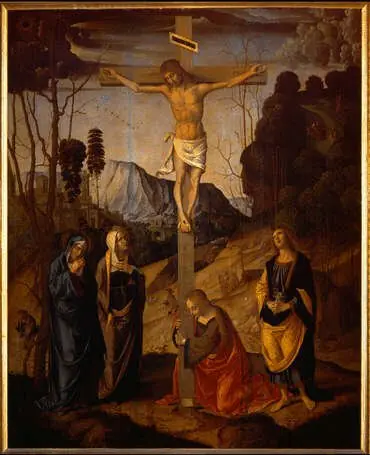
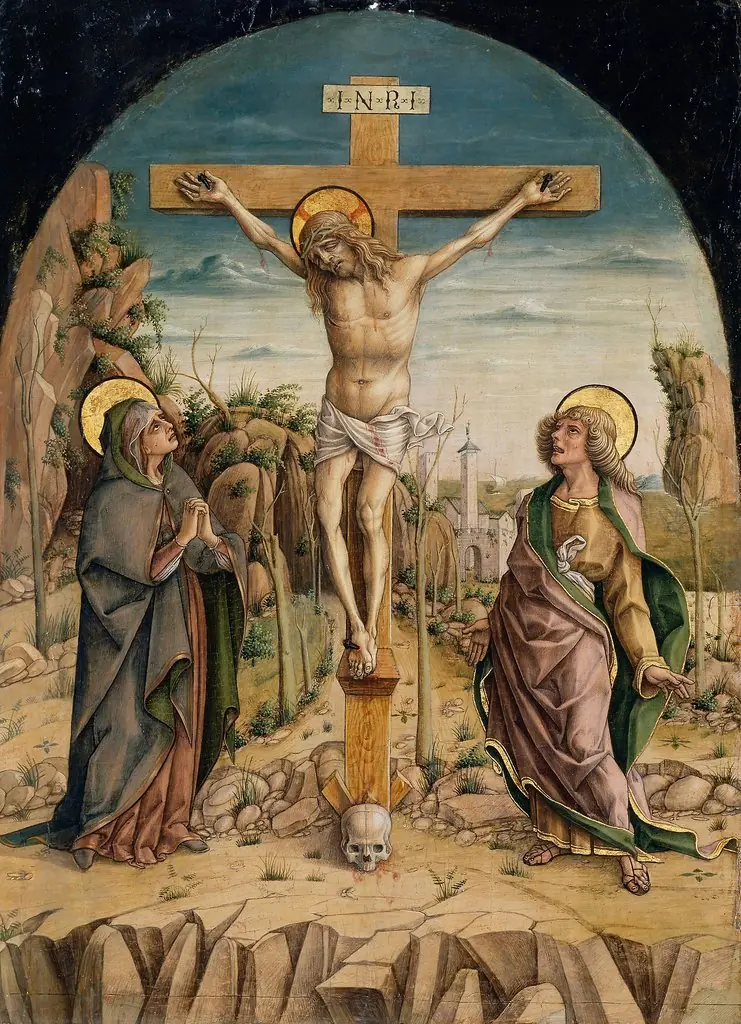
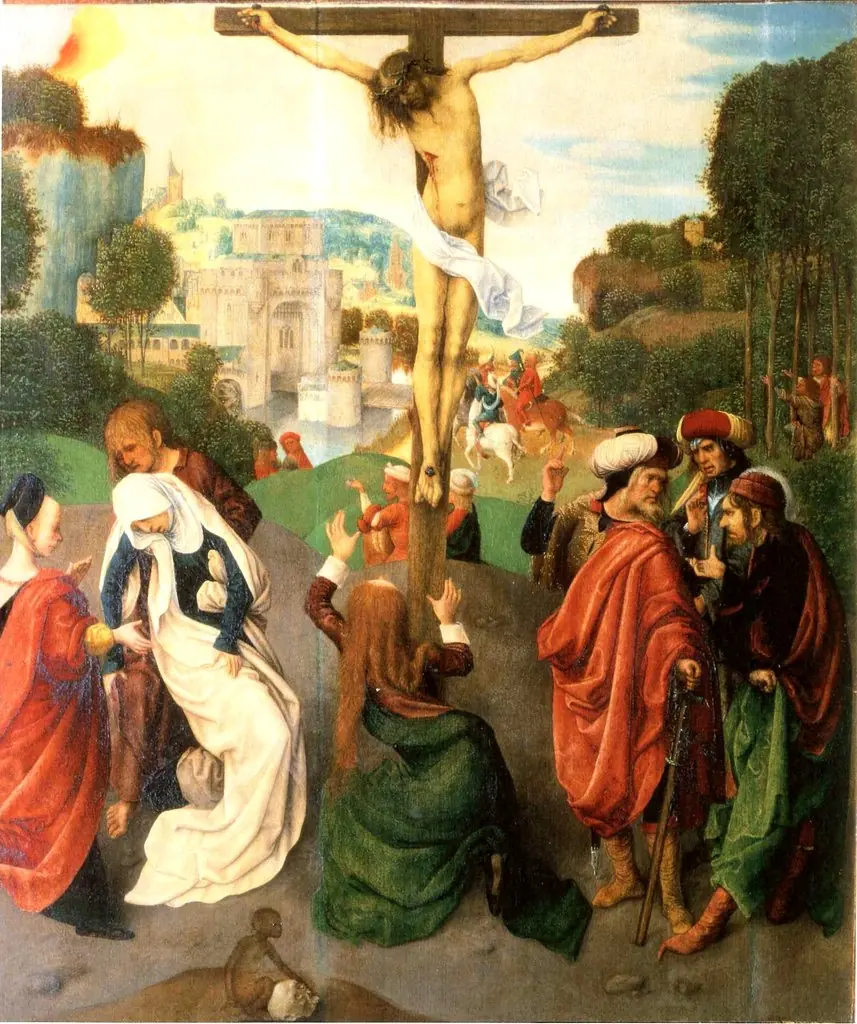
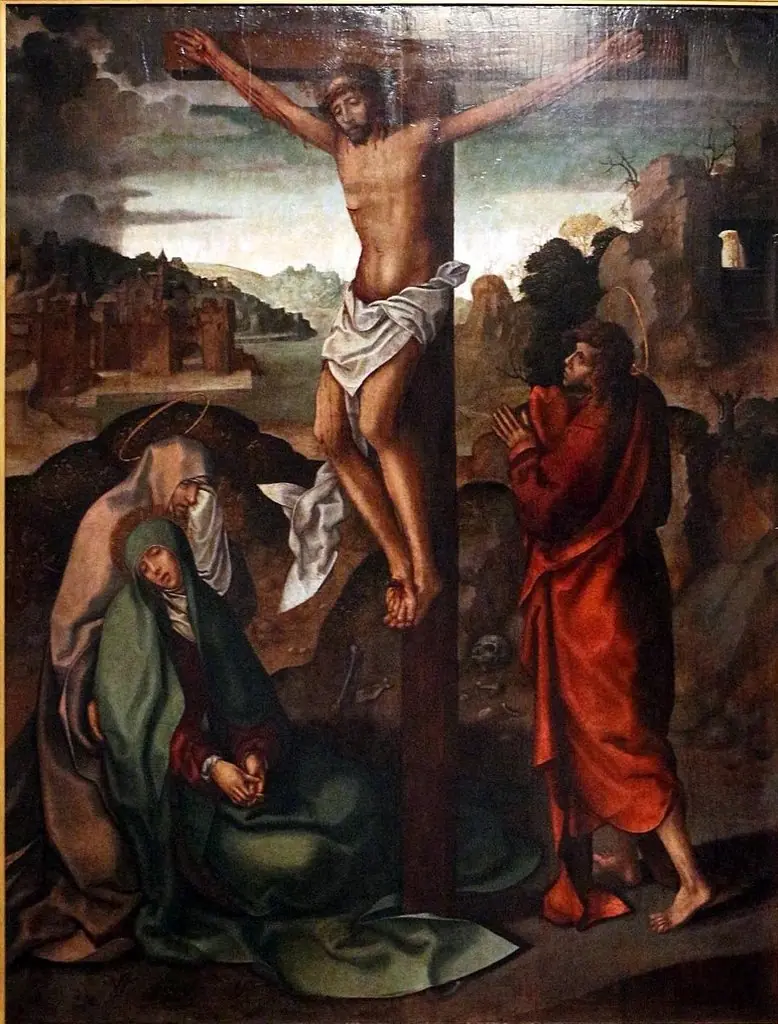
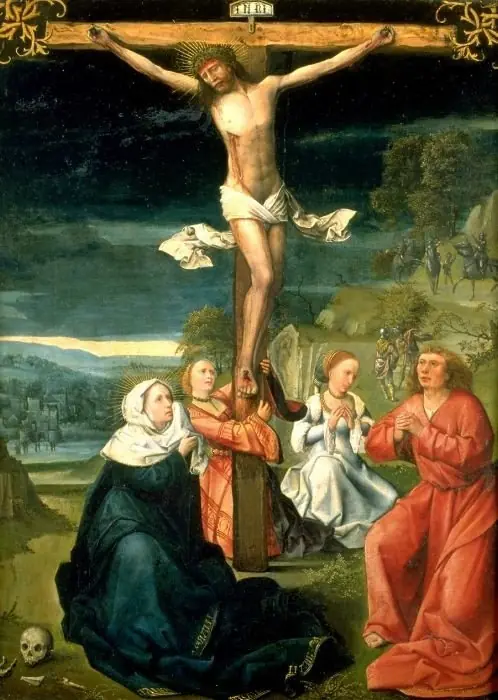
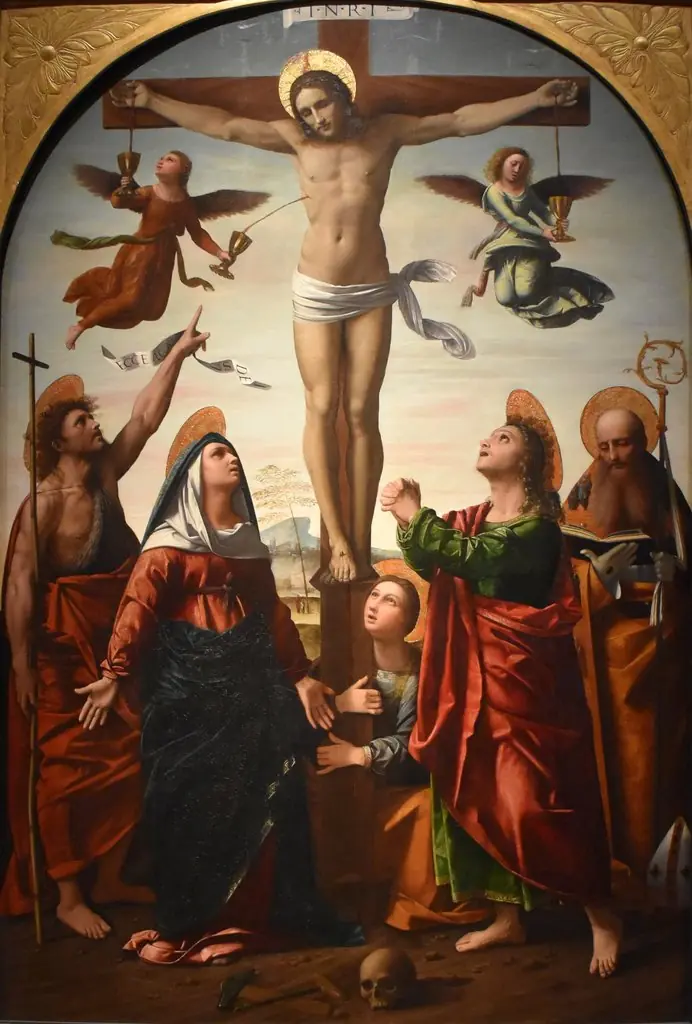
Christ on the Cross, mourned by the three Marys, John and a donor
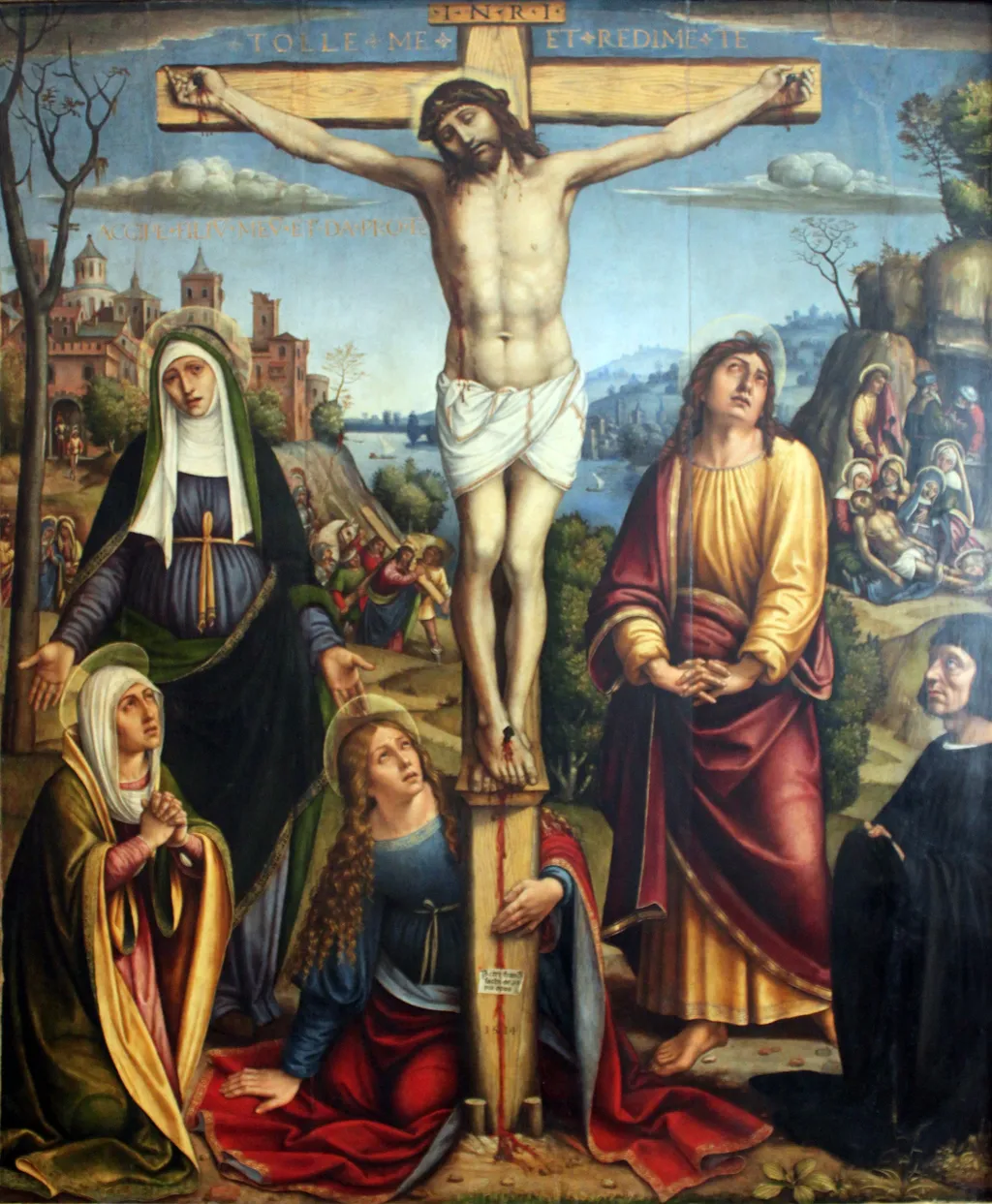
Christ on the Cross, mourned by the three Marys, John and a donor is a paint painting by the High Renaissance artist Pier Francesco Sacchi. It dates from 1514 and is held in the collection of the Gemäldegalerie Berlin.
About this work
Overview
Executed in oil on panel, it reflects the devotional priorities of early 16th-century Lombard painting.
Painted in 1514 by Pier Francesco Sacchi, this work presents the crucifixion of Christ attended by the Virgin Mary, Mary Magdalene, Mary of Clopas, Saint John, and a kneeling donor. Executed in oil on panel, it reflects the devotional priorities of early 16th-century Lombard painting. Sacchi, trained in Pavia and later active in Genoa, integrated regional stylistic tendencies with broader Renaissance conventions, particularly those associated with Mantegna’s sculptural forms and emotional restraint.
Subject & Meaning
The scene centers on Christ’s lifeless body on the cross, surrounded by mourners whose postures and gazes convey grief and contemplation. The inclusion of a donor figure, positioned among sacred figures, signals personal piety and the desire for spiritual intercession. The three Marys and John represent the faithful witnesses to Christ’s sacrifice, reinforcing the theological weight of the moment while grounding it in human emotion and communal devotion.
Technique & Style
Sacchi employs a restrained palette and clear, linear contours reminiscent of Mantegna’s influence, emphasizing anatomical solidity over atmospheric depth. Chiaroscuro is used subtly to model the figures, particularly Christ’s body, enhancing volume without dramatic contrast. The background’s distant cityscape and sky offer minimal spatial depth, directing focus to the central group. Robes are rendered with attention to fabric texture, and halos are rendered as thin gold bands, signaling sanctity without ornamentation.
History & Provenance
Commissioned likely for private devotion, the painting entered the collection of the Gemäldegalerie Berlin in the 19th century. Its survival through centuries of religious upheaval suggests it was preserved as an object of artistic rather than purely liturgical value. No early documentation of its original location survives, but its donor portrait implies a connection to a local Lombard or Genoese patron seeking spiritual merit through patronage.
Context
Created during the High Renaissance, the painting reflects the persistence of devotional themes even as artistic centers shifted toward Florence and Rome. Sacchi’s work, though outside these major hubs, demonstrates how regional artists absorbed and adapted innovations from northern Italian masters. The composition’s quiet solemnity aligns with contemporary religious sentiment, where emotional restraint was valued as a sign of spiritual depth.
Legacy
Though not widely known today, Sacchi’s painting exemplifies the quiet, personal piety characteristic of minor Renaissance workshops. It preserves a mode of religious representation that prioritized emotional sincerity over theatricality, offering insight into how faith was visually articulated beyond the most celebrated centers of art. Its presence in Berlin underscores its recognition as a representative work of early 16th-century Lombard painting.
Own this work as a print
Artist & collection
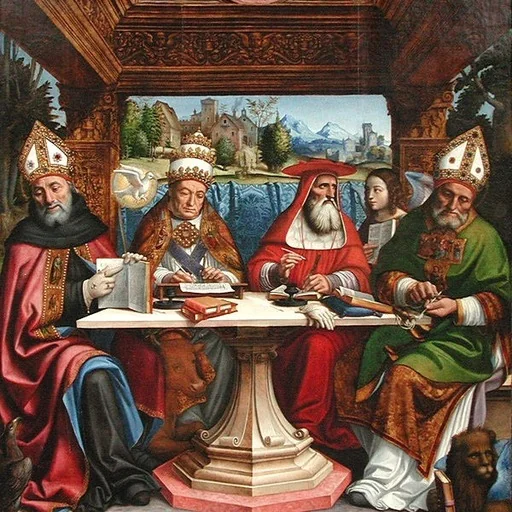
Artist
Pier-Francesco Sacchi (known active 1512–1520) was an Italian painter of the Renaissance period.