Artwork
Crucifixion with the Virgin and Saints
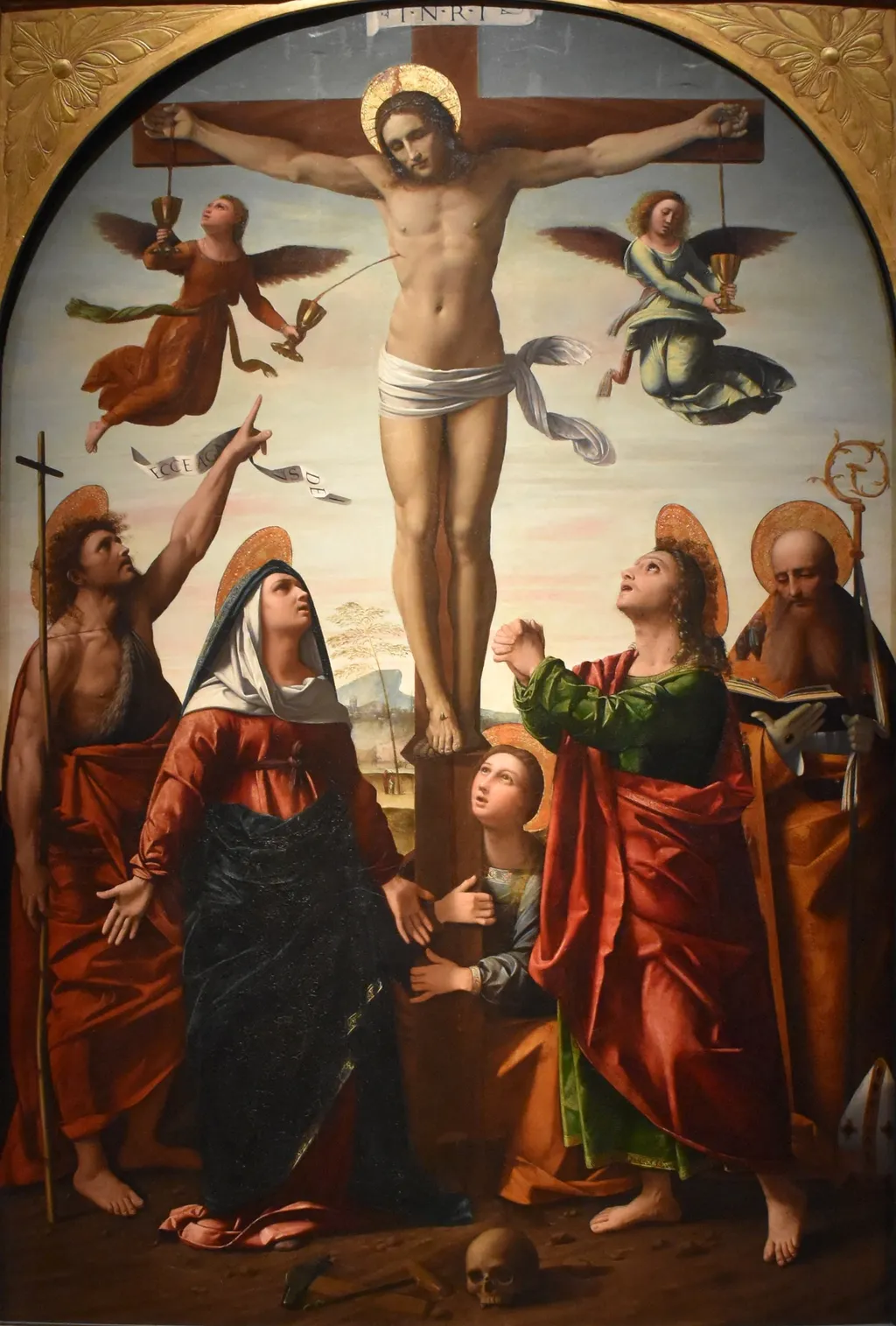
Crucifixion with the Virgin and Saints is an unspecified painting by Ortolano. It dates from 1515 and is held in the collection of the Pinacoteca di Brera.
About this work
Overview
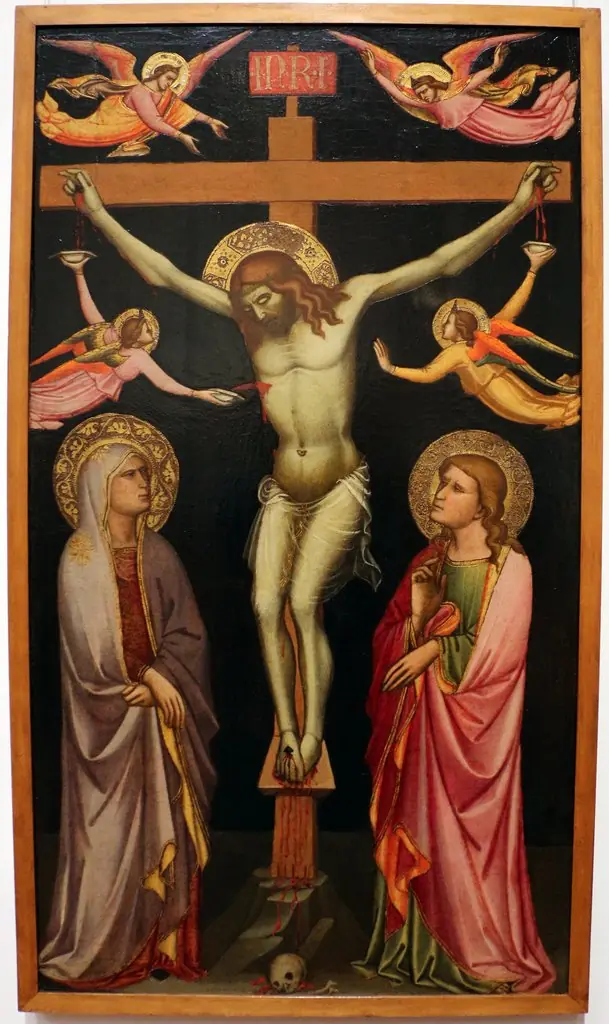
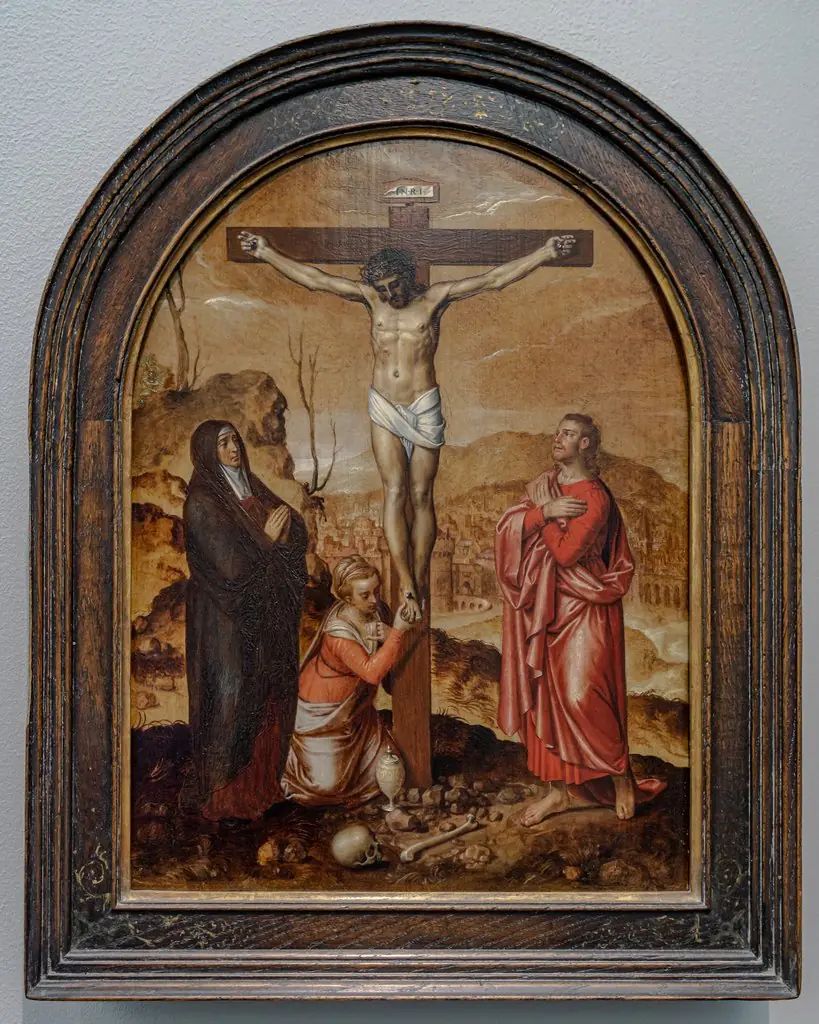
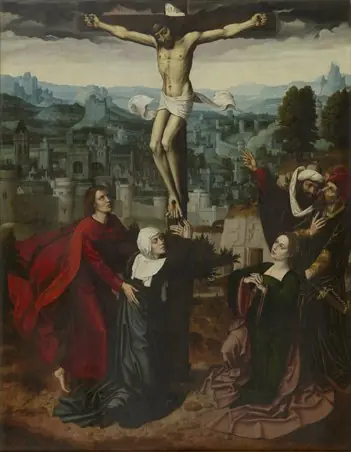
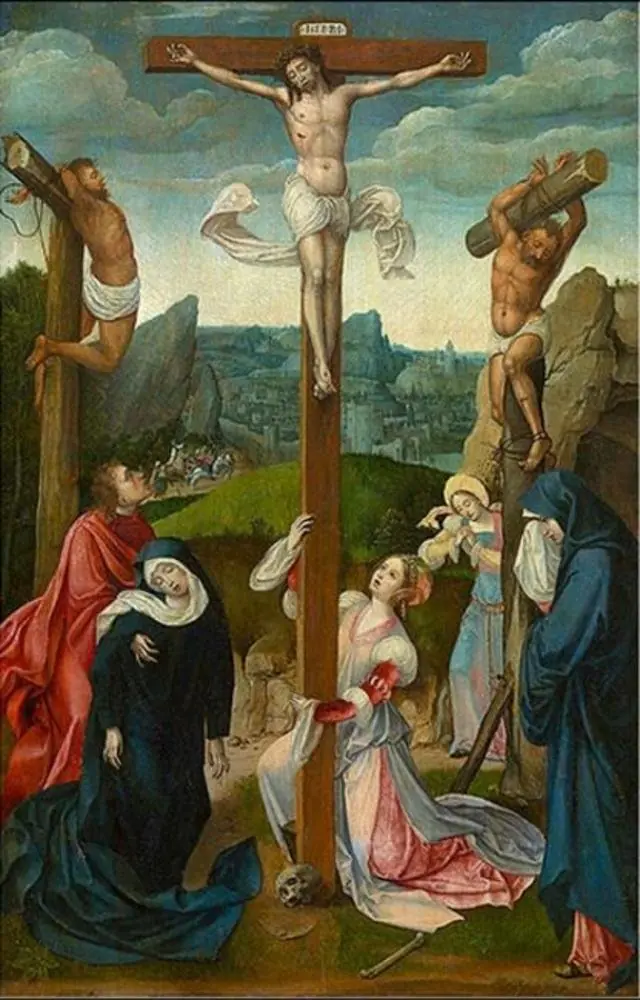
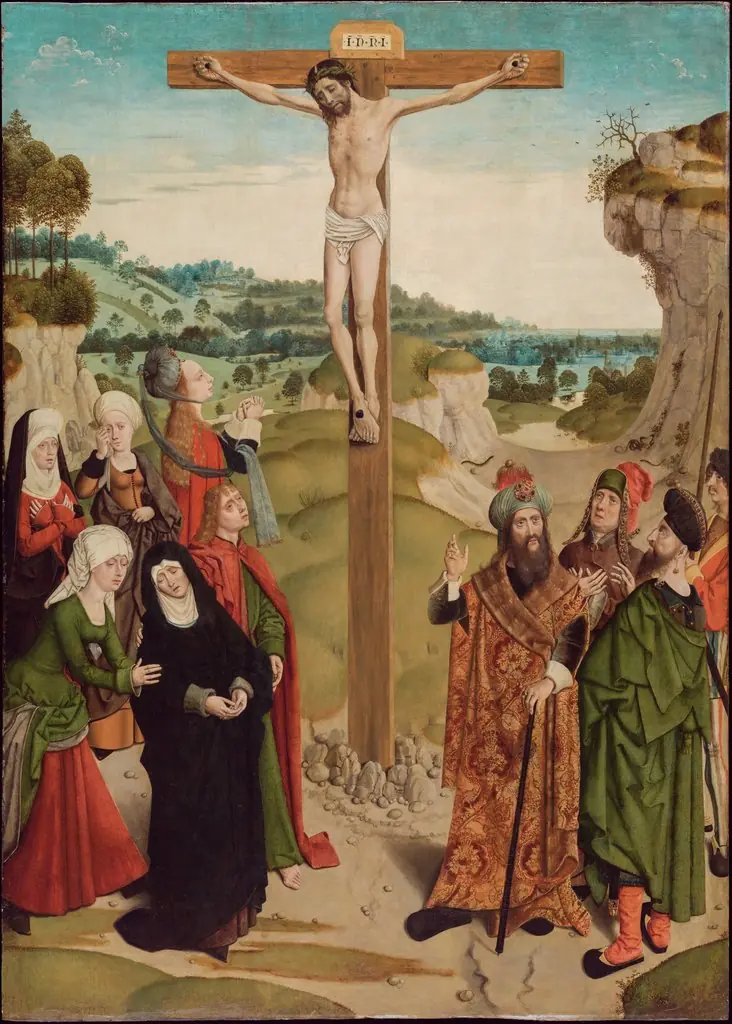
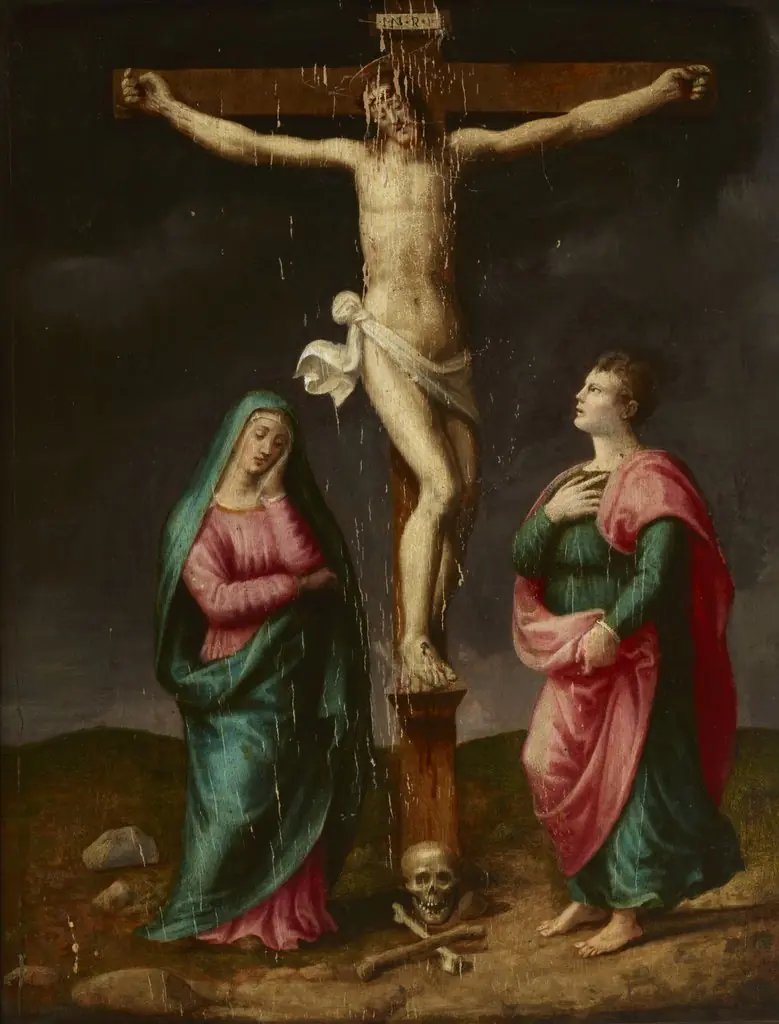
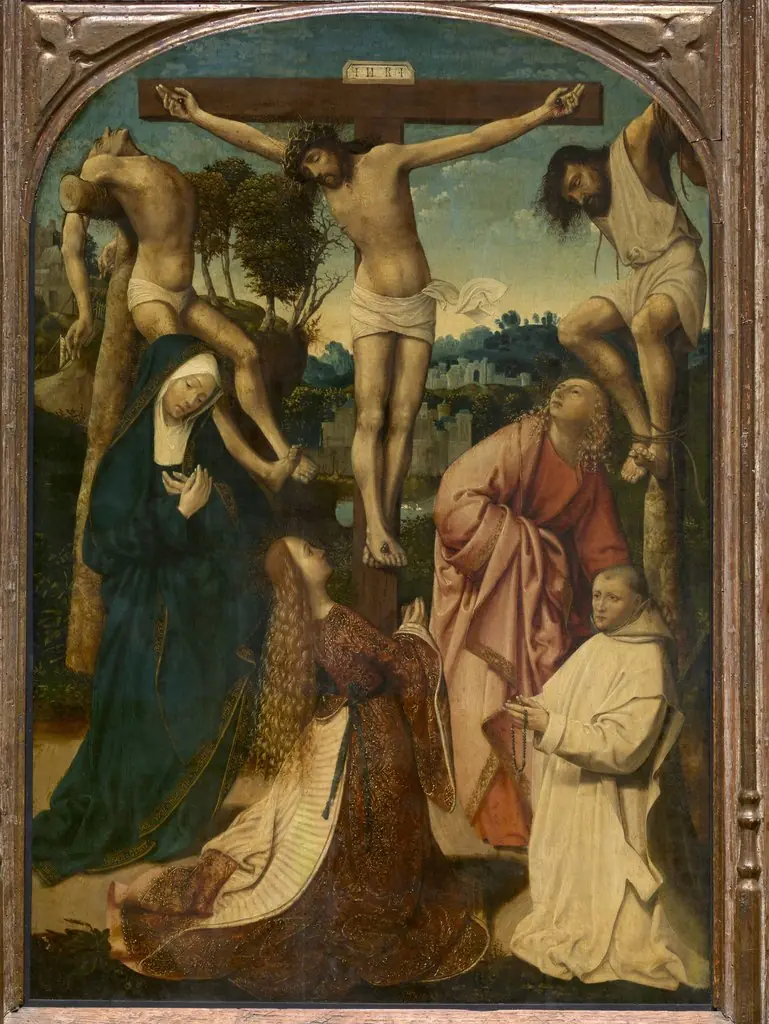
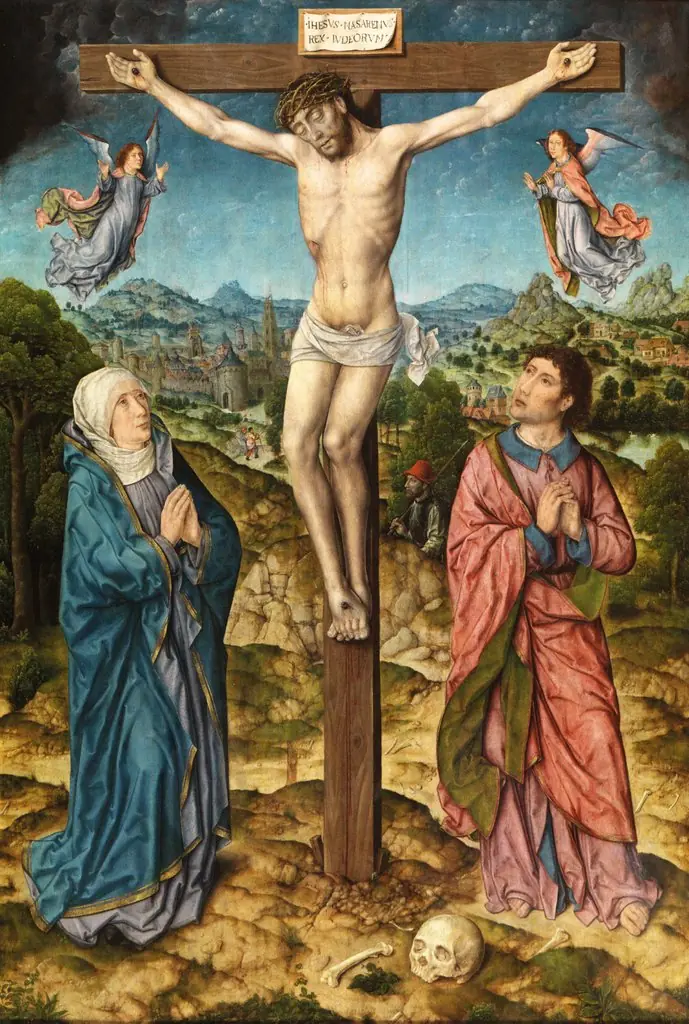
Created circa 1515 by the Ferrara‑based painter known as Ortolano, this oil on panel presents a traditional crucifixion tableau. The composition is housed in Milan’s Pinacoteca di Brera, where it remains a representative example of early‑sixteenth‑century religious painting from the Italian Renaissance.
Subject & Meaning
At the centre of the work, Christ hangs on the cross, his torso wrapped in a white cloth and crowned with a luminous halo. Flanking him are the Virgin Mary and a group of saints, each rendered in richly coloured robes that underscore their distinct identities. Angelic figures hover above, reinforcing the scene’s devotional intensity.
Technique & Style
Ortolado employs a balanced arrangement of figures against a sky mottled with clouds, while distant trees and modest architectural forms provide a subtle spatial depth. The palette—dominated by reds, greens, and blues—highlights the emotional contrast between the suffering of the crucified figure and the serene reverence of the surrounding holy persons.
History & Provenance
The painting entered the collection of the Pinacoteca di Brera in the nineteenth century, where it has been displayed as part of the museum’s holdings of Ferrarese art. Its attribution to Ortolano, an artist active around 1480–1520, rests on stylistic analysis linking it to his known oeuvre.
Context
Ortolano’s career unfolded within the vibrant artistic environment of Ferrara, a court that encouraged the production of devotional imagery for churches and private patrons. This work reflects the period’s emphasis on narrative clarity and emotional engagement, aligning with broader Renaissance trends that sought to make sacred events accessible to viewers.
Artist & collection
Artist
Ortolano was an Italian painter of the Ferrara School, active in the Renaissance period. Ticozzi cites his birth as ca. 1480.